Demographics of Mclean County
Affluence Level in Mclean County
A middle-class area roughly in line with national averages across income, home values, education, and employment.
People of Mclean County
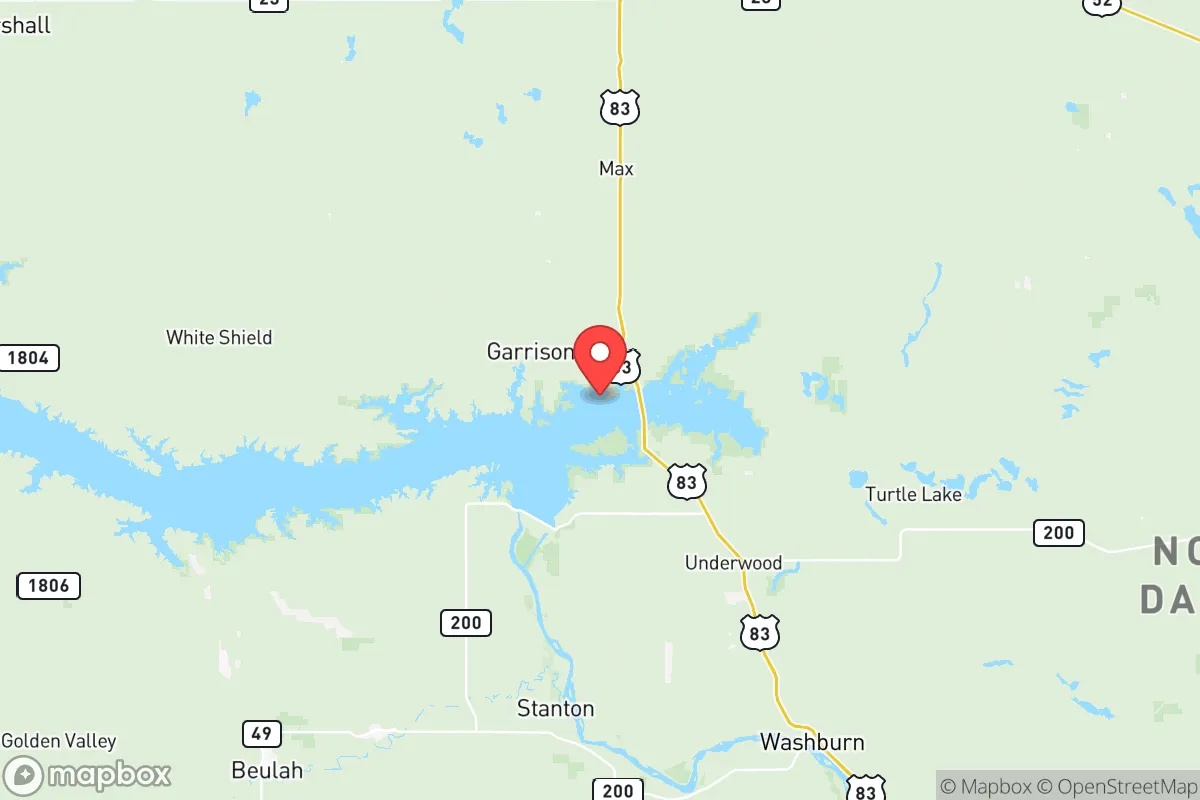
Mclean County, North Dakota, is home to roughly 9,800 residents, a population that is 88.4% white and notably older than the national median, with a strong rural character centered on agriculture and energy. The county’s people are predominantly native-born—only 1.2% are foreign-born—and its identity is shaped by a deep-rooted German-Russian and Scandinavian heritage, with small but established Native American communities. The county seat, Washburn, and the largest city, Garrison, serve as the primary hubs for a population that is spread across small towns and farmsteads, creating a tight-knit, conservative-leaning social fabric. This is a place where family history often ties directly to the land, and where the population has been slowly declining as younger generations move to urban centers.
Settlement & growth (pre-1960)
Before European settlement, the area that is now Mclean County was the homeland of the Mandan, Hidatsa, and Arikara (Three Affiliated Tribes) nations, who lived in fortified earth-lodge villages along the Missouri River. The most significant pre-contact settlement was at the site of present-day Stanton, just south of the county line, but the river bottoms within Mclean County also held seasonal camps and hunting grounds. The Lewis and Clark Expedition wintered near the county’s southern edge in 1804-1805 at Fort Mandan, just across the river from what is now Washburn, marking the first sustained American presence in the region.
American settlement began in earnest after the 1880s, driven by the Northern Pacific Railway’s expansion and the federal Homestead Act. The first major wave was of German-Russian immigrants, who arrived from the Black Sea region of the Russian Empire between 1885 and 1910, drawn by cheap land and the promise of wheat farming. These families settled heavily in the towns of Garrison, Turtle Lake, and Underwood, where they established tight-knit Lutheran and Catholic communities that still dominate the county’s cultural identity. A smaller but significant wave of Norwegian and Swedish immigrants arrived in the same period, concentrating in Washburn and Max, where they built Scandinavian-style churches and grain cooperatives.
The county’s population peaked at around 17,000 in the 1930s, fueled by a wheat boom and the construction of the Garrison Dam on the Missouri River, which began in 1947. The dam project brought a temporary influx of construction workers and engineers to Riverdale, a planned community built to house the workforce. However, the dam also flooded vast stretches of bottomland, displacing many farm families and the Fort Berthold Indian Reservation’s most fertile lands, which permanently altered the county’s demographic trajectory. By 1960, the population had already begun its long decline, as agricultural mechanization reduced the need for farm labor and younger adults left for Bismarck and the West Coast.
Modern era (post-1965)
Since the 1965 Hart-Cellar Act, Mclean County has experienced minimal international immigration, unlike many parts of the United States. The foreign-born population today stands at just 1.2%, and the county has not seen the formation of any significant immigrant enclaves. The small Hispanic population (2.0%) is largely composed of families who moved from Texas and the Southwest to work in the oil fields of the Bakken formation, which began a boom in the 2010s. These workers tend to live in temporary housing or rental properties in Garrison and Underwood, but few have put down permanent roots, as the oil industry’s boom-and-bust cycles discourage long-term settlement.
The most notable demographic shift since the 1960s has been the steady out-migration of young adults to urban areas, particularly Bismarck (30 miles south) and Minot (60 miles north). This has left the county with a median age well above the national average, and many small towns like Coleharbor and Benedict have seen their populations shrink to under 100 residents. The Native American population, which is not separately tracked in the county’s census data but is concentrated on the Fort Berthold Reservation (which overlaps the county’s western edge), has remained stable, though the reservation’s economic challenges have kept poverty rates high. The county’s racial makeup remains overwhelmingly white (88.4%), with Black residents at 0.2%, East/Southeast Asian residents at 0.3%, and Indian-subcontinent residents at 0.1%—all figures that reflect the lack of post-1965 immigration.
Suburbanization has been minimal, as the county lacks a major city. The only notable growth has been in Washburn, which has attracted a small number of retirees and telecommuters drawn to its Missouri River access and proximity to Bismarck. The county’s economy has shifted from pure agriculture to a mix of farming, oil extraction, and tourism (fishing and hunting on Lake Sakakawea), but this has not reversed the overall population decline.
The future
Mclean County’s population is projected to continue its slow decline over the next 10-20 years, as the aging cohort passes away and out-migration of young adults persists. The county’s diversity is unlikely to increase significantly, given the lack of international immigration and the transient nature of oil-field workers. The Hispanic population may grow modestly if the Bakken boom resumes, but it will likely remain a small share of the total. The Native American population on the Fort Berthold Reservation may see slight growth due to higher birth rates, but this will not offset the overall loss of white residents.
The county’s cultural identity will remain rooted in its German-Russian and Scandinavian heritage, with annual events like the Garrison German-Russian Festival and the Washburn Lewis and Clark Rendezvous reinforcing these traditions. The small towns will continue to consolidate services, with schools and churches closing in the most depopulated areas. For someone moving in now, Mclean County offers a quiet, low-cost, and safe rural lifestyle, but it is a place where the population is shrinking and the social fabric is thinning—a reality that prospective residents should weigh carefully.
In short, Mclean County is becoming an older, less populated, and more homogeneous version of its former self, with little demographic change on the horizon. For those seeking a tight-knit, traditional community with deep roots in the land, it remains a viable choice, but it is not a place of growth or increasing diversity. New arrivals will find a welcoming but insular population, where connections are built through church, school, and neighborly ties, and where the future is likely to look much like the present.

* Values derived from national, state, county, city and local statistics and may differ in a specific area. Last updated: 2026-06-22T20:02:14.000Z
Narrative content on this page is AI-generated and may contain mistakes. Verify any details that matter before acting on them.
ReloMaps may earn a commission from affiliate links at no extra cost to you.

