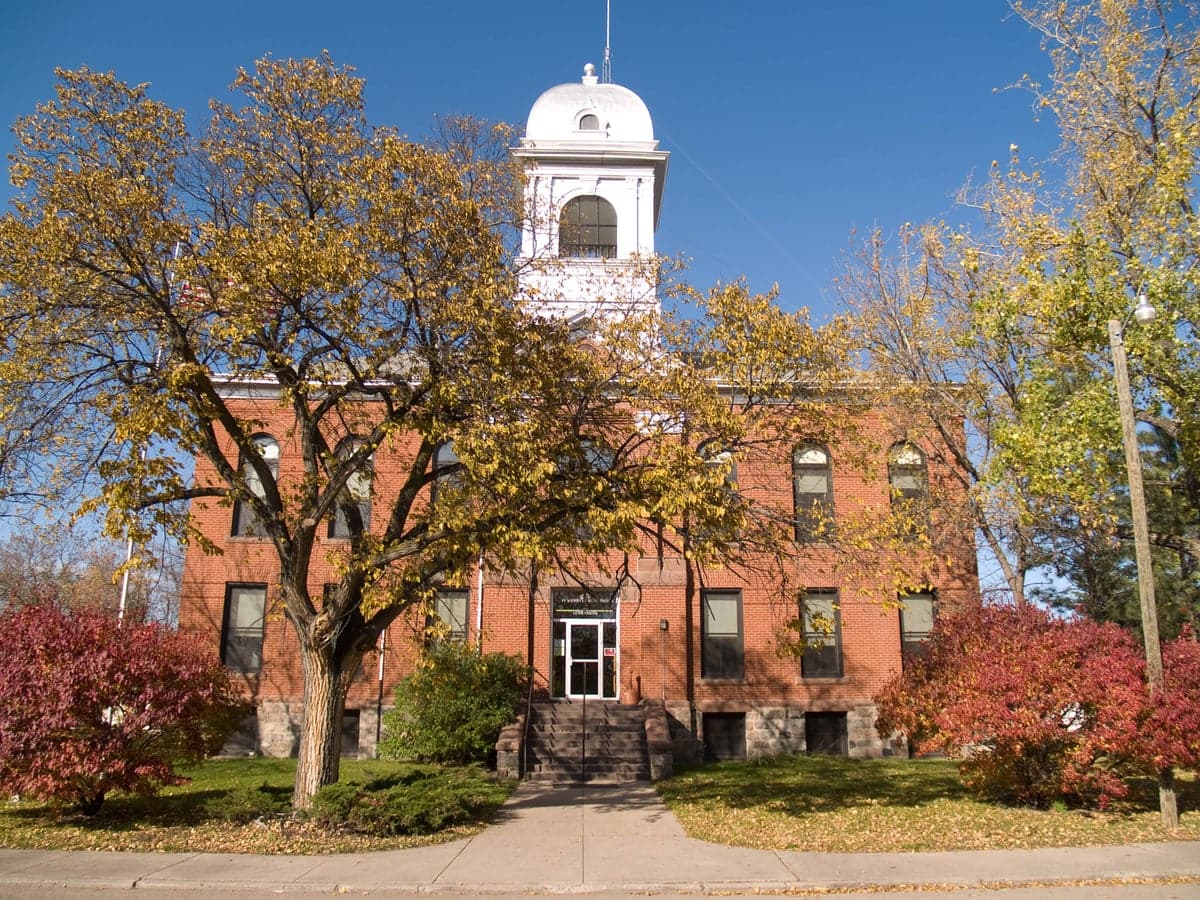
Photo: Wikipedia
Strategic Assessment of Eddy County
Strong survivability profile. Good buffer from population centers, with manageable environmental and tactical risks.
What does the Strategic Assessment tell us?
Our Strategic Assessment grades tactical survivability of an area. Major population centers, military targets, fallout zones, natural disasters, and border exposure all drive risk — lower exposure means a more defensible position in a crisis.
This is heavily inspired by Joel Skousen's Strategic Relocation book. Highly recommended you checkout the book ($)What does this tell us?
Our Strategic Assessment grades tactical survivability of an area. Major population centers, military targets, fallout zones, natural disasters, and border exposure all drive risk — lower exposure means a more defensible position in a crisis.
This is heavily inspired by Joel Skousen's Strategic Relocation book. Highly recommended you checkout the book ($)Strategic Pillars

Key Distances
Strategic Assessment Analysis
Eddy County, North Dakota, offers a compelling strategic profile for relocators prioritizing resilience, self-sufficiency, and distance from major metropolitan vulnerabilities. Its position in the north-central part of the state, anchored by the county seat of New Rockford, provides a blend of agricultural stability, low population density, and significant separation from the primary fallout and disruption risks associated with larger urban and industrial centers. For a family or individual serious about disaster readiness, this area presents a defensible, resource-rich environment with a notably low target profile.
Geographic position and natural advantages for long-term stability
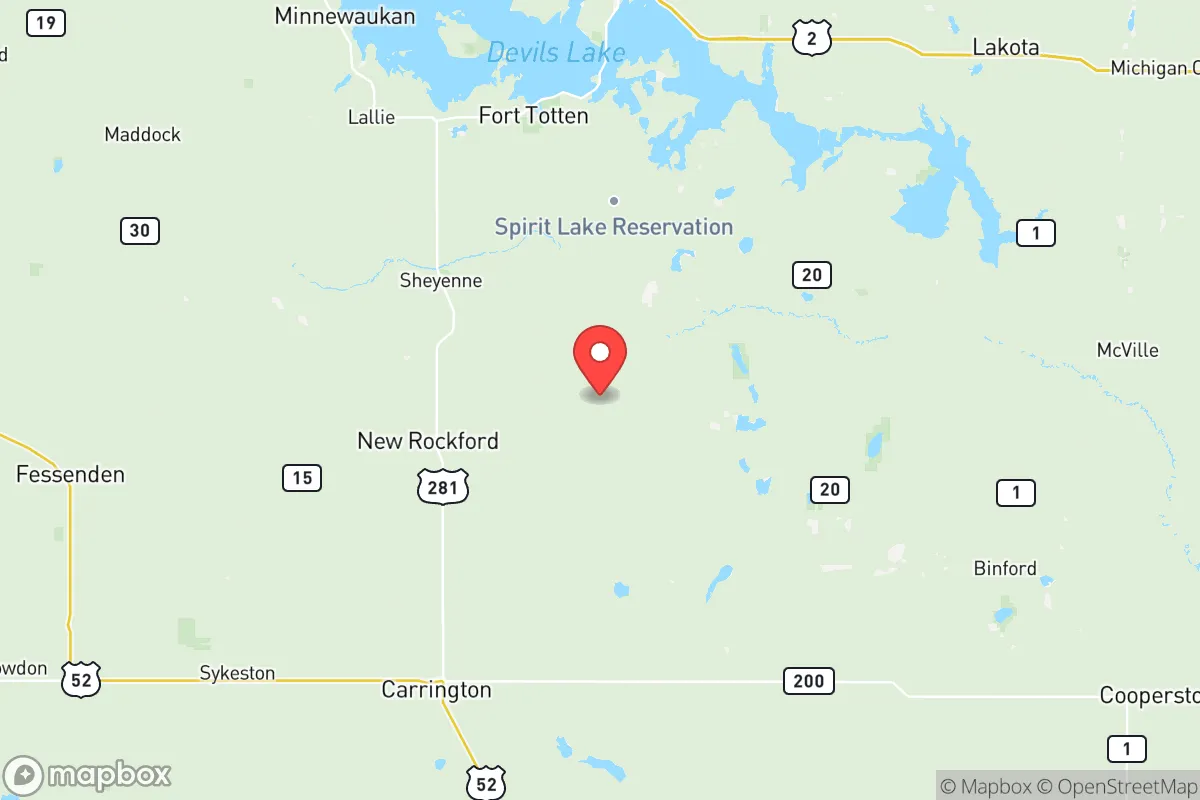
Eddy County sits in the heart of the Drift Prairie, a region characterized by gently rolling hills, numerous small lakes, and fertile soils. This geography offers several inherent advantages. The county is roughly 100 miles from the Canadian border and over 200 miles from the nearest major metropolitan area, the Minneapolis-St. Paul region. This distance is a critical buffer against the cascading failures—supply chain collapse, civil unrest, disease spread—that would likely follow a major event in a dense population center. The closest city of any significant size is Jamestown, about 40 miles south, which itself is a modest community of roughly 15,000 people. This means Eddy County residents are far from the immediate blast, fire, and fallout zones of high-value targets like oil refineries, major military installations, or large ports. The county's location within the Sheyenne River Valley provides a reliable freshwater source and supports a robust agricultural base, with local farms producing wheat, barley, sunflowers, and hay. The climate, while harsh with cold winters, is predictable and manageable with proper preparation, and the region is not prone to earthquakes, hurricanes, or wildfires on the scale seen in other parts of the country.
Risks, exposures, and proximity to potential fallout-relevant landmarks
While Eddy County's isolation is a strength, it is not without exposure. The primary man-made risk comes from its position within the broader energy and transportation infrastructure of North Dakota. The state is a major producer of oil and natural gas from the Bakken Shale formation, with key extraction and processing areas located roughly 150-200 miles to the northwest, around Williston and Minot. A major industrial accident or a targeted event at a natural gas processing plant or pipeline hub in that region could potentially create a localized chemical or radiological hazard, though prevailing winds typically carry such plumes eastward, away from Eddy County. Additionally, the Grand Forks Air Force Base, home to Global Hawk and other unmanned aircraft systems, is about 100 miles northeast. While not a primary nuclear target like Minot Air Force Base (which is a major ICBM and bomber base), it remains a military installation with strategic value. The county itself contains no major refineries, nuclear power plants, or large-scale industrial complexes, which significantly reduces its attractiveness as a direct target. The primary natural risk is severe winter weather, including blizzards and extreme cold snaps that can strand residents and disrupt power for days. The New Rockford area is also in a region with moderate tornado risk, though the frequency is lower than in the central plains.
Practical resilience for a relocator: food, water, energy, and defensibility
For a relocator focused on self-sufficiency, Eddy County offers strong fundamentals. Food security is excellent. The county is agricultural, with direct access to local producers of beef, pork, poultry, grains, and vegetables. The New Rockford Farmers Market and direct relationships with area ranchers provide a reliable local food supply that is largely independent of national grocery chains. Water availability is a major plus. The Sheyenne River and numerous glacial lakes (like Lake Minnewaukan and Lake Irvine) provide surface water, while the underlying Dakota Aquifer offers abundant groundwater for wells. Most rural properties can be equipped with a well and a backup hand pump, ensuring water independence. Energy resilience is moderate. The county is served by the rural electric cooperative Nodak Electric Cooperative, which has a reasonable reliability record, but the grid is vulnerable to ice storms and high winds. Wood is a plentiful heating fuel source from the region's shelterbelts and river-bottom forests, and solar potential is adequate for off-grid supplemental power, though winter days are short. Defensibility is a key advantage. The low population density—roughly 2,400 people across 630 square miles—means that a relocator can secure a property with significant standoff distance from neighbors and main roads. The terrain is open prairie with scattered tree lines, offering good visibility and limited avenues of approach for any potential threat. The local law enforcement presence is small but community-oriented, and the culture of mutual aid among rural residents is strong. The New Rockford area also has a small hospital and a well-stocked county emergency management office, providing a baseline of medical and coordination support.
The overall strategic picture for Eddy County is one of quiet, sustainable resilience. It is not a prepper's fortress in the mountains, but a working agricultural community with the land, water, and social fabric to weather disruptions. Its greatest strength is its low profile and distance from the high-risk corridors of the nation. The trade-offs are real: harsh winters, limited immediate access to specialized medical care or big-box retail, and a social environment that demands self-reliance and neighborly cooperation. For a family or individual who values distance from fallout zones, a secure local food and water base, and a defensible rural setting, Eddy County represents a solid, grounded choice in a volatile world. It is a place where resilience is not a hobby but a way of life, embedded in the landscape and the community.

* Values derived from national, state, county, city and local statistics and may differ in a specific area. Last updated: 2026-06-16T04:23:00.000Z
Narrative content on this page is AI-generated and may contain mistakes. Verify any details that matter before acting on them.
ReloMaps may earn a commission from affiliate links at no extra cost to you.

