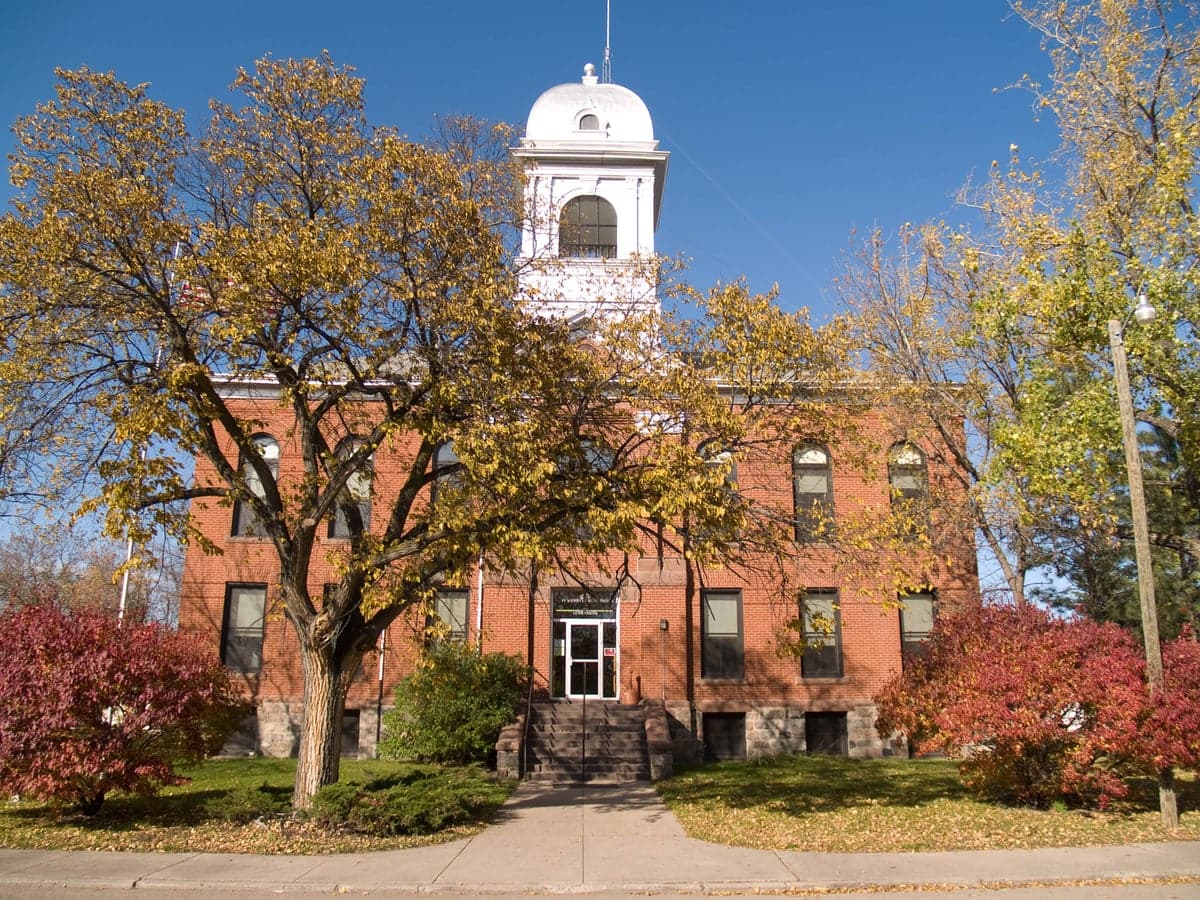
Photo: Wikipedia
Demographics of Eddy County
Affluence Level in Eddy County
A middle-class area roughly in line with national averages across income, home values, education, and employment.
People of Eddy County
Eddy County, North Dakota, is one of the most sparsely populated and demographically stable counties in the state, home to just 2,319 residents as of the most recent estimates. The population is overwhelmingly White (89.0%), with a Hispanic share of 3.9% and a foreign-born population of just 0.1%, reflecting a community shaped almost entirely by the descendants of 19th- and early 20th-century European settlers. The county's identity is rooted in its agricultural heritage, small-town civic life centered on the county seat of New Rockford, and a quiet, self-reliant character that appeals to those seeking a low-crime, rural lifestyle far from metropolitan pressures.
Settlement & growth (pre-1960)
Before European settlement, the area that is now Eddy County was part of the traditional territory of the Dakota (Sioux) people, specifically the Sisseton and Wahpeton bands, who followed bison herds and established seasonal camps along the James River and its tributaries. The United States acquired the region through the 1803 Louisiana Purchase, but sustained American presence did not begin until after the Dakota War of 1862 and the subsequent forced removal of Native peoples onto reservations, including the nearby Spirit Lake Reservation. The first permanent non-Native settlers arrived in the 1880s, drawn by the Northern Pacific Railroad's expansion and the promise of cheap, fertile land under the Homestead Act.
The dominant wave of settlement came from Scandinavian and German immigrants between 1883 and 1910. Norwegian and Swedish families filed homestead claims in the eastern part of the county, founding the communities of New Rockford (established 1883) and Sheyenne (1884). German-Russian immigrants, many from the Black Sea region, arrived slightly later and concentrated around Brantford and Munsell, bringing with them a distinctive wheat-farming culture and strong Lutheran and Catholic church traditions. The county was formally organized in 1885, and by 1910 the population had peaked at roughly 5,000 residents, supported by a thriving agricultural economy of wheat, oats, and livestock.
The decades between 1920 and 1960 saw a slow but steady population decline as farm consolidation reduced the number of family operations. The Dust Bowl of the 1930s hit the region hard, though Eddy County fared better than areas farther west due to its proximity to the James River valley. World War II drew many young men into military service and, afterward, into urban jobs in Fargo and Bismarck, accelerating the rural exodus. By 1960, the county's population had fallen to approximately 3,500, a trend that would continue for the next six decades.
Modern era (post-1965)
The 1965 Hart-Cellar Act, which reshaped U.S. immigration by eliminating national-origin quotas, had virtually no effect on Eddy County. The foreign-born population today stands at 0.1%, meaning the county has received essentially no international immigration in the modern era. Instead, the demographic story of the last 60 years has been one of domestic out-migration and aging in place. Young adults have consistently left for college and employment opportunities in larger cities, while the remaining population has grown older. The median age in Eddy County is now well above the national average, and the school district in New Rockford has consolidated with neighboring communities to maintain enrollment.
There has been a modest increase in the Hispanic population, rising from near zero in 1990 to 3.9% today. This growth is primarily attributable to Mexican-American and Central American workers employed in agricultural support roles, including dairy operations and crop processing, particularly around New Rockford and Sheyenne. These families have integrated into the local economy but have not formed distinct ethnic enclaves; the county remains overwhelmingly culturally homogeneous. The Black population is 0.0%, and there are no recorded East/Southeast Asian or Indian-subcontinent residents, reflecting the county's lack of the urban job markets or university centers that typically attract diverse populations.
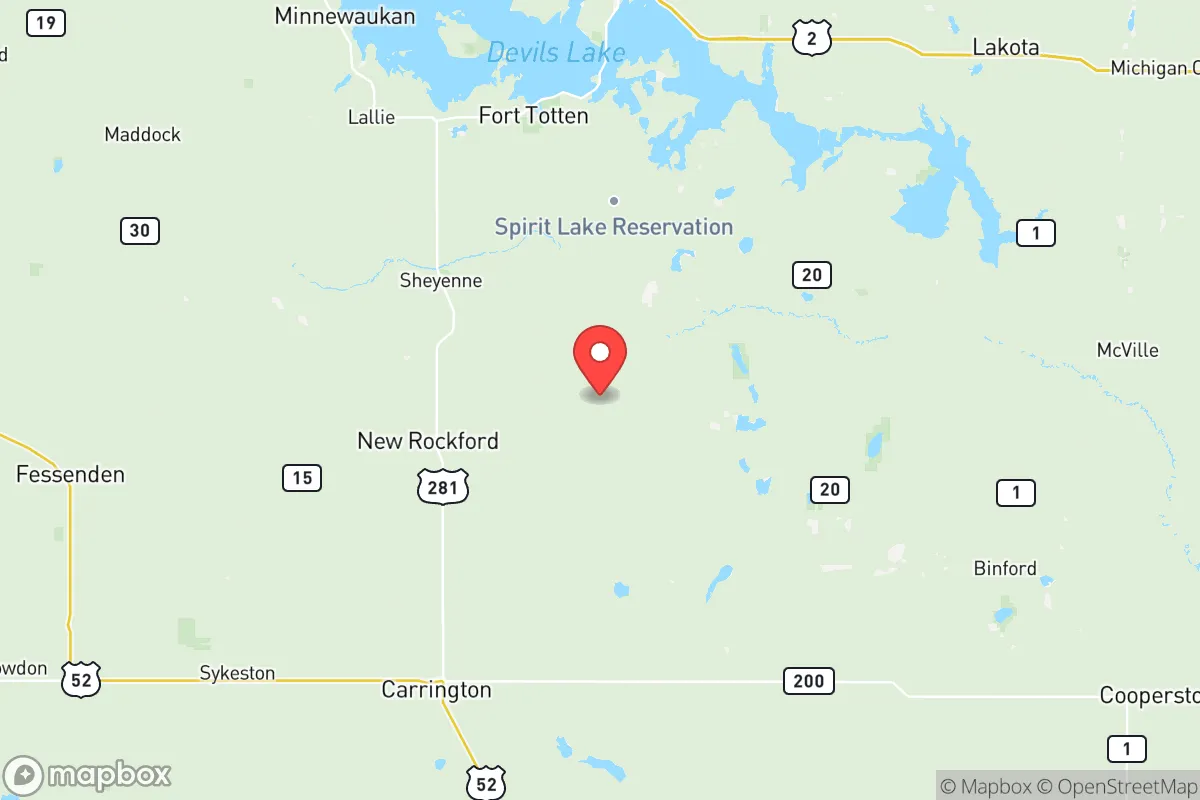
Suburbanization, a defining force in much of the United States, has not occurred in Eddy County. There are no suburbs to speak of; the only incorporated places are New Rockford (population ~1,300), Sheyenne (~200), and the unincorporated hamlets of Brantford, Munsell, and Warsaw, each with fewer than 50 residents. The county has no interstate highway and limited retail infrastructure, which has insulated it from the growth pressures seen in North Dakota's oil-producing counties to the west.
The future
Eddy County's population is projected to continue its slow decline over the next 10 to 20 years, barring a major economic shift. The county's college education rate of 28.2% is below the state average, limiting the draw for knowledge-economy jobs, and the agricultural sector is increasingly mechanized, requiring fewer workers. The aging demographic profile suggests that natural decrease (more deaths than births) will persist, and few new residents are expected to move in from outside the region. The Hispanic share may grow slightly as agricultural labor needs continue, but it is unlikely to exceed 8-10% within the next two decades.
Culturally, Eddy County will remain a predominantly White, rural, and conservative-leaning community. The county voted overwhelmingly Republican in the 2024 election, consistent with its historical voting patterns. There is no indication of significant new housing development, refugee resettlement, or industrial recruitment that would alter the demographic trajectory. The county's identity will continue to be defined by its agricultural roots, small-town institutions like the New Rockford Speedway and the annual Eddy County Fair, and a pace of life that prioritizes self-sufficiency and neighborly connection.
For someone moving in now, Eddy County offers a stable, predictable, and deeply traditional community where the population is small enough that everyone knows their neighbors. The trade-off is clear: residents gain safety, affordability, and a strong sense of place, but they accept limited economic opportunity, minimal diversity, and a shrinking population base. It is a place for those who value continuity over change, and who are comfortable being part of a community that is quietly, steadily becoming smaller.

* Values derived from national, state, county, city and local statistics and may differ in a specific area. Last updated: 2026-06-16T04:23:00.000Z
Narrative content on this page is AI-generated and may contain mistakes. Verify any details that matter before acting on them.
ReloMaps may earn a commission from affiliate links at no extra cost to you.

