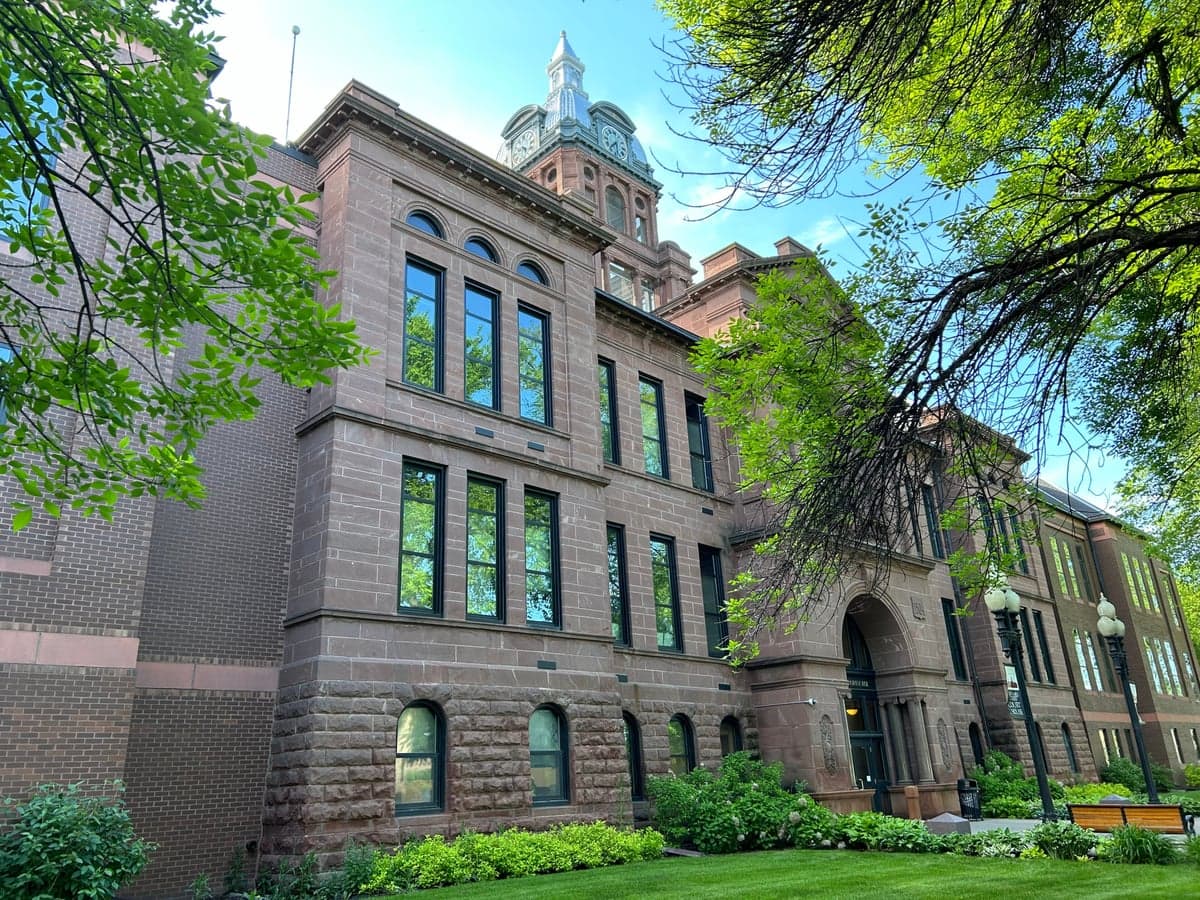
Photo: Wikipedia
Demographics of Cass County
Affluence Level in Cass County
A middle-class area roughly in line with national averages across income, home values, education, and employment.
People of Cass County
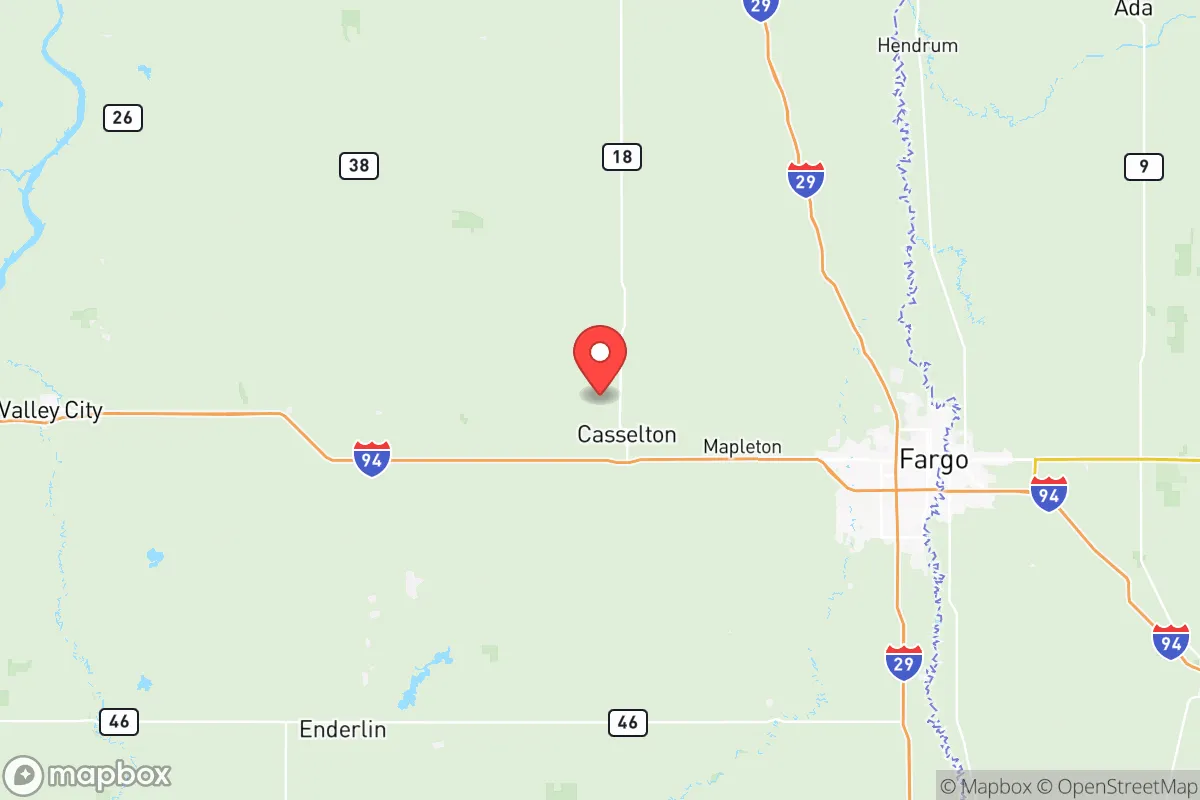
Cass County, North Dakota, is home to roughly 189,000 residents, making it the state’s most populous county and the economic and cultural anchor of the Fargo-Moorhead metropolitan area. The population is predominantly White (82.3%) with a notable Black community (6.5%) and growing Hispanic (3.5%) and East/Southeast Asian (1.7%) populations, alongside a small but established Indian-subcontinent community (1.4%). With a foreign-born share of just 4.7% and a highly educated workforce (43.3% college degree holders), Cass County today blends a historic Scandinavian and German-rooted character with a modern, midwestern urban identity shaped by waves of refugee resettlement and regional migration.
Settlement & growth (pre-1960)
Before American settlement, the Red River Valley was home to the Ojibwe (Chippewa) and Dakota (Sioux) nations, who used the region for hunting and seasonal camps. French fur traders and Métis families passed through as early as the 1700s, but permanent non-Native settlement did not begin until after the 1851 Treaty of Traverse des Sioux opened the area to homesteading. The U.S. military established Fort Abercrombie in 1857, and the first organized wave of settlers—mostly Yankees from New England and New York—arrived in the 1860s and 1870s, founding Fargo (1871) as a railroad town along the Northern Pacific line.
The great demographic shift came between 1870 and 1900, when tens of thousands of Norwegian and German immigrants poured into Cass County, drawn by the Homestead Act and the promise of cheap, fertile farmland. Norwegians concentrated in towns like Kindred, Harwood, and Mapleton, while German-Russian immigrants (often from the Black Sea region) settled around Casselton and Arthur. These groups established a deeply Lutheran, agrarian culture that dominated the county for generations. By 1900, Cass County’s population had surged past 25,000, and Fargo became the region’s commercial hub, processing wheat and flax from surrounding farms. A smaller wave of Swedish and Danish immigrants arrived in the 1880s, settling in West Fargo and rural townships. The Dust Bowl and Great Depression hit the region hard, but the county’s population held steady through the 1930s and 1940s, buoyed by Fargo’s role as a railroad and agricultural distribution center. Post-World War II, the GI Bill and the expansion of North Dakota State University (NDSU) in Fargo began attracting a more educated, urban-oriented population, though the county remained overwhelmingly White and rural-identified through the 1950s.
Modern era (post-1965)
The 1965 Hart-Cellar Act had a modest direct effect on Cass County compared to coastal regions, but its long-term impact arrived through refugee resettlement programs. Beginning in the 1980s and accelerating after 2000, Fargo became a primary resettlement site for Somali and South Sudanese refugees, drawn by affordable housing, low crime, and a strong network of nonprofit resettlement agencies. Today, the Black population (6.5%) is concentrated in Fargo and West Fargo, with Somali-owned businesses and community centers visible along Main Avenue and 13th Avenue South. A smaller but growing community of East/Southeast Asian residents (1.7%), including Vietnamese and Karen refugees from Myanmar, has settled in south Fargo and near NDSU. The Indian-subcontinent population (1.4%) is largely professional, tied to tech and healthcare jobs at Sanford Health, NDSU, and Microsoft’s Fargo campus, and is dispersed across Fargo’s newer suburbs rather than forming a single enclave. Hispanic residents (3.5%) include both Mexican-American families with multi-generational roots in the Red River Valley and newer arrivals working in construction, meatpacking, and agriculture, with small clusters in Casselton and Horace. Domestic migration since 2000 has been driven by young professionals and families from Minnesota, Wisconsin, and the Dakotas, attracted by Fargo’s relatively strong job market and low cost of living. Suburbanization has reshaped the county: West Fargo has grown from a farming village of 4,000 in 1990 to over 40,000 today, while Horace and Harwood have seen rapid new-home construction, drawing families out of central Fargo.
The future
Cass County is becoming more diverse, but slowly. The White share has declined from roughly 90% in 2000 to 82.3% today, and projections suggest it will fall to 75-78% by 2040, driven primarily by continued refugee resettlement and the aging of the non-Hispanic White population. The Black and Hispanic shares are expected to grow most rapidly, while East/Southeast Asian and Indian-subcontinent populations will increase modestly, tied to tech and healthcare job growth. New communities are concentrating in Fargo’s south side and West Fargo’s newer subdivisions, rather than dispersing into rural townships, reinforcing the metro area’s urban-suburban character. The county’s cultural identity is evolving from a historically Scandinavian-German, Lutheran agrarian base toward a more pluralistic, midwestern-urban identity—still family-oriented and conservative-leaning, but with visible immigrant communities and a growing professional class. For someone moving in now, Cass County offers a stable, growing economy and a population that is becoming more diverse in a measured, organic way, without the rapid demographic churn seen in larger Sun Belt metros.
Cass County is becoming a moderately diverse, education-driven midwestern hub where historic Scandinavian and German roots coexist with growing African, Asian, and Hispanic communities. For a relocating family or individual, the county offers a stable job market anchored by healthcare, tech, and agriculture, a strong public school system, and a population that is slowly but steadily diversifying—making it a practical, low-risk choice for those seeking opportunity without the volatility of faster-growing regions.

* Values derived from national, state, county, city and local statistics and may differ in a specific area. Last updated: 2026-07-12T08:17:42.000Z
Narrative content on this page is AI-generated and may contain mistakes. Verify any details that matter before acting on them.
ReloMaps may earn a commission from affiliate links at no extra cost to you.

