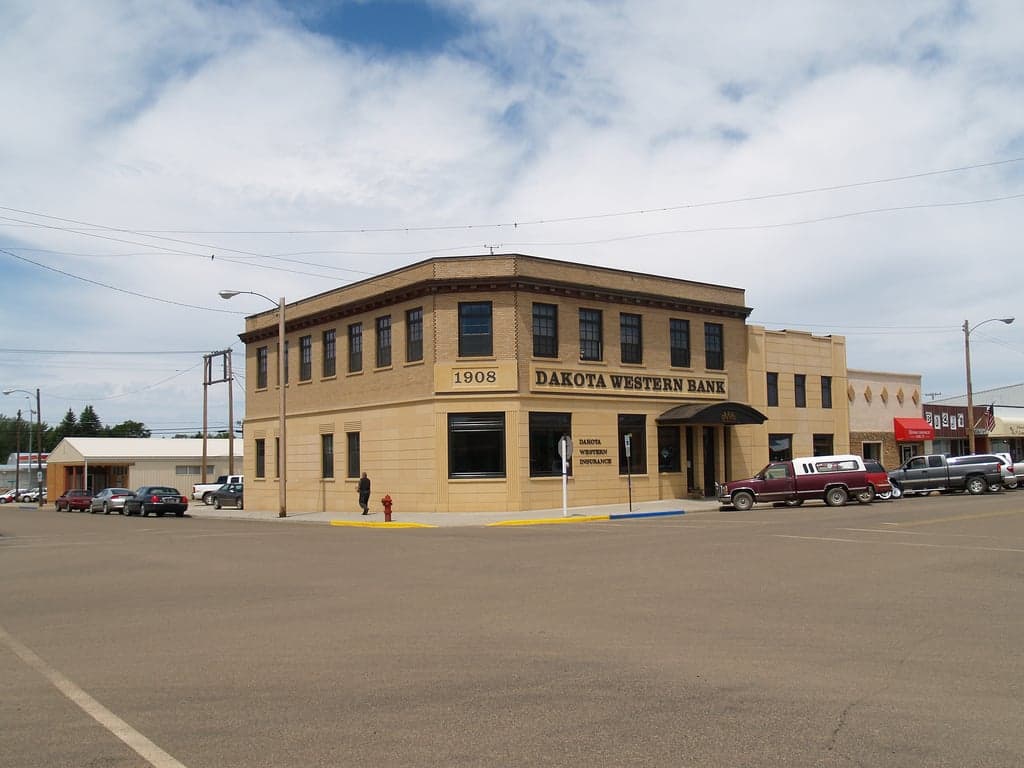
Photo: Wikipedia
Quality of Life in Bowman County
A livable area that tracks near national norms for affordability, walkability, and neighborhood health.
What does Quality of Life tell us?
Quality of Life measures an area by evaluating factors like cost of living, nearby amenities, country club access, airport proximity, socioeconomic signals and neighborhood character. For large states, this is a general average — quality of life can vary dramatically between metro areas, suburbs, and rural communities within the same state.
What does this tell us?
Quality of Life measures an area by evaluating factors like cost of living, nearby amenities, country club access, airport proximity, socioeconomic signals and neighborhood character. For large states, this is a general average — quality of life can vary dramatically between metro areas, suburbs, and rural communities within the same state.
Cost of Living
30% below national average
166%
The Real Cost of Living in Bowman County for 2026
| Tier | Individual | Family (4) |
|---|---|---|
| Survival | $14k | $26k |
| Comfortable | $34k | $50k |
| Luxury | $105k+ | $163k+ |
| Elite (Top 5%) | $124k+ | $192k+ |
Quality-of-Life Analysis
Bowman County, North Dakota, offers a quality-of-life spectrum that ranges from the modest commercial hub of Bowman to the quiet, unincorporated crossroads of Rhame and Scranton, with vast stretches of open prairie in between. This county attracts a specific type of resident: those who value low costs, short commutes, and wide-open spaces over urban amenities. The county's character is defined by its agricultural roots and energy-sector employment, drawing families seeking affordability, retirees looking for peace, and workers in oil, gas, and farming who need a stable, low-stress base.
Largest town(s) & population centers
The county seat and largest community is Bowman, home to roughly 1,500 residents. Daily life here centers on a walkable downtown with a grocery store, a hardware store, a public library, and a handful of local eateries. Bowman serves as the retail and service hub for the entire county, hosting the Bowman County School District (K-12), a critical access hospital, and the Bowman Regional Airport. Commute times are negligible — the county average is just 18 minutes — so most residents can reach work, school, or errands in minutes. The town's economy is anchored by agriculture, energy services, and the Bowman County Courthouse, providing stable employment for families who prefer a small-town pace with basic conveniences.
Smaller towns & rural pockets
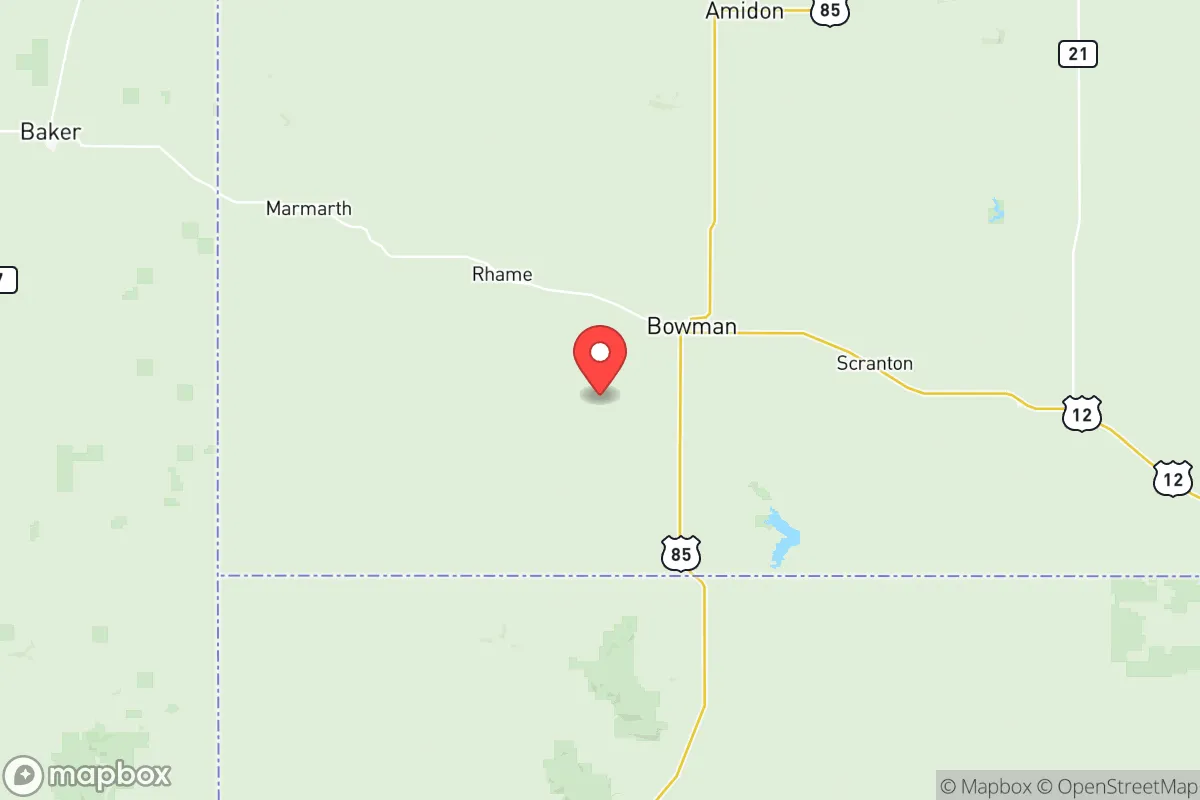
Outside Bowman, the county's smaller communities offer a quieter, more isolated lifestyle. Rhame, with a population under 200, sits along the Little Missouri River and is a classic Plains hamlet with a post office, a bar, and a grain elevator. Scranton, slightly larger at around 250 residents, has a K-12 school and a few local businesses, but residents typically commute to Bowman for groceries and healthcare. Unincorporated areas like Gascoyne and Amidon are little more than crossroads with a handful of homes, where the nearest gas station or restaurant may be 20 miles away. These pockets appeal to ranchers, hunters, and those seeking absolute privacy on large acreages, where the nearest neighbor might be a mile down a gravel road.
Cost & lifestyle range
The cost of living across Bowman County is uniformly low, but the trade-offs between town and rural life are stark. Bowman offers the highest amenity density: a cost of living index of 70 (30% below the U.S. average), with a median home value of $176,400 and median rent of $869. A family in Bowman can buy a three-bedroom home for under $200,000 and walk to the grocery store. In Rhame or Scranton, housing is even cheaper — a fixer-upper might sell for under $100,000 — but residents sacrifice access to services. There is no hospital in Rhame; the nearest is 20 miles away in Bowman. Rural properties on large lots near Gascoyne or Amidon offer the lowest prices per acre, but require a vehicle for every errand. At the high end of the spectrum, a newer home on a few acres just outside Bowman might approach $300,000, still far below national averages. The lifestyle range is simple: Bowman provides walkable small-town life with basic services; the smaller towns and rural areas offer solitude and land at rock-bottom prices, with a longer drive for everything.
Bowman County is best suited for people who prioritize affordability, short commutes, and a quiet, self-sufficient lifestyle. Families who want a good school and a safe environment will find Bowman ideal. Retirees and remote workers who value low housing costs and minimal traffic will thrive in any of the county's communities. Those who need urban entertainment, specialized healthcare, or diverse job markets should look elsewhere. For anyone seeking a low-cost, low-stress base in the northern Plains, Bowman County delivers a clear, honest value proposition.

Crime in Bowman County
Generally safer than 65% of comparable U.S. locations.
Violent CrimeViolent Crime Analysis
Property CrimeProperty Crime Analysis
Crime Analysis
Bowman County, North Dakota, is a rural, sparsely populated area in the state's far southwest corner that experiences crime rates significantly below national averages, though property crime remains a more tangible concern for residents than violent offenses. With a population of roughly 3,200, the county's violent crime rate of 235.4 per 100,000 people and property crime rate of 1,471.7 per 100,000 place it in a relatively safe position compared to both state and national benchmarks. The county seat of Bowman and the smaller town of Scranton serve as the primary population centers, where most reported incidents occur.
Crime in context
Bowman County's violent crime rate of 235.4 per 100,000 is roughly 37% lower than the national average of about 380 per 100,000, though it sits slightly above the North Dakota state average of approximately 210 per 100,000. The property crime rate of 1,471.7 per 100,000 is about 23% below the national average of 1,910 per 100,000 and closely aligns with the state average for rural counties. For context, neighboring Slope County to the north and Adams County to the east report similarly low violent crime figures, while the larger city of Dickinson in Stark County—about 50 miles northeast—sees elevated property crime rates due to its larger population and oil-boom-related transient workforce. Bowman County's numbers are a fraction of those seen in North Dakota's urban centers like Fargo or Grand Forks, where property crime rates can exceed 3,000 per 100,000.
What residents experience
Residents of Bowman County most commonly encounter property crimes such as theft from vehicles, burglary of unoccupied farm structures, and occasional vandalism—typical for an agricultural region with scattered homesteads and seasonal oil-field workers. Violent crime is rare, with the county recording zero homicides in most years; the 235.4 rate typically reflects a small number of aggravated assaults, often stemming from domestic disputes or bar altercations in Bowman's downtown area. The Bowman County Sheriff's Office, based in Bowman, provides primary law enforcement, while the North Dakota Highway Patrol handles traffic enforcement on U.S. Highway 85, a major north-south route through the county. The local judicial system, overseen by the Southwest Judicial District with courts in Bowman and Dickinson, has a reputation for conservative sentencing practices that prioritize victim rights and public safety over progressive offender rehabilitation programs—a factor that contributes to the county's low recidivism and general sense of security.
Neighborhood-level variation
Safety in Bowman County is relatively uniform, but subtle differences exist between the county's small communities. The town of Bowman, with about 1,700 residents, sees the highest concentration of reported incidents—primarily minor thefts and disorderly conduct near the bars along Main Street and the industrial areas near the railroad tracks. The village of Scranton, 15 miles south, reports almost no violent crime and only occasional property offenses, making it one of the safest spots in the county. Rural areas outside these towns, including the unincorporated communities of Rhame and Griffin, experience negligible crime, though isolated thefts from farm equipment and outbuildings occur. The county's proximity to the oil fields of the Bakken formation in western North Dakota brings a transient population that can increase property crime risk near motels and campgrounds along Highway 85, but overall, Bowman County remains one of the safest rural counties in the state for families and retirees seeking a low-crime environment.
* Values derived from national, state, county, city and local statistics and may differ in a specific area. Last updated: 2026-08-14T01:08:23.000Z
Narrative content on this page is AI-generated and may contain mistakes. Verify any details that matter before acting on them.
ReloMaps may earn a commission from affiliate links at no extra cost to you.

