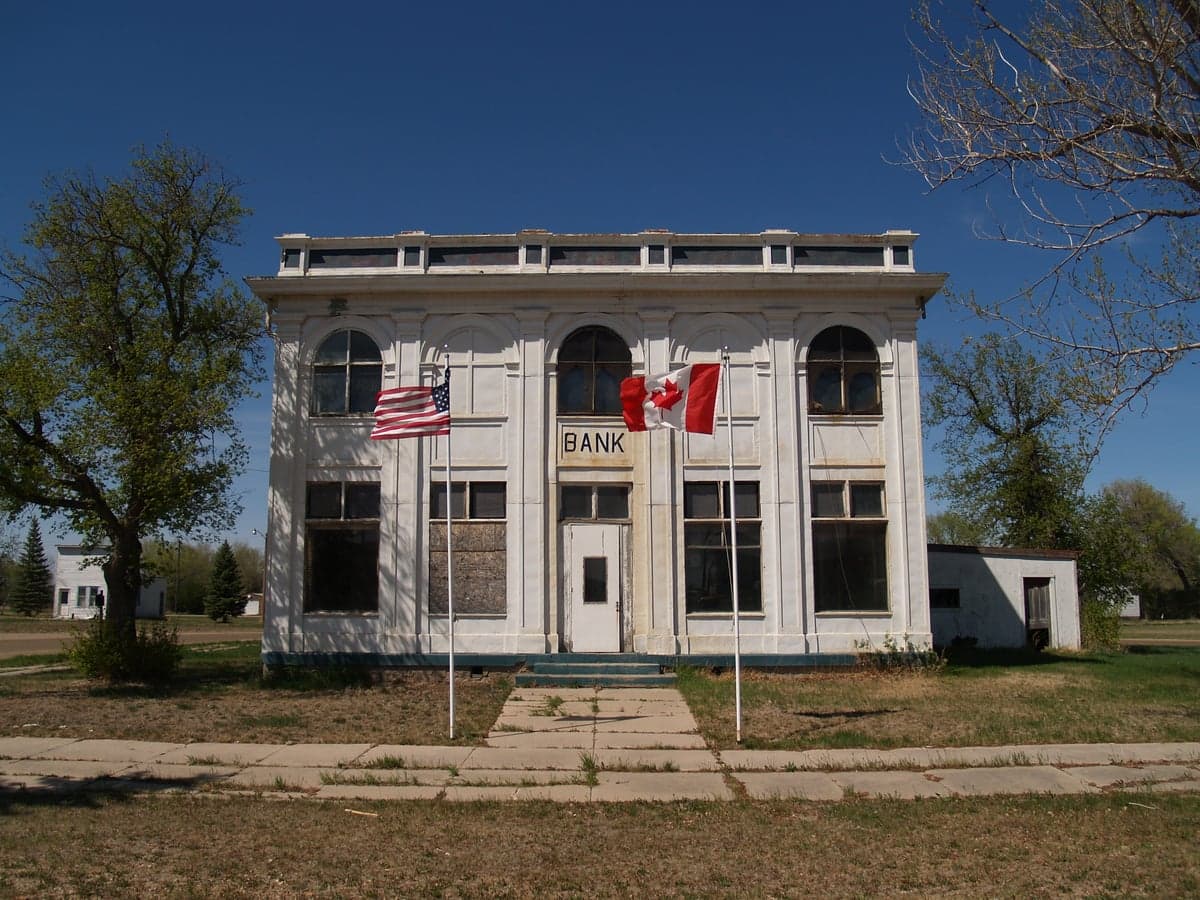
Photo: Wikipedia
Quality of Life in Bottineau County
A livable area that tracks near national norms for affordability, walkability, and neighborhood health.
What does Quality of Life tell us?
Quality of Life measures an area by evaluating factors like cost of living, nearby amenities, country club access, airport proximity, socioeconomic signals and neighborhood character. For large states, this is a general average — quality of life can vary dramatically between metro areas, suburbs, and rural communities within the same state.
What does this tell us?
Quality of Life measures an area by evaluating factors like cost of living, nearby amenities, country club access, airport proximity, socioeconomic signals and neighborhood character. For large states, this is a general average — quality of life can vary dramatically between metro areas, suburbs, and rural communities within the same state.
Cost of Living
34% below national average
153%
The Real Cost of Living in Bottineau County for 2026
| Tier | Individual | Family (4) |
|---|---|---|
| Survival | $12k | $23k |
| Comfortable | $37k | $55k |
| Luxury | $151k+ | $234k+ |
| Elite (Top 5%) | $179k+ | $277k+ |
Quality-of-Life Analysis
Bottineau County, North Dakota, offers a distinct quality-of-life spectrum that ranges from the modest amenities of its county seat to the quiet self-reliance of its remote prairie hamlets. With a cost of living index of 66—well below the national average of 100—the county attracts a mix of outdoor enthusiasts, agricultural workers, and remote professionals seeking affordability and space. The character of daily life shifts noticeably depending on whether you live in the largest town, a smaller village, or an isolated farmstead, each offering a different balance of convenience, community, and solitude.
Largest town(s) & population centers
Bottineau, the county seat and home to roughly 2,100 residents, is the undisputed hub. Daily life here centers on a compact downtown with essential services: a grocery store, a hardware store, a clinic, and a handful of restaurants and cafes. The presence of Dakota College at Bottineau brings a small but steady student population and cultural events like theater productions and guest lectures that are rare in surrounding communities. The Bottineau Winter Park, just 12 miles north, provides skiing, snowboarding, and snowshoeing in winter, while Lake Metigoshe State Park offers summer swimming, fishing, and hiking. Commute times average just 19 minutes countywide, and in Bottineau itself most errands are a five-minute drive. The town’s median home value of $190,900 and median rent of $763 make homeownership attainable for many, though inventory is limited. This is the county’s best option for families who want schools, a library, and a modest social scene without leaving the county.
Smaller towns & rural pockets
Beyond Bottineau, the county’s smaller communities offer a quieter, more agrarian rhythm. Westhope (pop. ~330) sits near the Canadian border and is a classic grain-elevator town with a post office, a gas station, and a strong sense of neighborly obligation. Landa (pop. ~40) and Kramer (pop. ~30) are unincorporated hamlets where the nearest grocery store is a 20-minute drive. Souris (pop. ~60) and Willow City (pop. ~150) each have a bar or café that doubles as the community bulletin board. In these pockets, daily life revolves around farming schedules, church suppers, and volunteer fire departments. Internet access is improving but can still be spotty in the most remote stretches, making satellite or fixed wireless a necessity for remote work. These areas appeal to those who value privacy, low property taxes, and the ability to own acreage—often at prices well below the county median home value.
Cost & lifestyle range
The cost of living across Bottineau County is uniformly low, but the trade-offs between town and country are stark. In Bottineau, a three-bedroom home near the college might list for $210,000–$230,000, while a comparable house in Westhope or Willow City could sell for $120,000–$150,000. Rent in the county seat averages $763, but in smaller towns, rental units are scarce and often informal—a landlord might rent a farmhouse for $500–$600. Utilities are higher in rural areas due to well water, septic systems, and propane heating, which can add $150–$300 monthly compared to town services. Amenities follow the same gradient: Bottineau has a hospital, a pharmacy, and a weekly farmers market; Westhope has a clinic open two days a week; Landa and Kramer have none. For groceries, Bottineau residents have a full supermarket, while those in Souris or Willow City typically drive 20–30 minutes to Bottineau or to Minot (45 minutes south) for major shopping. The lifestyle range thus runs from compact convenience in Bottineau to deep rural independence in the county’s northern and eastern townships, with the latter demanding more self-sufficiency in exchange for lower housing costs and greater land.
The people who thrive in Bottineau County are those who value predictability, low financial pressure, and a direct connection to the land. Retirees on fixed incomes find the low cost of living and quiet pace appealing. Young families willing to drive for work or school can buy a home here for a fraction of what they would pay in Fargo or Bismarck. Remote workers with reliable internet can enjoy the solitude of a farmhouse near the Turtle Mountains. But the county is not for those seeking urban energy, diverse dining, or rapid career growth—its strengths are stability, affordability, and a community where neighbors still know each other’s names. For the right person, that combination is hard to beat anywhere in the upper Midwest.

Crime in Bottineau County
Generally safer than 66% of comparable U.S. locations.
Violent CrimeViolent Crime Analysis
Property CrimeProperty Crime Analysis
Crime Analysis
Bottineau County, located along the Canadian border in north-central North Dakota, reports a violent crime rate of 237.8 per 100,000 residents and a property crime rate of 1,477.3 per 100,000, placing it above the national average for property offenses but below many larger, more urbanized counties in the state. The county's overall safety picture is shaped by its small-town character, with the city of Bottineau serving as the primary population and commercial hub, while outlying communities like Westhope, Landa, and Souris experience significantly lower incident volumes. Residents and prospective movers should weigh these statistics against the county's rural geography, limited law enforcement resources, and the proximity to the Turtle Mountain Indian Reservation, which introduces distinct jurisdictional and crime-reporting dynamics.
Crime in context
Bottineau County's violent crime rate of 237.8 per 100,000 is roughly 40% higher than the North Dakota state average of 170 per 100,000 but still well below the national rate of approximately 380 per 100,000. The property crime rate of 1,477.3 per 100,000, however, exceeds both the state average (1,200 per 100,000) and the national average (1,100 per 100,000), driven largely by thefts and burglaries in and around the city of Bottineau. Compared to larger North Dakota counties like Cass (Fargo) or Burleigh (Bismarck), Bottineau County's violent crime is lower, but its property crime rate is proportionally higher given its population size. The county falls under the jurisdiction of the Northeast Central Judicial District, which covers Bottineau, McHenry, Pierce, and Rolette counties; this district has not adopted the progressive prosecutorial policies seen in some urban areas, meaning offenders face more traditional sentencing and supervision.
What residents experience
Residents of Bottineau County most commonly encounter property crimes such as vehicle break-ins, shed burglaries, and theft of farm equipment or recreational vehicles, particularly in unincorporated areas and smaller towns like Willow City and Maxbass. Violent crime is rare but not absent, with incidents concentrated in the city of Bottineau itself, often involving domestic disputes or alcohol-related altercations. The county's law enforcement is provided by the Bottineau County Sheriff's Office, which covers 1,697 square miles with a small staff, meaning response times in remote areas like Antler or Kramer can exceed 30 minutes. The presence of the Turtle Mountain Band of Chippewa reservation to the north introduces cross-jurisdictional issues; while the reservation's crime rates are higher, they are not included in Bottineau County's official statistics, which can give a slightly misleading impression of overall safety in the region. Residents in the county's southern and western townships generally report feeling safer than those in Bottineau city limits, where the majority of reported incidents occur.
Neighborhood-level variation is modest but discernible. The city of Bottineau's core, near the downtown commercial district and the Bottineau Winter Park area, sees higher foot traffic and a corresponding uptick in petty theft and vandalism. In contrast, the residential neighborhoods along the Lake Metigoshe corridor and the rural subdivisions around Overly and Russell experience very low crime, with most incidents being isolated thefts from unlocked vehicles. Prospective residents should note that Bottineau County's justice system, operating under the Northeast Central Judicial District, has not adopted the lenient, progressive policies seen in some larger metro areas—such as no-cash-bail or diversion-heavy programs—meaning that convicted offenders are more likely to face jail time and supervised probation. This traditional approach contributes to a lower recidivism rate and a sense of accountability that many residents cite as a reason they feel secure in their communities. For those considering relocation, the safest housing options are in the outlying townships and lake-area properties, while the city of Bottineau requires standard precautions like locking vehicles and securing outbuildings.
* Values derived from national, state, county, city and local statistics and may differ in a specific area. Last updated: 2026-11-15T23:20:11.000Z
Narrative content on this page is AI-generated and may contain mistakes. Verify any details that matter before acting on them.
ReloMaps may earn a commission from affiliate links at no extra cost to you.

