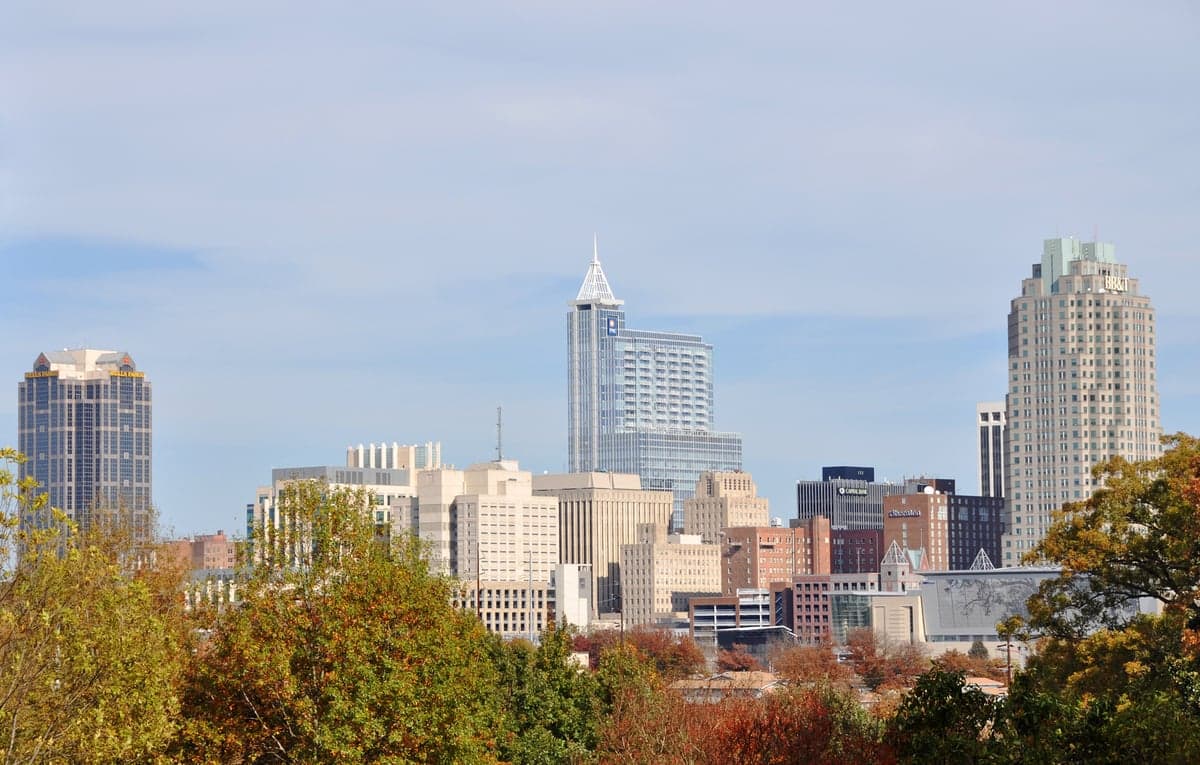
Photo: Wikipedia
Quality of Life in Wake County
A livable area that tracks near national norms for affordability, walkability, and neighborhood health.
What does Quality of Life tell us?
Quality of Life measures an area by evaluating factors like cost of living, nearby amenities, country club access, airport proximity, socioeconomic signals and neighborhood character. For large states, this is a general average — quality of life can vary dramatically between metro areas, suburbs, and rural communities within the same state.
What does this tell us?
Quality of Life measures an area by evaluating factors like cost of living, nearby amenities, country club access, airport proximity, socioeconomic signals and neighborhood character. For large states, this is a general average — quality of life can vary dramatically between metro areas, suburbs, and rural communities within the same state.
Cost of Living
38% above national average
84%
The Real Cost of Living in Wake County for 2026
| Tier | Individual | Family (4) |
|---|---|---|
| Survival | $24k | $45k |
| Comfortable | $82k | $121k |
| Luxury | $178k+ | $277k+ |
| Elite (Top 5%) | $210k+ | $325k+ |
Quality-of-Life Analysis
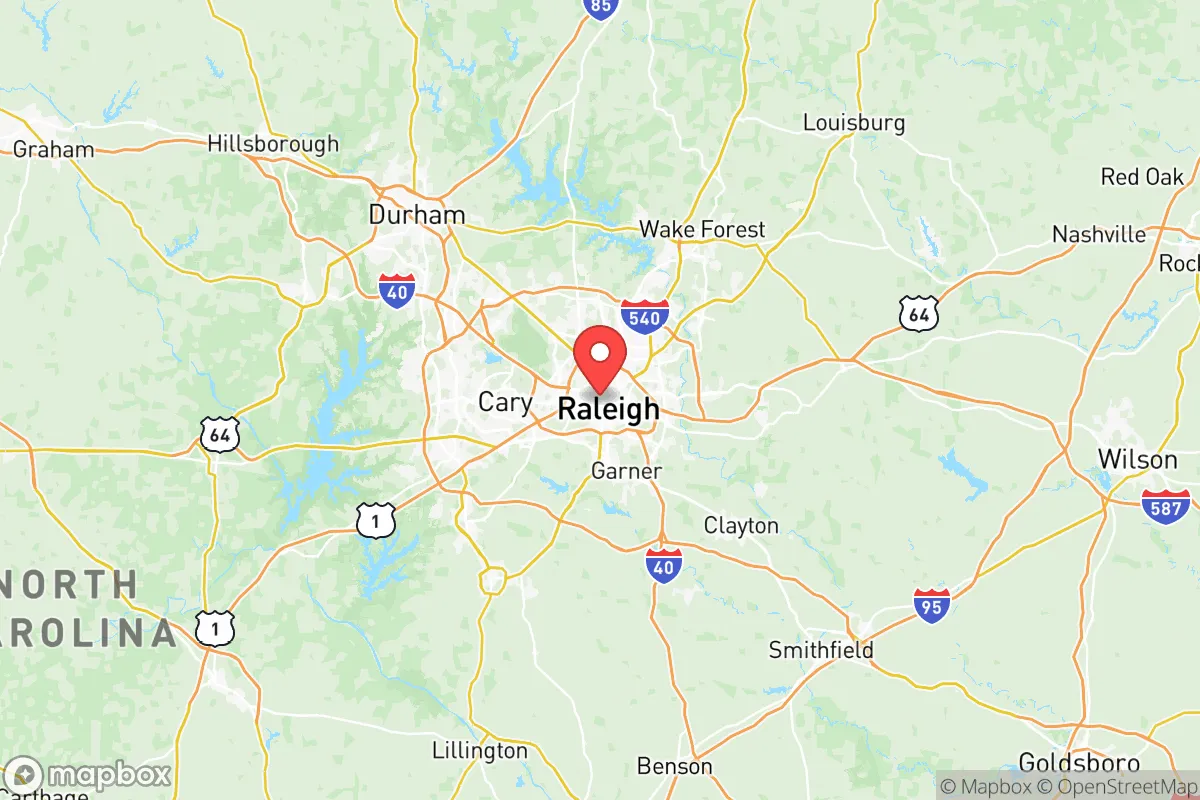
Wake County, North Carolina, offers a broad quality-of-life spectrum that ranges from the dense, amenity-rich urban core of Raleigh to quiet, unincorporated crossroads and working farms, making it a county where both tech executives and rural homesteaders can find a fit. The county’s character is defined by this internal contrast: roughly 60% of its land remains in agricultural or undeveloped use, yet its population centers are among the fastest-growing in the Southeast. People are drawn to the county’s eastern and southern rural pockets for land and lower taxes, while the western and northern suburbs attract professionals commuting to Research Triangle Park (RTP) and downtown Raleigh.
Largest town(s) & population centers
Raleigh, the state capital and the county seat, is the dominant population center with over 470,000 residents. Daily life here is defined by a dense job market anchored by state government, NC State University, and dozens of tech and biotech firms in the nearby RTP. The city offers walkable neighborhoods like the Warehouse District and Cameron Village, a robust bus and light-rail-adjacent bus system (GoRaleigh), and a nationally recognized food scene. Cary, the county’s second-largest town (pop. ~180,000), is often cited as one of the safest cities in the U.S. and is a magnet for families seeking top-rated Wake County Public Schools and a suburban, master-planned environment with extensive greenway trails. Apex (pop. ~75,000) and Morrisville (pop. ~30,000) round out the western suburban corridor, with Morrisville offering the shortest average commute to RTP—often under 15 minutes—and Apex known for its historic downtown and high home values that often exceed the county median of $422,800.
Smaller towns & rural pockets
East of the urban crescent, Zebulon (pop. ~7,000) and Wendell (pop. ~10,000) retain a small-town, agricultural feel with working tobacco and soybean farms still visible along NC-97. Zebulon’s downtown is anchored by the historic Little River Railroad Depot, and its housing stock includes many pre-1960s homes priced well below the county median—often in the $250,000–$350,000 range. Fuquay-Varina (pop. ~35,000) in southern Wake County has grown rapidly but still maintains a distinct dual-downtown character (the original Fuquay Springs and Varina), with newer subdivisions pushing into former pine forests. The unincorporated community of New Hill, near the Chatham County line, is a true rural pocket with large-lot homes, horse farms, and no municipal services; residents rely on wells and septic systems. Rolesville (pop. ~12,000) in northern Wake County is another small town experiencing infill development, yet its zoning still allows for 2+ acre lots in many areas, preserving a semi-rural feel.
Cost & lifestyle range
The county’s overall cost-of-living index of 138 (38% above the U.S. average) masks a wide internal spread. At the high end, North Raleigh’s 27614 zip code and Cary’s 27519 zip code see median home values exceeding $600,000, with many homes on half-acre or larger lots near the Falls Lake recreation area. These areas offer the shortest commutes to RTP (often under 20 minutes) and access to premium amenities like the Prestonwood Country Club and the Umstead State Park trail system. At the lower end, Zebulon and Wendell offer median home values around $320,000–$370,000, and rents that can fall below the county median of $1,508 for a two-bedroom apartment. The average commute across the county is 25.3 minutes, but residents in eastern Wake County often face 35–45 minute drives to RTP or downtown Raleigh, while those in Morrisville or Cary may have commutes under 15 minutes. Property taxes in Wake County are uniform at the county level ($0.68 per $100 of assessed value as of 2025), but municipal taxes add 10–20 cents more in Raleigh and Cary, while unincorporated areas like New Hill pay only the county rate—a meaningful difference for budget-conscious buyers.
Wake County works best for people who want access to a major metro economy—with its jobs, universities, and cultural venues—but also value the ability to choose a distinctly different daily environment, from a downtown condo to a 10-acre farm. Families prioritizing schools and safety gravitate to the western suburbs, while those seeking land and lower housing costs find opportunity in the eastern towns. The county’s internal diversity means that no single lifestyle dominates, and the trade-off is usually between commute time and space or price.

Crime in Wake County
Crime rates similar to the national median for U.S. locations.
Violent CrimeViolent Crime Analysis
Property CrimeProperty Crime Analysis
Crime Analysis
Wake County, home to Raleigh and a rapidly growing population exceeding 1.2 million, presents a mixed safety profile that demands careful attention from potential residents. The county’s overall violent crime rate of 299.4 per 100,000 residents sits slightly below the national average of roughly 380 per 100,000, but its property crime rate of 1,659.9 per 100,000 is notably higher than the national figure of about 1,950 per 100,000. However, these countywide averages mask significant variation between municipalities and neighborhoods, and the progressive judicial philosophy prevalent in the region creates genuine concerns about public safety and recidivism.
Crime in context
Compared to North Carolina’s statewide violent crime rate of approximately 350 per 100,000, Wake County’s 299.4 figure appears favorable, but the picture is more nuanced. The county’s property crime rate is actually 15% higher than the state average of roughly 1,440 per 100,000, driven largely by thefts and vehicle break-ins in high-traffic areas. Raleigh, the county seat, reports a violent crime rate of about 320 per 100,000, while smaller towns like Apex and Cary consistently record rates below 150 per 100,000. The disparity is stark: Raleigh and Garner account for the majority of the county’s violent offenses, while Fuquay-Varina and Holly Springs maintain some of the lowest crime rates in the region. The Wake County District Attorney’s office, under progressive leadership, has implemented diversion programs and reduced prosecutions for certain non-violent offenses, a policy that critics argue emboldens repeat offenders and undermines deterrence.
What residents experience
Daily life in Wake County varies dramatically by location. In downtown Raleigh, residents report frequent property crimes—bicycle thefts, car break-ins, and package thefts—while violent incidents like aggravated assaults are concentrated near entertainment districts and transit hubs. Suburban communities like Cary and Morrisville experience far fewer incidents, with residents citing well-lit streets, active neighborhood watch programs, and responsive police departments as key factors. However, the county’s rapid growth has strained law enforcement resources; response times in newly developed areas can exceed 15 minutes. The progressive criminal justice reforms championed by local judges, including reduced cash bail and expanded pretrial release, have led to a noticeable increase in repeat property offenders cycling through the system. For families, this means that even in safer suburbs, vigilance about locking cars and securing homes is essential, as property crime rings often target multiple jurisdictions in a single night.
Neighborhood-level variation
The safest enclaves in Wake County are western and southern suburbs like Apex, Holly Springs, and Fuquay-Varina, where violent crime rates hover near 100 per 100,000 and property crime rates are roughly half the county average. In contrast, northeastern Raleigh and parts of Garner report violent crime rates exceeding 400 per 100,000, driven by gang activity and drug-related offenses. The Wake Forest and Rolesville areas, while growing rapidly, have seen property crime rise by 12% since 2022 as new construction attracts transient theft crews. Prospective residents should examine block-level crime maps and consider that the county’s progressive district attorney, Lorrin Freeman, has faced criticism for declining to prosecute certain low-level felonies, a policy that may embolden offenders in higher-crime corridors. For those prioritizing safety, the western suburbs offer the strongest combination of low crime rates and conservative-leaning local governance that emphasizes law and order.
* Values derived from national, state, county, city and local statistics and may differ in a specific area. Last updated: 2026-05-08T06:59:30.000Z
Narrative content on this page is AI-generated and may contain mistakes. Verify any details that matter before acting on them.
ReloMaps may earn a commission from affiliate links at no extra cost to you.

