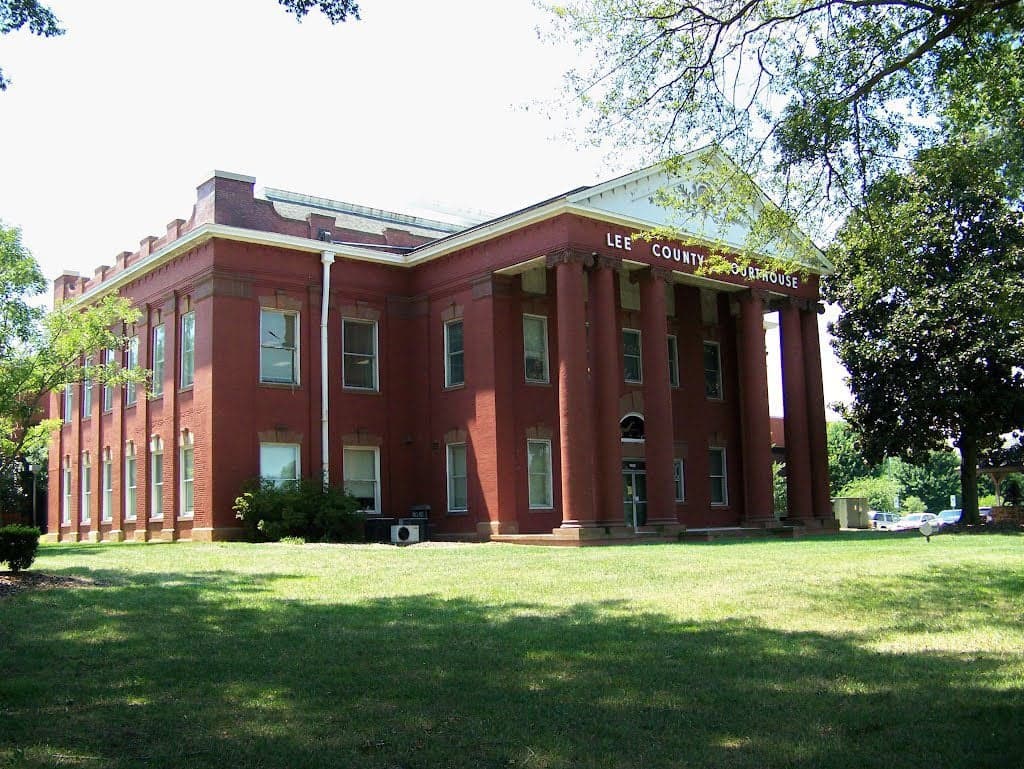
Photo: Wikipedia
Personal Sovereignty in Lee County
Viable for self-reliance. Generally workable, though some barriers may limit total independence.
What does Personal Sovereignty tell us?
Personal Sovereignty measures your capacity for self-reliance and independence with minimal government friction. Higher scores mean fewer barriers between you and the way you want to live... but it assumes you have the space you need and good neighbors.
What does this tell us?
Personal Sovereignty measures your capacity for self-reliance and independence with minimal government friction. Higher scores mean fewer barriers between you and the way you want to live... but it assumes you have the space you need and good neighbors.
State Policy
Energy independence: Importer (15% of energy produced in-state)
Personal Liberty
Homesteading

Personal Liberty Analysis
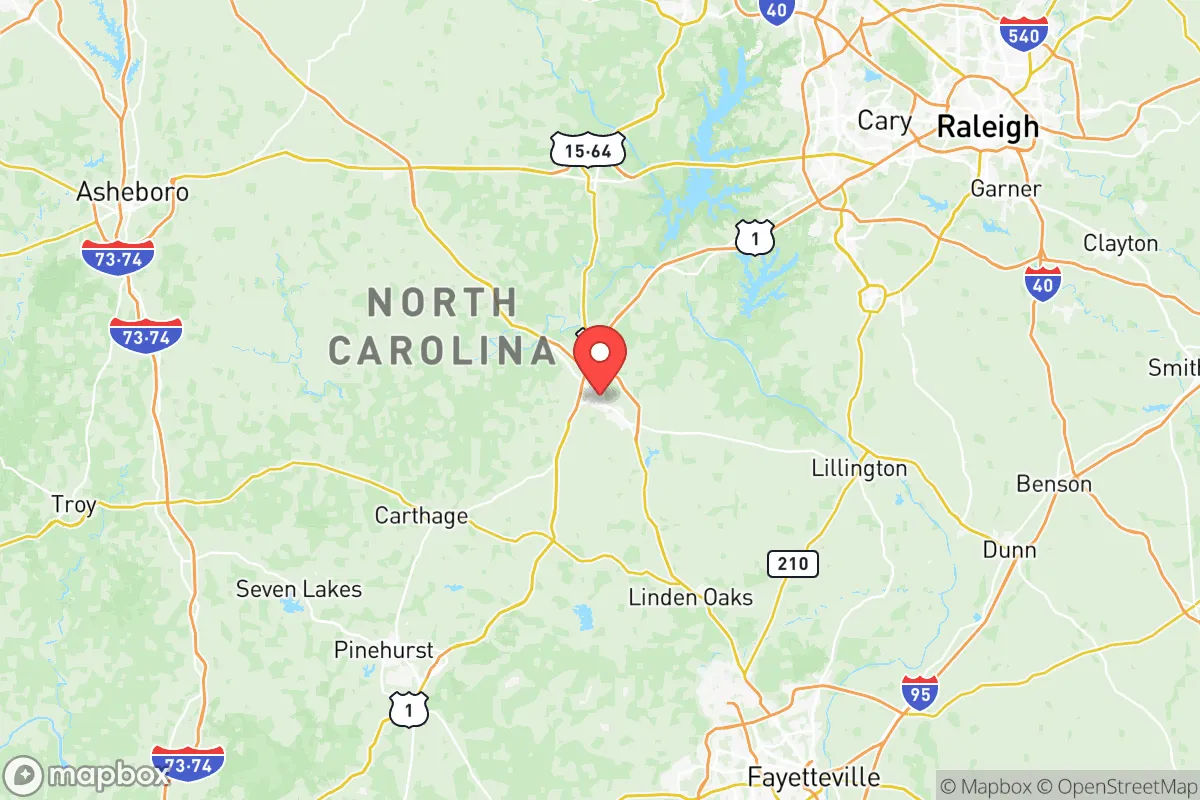
Lee County, North Carolina offers a notably high degree of personal sovereignty relative to many urban and suburban areas in the state, driven by a light-touch regulatory environment, strong gun rights protections, and a land-use framework that permits significant self-reliance. Located in the Sandhills region, the county’s autonomy profile is shaped more by state-level preemption laws and local cultural norms than by aggressive county ordinances, making it a viable option for individuals and families seeking to minimize government intrusion in daily life. The towns of Sanford, Broadway, and Jonesboro each present slightly different flavors of this independence, with Sanford’s city limits carrying more zoning oversight than the unincorporated areas surrounding Cumnock and Lemon Springs.
Tax burden and regulatory posture in Lee County
North Carolina’s state-level tax structure is among the more favorable in the Southeast for those prioritizing financial autonomy, with a flat personal income tax rate of 4.5% in 2026 and a corporate rate of 2.5%. Lee County adds a local property tax rate of approximately 0.74 per $100 of assessed value, which is moderate for the region and well below the rates in neighboring Wake County (Raleigh area) or Chatham County. The county does not impose any local sales tax beyond the state’s 4.75% base, though the combined state and local rate in Lee County is 7.0% — lower than in many urban counties. Regulatory posture is generally permissive: the county has no countywide building code enforcement outside of incorporated towns, and the planning department’s review process for minor subdivisions is streamlined. Sanford, the county seat, enforces standard zoning and permitting for new construction within its limits, but unincorporated areas like Cumnock and the area around the Deep River allow for more flexible land use without the need for variances. For a relocation reader, this means that building a workshop, adding a detached garage, or operating a small home-based business is far simpler outside Sanford’s city limits.
Self-defense and gun law specifics in Lee County
North Carolina is a shall-issue state for concealed carry permits, and Lee County’s sheriff’s office processes permits efficiently, typically within the 45-day statutory window. The state has no red-flag law, no permit requirement for open carry of handguns (for those legally allowed to possess firearms), and no magazine capacity restrictions. Lee County’s local culture is strongly gun-friendly: the county is home to the Deep River Sporting Clays and Shooting Range near Sanford, and the Lee County Gun Club operates a private range near Broadway. The towns of Broadway and Jonesboro are particularly firearm-friendly, with local businesses openly displaying firearms and few local ordinances restricting discharge within town limits — though Sanford does prohibit discharging a firearm within city limits except at approved ranges. For a reader prioritizing self-defense autonomy, Lee County offers the ability to carry openly or concealed without local interference, and the county’s rural character means that target shooting on private property is generally permissible as long as it does not violate state nuisance laws. The absence of a state-level red-flag law and the strong preemption statute (which prevents local governments from enacting their own gun restrictions) means that Sanford cannot impose stricter rules than the state, preserving uniform rights across the county.
Self-reliance and homesteading viability in Lee County
Homesteading and off-grid living are highly viable in Lee County, particularly in the unincorporated areas and smaller towns. Minimum lot sizes in the county’s rural zoning districts are typically 1 to 3 acres, with no countywide prohibition on keeping livestock, chickens, or bees — even on smaller parcels in areas like Cumnock and Lemon Springs. The county does not require building permits for agricultural structures under 600 square feet, and there are no county-level restrictions on rainwater collection or composting toilets, though state health department rules apply for septic systems. Off-grid solar is permitted without special permitting, and the county’s net metering policy with Duke Energy allows for grid-tied systems. The town of Broadway is particularly accommodating to homesteading: it has no zoning ordinance at all, meaning residents can keep goats, horses, or operate small-scale agriculture on standard residential lots. Sanford, by contrast, has more restrictive zoning that limits livestock to parcels of 2 acres or more and requires permits for accessory dwelling units. For a reader seeking maximum self-reliance, the area around Jonesboro and the rural stretches along Highway 42 offer the best combination of low regulation, affordable land (typically $5,000–$10,000 per acre), and proximity to Sanford’s hardware stores and feed suppliers.
Personal liberties in Lee County: parental rights, medical autonomy, speech, and property
North Carolina’s legal framework provides strong protections for parental rights, including a 2023 law that requires school districts to notify parents of any changes in a student’s health or well-being and to obtain parental consent for certain medical services. Lee County Schools, which serves Sanford and the surrounding area, has adopted policies aligned with this law, and the county’s school board has been responsive to parental concerns regarding curriculum and library materials. Medical autonomy is more limited by state law: North Carolina has not expanded Medicaid under the Affordable Care Act (as of 2026), and the state maintains a strict scope-of-practice for nurse practitioners and physician assistants, which can affect access to care in rural areas. However, Lee County has no local health ordinances that restrict alternative or complementary medicine, and the county’s health department does not enforce vaccine mandates beyond state requirements. Free speech protections are robust, with no local hate speech ordinances or restrictions on political signage — Sanford allows temporary signs for up to 60 days without a permit, and unincorporated areas have no sign regulations at all. Property rights are strongly protected: North Carolina’s eminent domain laws are among the most restrictive in the Southeast, requiring a public purpose and full compensation, and Lee County has not pursued aggressive condemnation for economic development. The county’s land records are digitized and accessible online, and the tax assessor’s office is known for reasonable valuations — a plus for property owners who value transparency and predictability.
Overall, Lee County ranks as one of the more sovereignty-friendly areas in central North Carolina, offering a balance of low taxes, permissive gun laws, and homesteading viability that is rare within an hour’s drive of the Research Triangle. Compared to Wake County, where property taxes are 30% higher and zoning is far more restrictive, or Chatham County, where recent growth has brought tighter subdivision regulations, Lee County remains a relative haven for those who value personal autonomy. The key trade-off is that Sanford’s city limits impose moderate regulation, while the unincorporated areas and towns like Broadway and Jonesboro offer near-total freedom in land use and daily life. For a relocation reader who prioritizes independence over urban amenities, Lee County — particularly its rural stretches — provides a legal and cultural environment where self-reliance is not just tolerated but expected.

* Values derived from national, state, county, city and local statistics and may differ in a specific area. Last updated: 2026-08-19T22:12:20.000Z
Narrative content on this page is AI-generated and may contain mistakes. Verify any details that matter before acting on them.
ReloMaps may earn a commission from affiliate links at no extra cost to you.

