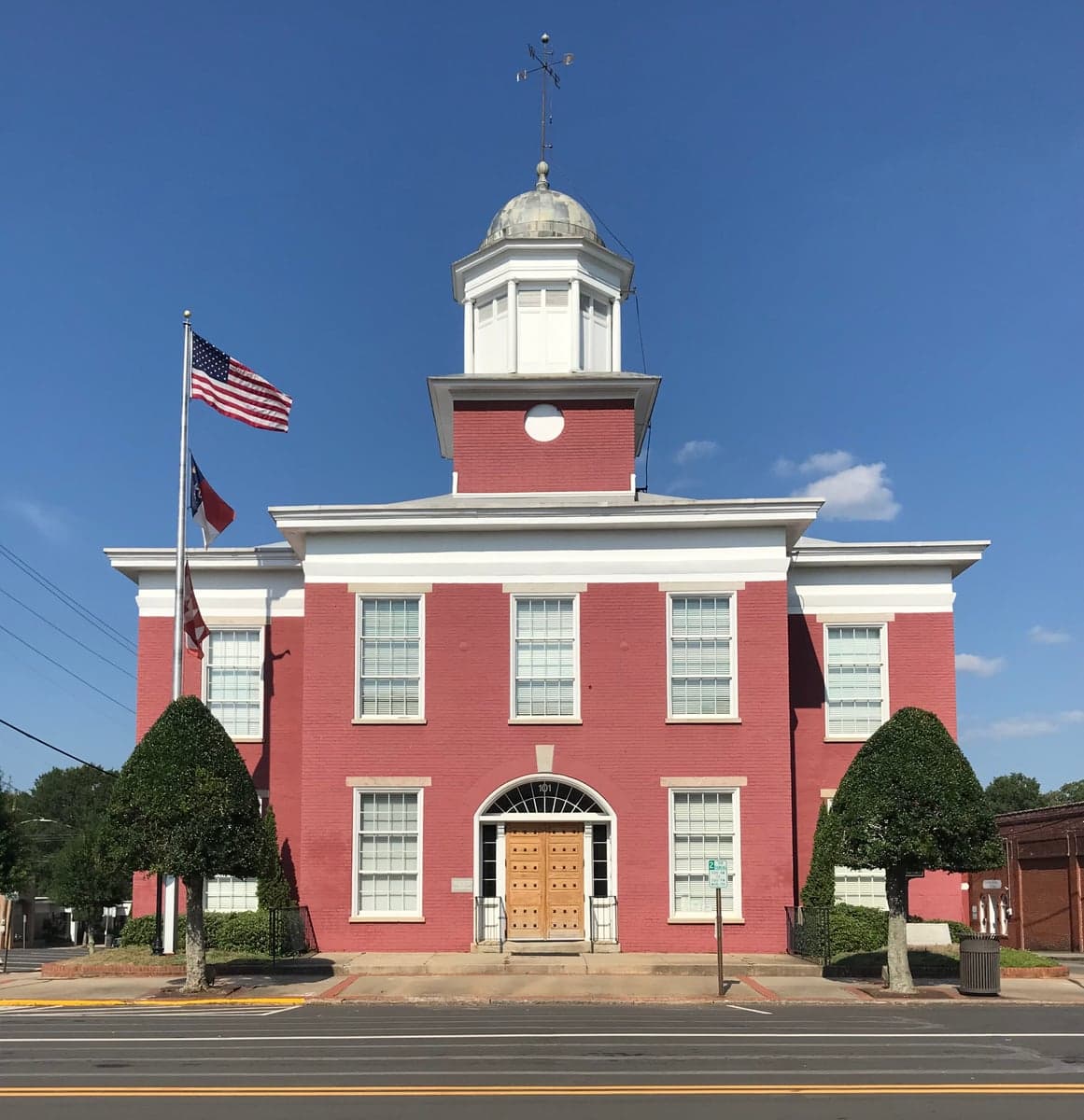
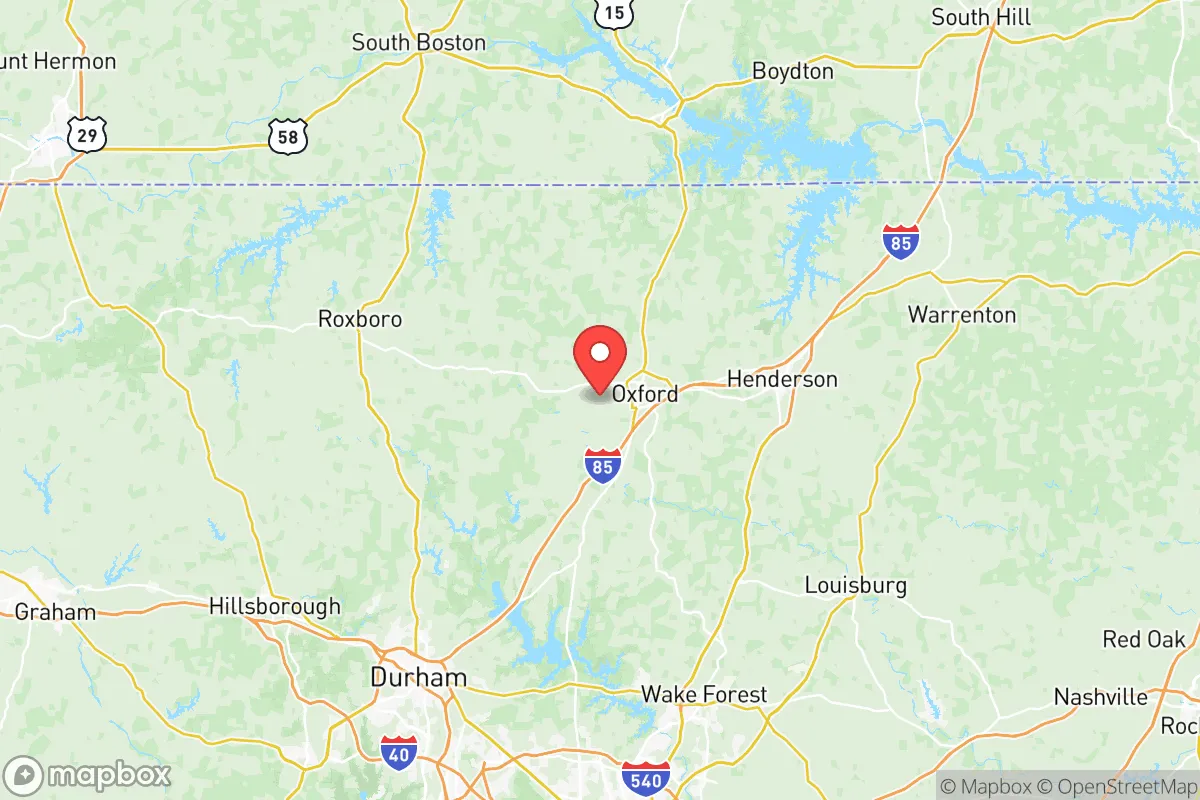
Photo: Wikipedia
Personal Sovereignty in Granville County
Viable for self-reliance. Generally workable, though some barriers may limit total independence.
What does Personal Sovereignty tell us?
Personal Sovereignty measures your capacity for self-reliance and independence with minimal government friction. Higher scores mean fewer barriers between you and the way you want to live... but it assumes you have the space you need and good neighbors.
What does this tell us?
Personal Sovereignty measures your capacity for self-reliance and independence with minimal government friction. Higher scores mean fewer barriers between you and the way you want to live... but it assumes you have the space you need and good neighbors.
State Policy
Energy independence: Importer (15% of energy produced in-state)
Personal Liberty
Homesteading

Personal Liberty Analysis
Granville County, North Carolina, offers a notably high degree of personal sovereignty, particularly for those seeking a lighter regulatory touch than what is found in the state's major urban centers like Raleigh or Durham. The county's rural character, combined with North Carolina's generally permissive state-level framework on gun rights, taxes, and property use, creates an environment where individual autonomy is the default. While not a libertarian enclave, Granville County provides a practical, middle-ground balance of freedom and community norms that appeals to families and individuals who prioritize self-reliance and limited government interference in daily life.
Tax burden and regulatory posture in Granville County
North Carolina's tax structure is one of the more favorable in the Southeast for those seeking to keep more of their earnings. The state levies a flat individual income tax rate of 4.5% (as of 2025), with a scheduled decline to 3.99% by 2027, and a corporate income tax rate of just 2.5%. Granville County itself adds a local property tax rate of approximately $0.73 per $100 of assessed value, which is moderate for the region. This combination means a household earning $75,000 annually pays roughly $3,375 in state income tax, significantly less than in neighboring Virginia or most Northeastern states. The county's regulatory posture is light-touch: there is no countywide zoning ordinance for unincorporated areas, meaning property owners in places like Stem or Butner (outside the town limits) generally face fewer restrictions on land use, home-based businesses, or accessory structures. However, incorporated towns like Oxford and Creedmoor do enforce local zoning and building codes, so buyers should verify specific municipal rules before purchasing. The overall regulatory environment is best described as "hands-off until a problem arises," which aligns well with a self-reliant mindset.
Self-defense and gun law specifics in Granville County
North Carolina is a "shall-issue" state for concealed carry permits, meaning the Granville County Sheriff's Office must issue a permit to any qualified applicant who passes a background check and completes a firearms safety course. The state also permits open carry of handguns and long guns without a permit for anyone legally allowed to possess a firearm. Stand-your-ground laws are in effect, with no duty to retreat in any place where the individual has a lawful right to be. Castle Doctrine protections extend to occupied vehicles and workplaces, not just homes. Granville County's gun culture is robust and practical; shooting ranges are common, and firearms are a routine part of rural life in communities like Wilmington (the unincorporated area near the county line) and Lake Gaston. The sheriff's office processes permits efficiently, typically within the 45-day statutory window. For those moving from restrictive states like California or New York, the contrast is stark: private firearm sales between individuals do not require a background check, and there is no state-level registry of firearms or ammunition. Magazine capacity is not restricted by state law. This legal framework gives residents a high degree of confidence in their ability to defend themselves and their property without bureaucratic hurdles.
Self-reliance and homesteading viability in Granville County
Granville County is one of the more viable areas in the Research Triangle region for homesteading and off-grid living, largely due to its agricultural zoning and relatively affordable land. In unincorporated areas, there are no county-level restrictions on keeping livestock, including chickens, goats, or even cattle, on parcels as small as one to three acres. The county's soil and climate are well-suited for gardening, with a growing season of roughly 200 days. Off-grid feasibility is high: rainwater collection is not prohibited, and many rural properties rely on private wells and septic systems, which are regulated by the county health department but not prohibitively expensive to install. Solar panels are permitted without special permitting beyond standard electrical inspections. The towns of Stem and Wilmington (the unincorporated community, not the coastal city) are particularly attractive for homesteaders due to lower land prices—typically $5,000 to $10,000 per acre—and minimal neighbor density. In contrast, subdivisions near Creedmoor and Butner often have homeowners' associations that restrict livestock, garden size, and external structures, so buyers should prioritize unincorporated parcels if self-reliance is a primary goal. The county's extension office offers free soil testing and agricultural workshops, supporting a culture of practical self-sufficiency rather than mere theory.
Personal liberties in Granville County: parental rights, medical autonomy, and property
North Carolina law generally respects parental rights in education and medical decisions. The state has a Parents' Bill of Rights (enacted in 2023) that requires schools to notify parents of any changes in a student's services or monitoring related to mental, emotional, or physical health, and to obtain parental consent before administering any student health survey. Granville County Schools, which serve the majority of the county's families, have implemented these policies with minimal controversy. Medical autonomy is more mixed: while the state does not mandate COVID-19 or other adult vaccinations, it does require certain childhood immunizations for school attendance, with medical and religious exemptions available. Property rights are strongly protected; North Carolina is a "right-to-farm" state, meaning agricultural operations are generally shielded from nuisance lawsuits if they were established before nearby residential development. This is particularly relevant in Granville County, where farming remains a major land use. Free speech protections are robust, with no state-level restrictions on political expression or assembly. The county's political climate is conservative-leaning but not monolithic; Oxford and Creedmoor have more moderate pockets, while rural areas lean strongly Republican. Overall, the legal environment supports a high degree of personal choice in family, health, and property matters, with the primary limitation being federal or state-level mandates rather than local overreach.
Compared to other areas in the Research Triangle region, Granville County offers a distinctly higher level of personal sovereignty than Wake or Durham counties, where zoning, taxes, and regulatory oversight are more intrusive. It is less permissive than truly rural counties like Vance or Warren, but the trade-off is better access to jobs, healthcare, and infrastructure. For a family or individual who values the ability to own firearms without hassle, keep livestock on a few acres, and make personal medical and educational decisions without government second-guessing, Granville County represents a strong, practical choice. The key is to choose the right location within the county: unincorporated areas near Stem or Wilmington maximize freedom, while town limits in Oxford or Creedmoor offer more services but slightly more regulation. With careful property selection, Granville County delivers a sovereignty profile that is hard to beat in the mid-Atlantic region.

* Values derived from national, state, county, city and local statistics and may differ in a specific area. Last updated: 2026-09-08T07:06:10.000Z
Narrative content on this page is AI-generated and may contain mistakes. Verify any details that matter before acting on them.
ReloMaps may earn a commission from affiliate links at no extra cost to you.

