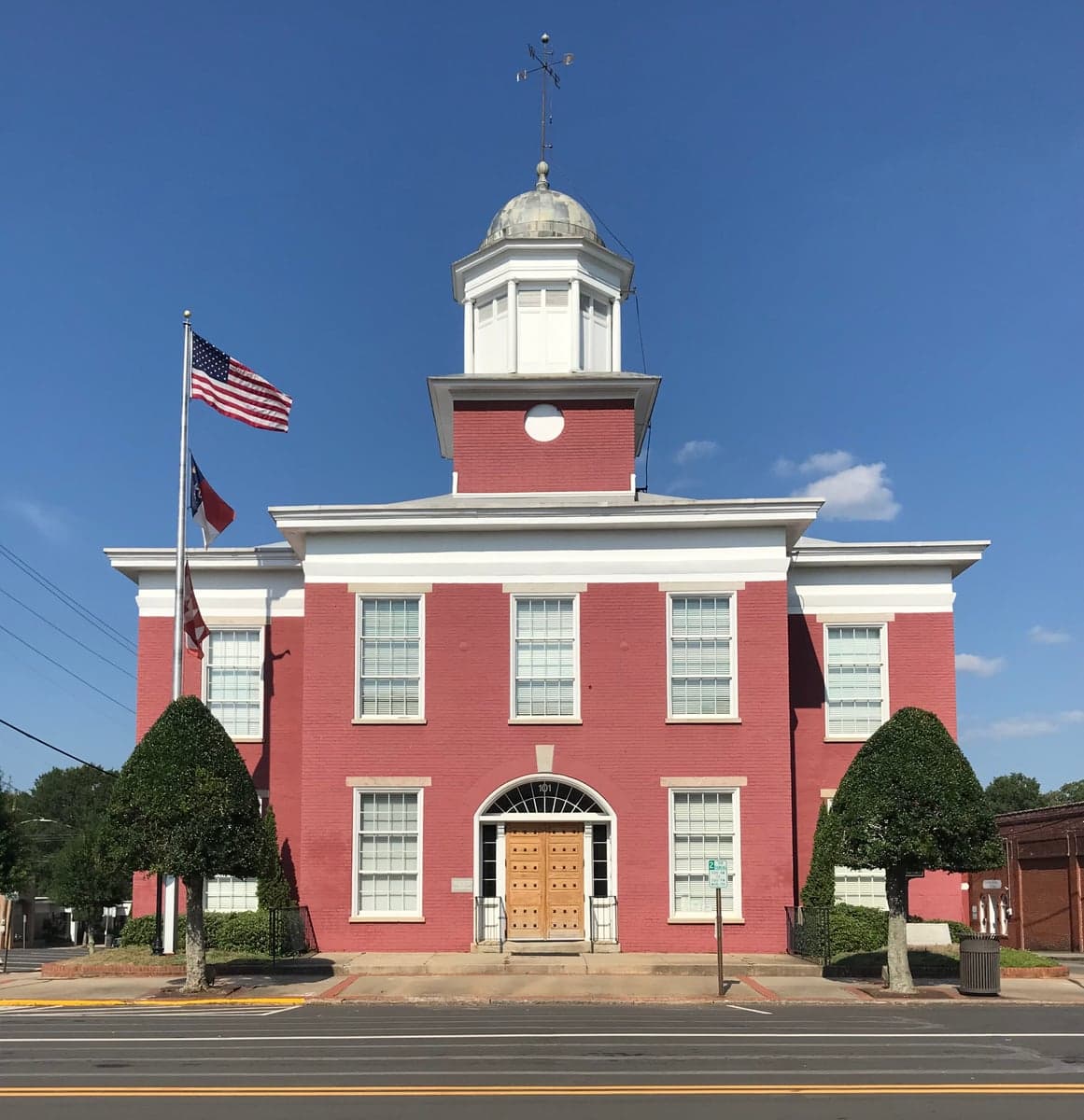
Photo: Wikipedia
Demographics of Granville County
Affluence Level in Granville County
A middle-class area roughly in line with national averages across income, home values, education, and employment.
People of Granville County
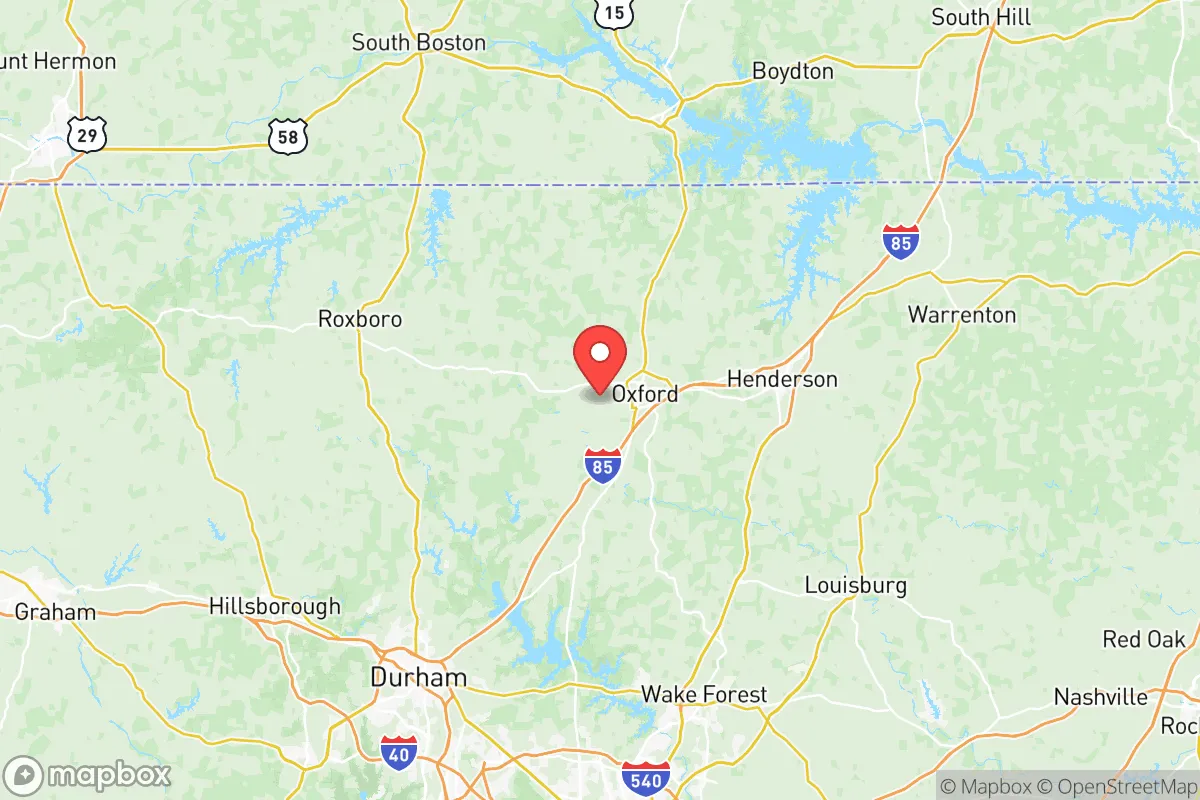
Granville County, North Carolina, is home to 61,439 residents, a population that reflects a deep-rooted Black and White heritage now diversifying with a growing Hispanic community. The county’s character is defined by its small-town centers like Oxford and Creedmoor, a rural-to-suburban transition zone between Raleigh and the Virginia line, and a population density of roughly 80 people per square mile. Distinctive markers include a historically significant Black landowning class, a stable but aging White population, and a recent influx of Hispanic workers drawn to agriculture and construction. This is a place where the past is still visible in the landscape, but the future is being shaped by newcomers.
Settlement & growth (pre-1960)
Before European settlement, the region was home to the Occaneechi and Saponi peoples, Siouan-speaking tribes who lived along the Tar River and its tributaries. By the early 1700s, disease and displacement from English colonial expansion had largely pushed these groups out, and the area became a frontier for English and Scots-Irish settlers moving south from Virginia. Granville County was officially formed in 1746 from Edgecombe County, named for John Carteret, Earl Granville, who held a vast land grant in the region. The earliest European settlers were primarily English planters and their enslaved laborers, establishing tobacco plantations along the fertile floodplains of the Tar and Fishing Creek.
In the decades after the American Revolution, the county’s population grew steadily through natural increase and the forced migration of enslaved Africans. By 1860, Granville County had a Black majority population, a pattern that persisted well into the 20th century. The end of the Civil War brought emancipation, and many freedmen remained in the county, becoming sharecroppers or small landowners. Towns like Oxford, the county seat, and Creedmoor became centers of Black community life, with churches, schools, and businesses. The late 19th and early 20th centuries saw little new immigration; the county’s population remained overwhelmingly native-born, with a small number of European immigrants, mostly from Germany and Ireland, settling in Oxford and Stem.
The Great Migration (1910–1970) saw a significant outflow of Black residents from Granville County to industrial cities in the North, such as Philadelphia, New York, and Baltimore. This exodus, combined with the mechanization of tobacco farming, led to a population decline from a peak of 34,000 in 1910 to just under 30,000 by 1960. The county’s economy remained tied to tobacco, textiles, and lumber, with little manufacturing to attract new residents. The population that remained was deeply rural, with small towns like Butner (established as a federal psychiatric hospital in the 1940s) and Wilmington (a small crossroads community) serving as local service hubs.
Modern era (post-1965)
The 1965 Hart-Cellar Act had a minimal direct impact on Granville County, as the area did not attract significant international immigration until the 1990s. Instead, the most transformative demographic shift was domestic: the suburbanization of the Research Triangle region. Beginning in the 1980s, the expansion of Raleigh-Durham’s economy—driven by tech, pharmaceuticals, and universities—pushed housing demand outward. Granville County, with its lower land costs and rural character, became a bedroom community for workers commuting to Durham, Raleigh, and Research Triangle Park. Towns like Creedmoor and Butner saw the fastest growth, with new subdivisions and retail centers catering to middle-class families.
The Hispanic population began to grow noticeably in the 1990s, driven by demand for labor in tobacco farming, construction, and poultry processing. By 2020, Hispanics made up 10.7% of the county’s population, concentrated in and around Oxford and Creedmoor, where they formed small but visible enclaves. This growth is almost entirely from immigration from Mexico and Central America, with a smaller number from Puerto Rico. The Black population, which had been declining due to outmigration, stabilized at 29.1% as some families returned from the North and new Black residents moved in from other parts of the South. The White population, now 55.3%, includes both long-standing families and new arrivals from other states, particularly the Northeast and Midwest. The foreign-born share remains low at 4.0%, but it is rising. East/Southeast Asian communities (0.5%) and Indian subcontinent residents (0.1%) are present in very small numbers, mostly in professional roles tied to the Research Triangle economy.
Suburbanization has reshaped the county’s geography. Creedmoor, once a quiet railroad town, has become the fastest-growing municipality, with new housing developments and a growing commercial corridor along US-15. Butner has seen a similar transformation, with its state hospital campus now sharing space with residential subdivisions and a new prison. Oxford, the historic county seat, has experienced slower growth, retaining its small-town feel and historic downtown, but also seeing some revitalization with new restaurants and shops. The unincorporated areas, particularly around Lake Rogers and Falls Lake, have attracted retirees and second-home buyers seeking waterfront property.
The future
Granville County is projected to continue growing, driven by the ongoing expansion of the Research Triangle region. The population is expected to become more diverse, with the Hispanic share likely rising to 15-18% by 2040, and the Asian and Indian populations growing slowly as professionals seek more affordable housing outside Raleigh. The Black population is expected to remain stable or grow slightly, as the county becomes a more attractive option for Black families priced out of Durham and Wake County. The White population will likely continue to grow in absolute numbers but decline as a share of the total, as new arrivals are disproportionately non-White.
The cultural identity of the county is evolving from a rural, biracial (Black and White) society to a more multi-ethnic, suburban one. This is creating some tension, as long-time residents adjust to new neighbors and changing land use. However, the county’s low cost of living, good schools in some areas, and proximity to the Triangle’s job market make it an attractive destination for a wide range of people. The next 10-20 years will likely see continued suburbanization along the US-15 and I-85 corridors, with new subdivisions and commercial development in Creedmoor, Butner, and Oxford. The rural character of the county’s eastern and northern areas will likely persist, but the western edge will become increasingly integrated into the Raleigh metro area.
For someone moving in now, Granville County offers a middle ground: a place with a strong sense of local history and community, but with the amenities and job access of a major metropolitan area within a 30-45 minute drive. It is becoming a more diverse, more suburban, and more connected place, but it retains a slower pace and lower cost of living than its neighbors to the south. The county’s future is tied to the Triangle’s growth, but its identity remains distinctly its own.

* Values derived from national, state, county, city and local statistics and may differ in a specific area. Last updated: 2026-09-08T07:06:10.000Z
Narrative content on this page is AI-generated and may contain mistakes. Verify any details that matter before acting on them.
ReloMaps may earn a commission from affiliate links at no extra cost to you.

