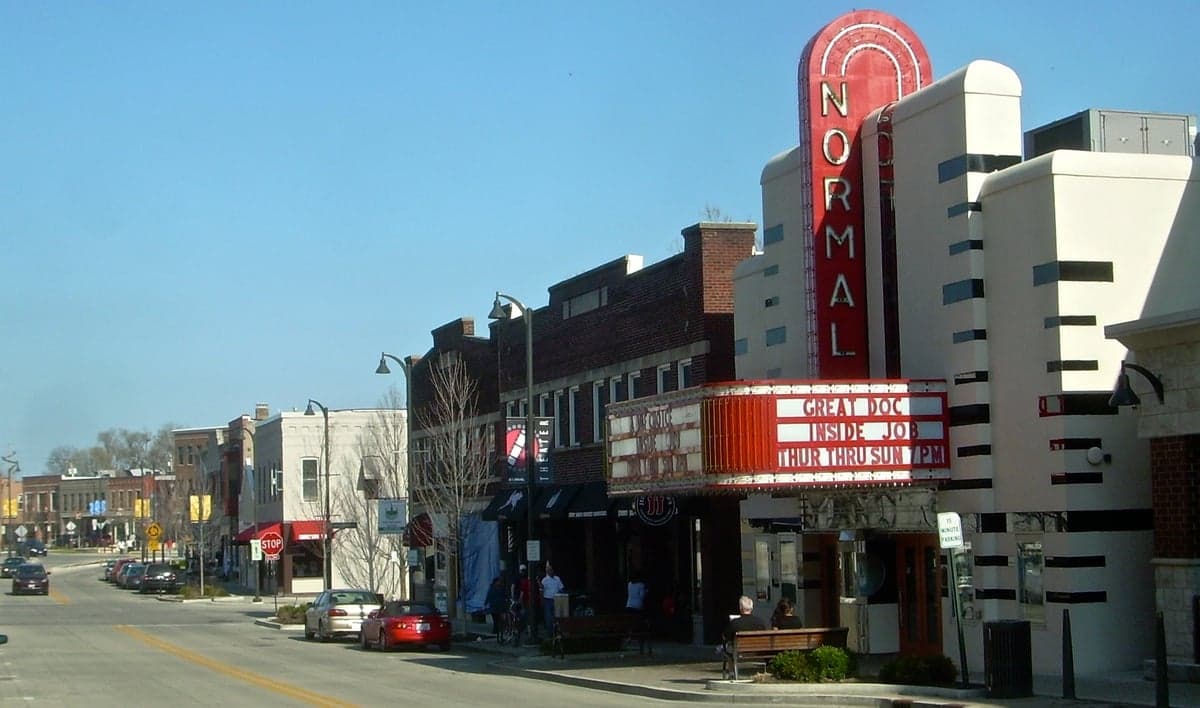
Photo: Wikipedia
Strategic Assessment of Normal, IL
Meaningful friction. Expect exposure to either population pressure, blast zones, or natural disaster risk. Consider buying a retreat property.
What does the Strategic Assessment tell us?
Our Strategic Assessment grades tactical survivability of an area. Major population centers, military targets, fallout zones, natural disasters, and border exposure all drive risk — lower exposure means a more defensible position in a crisis.
This is heavily inspired by Joel Skousen's Strategic Relocation book. Highly recommended you checkout the book ($)What does this tell us?
Our Strategic Assessment grades tactical survivability of an area. Major population centers, military targets, fallout zones, natural disasters, and border exposure all drive risk — lower exposure means a more defensible position in a crisis.
This is heavily inspired by Joel Skousen's Strategic Relocation book. Highly recommended you checkout the book ($)Strategic Pillars

Key Distances
Regional Safe Places
Below is our recommended "safe zones" in Illinois and the surrounding area based on our strategic heuristics. For most people, it's unrealistic to live in a “safe zone” full-time due to work, family or other personal reasons. They tend to be more rural. However, many of these areas are perfect for second homes and retreat properties that double as a vacation home or even a short-term rental.
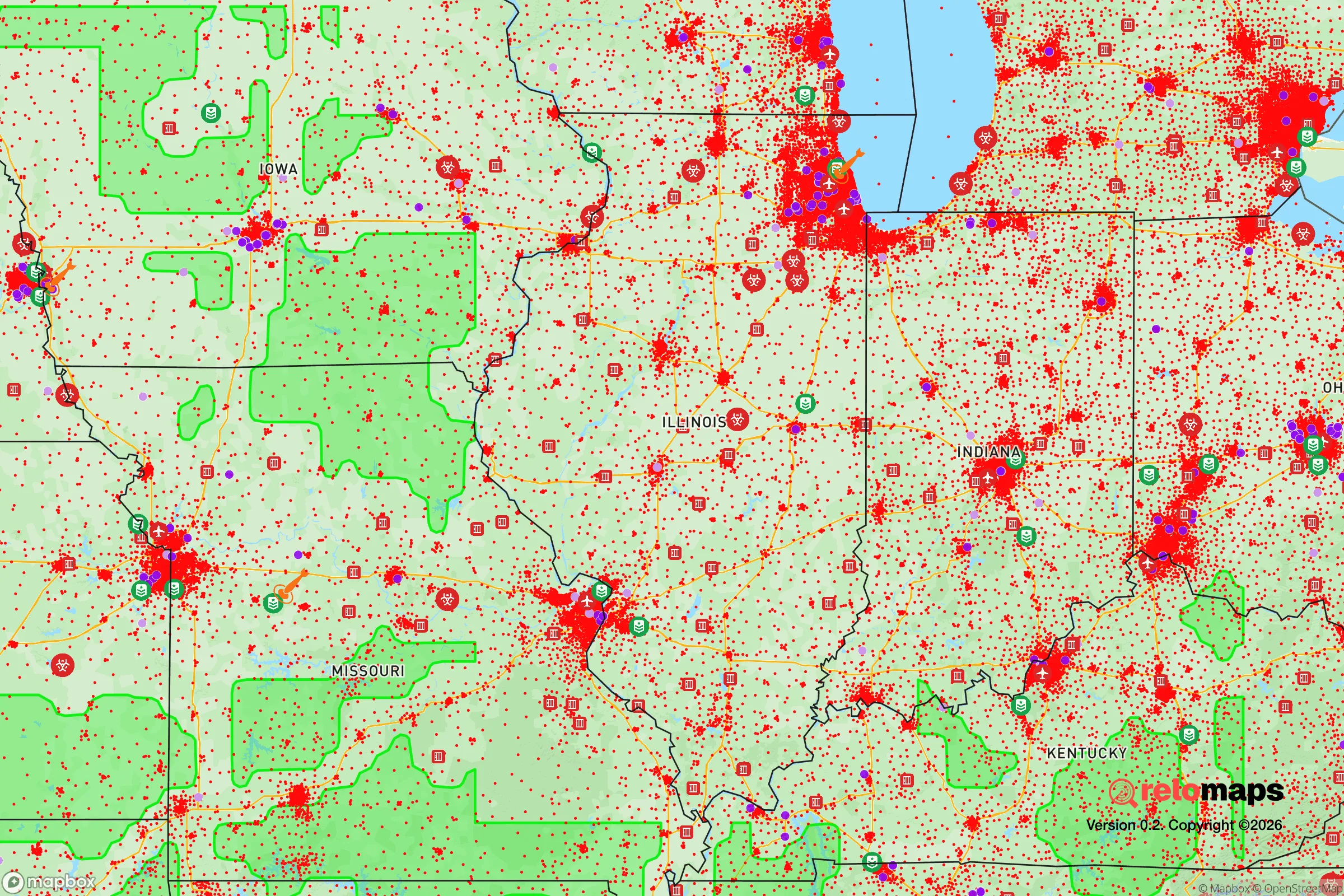
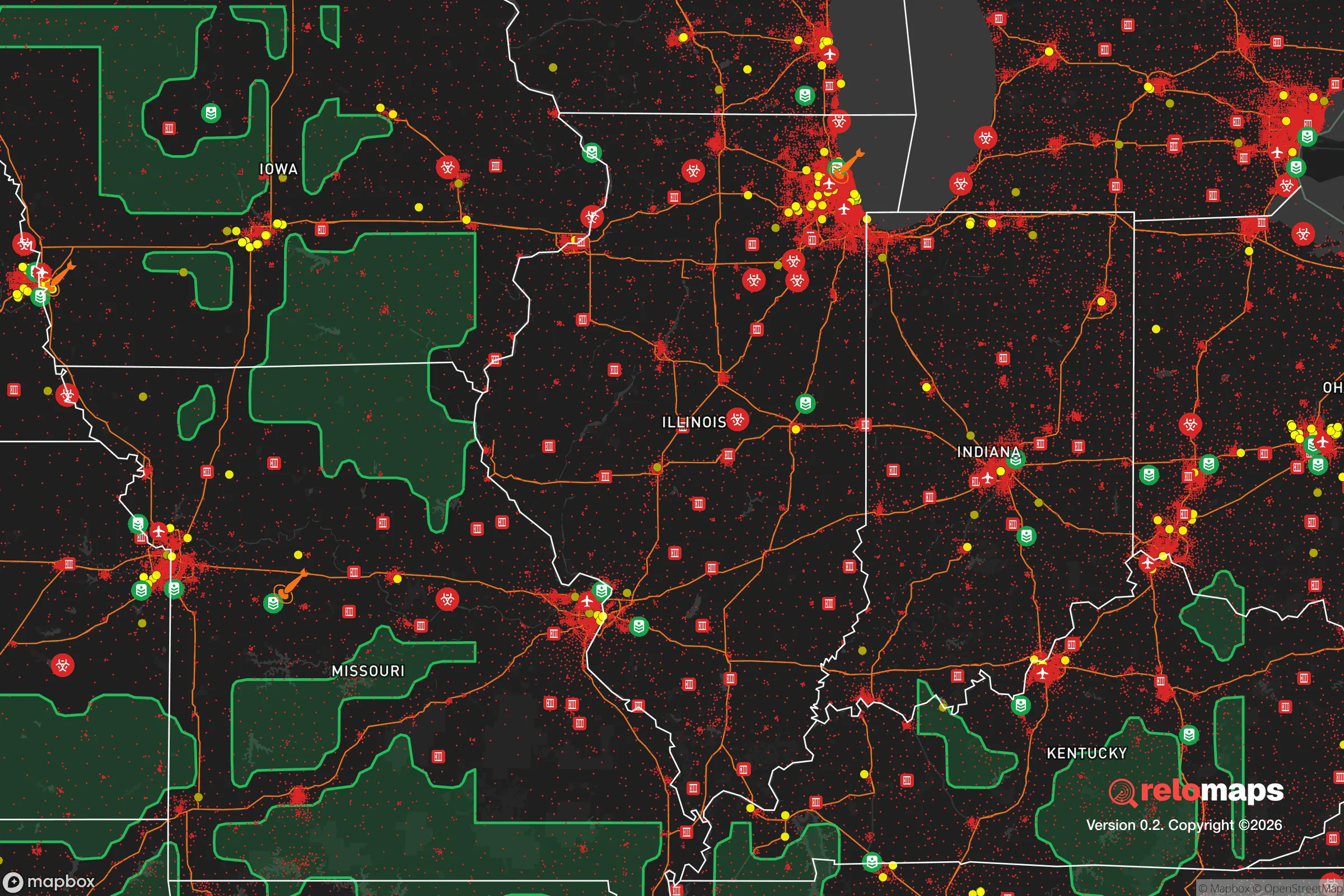


Important Note: For informational purposes only. This does not mean nothing bad ever happens in the green zones. Please use common sense. This is based on public data and modeled with AI. We tried to take a conservative approach but mistakes happen. We update this regularly as new information becomes available.
Solar Generator Recommendations
Backup power matters more here than in safer locations. We've picked three solar generators across budgets and capacity tiers — start with the budget unit if you only need a few essentials, or step up if you want to run a fridge and HVAC for days at a time.

Jackery Portable Power Station Explorer 300
Budget OptionPower on the Go: Weighing only 11 lbs, it's convenient to set up and store with book-sized foldable solar panels

BLUETTI Portable Power Station AC180
Designed for both indoor and outdoor scenarios, AC180 is highly capable as it has a robost capacity and continuous output power.

EF ECOFLOW DELTA Pro Ultra Power Station
Upgraded PickEcoFlow DELTA Pro Ultra is a whole-home energy system designed to grow with your family. Integrated with the Smart Home Panel 2, it scales to meet your evolving energy needs — keeping your home powered, intelligent, and secure through every stage of life.
We earn a commission, at no additional cost to you.
Strategic Assessment Analysis
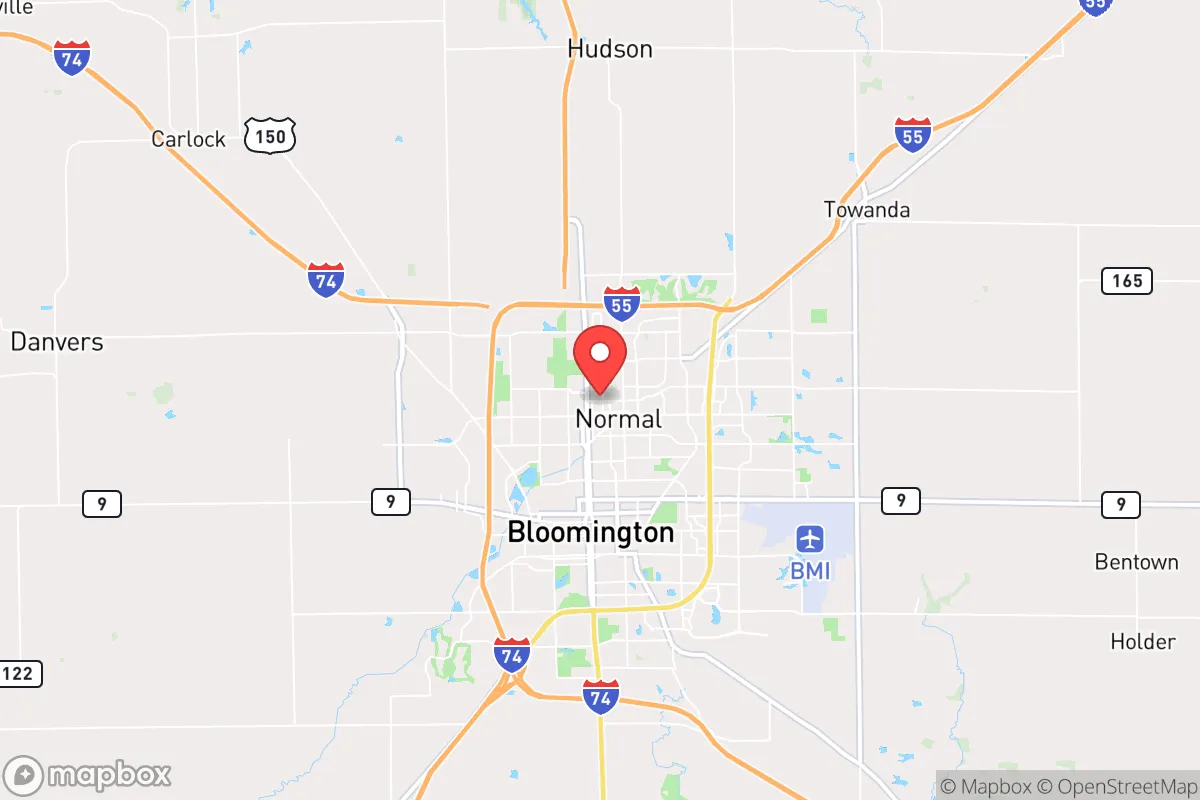
Normal, Illinois, sits in a geographic sweet spot that offers genuine strategic depth for those thinking ahead about resilience, but it also carries exposure risks that demand clear-eyed assessment. Located in McLean County at the junction of Interstates 39, 55, and 74, Normal is part of the Bloomington-Normal metro area—a population center of roughly 130,000 that functions as a regional hub without the chaos of a major metropolis. The town’s name is misleadingly placid; its position in the central Illinois corn belt, far from coastal fault lines and major floodplains, provides a baseline of physical security that many preppers undervalue. However, being 130 miles southwest of Chicago and 160 miles northeast of St. Louis means that fallout from civil unrest in those cities—whether from supply chain disruptions, mass casualty events, or political violence—could ripple outward and affect Normal’s stability. The key question for a relocator is whether this area’s advantages outweigh its proximity to larger, more volatile population centers.
Geographic position and natural advantages for long-term security
Normal’s location in the flat, fertile Illinois River Valley region offers several hard-to-replicate natural advantages. The area sits atop the Mahomet Aquifer, one of the largest groundwater reserves in the Midwest, providing a reliable water source that is less vulnerable to surface contamination than many other regions. The local climate is continental, with cold winters and hot summers, but it avoids the extreme weather patterns of tornado alley to the west and the hurricane-prone Gulf Coast. The land is predominantly agricultural, meaning that in a prolonged disruption scenario, local food production capacity is high—McLean County is consistently among the top corn and soybean producers in the nation. For a relocator, this translates to a lower risk of food shortages compared to urban or desert regions. The terrain is flat, which simplifies construction, farming, and defensive positioning, though it offers little natural cover for concealment. The area’s low population density outside the immediate metro—about 100 people per square mile county-wide—reduces the risk of disease spread and resource competition during a crisis. Normal’s elevation of roughly 800 feet above sea level also means it is not prone to flooding from rivers, unlike many towns along the Mississippi or Illinois Rivers.
Risks, exposures, and proximity to fallout-relevant landmarks
The most significant strategic risk for Normal is its proximity to Chicago, a city that preppers view as a potential epicenter of civil unrest, mass casualty events, or cascading infrastructure failure. Chicago is 130 miles northeast, but the I-55 corridor is a direct line for population movement during a crisis—meaning that if Chicago experiences a breakdown in order, Normal could see an influx of refugees, resource competition, and secondary violence. The same logic applies to St. Louis, 160 miles southwest, and Indianapolis, 170 miles east. While these distances provide some buffer, they are not enough to guarantee isolation. Additionally, Normal is within 50 miles of the Clinton Nuclear Power Station, a 1,065-megawatt plant on the Clinton Lake reservoir. While the plant has a strong safety record, any major incident—whether from sabotage, natural disaster, or grid failure—could create a fallout zone that extends into McLean County. The prevailing winds in central Illinois are from the west and southwest, which would carry radioactive material toward Normal in a worst-case scenario. There are no major military installations, chemical plants, or rail hubs for hazardous materials in the immediate vicinity, but the area’s rail network is dense, with Norfolk Southern and Union Pacific lines running through town, carrying everything from grain to crude oil. A derailment or intentional attack on these lines could cause localized contamination or disruption.
Practical resilience for a relocator: food, water, energy, and defensibility
For a relocator with a survivalist mindset, Normal offers a mixed but workable resilience profile. Water security is strong: the Mahomet Aquifer supplies the town’s municipal water, and private wells are common in rural areas within 10-15 minutes of town. A prepper should plan for well installation or rainwater catchment, as municipal systems could fail during a prolonged grid outage. Food production is excellent: the surrounding farmland means that local farmers’ markets, CSAs, and direct-from-farm purchasing are viable year-round. Normal also has a strong home-gardening culture, with the University of Illinois Extension office offering resources on seed saving and soil management. For those willing to hunt, deer populations are high in the county, and public hunting land is available at nearby state parks like Moraine View and Clinton Lake. Energy resilience is moderate: the grid is stable but not hardened against EMP or cyberattack. Solar potential is decent—central Illinois gets about 4.5 peak sun hours per day—but winter cloud cover can reduce output. Natural gas is widely available, and propane tanks are common in rural homes. Defensibility is the weak point: the flat terrain offers no natural chokepoints or high ground, so a relocator should prioritize a property with good sightlines, a perimeter fence, and a basement or storm shelter that can double as a safe room. The town’s police and fire services are well-funded (McLean County has a property tax base that supports them), but in a widespread crisis, response times could stretch. The presence of Illinois State University and Heartland Community College means a large transient population that could become a liability during a breakdown—students may lack local ties and resources, increasing the risk of looting or desperation.
The overall strategic picture for Normal is one of cautious viability for a conservative-minded relocator focused on preparedness. The area’s agricultural base, water abundance, and distance from coastal chaos are genuine assets. But the proximity to Chicago and St. Louis, the nuclear plant risk, and the flat, indefensible terrain are real liabilities that cannot be ignored. A relocator who chooses Normal should plan for a layered defense: a rural property outside the town limits, a well and solar backup, and a network of like-minded neighbors. The local political climate is moderate—McLean County voted 51% for Trump in 2020, with Normal itself leaning slightly left due to the university—so a conservative prepper will find allies but also ideological friction. For those willing to invest in hardening a property and building community ties, Normal offers a solid foundation. For those seeking absolute isolation and minimal risk, the upper Midwest or Appalachia may be better bets. Normal is a compromise: not a fortress, but not a death trap either—a place where preparation, not luck, will determine outcomes.

* Values derived from national, state, county, city and local statistics and may differ in a specific area. Last updated: 2026-04-19T07:08:06.000Z
Narrative content on this page is AI-generated and may contain mistakes. Verify any details that matter before acting on them.
ReloMaps may earn a commission from affiliate links at no extra cost to you.

