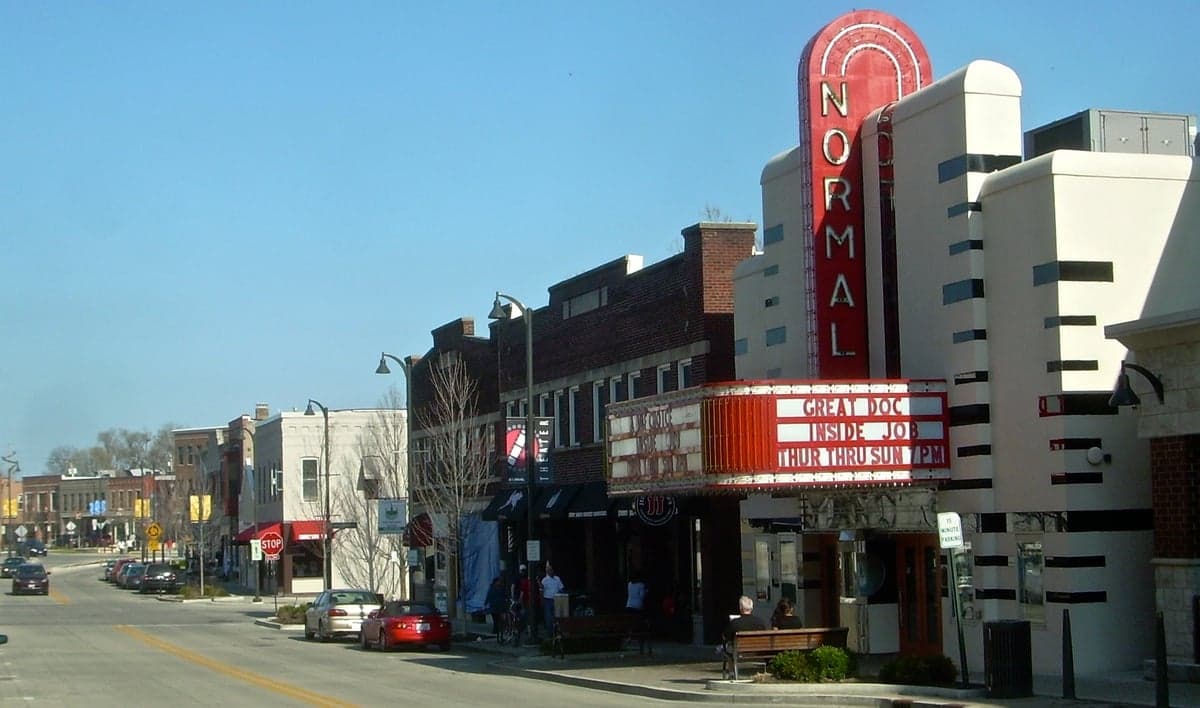
Photo: Wikipedia
Political ClimatePolitical Climate in Normal, IL
District shown is the primary district for this city’s centroid. Cities may span multiple districts.
Local Political AnalysisPolitical Analysis of Normal, IL
Normal, Illinois, leans solidly Democratic, with a Cook PVI of D+3, but that number doesn't tell the whole story of how much things have shifted here. It used to be a place where you could have a reasonable conversation about taxes or local ordinances without everyone immediately taking a side based on national party lines. Now, especially since the 2020 election, you see a lot more of that progressive energy bleeding into city council meetings and school board decisions, and it’s starting to feel like the government is getting its nose into things it shouldn’t. The trajectory is concerning for anyone who values personal freedoms and wants to keep local government focused on basics like roads and public safety, not social experiments.
How it compares
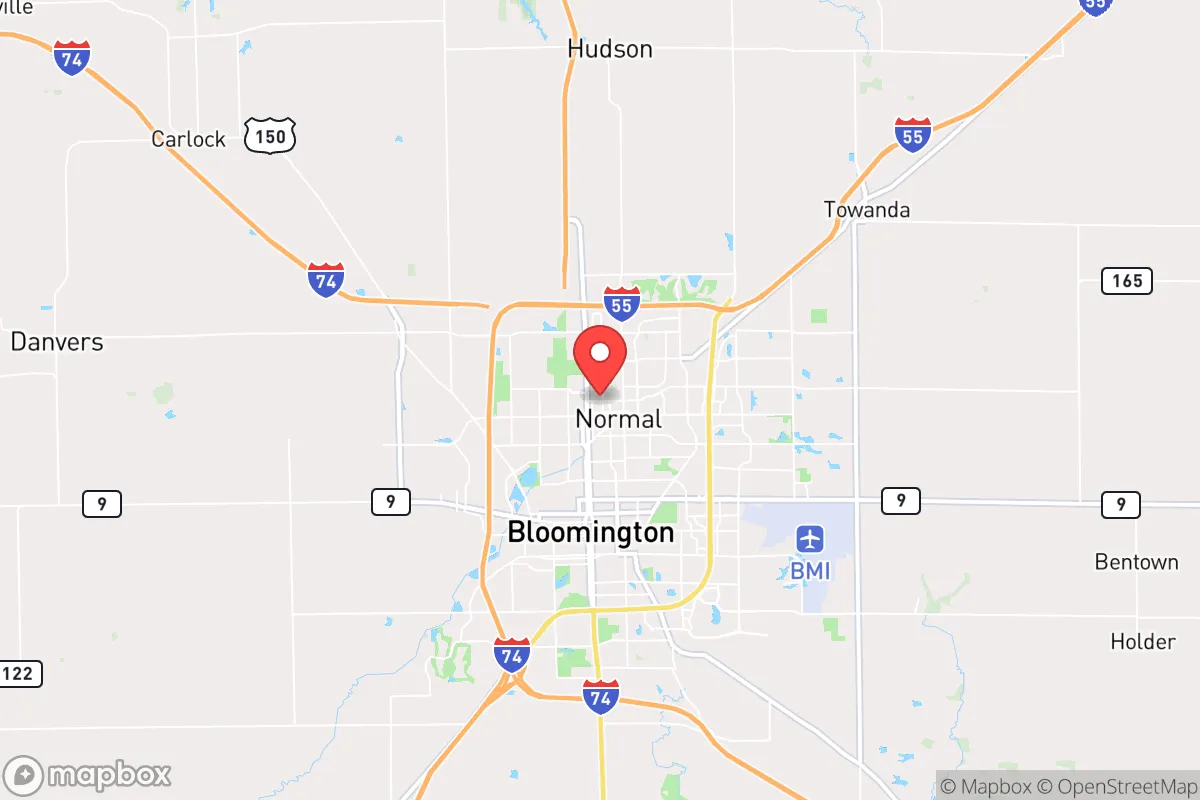
If you drive just a few miles outside of town, the political landscape flips hard. Towns like Hudson and Towanda are still very much conservative strongholds, where people wave off the kind of progressive policies you see creeping into Normal. Even Bloomington, right next door, has a more mixed political vibe—it’s not as uniformly blue as Normal, especially in its outer neighborhoods. The contrast is stark: you can be in a Normal coffee shop hearing about a new diversity initiative or a climate resolution, then drive ten minutes to a farm stand where folks are grumbling about property taxes and government mandates. That split is real, and it’s widening every year.
What this means for residents
For a long-time resident who remembers when Normal was more about common sense than ideology, the biggest red flag is how quickly local government has embraced a kind of top-down, one-size-fits-all approach. You see it in things like the push for stricter zoning rules that make it harder to run a small business out of your home, or in school policies that seem more focused on social messaging than on reading and math. The concern is that personal freedoms—like how you choose to educate your kids or what you do with your own property—are getting squeezed by a city council that’s more interested in checking boxes for state-level progressive agendas than in listening to the people who actually live here. It’s not a full-blown crisis yet, but the trajectory is clear: more regulation, less individual choice.
One of the most telling cultural shifts is how the local university, Illinois State, drives a lot of this change. The student population brings a transient, activist energy that doesn’t always align with the values of families who have been here for generations. You’ll see things like city-funded programs that prioritize certain groups over others, or public statements from officials that feel more like press releases from a national campaign than local governance. For someone who values a live-and-let-live approach, it’s getting harder to find that middle ground. The long-term worry is that Normal will keep drifting away from its roots, becoming a place where government overreach is just accepted as the new normal.

State Political ClimatePolitical Climate in Illinois
State Political AnalysisPolitical Environment in the State
Illinois has been a reliably blue state in presidential elections since 1992, but its political climate is far more complex than a simple partisan label suggests. The state is dominated by the Chicago metropolitan area, which accounts for roughly two-thirds of the population and drives the state’s progressive lean, while the rest of Illinois—often called "downstate"—votes overwhelmingly Republican. Over the last 10-20 years, the state has shifted further left on social and fiscal policy, driven by Chicago’s growing influence and a steady exodus of conservative-leaning residents from rural areas and smaller cities like Peoria, Rockford, and Springfield.
Urban vs. rural divide
The political map of Illinois is a textbook case of urban-rural polarization. Cook County, home to Chicago, delivers massive Democratic margins—typically 70-80% of the vote—while collar counties like DuPage, Lake, and Will have trended blue in recent cycles as suburban voters move left. Meanwhile, downstate counties such as Williamson, Effingham, and Macoupin vote Republican by 60-70% or more. The divide is stark: in 2024, Chicago’s Cook County gave Joe Biden a 1.5 million vote margin, while the rest of the state combined went for Donald Trump by about 200,000 votes. Cities like Springfield and Peoria are purple, but their surrounding rural areas are deep red. The result is a state where a resident of Murphysboro or Effingham lives under the same state government as a resident of Evanston, but their political realities could not be more different.
Policy environment
Illinois’s policy environment is a mixed bag that leans heavily toward government intervention. The state has a flat income tax rate of 4.95%, but property taxes are among the highest in the nation—averaging over 2% of home value statewide, with rates exceeding 3% in Cook County and parts of the collar counties. Sales tax rates can hit 10.25% in Chicago. The regulatory posture is business-friendly in name only; the state’s minimum wage is $15 an hour (indexed to inflation), and paid leave mandates are extensive. Education policy is dominated by the Chicago Teachers Union, which has successfully pushed for progressive curricula and defunded police measures in Chicago Public Schools. Healthcare is heavily regulated, with a state-run insurance exchange and Medicaid expansion under the Affordable Care Act. Election laws are among the most liberal in the country: no-excuse mail-in voting, same-day registration, and automatic voter registration are all in place. For a conservative-leaning resident, the policy environment feels like a constant expansion of state power into daily life.
Trajectory & freedom
Over the past decade, Illinois has become less free by almost any measure. The state passed the Protect Illinois Communities Act in 2023, which banned the sale of assault weapons and high-capacity magazines, and requires existing owners to register them with the state police—a direct infringement on Second Amendment rights. Parental rights have been eroded by the Keeping Youth Safe and Healthy Act, which allows minors as young as 12 to access reproductive health services without parental consent. Medical autonomy took a hit with the Reproductive Health Act, which removed nearly all restrictions on abortion, including parental notification for minors. On the fiscal side, the state’s progressive income tax amendment was rejected by voters in 2020, but the legislature continues to raise taxes through other means, including a new per-mile road usage fee pilot program that could expand statewide. Property rights are under pressure from rent control preemption repeal and aggressive eminent domain practices in Chicago. The trend is clear: more mandates, more registration, more taxation, and less individual discretion.
Civil unrest & political movements
Illinois has seen significant civil unrest, particularly in Chicago, where the 2020 George Floyd protests resulted in widespread looting and property damage, with over $60 million in damages in the Loop alone. The state’s sanctuary state status, codified by the Trust Act in 2017, limits local law enforcement cooperation with federal immigration authorities, creating tension between downstate communities and Chicago. Organized activist movements are strong on both sides: the Illinois Family Institute and Awake Illinois mobilize conservative voters on parental rights and school transparency, while progressive groups like Indivisible Chicago and the Chicago Teachers Union push for more state intervention. Election integrity remains a flashpoint—the state’s universal mail-in ballot system in 2020 led to allegations of fraud in Madison County and St. Clair County, though no widespread irregularities were proven. A new resident would notice the political tension most acutely in school board meetings, where battles over curriculum and library books are common, and in the stark contrast between Chicago’s progressive politics and the conservative values of towns like Robinson or Marshall.
Projection
Over the next 5-10 years, Illinois is likely to continue its leftward drift, driven by demographic trends. Chicago’s population is declining, but the suburbs are growing and becoming more diverse and liberal. Downstate continues to lose population, with counties like Alexander and Pulaski shrinking by double digits each decade. The result is a state that will become more Democratic and more progressive at the state level, even as individual conservative communities hold firm. In-migration patterns are net negative—Illinois loses about 100,000 residents per year to other states, mostly to Florida, Texas, and Indiana. Those who stay are increasingly those who align with the state’s policy direction. A new resident moving in now should expect higher taxes, more gun control, and a continued expansion of government into healthcare and education. The state’s pension debt, currently over $140 billion, will force either massive tax hikes or service cuts, likely both. For a conservative-leaning individual, the practical takeaway is that Illinois will not become more friendly to your values over time—it will become less so.
Bottom line for a new resident: If you value low taxes, gun rights, parental control over education, and limited government, Illinois is a challenging place to live. The state’s trajectory is toward more regulation, higher costs, and a political culture that prioritizes collective outcomes over individual freedom. You can find conservative communities in downstate towns like Effingham or Murphysboro, but you will still be subject to state laws written in Chicago. For many conservative families, the best move is to consider neighboring states like Indiana or Missouri, where the policy environment aligns more closely with their values. If you do choose Illinois, be prepared to fight for your rights at the local level—and to pay for the privilege.
* Values derived from national, state, county, city and local statistics and may differ in a specific area. Last updated: 2026-04-19T07:08:06.000Z
Narrative content on this page is AI-generated and may contain mistakes. Verify any details that matter before acting on them.
ReloMaps may earn a commission from affiliate links at no extra cost to you.

