Photo: Wikipedia
Strategic Assessment of Newmarket, NH
Meaningful friction. Expect exposure to either population pressure, blast zones, or natural disaster risk. Consider buying a retreat property.
What does the Strategic Assessment tell us?
Our Strategic Assessment grades tactical survivability of an area. Major population centers, military targets, fallout zones, natural disasters, and border exposure all drive risk — lower exposure means a more defensible position in a crisis.
This is heavily inspired by Joel Skousen's Strategic Relocation book. Highly recommended you checkout the book ($)What does this tell us?
Our Strategic Assessment grades tactical survivability of an area. Major population centers, military targets, fallout zones, natural disasters, and border exposure all drive risk — lower exposure means a more defensible position in a crisis.
This is heavily inspired by Joel Skousen's Strategic Relocation book. Highly recommended you checkout the book ($)Strategic Pillars

Key Distances
Regional Safe Places
Below is our recommended "safe zones" in New Hampshire and the surrounding area based on our strategic heuristics. For most people, it's unrealistic to live in a “safe zone” full-time due to work, family or other personal reasons. They tend to be more rural. However, many of these areas are perfect for second homes and retreat properties that double as a vacation home or even a short-term rental.
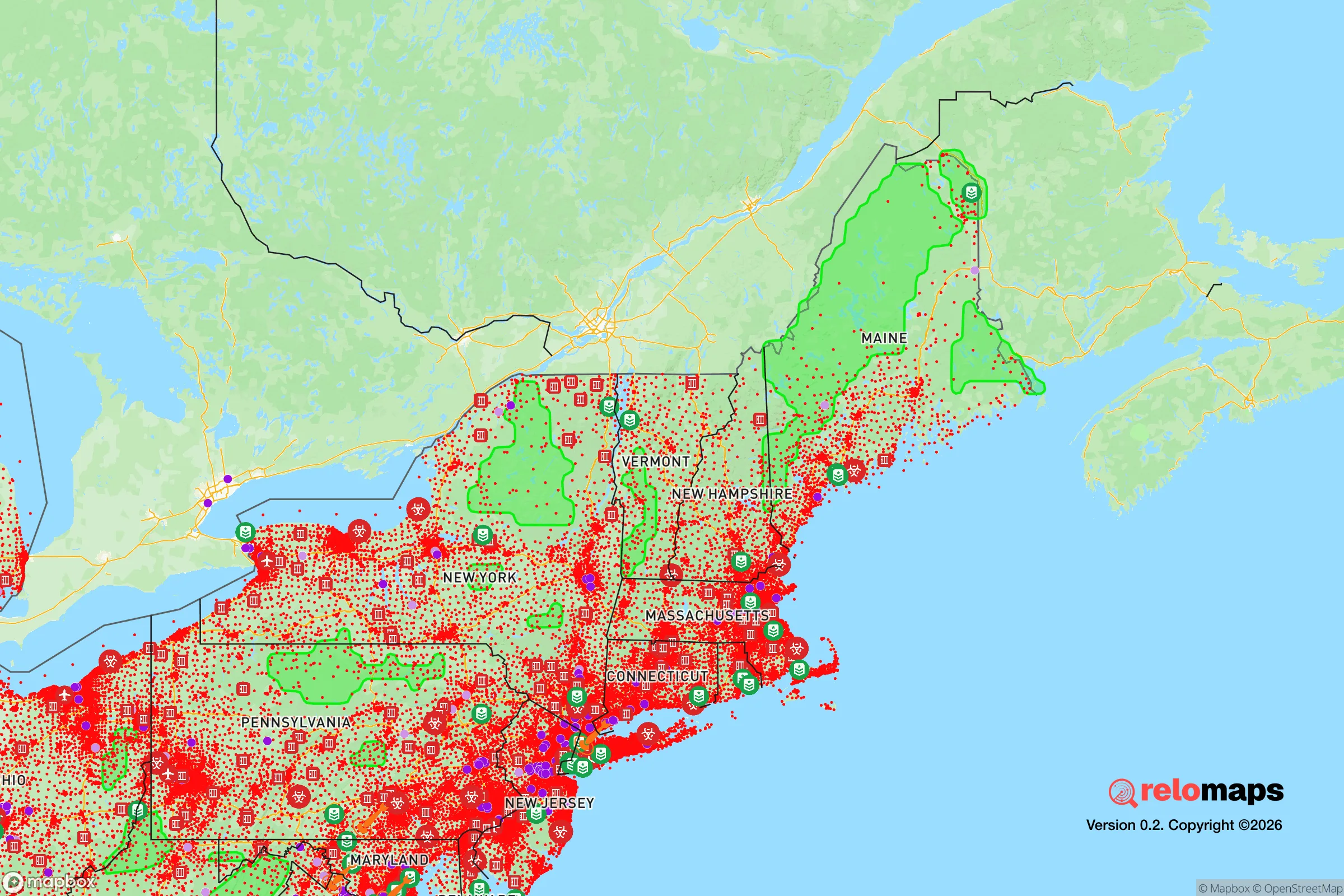
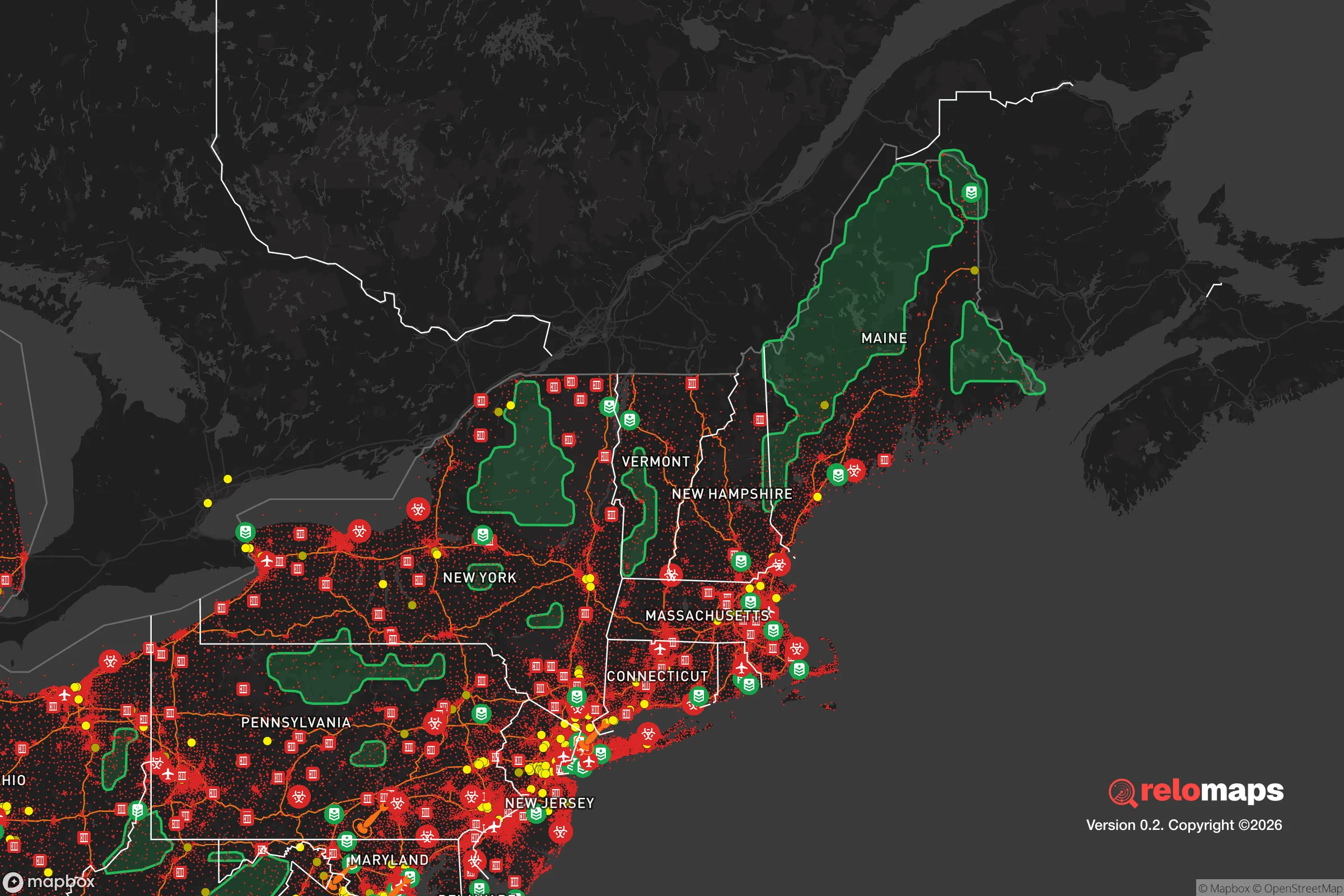


Important Note: For informational purposes only. This does not mean nothing bad ever happens in the green zones. Please use common sense. This is based on public data and modeled with AI. We tried to take a conservative approach but mistakes happen. We update this regularly as new information becomes available.
Solar Generator Recommendations
Backup power matters more here than in safer locations. We've picked three solar generators across budgets and capacity tiers — start with the budget unit if you only need a few essentials, or step up if you want to run a fridge and HVAC for days at a time.

Jackery Portable Power Station Explorer 300
Budget OptionPower on the Go: Weighing only 11 lbs, it's convenient to set up and store with book-sized foldable solar panels

BLUETTI Portable Power Station AC180
Designed for both indoor and outdoor scenarios, AC180 is highly capable as it has a robost capacity and continuous output power.

EF ECOFLOW DELTA Pro Ultra Power Station
Upgraded PickEcoFlow DELTA Pro Ultra is a whole-home energy system designed to grow with your family. Integrated with the Smart Home Panel 2, it scales to meet your evolving energy needs — keeping your home powered, intelligent, and secure through every stage of life.
We earn a commission, at no additional cost to you.
Strategic Assessment Analysis
Newmarket, New Hampshire, occupies a strategic position that balances the convenience of a small town with the sobering realities of proximity to major population and industrial centers. For a relocator prioritizing disaster readiness and self-sufficiency, this town offers a mixed picture: genuine natural advantages in water and defensible terrain, but significant exposure to risks stemming from its location within the Boston-to-Portland corridor. The town's resilience profile is defined less by its own vulnerabilities and more by its relationship to the larger region, making it a location that requires active preparation rather than passive safety.
Geographic position and natural advantages for self-sufficiency
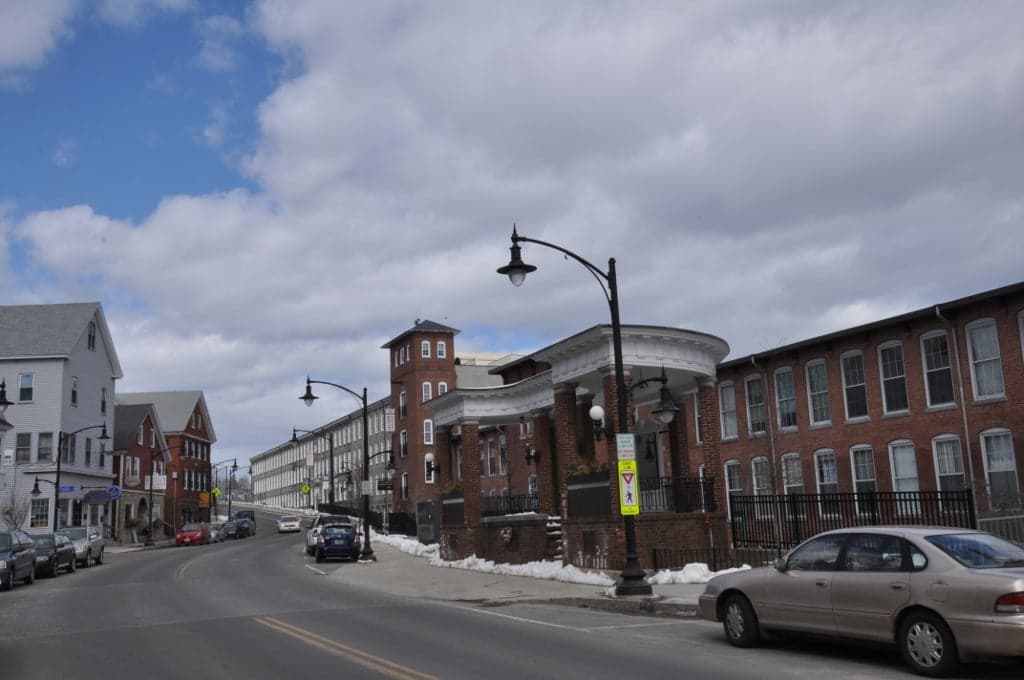
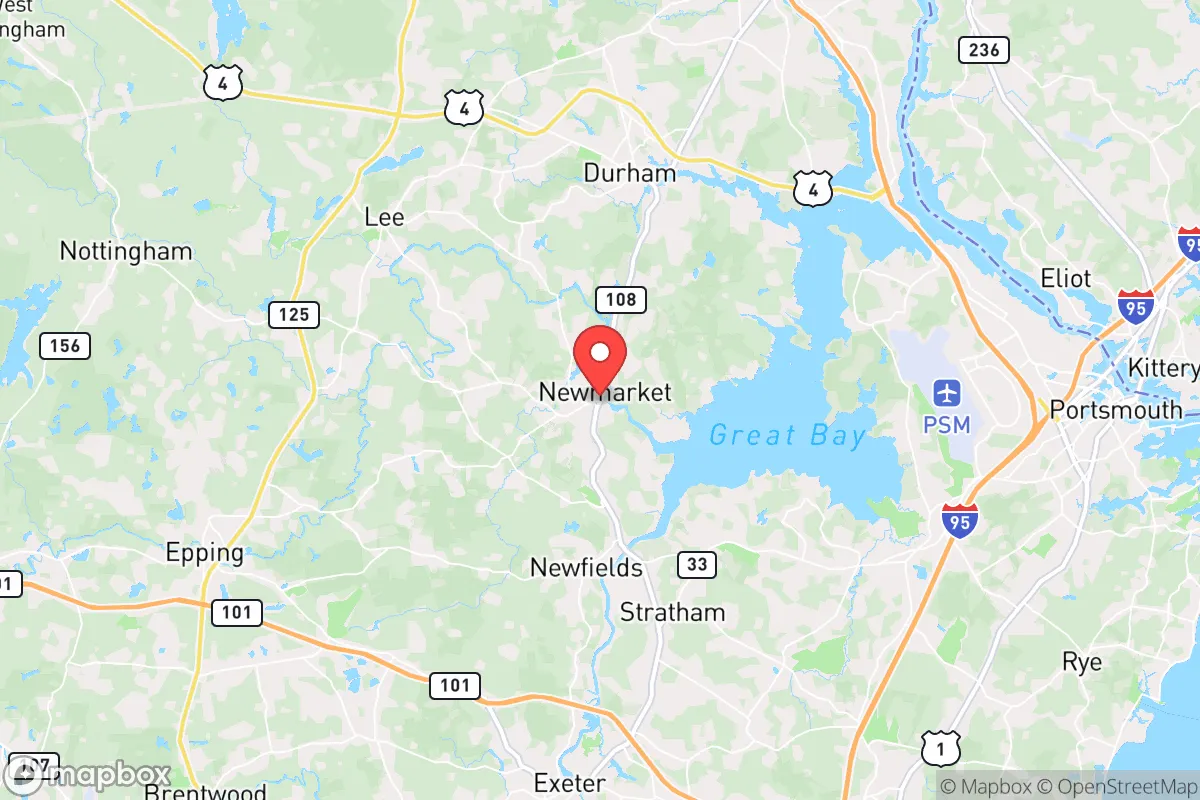
Newmarket sits at the head of the Great Bay estuary, roughly 12 miles from the Atlantic coast and 55 miles north of Boston. Its position along the Lamprey River provides a reliable freshwater source, a critical asset for any long-term resilience plan. The surrounding terrain is a mix of low hills, forested areas, and wetlands, offering some natural defensibility and ample cover for those seeking to operate discreetly. The town's location in southeastern New Hampshire places it within a region that receives consistent rainfall, supporting local agriculture and private well water systems. The area's soils, while not the richest in the state, are workable for small-scale food production, and the nearby forests provide a sustainable source of firewood and building materials. Newmarket's position also places it within a reasonable distance of the White Mountains and the vast, sparsely populated forests of northern New England, offering a potential retreat corridor if conditions deteriorate. The town's own topography, with its river valley and surrounding ridges, creates microclimates that can moderate temperature extremes and provide some protection from the worst of coastal storms.
Risks, exposures, and proximity to fallout-relevant landmarks
The most significant risk for Newmarket is its location within the densely populated and heavily industrialized Seacoast region. The town lies approximately 15 miles from the Seabrook Nuclear Power Plant, a facility that has been a source of regional concern for decades. While the plant's safety record is a matter of public record, its presence introduces a non-trivial risk of radiological release, whether from accident, natural disaster, or deliberate action. The prevailing wind patterns in the region, which often blow from the southwest, could carry fallout directly over Newmarket in such an event. Beyond nuclear risk, the town's proximity to the Portsmouth Naval Shipyard, a strategic military asset, makes it a potential target in any conflict involving state actors. The shipyard's role in maintaining the nuclear submarine fleet is well-documented, and its location on an island in the Piscataqua River, just 10 miles from Newmarket, places the town within a plausible blast or fallout zone for a precision strike. The town also sits near major transportation corridors, including Interstate 95 and the Spaulding Turnpike, which would become chokepoints and targets during any large-scale disruption. These highways, while convenient for daily life, represent significant liabilities in a crisis, as they would channel refugees, military traffic, and potential adversaries directly through the area. The region's dense population, with over 300,000 people within a 20-mile radius, means that any major event would quickly overwhelm local resources and create competition for food, water, and medical care.
Practical resilience for a relocator: food, water, energy, and defensibility
For a relocator serious about self-sufficiency, Newmarket offers a mixed bag of practical assets and liabilities. The town's water situation is relatively strong: the Lamprey River is a perennial stream with good flow, and many homes in the outlying areas draw from private wells. However, the town's municipal water system draws from the river and is vulnerable to contamination from upstream sources or saltwater intrusion during storm surges. A well-maintained private well, ideally with a hand pump or solar-powered backup, is a must for anyone prioritizing resilience. The local food landscape is moderately favorable. The surrounding area has a number of small farms, and the town itself hosts a farmers' market during the growing season. The soils in the river valley are productive enough for vegetable gardens, and the nearby forests support game such as deer and turkey. However, the region's short growing season, typically from May to September, limits year-round food production without significant investment in greenhouses or cold storage. Energy resilience is a more challenging proposition. The town is served by Eversource, and the grid in this region is prone to outages during nor'easters and ice storms. Solar potential is decent, with the area receiving about 4.5 peak sun hours per day, but the region's frequent cloud cover can reduce output significantly during winter months. Wood heat is a practical option, given the abundance of forested land, but it requires significant labor and storage space. Defensibility is perhaps Newmarket's weakest point. The town's layout, with its historic downtown clustered along the river and residential areas spreading out along the main roads, offers few natural chokepoints. The surrounding wetlands and forests provide some cover, but the area's proximity to major highways means that any determined group could reach the town quickly. A relocator would need to choose a property carefully, ideally one set back from main roads with good sightlines and multiple egress routes.
The overall strategic picture for Newmarket is one of calculated risk. The town offers genuine advantages in water access, moderate agricultural potential, and proximity to northern retreat areas. However, these benefits are offset by significant exposure to nuclear and military risks, a dense surrounding population, and limited natural defensibility. For a relocator who is willing to invest in robust preparations—private well and filtration, solar backup, wood heat, and a well-stocked pantry—Newmarket can be a viable base of operations. But it is not a place for those seeking passive safety. The town's location within the Seacoast region means that any major disruption will bring external pressures that cannot be ignored. The key to resilience here is not isolation, but rather a clear-eyed understanding of the risks and a disciplined approach to preparation. For the right person, Newmarket offers a balance of convenience and capability that few other towns in the region can match. For the unprepared, it offers the same dangers as any other town in the shadow of a major metropolitan area. The choice, as always, is in the preparation.

* Values derived from national, state, county, city and local statistics and may differ in a specific area. Last updated: 2026-10-11T03:15:52.000Z
Narrative content on this page is AI-generated and may contain mistakes. Verify any details that matter before acting on them.
ReloMaps may earn a commission from affiliate links at no extra cost to you.

