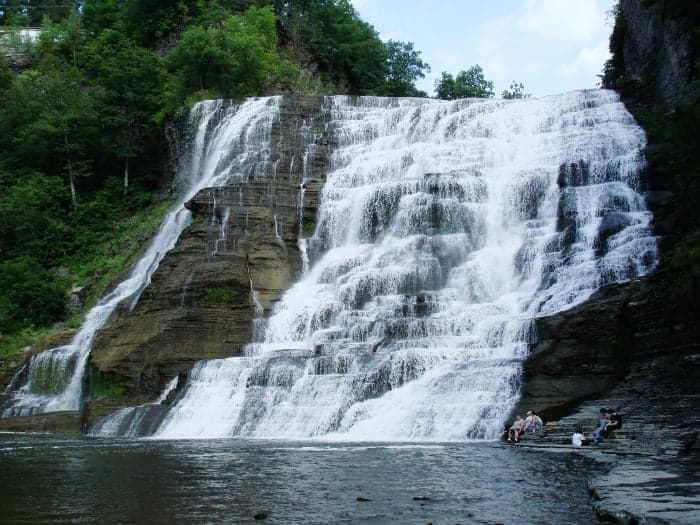
Photo: Wikipedia
Quality of Life in Tompkins County
A livable area that tracks near national norms for affordability, walkability, and neighborhood health.
What does Quality of Life tell us?
Quality of Life measures an area by evaluating factors like cost of living, nearby amenities, country club access, airport proximity, socioeconomic signals and neighborhood character. For large states, this is a general average — quality of life can vary dramatically between metro areas, suburbs, and rural communities within the same state.
What does this tell us?
Quality of Life measures an area by evaluating factors like cost of living, nearby amenities, country club access, airport proximity, socioeconomic signals and neighborhood character. For large states, this is a general average — quality of life can vary dramatically between metro areas, suburbs, and rural communities within the same state.
Cost of Living
9% above national average
94%
The Real Cost of Living in Tompkins County for 2026
| Tier | Individual | Family (4) |
|---|---|---|
| Survival | $22k | $41k |
| Comfortable | $53k | $78k |
| Luxury | $132k+ | $204k+ |
| Elite (Top 5%) | $172k+ | $267k+ |
Quality-of-Life Analysis
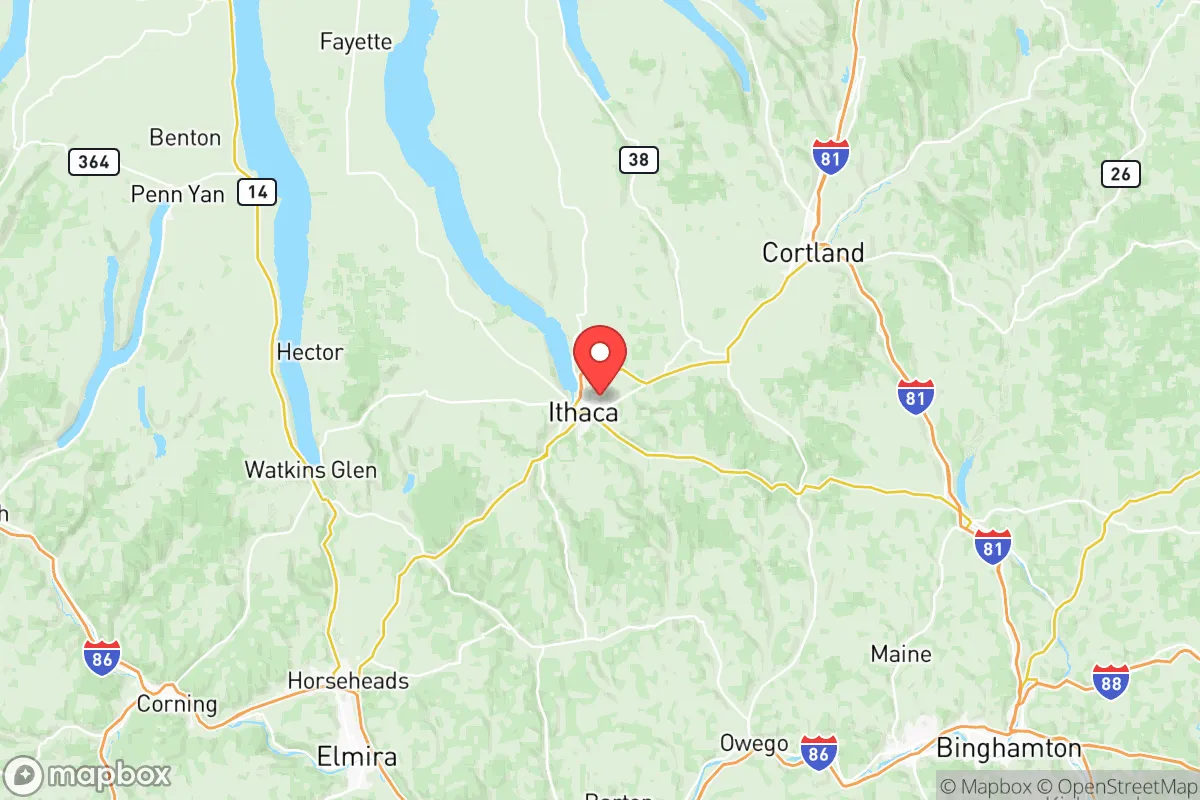
Tompkins County offers a quality-of-life spectrum that ranges from the dense, walkable college town of Ithaca to quiet lakeside hamlets and working farm country, attracting everyone from Cornell researchers and artists to homesteaders and remote workers. The county's character is defined by its dramatic Finger Lakes geography—steep hills, deep gorges, and Cayuga Lake's shoreline—which shapes daily life differently in each corner. With a cost of living index of 109 (just above the national average) and a median home value of $271,500, the county provides more affordable entry points than many Northeast metros, though prices climb sharply in Ithaca proper.
Largest town(s) & population centers
Ithaca is the county's undisputed hub, home to Cornell University and Ithaca College, and the only place in Tompkins County with a true urban feel. Daily life here revolves around the Commons pedestrian mall, a dense mix of independent bookstores, farm-to-table restaurants, and live music venues. The student population keeps the city young and politically progressive, but also drives a competitive rental market where the median rent of $1,374 often requires roommates or a substantial income. Cayuga Heights and Northeast Ithaca, both adjacent to Cornell, offer quieter residential streets with larger homes and deeper setbacks, appealing to faculty and professionals who want proximity to campus without the student noise. Lansing, on the eastern shore of Cayuga Lake, blends suburban subdivisions with lakefront access and a strong school district, making it a top choice for families who commute into Ithaca (the countywide average commute is just 20.5 minutes).
Smaller towns & rural pockets
Outside the Ithaca orbit, the county's smaller communities offer a markedly different pace. Trumansburg, on the western shore of Cayuga Lake, is a tight-knit village of about 1,800 with a walkable main street, a popular farmers market, and Taughannock Falls State Park at its doorstep. It attracts artists, musicians, and families seeking a small-town feel with strong community ties. Dryden, to the east, is more agricultural, with a historic village center and sprawling farmland that hosts the Dryden Agway and the annual Dryden Dairy Day. Groton, in the county's northeast corner, is a classic upstate hamlet with a compact downtown, a public golf course, and a mix of old farmhouses and newer subdivisions. Newfield, to the south, is the most rural of the incorporated villages, with deep wooded valleys, the Newfield Covered Bridge, and a population that skews toward outdoor enthusiasts and those seeking land for under $200,000. Unincorporated areas like Slaterville Springs and Brooktondale are tiny crossroads communities where residents often live on dirt roads and rely on well water, trading convenience for privacy and acreage.
Cost & lifestyle range
The cost of living varies dramatically across the county. At the high end, Ithaca's Northside and Fall Creek neighborhoods command median home prices well above $350,000, with Victorian homes near the Commons fetching $400,000 or more. Cayuga Heights is the county's priciest enclave, where lake-view properties regularly exceed $500,000. At the lower end, Groton and Newfield offer median home values closer to $200,000, and rural Dryden has pockets where fixer-uppers on an acre sell for under $150,000. Rent follows the same gradient: a one-bedroom in Ithaca averages $1,400, while the same unit in Trumansburg or Dryden might run $900–$1,100. Amenities also thin out as you move away from Ithaca. The city has a robust bus system (TCAT), multiple grocery stores including Wegmans and GreenStar Co-op, and a full-service hospital (Cayuga Medical Center). In contrast, Groton has a single small grocery store and no urgent care, requiring a 20-minute drive to Ithaca for most services. Trumansburg and Dryden sit in the middle, each with a handful of restaurants, a pharmacy, and a library, but still dependent on Ithaca for specialized shopping and healthcare.
Who thrives in Tompkins County depends on which end of the spectrum they choose. Academics, students, and creative professionals gravitate to Ithaca for its intellectual energy and cultural density. Families and remote workers often settle in Lansing or Trumansburg for the schools and lake access. Homesteaders, farmers, and those seeking land find their place in Newfield, Groton, or rural Dryden, where property taxes are lower and neighbors are few. The county's short average commute means that even the most rural residents can reach Ithaca's jobs and amenities in under 25 minutes, making it possible to live on a gravel road and still attend a concert at the State Theatre on a weeknight. The key is knowing which trade-offs—walkability vs. space, price vs. proximity—matter most.

Crime in Tompkins County
Crime rates similar to the national median for U.S. locations.
Violent CrimeViolent Crime Analysis
Property CrimeProperty Crime Analysis
Crime Analysis
Tompkins County, anchored by Ithaca, reports a violent crime rate of 361.3 per 100,000 residents and a property crime rate of 1,530.2 per 100,000, placing it above the national average for violent offenses but near the national median for property crime. While the county is often perceived as a safe college town environment, the data reveals a more complex picture, particularly in the City of Ithaca, where crime is concentrated. The progressive policies of the Tompkins County District Attorney’s office, which emphasize diversion and reduced incarceration, have drawn criticism from residents who argue they contribute to a revolving-door justice system that prioritizes offender rehabilitation over public safety.
Crime in context
Tompkins County’s violent crime rate of 361.3 per 100,000 is roughly 25% higher than the national average of approximately 290 per 100,000, and significantly exceeds the New York State average of about 240 per 100,000. Property crime at 1,530.2 per 100,000 is slightly below the national average of 1,954 per 100,000 but above the state average of 1,200 per 100,000. The disparity is largely driven by the City of Ithaca, which accounts for the majority of reported incidents. Surrounding towns like Dryden, Lansing, and Caroline report far lower crime rates, often with violent crime figures below 100 per 100,000. The county’s progressive District Attorney, Matthew Van Houten, has implemented policies that include presumptive non-prosecution for certain low-level offenses and a heavy reliance on restorative justice, which critics say emboldens repeat offenders and undermines deterrence.
What residents experience
Residents of Tompkins County experience a stark urban-rural divide in safety. In Ithaca, the downtown area and the Collegetown neighborhood near Cornell University see elevated rates of theft, assault, and burglary, often tied to student populations and transient individuals. The Southside and West Hill neighborhoods in Ithaca also report higher property crime, including vehicle break-ins and package theft. In contrast, the villages of Trumansburg, Groton, and Cayuga Heights are consistently cited as very safe, with violent crime rates near zero. The county’s approach to drug offenses—particularly the Ithaca Police Department’s policy of not making arrests for simple possession—has been a point of contention, with some residents feeling that law enforcement has been disarmed in dealing with open drug use and related theft. The Tompkins County Sheriff’s Office patrols the more rural areas, but its resources are stretched thin, leading to slower response times in outlying hamlets like Slaterville Springs and Brooktondale.
Neighborhood-level variation is pronounced. Within the City of Ithaca, the Fall Creek and Northside neighborhoods have moderate crime rates, while the South Hill area near Ithaca College sees occasional spikes in burglary. The progressive judicial philosophy in the county, including the use of Ithaca’s Community Justice Center, which focuses on alternatives to incarceration, has resulted in low jail populations but also a perception among some residents that consequences for crime are minimal. For example, repeat shoplifters and car thieves in Ithaca often face deferred prosecution or short sentences, leading to frustration among business owners and homeowners. Those seeking a safer environment typically look to the towns of Ulysses and Enfield, where crime is virtually nonexistent, though these areas lack the amenities of Ithaca. Overall, Tompkins County offers a safe experience for those outside the urban core, but the progressive justice policies in the city create a notable risk for residents and visitors in Ithaca proper.
* Values derived from national, state, county, city and local statistics and may differ in a specific area. Last updated: 2026-07-16T01:02:28.000Z
Narrative content on this page is AI-generated and may contain mistakes. Verify any details that matter before acting on them.
ReloMaps may earn a commission from affiliate links at no extra cost to you.

