Photo: Wikipedia
Demographics of Steuben County
Affluence Level in Steuben County
A middle-class area roughly in line with national averages across income, home values, education, and employment.
People of Steuben County
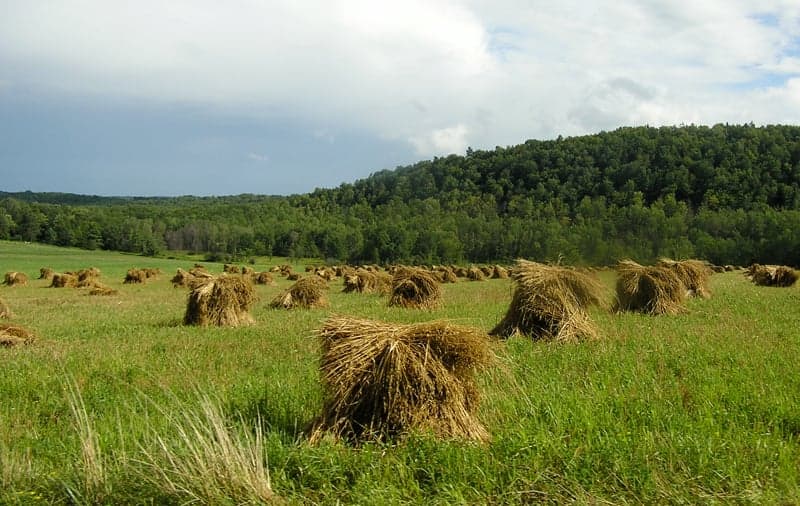
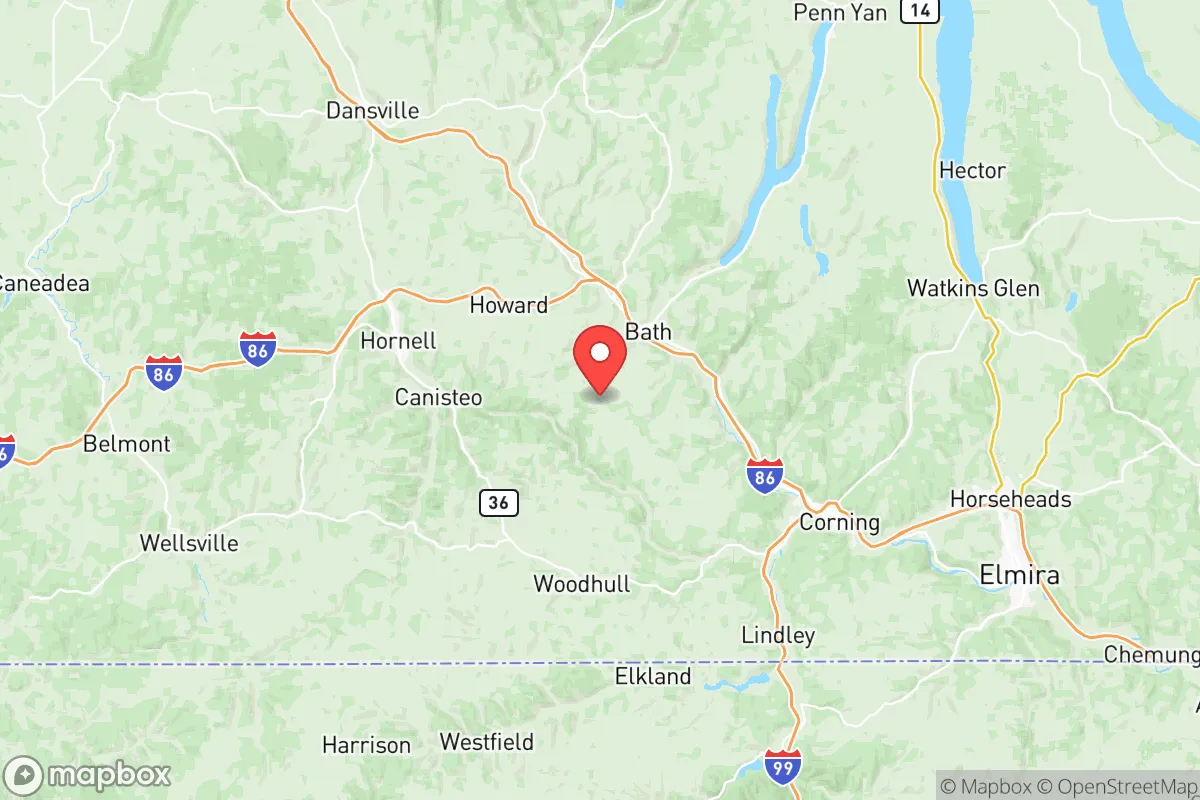
Steuben County, New York, is home to 93,034 residents, a population that is 91.8% white and overwhelmingly native-born, with only 1.4% foreign-born. The county’s character is shaped by its rural, small-town identity, anchored by the cities of Corning and Hornell, and defined by a deep-rooted sense of place among families who have lived here for generations. This is a region where the legacy of 19th-century European settlement still dominates the cultural landscape, though subtle shifts in age and employment are beginning to reshape who lives here and why.
Settlement & growth (pre-1960)
Before European contact, the area now known as Steuben County was part of the traditional homeland of the Seneca Nation, one of the five nations of the Iroquois Confederacy. The Seneca controlled a vast territory in the Finger Lakes region, using the land for hunting, fishing, and seasonal agriculture. Their presence was largely displaced after the American Revolution, when the 1779 Sullivan-Clinton campaign systematically destroyed Seneca villages across western New York, including settlements near present-day Bath and Painted Post. The 1794 Treaty of Canandaigua formally ceded most of the region to the United States, opening it to white settlement.
The first wave of American settlers arrived in the 1790s, primarily Yankees from New England and veterans of the Revolutionary War who were granted land in the newly formed Steuben County (established 1796). These early pioneers were drawn by the promise of fertile soil in the Chemung and Canisteo River valleys. They established the county’s first permanent settlements at Bath (the county seat, founded 1793) and Addison (1795). By the 1820s, the county’s population had swelled to over 20,000, almost entirely of English and Scots-Irish stock, with a scattering of Dutch families from the Hudson Valley.
The second major wave came with the Erie Canal’s completion in 1825, which made western New York accessible to European immigrants. German farmers began arriving in the 1830s and 1840s, settling in the northern townships of Wayland and Dansville, where they established dairy farms and small breweries. Irish laborers followed in the 1840s and 1850s, many working on the construction of the New York and Erie Railroad, which reached Hornell in 1851. The Irish concentrated in Hornell and Corning, where they formed the backbone of the railroad and glassmaking workforces. By 1860, the county’s population had reached 46,000, with immigrants making up roughly 15% of the total.
The late 19th century brought a smaller but distinct wave of Italian immigrants, who arrived between 1880 and 1910 to work in the burgeoning glass industry in Corning. The Corning Glass Works, founded in 1851, became the county’s dominant employer, drawing skilled glassblowers from Italy and later from Eastern Europe. These Italian families settled in Corning’s “Goosetown” neighborhood and in the village of Painted Post, where their descendants remain a visible part of the community. A modest number of Polish and Slovak families also arrived during this period, settling in Hornell and the rural hamlet of Canisteo to work on the railroad and in local factories.
By 1900, Steuben County’s population peaked at 82,000, a figure it would not surpass until the 1970s. The early 20th century saw little new immigration; the county’s growth came from natural increase and the expansion of Corning’s manufacturing base. The Great Depression and World War II slowed migration further, and the county’s population actually declined slightly between 1930 and 1950 as young people left for industrial jobs in Buffalo and Rochester. The post-war boom brought a modest influx of returning veterans and their families, but Steuben County remained overwhelmingly white, native-born, and rural through the 1960s.
Modern era (post-1965)
The 1965 Hart-Cellar Act, which dramatically expanded non-European immigration, had almost no impact on Steuben County. Unlike major metropolitan areas that saw waves of new arrivals from Asia, Latin America, and Africa, Steuben County’s foreign-born population today stands at just 1.4%—a figure virtually unchanged from 1970. The county’s demographic story since 1965 is not one of immigration but of domestic migration and suburbanization.
The most significant shift has been the decline of manufacturing and the corresponding out-migration of young adults. Corning Glass Works (now Corning Incorporated) restructured in the 1980s and 1990s, shedding thousands of jobs. The city of Corning’s population fell from 12,000 in 1970 to 10,500 by 2020. Hornell, once a thriving railroad town, saw its population drop from 10,000 to 8,200 over the same period. The county’s overall population has been essentially flat since 1970, hovering between 93,000 and 99,000, with a slight decline in the 2010s.
Suburbanization has been modest but noticeable. The village of Horseheads (though technically in Chemung County, it serves as a bedroom community for Corning) and the town of Erwin (which includes Painted Post) have seen new housing developments catering to professionals commuting to Corning Incorporated’s headquarters. These areas have attracted a small number of East/Southeast Asian professionals—primarily engineers and scientists recruited by Corning—who now make up 1.1% of the county’s population. Indian-subcontinent residents, at 0.5%, are a separate and even smaller group, concentrated in Corning’s technical workforce.
The county’s Hispanic population, at 1.9%, has grown slowly, primarily through the arrival of Mexican and Central American workers in the agricultural sector. These families have settled in the rural townships of Bath and Hornell, where they work in dairy farming and food processing. The Black population, at 1.5%, has remained stable and is largely concentrated in Corning and Hornell, with roots in the post-World War II migration of African Americans from the South to industrial jobs in the North.
One notable trend is the aging of the population. Steuben County’s median age is 44.3, significantly higher than the national average of 38.8. Young adults continue to leave for college and urban job markets, while retirees from the Finger Lakes region and the Northeast are drawn to the county’s low cost of living and rural character. This has created a demographic profile that is older, whiter, and more native-born than the national average.
The future
Steuben County’s population is projected to decline modestly over the next 20 years, driven by low birth rates and continued out-migration of young adults. The county’s racial and ethnic composition will remain overwhelmingly white, with only incremental growth in the Hispanic and Asian populations. The foreign-born share is unlikely to rise above 2-3% without a major shift in local employment or immigration policy.
The most likely source of new residents is domestic migration from higher-cost areas in the Northeast. The rise of remote work has made Steuben County more attractive to telecommuters seeking affordable housing and rural lifestyles. The villages of Hammondsport on Keuka Lake and Watkins Glen (just over the county line in Schuyler County) have already seen an influx of second-home buyers and retirees from New York City and the Hudson Valley. This trend may accelerate, bringing a slightly more diverse and educated population to the lakefront communities, though the impact on the county as a whole will be limited.
Corning Incorporated’s continued investment in its headquarters and research facilities in Corning and Erwin will likely sustain a small but steady stream of technical professionals from outside the region. These workers, many of whom are East/Southeast Asian or Indian, will remain a tiny minority but will contribute to the county’s modest diversity. The agricultural sector will continue to rely on Hispanic labor, but without a path to permanent settlement, these families are unlikely to form large, stable communities.
Steuben County is becoming a quieter, older, and more retirement-oriented place. The cultural identity remains rooted in its 19th-century European heritage, with little pressure from immigration to change. For someone moving in now, the county offers a stable, safe, and affordable environment with strong community ties, but little of the demographic dynamism found in growing regions of the country. The population is not heading toward greater diversity or rapid growth; it is settling into a steady, slow decline, with the character of the county shaped by those who choose to stay or return.

* Values derived from national, state, county, city and local statistics and may differ in a specific area. Last updated: 2026-11-07T08:08:43.000Z
Narrative content on this page is AI-generated and may contain mistakes. Verify any details that matter before acting on them.
ReloMaps may earn a commission from affiliate links at no extra cost to you.

