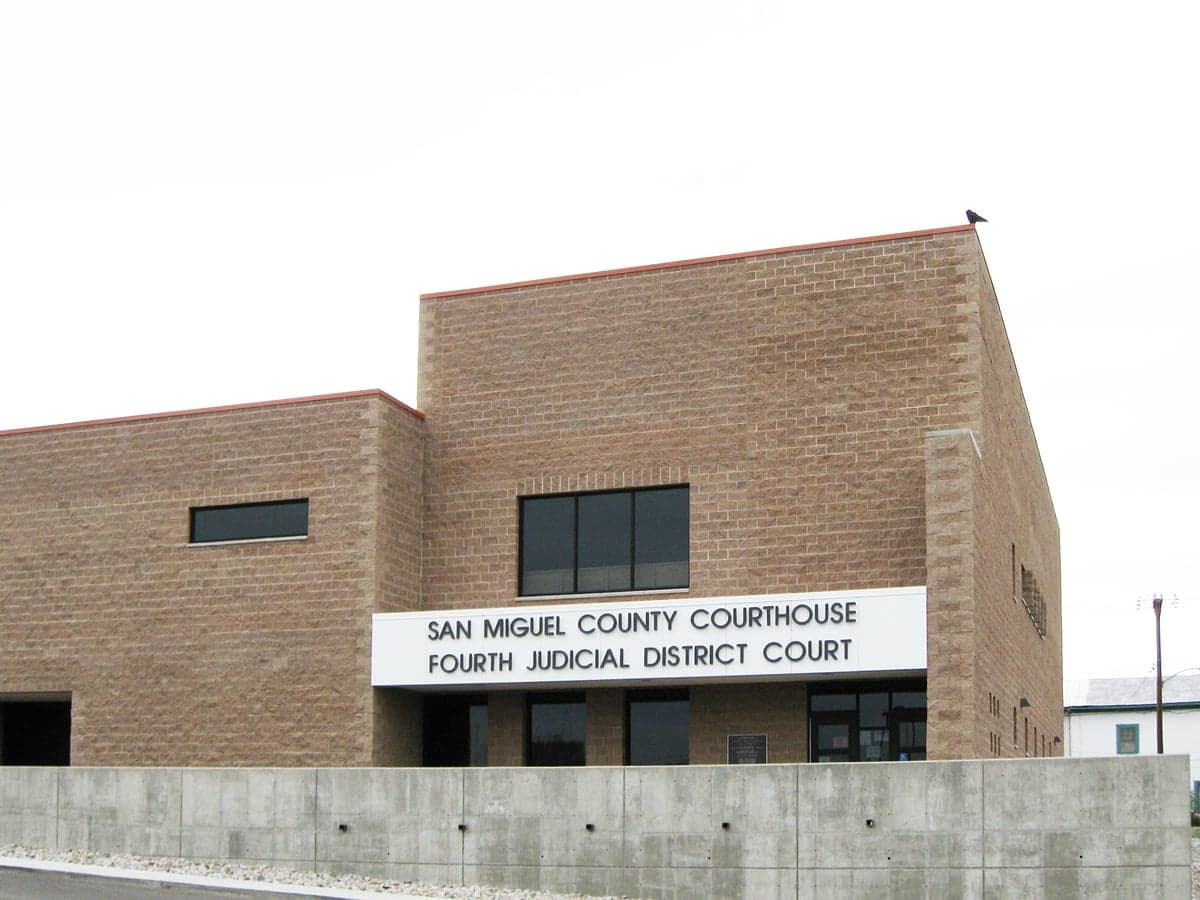
Photo: Wikipedia
Demographics of San Miguel County
Affluence Level in San Miguel County
A below-average socioeconomic profile. Incomes, home values, and educational attainment trail the U.S., with higher poverty and unemployment.
People of San Miguel County
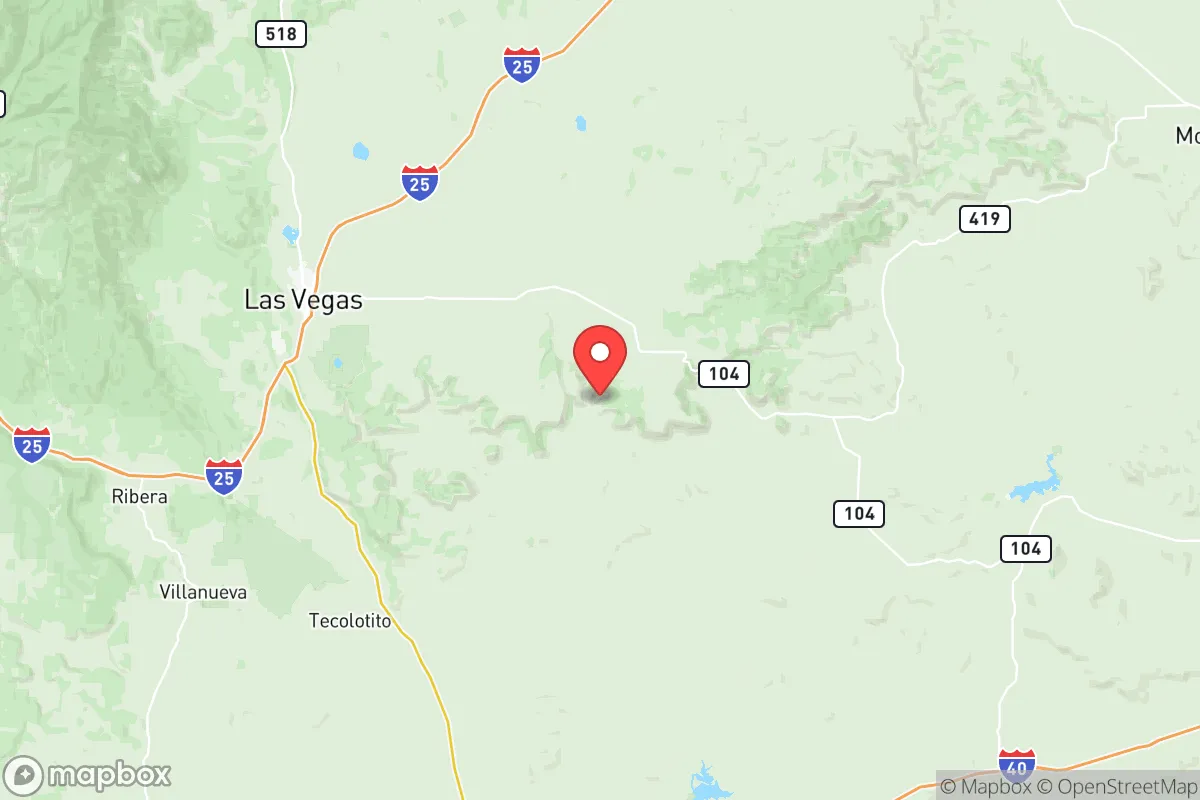
San Miguel County, New Mexico, is a predominantly Hispanic, rural county of 27,036 residents, anchored by the historic town of Las Vegas (the county seat) and the smaller communities of Pecos, Mora, and Villanueva. With a population that is 75.3% Hispanic and only 17.4% White, the county’s identity is deeply rooted in its Spanish colonial and Mexican-era land grant history, distinct from the Anglo-dominated settlement patterns of much of the American West. The county is characterized by a low foreign-born share (1.6%), a modest college attainment rate (26.2%), and a sparse population density that reflects its rugged terrain along the eastern slopes of the Sangre de Cristo Mountains. For a conservative-leaning audience, San Miguel County represents a place where traditional Hispanic Catholic culture, rural self-reliance, and a strong sense of local place have persisted, even as the county faces economic stagnation and population decline.
Settlement & growth (pre-1960)
The human history of San Miguel County begins with the Tiwa and Tewa Pueblo peoples, who inhabited the upper Pecos River valley for centuries before European contact. The most significant pre-American settlement was the Pueblo of Pecos, a major trade hub that connected the Rio Grande pueblos with the Plains tribes. Spanish colonization arrived in the early 17th century, but permanent Hispanic settlement in the area that is now San Miguel County began in earnest after the 1692 reconquest of New Mexico. The Spanish crown issued large land grants—such as the San Miguel del Vado Land Grant (1794) and the Las Vegas Land Grant (1835)—to attract settlers to the frontier. These grants drew Hispanic families from the Rio Grande valley, who established farming and ranching communities along the Gallinas River and the Pecos River. The town of Las Vegas was founded in 1835 as a plaza on the Santa Fe Trail, becoming a critical stop for traders and a center of Hispanic pastoral life. The village of Pecos, near the ruins of the ancient pueblo, grew as a farming settlement, while Villanueva and Ribera developed along the Pecos River as irrigated agricultural hamlets.
After the U.S. takeover of New Mexico in 1846, San Miguel County saw a modest influx of Anglo-American traders, soldiers, and merchants, but the county remained overwhelmingly Hispanic. The arrival of the Atchison, Topeka and Santa Fe Railway in Las Vegas in 1879 briefly spurred a boom, bringing a small number of Anglo railroad workers, merchants, and a few Italian and Irish immigrants. However, the county’s rugged terrain and lack of large-scale mining or timber operations limited Anglo settlement. The Dust Bowl and Great Depression of the 1930s pushed some Hispanic families into migrant farm labor, but the county’s population remained stable and culturally homogeneous. By 1960, San Miguel County was still over 90% Hispanic, with a small Anglo minority concentrated in Las Vegas and the higher-elevation ranching areas around Mora and Ocate. The county’s economy was based on subsistence agriculture, sheep ranching, and small-scale timber, with Las Vegas serving as a regional trade and government center.
Modern era (post-1965)
The post-1965 era brought no large-scale immigration wave to San Miguel County. The county’s foreign-born population today is just 1.6%, far below the national average, and the overwhelming majority of residents are U.S.-born Hispanics whose families have lived in the area for generations. The most significant demographic shift since the 1960s has been out-migration, not in-migration. Young people, particularly those with college degrees, have left for larger cities like Albuquerque, Santa Fe, and Denver in search of jobs. This has driven a steady population decline from a peak of roughly 30,000 in the 1960s to 27,036 today. The county’s White population share has actually fallen slightly (from around 20% in 1970 to 17.4% today), as the small Anglo ranching and professional class has aged and not been replaced. The Black population remains tiny at 1.2%, and East/Southeast Asian communities account for just 0.4%—mostly a handful of families in Las Vegas associated with the local university (New Mexico Highlands University) or healthcare sector. There is no measurable Indian subcontinent population.
Suburbanization has been minimal. The county has no major interstate highway, and the nearest significant urban center is Santa Fe, 60 miles west. Las Vegas has seen some spillover from Santa Fe’s growth, with a few retirees and telecommuters buying historic homes, but this has been a trickle. The village of Pecos, closer to Santa Fe, has attracted a small number of Anglo artists and second-home owners, but the county remains overwhelmingly Hispanic and rural. The most notable modern development has been the growth of the Pecos National Historical Park, which draws tourists but has not spurred large-scale population growth. The county’s cultural identity remains rooted in Spanish-language traditions, Catholic feast days, and the legacy of the land grants, which still shape property ownership patterns and local politics.
The future
San Miguel County’s population is projected to continue a slow decline over the next 10–20 years, as the out-migration of young adults persists and the birth rate among the aging Hispanic population falls. The county is becoming slightly less diverse in the sense that the small Anglo and other minority populations are shrinking faster than the Hispanic majority. The Hispanic share may rise to 80% or higher by 2040, simply due to differential aging and out-migration. New communities are not forming; instead, the population is concentrating in the county’s few remaining service centers—Las Vegas (the only town with a hospital, grocery stores, and a university) and, to a lesser extent, Pecos and Mora. The outlying villages like Villanueva, Ribera, and Ocate are depopulating as younger generations leave and older residents pass away.
There is no sign of a major new immigrant group arriving. The county lacks the job base—no large employers, no manufacturing, no logistics hubs—to attract domestic or international migrants. The one potential wildcard is climate migration: as the Southwest becomes hotter and drier, some people may seek the cooler, forested elevations of San Miguel County. However, water scarcity and limited infrastructure make a large influx unlikely. The county’s cultural identity will likely remain stable: deeply Hispanic, Catholic, and rural, with a strong attachment to local land and tradition. For a conservative-leaning family or individual moving in now, San Miguel County offers a place where community ties are strong, crime is low, and the pace of life is slow—but where economic opportunities are limited and the population is aging.
San Miguel County is becoming a quieter, older, and more uniformly Hispanic place, shaped by out-migration and the persistence of its centuries-old land grant culture. For someone moving in today, it offers an authentic, traditional New Mexican lifestyle at the cost of limited job prospects and a shrinking population base. The county is not diversifying or growing; it is consolidating around its historic Hispanic core, making it one of the most culturally stable—and demographically static—counties in the American Southwest.

* Values derived from national, state, county, city and local statistics and may differ in a specific area. Last updated: 2026-06-18T01:54:48.000Z
Narrative content on this page is AI-generated and may contain mistakes. Verify any details that matter before acting on them.
ReloMaps may earn a commission from affiliate links at no extra cost to you.

