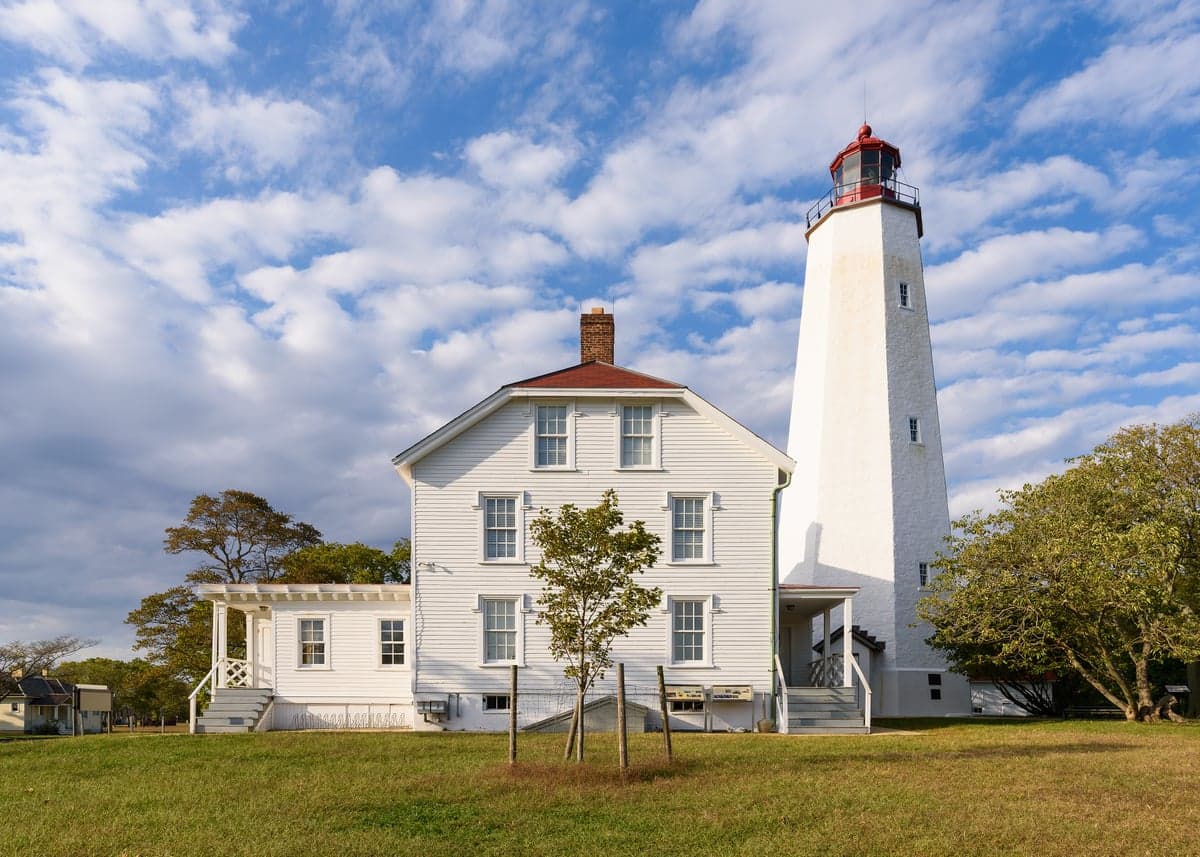
Photo: Wikipedia
Political ClimatePolitical Climate in Monmouth County
Showing district-level results — no local-only data available.
Local Political AnalysisPolitical Analysis of Monmouth County
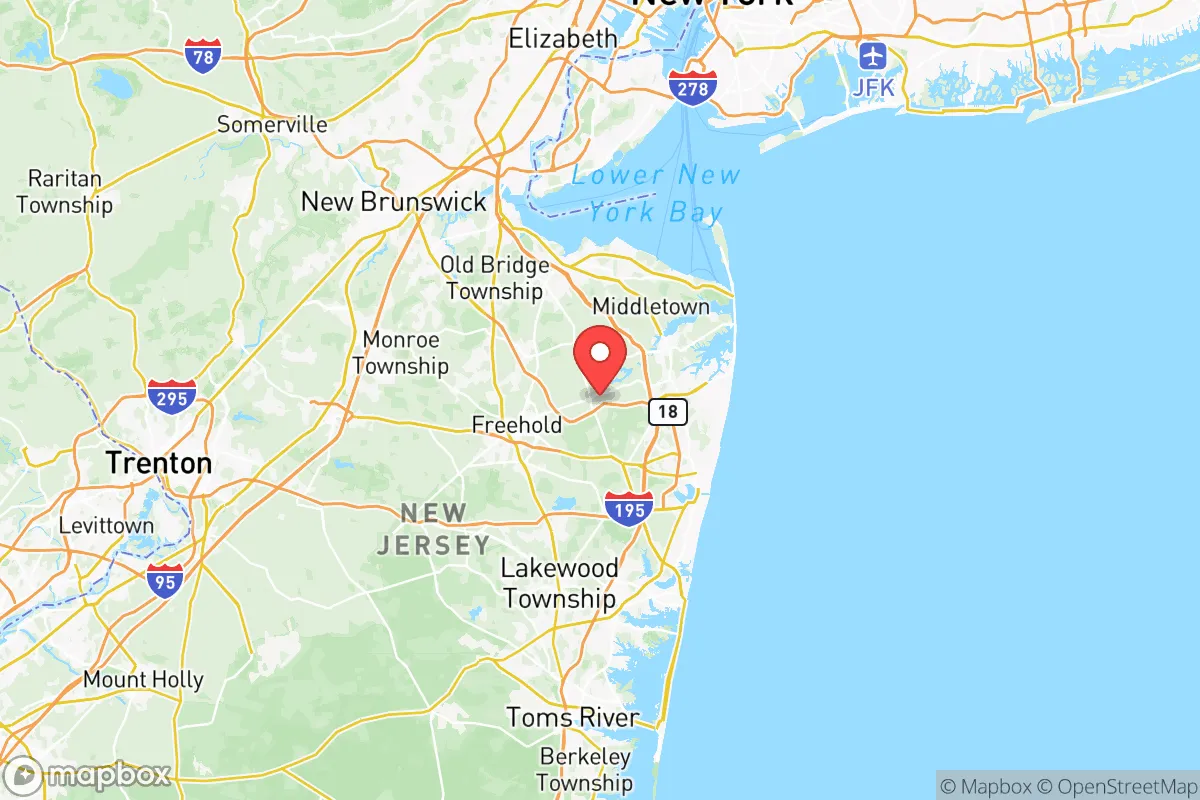
Monmouth County, New Jersey, has long been a Republican stronghold in an otherwise blue state, carrying a Cook Partisan Voting Index of R+14. That means the county consistently votes about 14 points more Republican than the nation as a whole, a stark contrast to New Jersey's statewide PVI of D+5. While the county has trended slightly more competitive in recent presidential cycles—Hillary Clinton lost it by 6 points in 2016, Joe Biden by 8 in 2020—it remains one of the most reliably red counties in the Northeast. The GOP's grip is strongest in the rural western and southern towns, while the coastal and commuter-heavy eastern towns have shifted leftward, creating a patchwork of precinct-level polarization.
How it compares
Compared to New Jersey as a whole, Monmouth County is a political outlier. The state's D+5 PVI reflects the overwhelming Democratic margins in urban centers like Newark, Jersey City, and the Philadelphia suburbs. Monmouth, by contrast, is part of the "red wall" along the Jersey Shore that includes Ocean and Cape May counties. Within Monmouth itself, the political geography is sharply divided. Towns like Middletown, Holmdel, and Colts Neck are reliably Republican, often delivering 60% or more of their votes to GOP candidates. Meanwhile, Asbury Park, Red Bank, and Long Branch are Democratic strongholds, with Asbury Park regularly voting over 80% Democratic. The swing precincts are in the middle-class suburbs like Marlboro and Manalapan, where independent voters and moderate Republicans have increasingly split tickets, especially in state and local races. This internal diversity means Monmouth is not a monolith—it's a county where a Republican can win countywide but lose several key towns by wide margins.
What this means for residents
For conservative residents, Monmouth County offers a rare environment in New Jersey where Republican policies and candidates are not just viable but often dominant at the local level. The county government, board of commissioners, and many municipal councils are GOP-controlled, which shapes everything from land-use decisions to tax policy. For liberal residents, the county's red lean can feel isolating, but the blue towns provide active Democratic organizations and representation in the state legislature—Monmouth's delegation in Trenton is split, with Democrats holding several Assembly and Senate seats. The practical effect is a county that often feels like a political battleground: school board meetings can get heated over curriculum and funding, and local elections frequently hinge on development and property tax issues rather than national culture wars. Both sides find that Monmouth's politics are more pragmatic than ideological, with a strong emphasis on local governance and quality-of-life concerns.
Culturally, Monmouth County stands apart from the rest of New Jersey in its blend of suburban conservatism and shore-town liberalism. The county's identity is shaped by its beaches, horse farms, and historic towns, which foster a sense of local pride that transcends party lines. Policy-wise, Monmouth is more skeptical of state-level progressive initiatives like strict gun control and high-density housing mandates, often pushing back through legal challenges or local zoning. At the same time, the county has embraced environmental conservation—its parks system is one of the best-funded in the state—and supports moderate positions on education and infrastructure. The result is a political climate that feels more like a purple microcosm than a deep-red enclave, where the national polarization is softened by a shared commitment to the Shore way of life.

State Political ClimatePolitical Climate in New Jersey
State Political AnalysisPolitical Environment in the State
New Jersey has a solid Democratic lean, with a Cook PVI of D+5, but don’t let that single number fool you—this state is far from a one-party monolith. The political reality here is a story of two New Jerseys: the densely packed, transit-oriented urban core that votes overwhelmingly blue, and the sprawling suburbs, exurbs, and rural stretches where Republicans can still win local races and occasionally flip a county. Over the past 10-20 years, the state has drifted leftward on social and cultural issues, but the tax burden and regulatory climate have kept fiscal conservatism alive as a potent local issue, especially in places like Morris County and Ocean County.
Urban vs. rural divide
The political map of New Jersey is a textbook case of geographic polarization. The Democratic stronghold is the Newark-Jersey City corridor in the northeast, along with Camden and Trenton in the south—cities where union households, public-sector workers, and diverse immigrant populations drive turnout. These areas reliably deliver 70-80% of the vote for Democratic candidates. In contrast, the rural and exurban counties of Sussex, Hunterdon, and Salem are reliably Republican, with Ocean County being the GOP’s biggest vote bank—it went +22 for Trump in 2020. The real battleground is the “in-between” suburbs: Bergen County and Middlesex County have trended blue over the last decade, driven by Asian-American and Hispanic growth, while Monmouth County has become a true swing county, flipping between parties depending on the race. A conservative moving to New Jersey will find their strongest communities in Ocean, Sussex, and parts of Morris, while a liberal will feel at home in Hudson, Essex, and Mercer counties.
Policy environment
New Jersey’s policy environment is defined by its aggressive tax-and-spend posture. The state has the highest property taxes in the nation (averaging over $9,500 annually), a progressive income tax that tops out at 10.75% for earners over $1 million, and a sales tax of 6.625%. On the regulatory side, it’s one of the most stringent states for business, with complex environmental rules and a strong public-sector union presence. Education policy is centralized and well-funded—per-pupil spending is among the highest in the U.S., but the system is heavily reliant on local property taxes, creating wide disparities between wealthy suburbs like Millburn and poorer cities like Paterson. Healthcare is dominated by large hospital systems, and the state expanded Medicaid under the ACA. Election laws are moderately accessible: no-excuse mail-in voting was made permanent in 2021, and same-day registration is available. For a conservative, the policy environment feels like a constant uphill battle on taxes and regulation, but the quality of public services—especially schools and infrastructure—is a genuine trade-off.
Recent policy direction
Over the last five years, New Jersey has moved decisively left on several fronts. In 2022, Governor Phil Murphy signed a comprehensive gun safety package that banned .50 caliber rifles, raised the purchasing age to 21, and required firearm owners to carry liability insurance—one of the strictest regimes in the country. On education and parental rights, the state has resisted the national trend: in 2023, Murphy signed a law prohibiting school districts from requiring parental notification if a student changes their gender identity or pronouns, a flashpoint for conservative families. Medical and bodily autonomy is fully protected—abortion is legal up to viability, and a 2022 law expanded access by allowing advanced practice nurses to perform the procedure. On property rights, the state’s Mount Laurel Doctrine forces municipalities to zone for affordable housing, which has led to ongoing fights in suburbs like Montclair and Maplewood over development density. Voting access has expanded: automatic voter registration at DMVs and early in-person voting were implemented in 2021. For a conservative relocator, the key takeaway is that the state’s trajectory on gun rights, parental rights, and taxes is clearly leftward, but the pace is slow enough that local resistance—especially in GOP-controlled counties—can still blunt the impact.
Civil unrest & political movements
New Jersey has a history of organized political activism on both sides, but it rarely boils over into the kind of unrest seen in other states. The Black Lives Matter protests in 2020 were large and sustained in Newark and Jersey City, but mostly peaceful. On the right, the New Jersey 2nd Amendment Society and local gun clubs are highly active, organizing rallies at the statehouse and suing over the new gun laws. Immigration politics are a constant undercurrent: New Jersey is a sanctuary state by executive order (2018), and cities like Newark and Camden have explicit non-cooperation policies with ICE. This has created friction in more conservative towns, particularly in Ocean County, where some local officials have passed symbolic resolutions opposing sanctuary policies. Election integrity has been a flashpoint since 2020: the state’s move to universal mail-in ballots during the pandemic drew lawsuits from Republicans, and while no widespread fraud was found, the issue remains live in local GOP circles. A new resident will notice that political signs and bumper stickers are common, but actual street-level conflict is rare—most people keep their politics to themselves in day-to-day life.
Projection
Looking ahead 5-10 years, New Jersey’s Democratic lean is likely to deepen, but not dramatically. The key demographic driver is the continued growth of the Asian-American and Hispanic populations in the suburban counties—Bergen and Middlesex are already trending bluer, and this will spread to Monmouth and parts of Morris. However, the state’s high cost of living and tax burden are pushing some middle-class families, including many moderate Democrats, to move to lower-tax states like Florida and Texas. This out-migration is slightly more pronounced among conservatives, which will further tilt the electorate. The wild card is the state’s affordable housing mandates: as more towns are forced to build denser housing, the political character of formerly Republican suburbs could shift. A conservative moving in now should expect to be in a permanent minority at the state level, but with enough local control in GOP counties to make daily life comfortable. A liberal will find the state increasingly aligned with their values, but will face rising costs and infrastructure strain.
For a new resident, the bottom line is that New Jersey offers a high-quality public infrastructure—schools, roads, transit—in exchange for a heavy tax burden and a regulatory environment that leans left. Conservatives can find their niche in Ocean, Sussex, and parts of Morris County, where local politics still reflect their values, but they will have little influence over state-level policy. Liberals will feel at home in the urban core and inner suburbs, but should budget for the highest property taxes in the nation. The state is not a political battleground in the way Pennsylvania or Georgia are—it’s a settled blue state with a vocal, organized conservative minority. If you’re moving here, know that your vote for state office will likely not change the outcome, but your local school board and town council races are where the real fights happen.
* Values derived from national, state, county, city and local statistics and may differ in a specific area. Last updated: 2026-07-02T17:04:03.000Z
Narrative content on this page is AI-generated and may contain mistakes. Verify any details that matter before acting on them.
ReloMaps may earn a commission from affiliate links at no extra cost to you.

