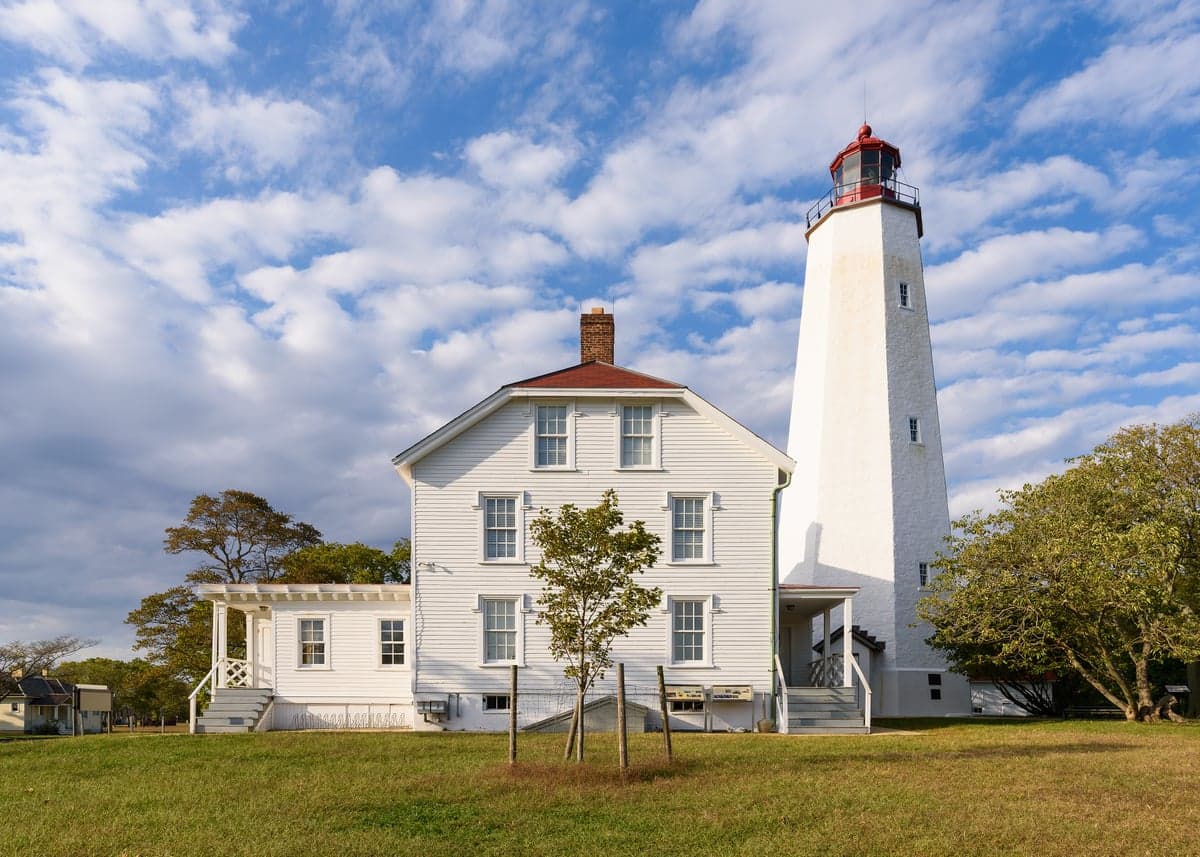
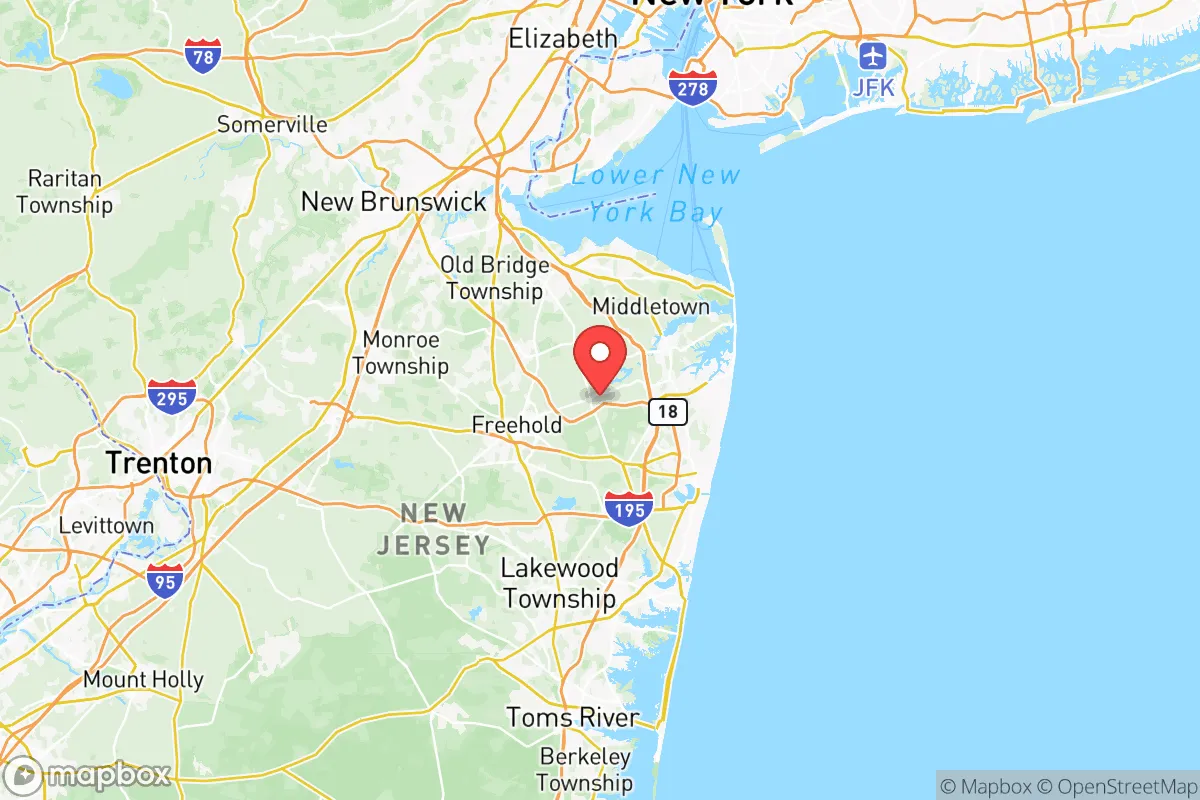
Photo: Wikipedia
Demographics of Monmouth County
Affluence Level in Monmouth County
An upper-middle-class area. Household wealth, education levels, and homeownership run ahead of national benchmarks.
People of Monmouth County
Monmouth County, New Jersey, is home to 643,615 residents, a population that blends historic coastal communities with suburban commuter towns. The county is predominantly white (72.1%) with a growing Hispanic population (12.7%) and smaller Black (5.9%), East/Southeast Asian (3.1%), and Indian-subcontinent (2.2%) communities. With a foreign-born share of just 4.7% and over half of adults holding college degrees, Monmouth County retains a distinctly native-born, well-educated character that sets it apart from the more diverse urban counties to its north.
Settlement & growth (pre-1960)
The original inhabitants of Monmouth County were the Lenape people, specifically the Unami and Munsee bands, who lived along the Navesink River and the Atlantic coast for thousands of years before European contact. Dutch traders from New Amsterdam began exploring the Sandy Hook area in the early 1600s, but permanent European settlement did not take hold until the English took control of the region in 1664. The first English settlers, mostly Puritans and Quakers from Long Island and New England, established the towns of Middletown and Shrewsbury in the 1660s and 1670s, drawn by the promise of fertile farmland and access to the sea.
Throughout the 18th and 19th centuries, Monmouth County's population grew steadily through natural increase and modest immigration from the British Isles. Scots-Irish Presbyterians arrived in the 1720s and 1730s, settling in the inland farming areas around Freehold and Colts Neck. The county's location on the Atlantic made it a minor port of entry, but it never attracted the massive waves of immigrants that flooded New York City or Philadelphia. Instead, the population remained overwhelmingly English, Scots-Irish, and Dutch-descended through the 1800s, with small pockets of German and Irish immigrants arriving after the 1840s to work on farms and in the emerging fishing industry along the coast.
The late 19th and early 20th centuries brought a new kind of settlement to Monmouth County: the summer resort. Wealthy families from New York and Philadelphia built vacation homes in Long Branch, Asbury Park, and Spring Lake, transforming these coastal towns into seasonal destinations. This resort economy attracted Italian and Irish immigrants to work in hotels, restaurants, and domestic service, creating ethnic enclaves in Asbury Park and Long Branch that persisted for generations. The opening of the Raritan River Bridge in 1908 and the expansion of rail service made commuting to New York City feasible, setting the stage for the suburban boom that would follow World War II.
The post-war period from 1945 to 1960 saw the first major wave of suburbanization in Monmouth County. Returning veterans and their families, many of them second- and third-generation Irish, Italian, and Polish Americans from Newark, Elizabeth, and other industrial cities, moved to newly built housing developments in Middletown, Holmdel, and Hazlet. The construction of the Garden State Parkway in the 1950s accelerated this trend, turning Monmouth County from a largely rural and coastal-resort area into a bedroom community for New York City. By 1960, the county's population had more than doubled from its 1940 level, reaching over 300,000 residents.
Modern era (post-1965)
The 1965 Hart-Cellar Act had a relatively muted effect on Monmouth County compared to other parts of New Jersey. The county's foreign-born population remains low at 4.7%, reflecting its character as a destination for domestic migration rather than international immigration. The most significant demographic shift since 1965 has been the growth of the Hispanic population, which rose from a negligible share in 1970 to 12.7% today. This growth has been driven primarily by Puerto Rican and Dominican families moving from New York City and northern New Jersey, settling in Asbury Park, Long Branch, and Freehold, where they have established churches, bodegas, and community organizations.
The East/Southeast Asian population, at 3.1%, is a more recent arrival, concentrated in the northern towns of Marlboro and Holmdel. Chinese and Korean families began moving to these communities in the 1990s and 2000s, drawn by the highly ranked school systems and large homes on suburban lots. The Indian-subcontinent population, at 2.2%, follows a similar pattern, with families settling in Marlboro, Manalapan, and Edison (the latter technically in Middlesex County but part of the same commuting corridor). These communities are among the most affluent and highly educated in the county, with many residents working in technology, finance, and healthcare in New York City or at nearby corporate campuses.
The Black population of Monmouth County, at 5.9%, is concentrated in Asbury Park, Long Branch, and Neptune Township. These communities have deep roots dating to the Great Migration of the early 20th century, when African Americans moved from the South to work in the resort and service industries along the Jersey Shore. The Black population has remained relatively stable in share since 1970, though it has declined in absolute numbers in Asbury Park as that city has experienced gentrification and displacement of long-term residents.
Domestic migration has been the dominant force shaping Monmouth County's modern demographics. The county has attracted families from northern New Jersey and New York City seeking lower taxes, better schools, and more space, while also losing some young adults to more urban areas. The 2008 financial crisis and the COVID-19 pandemic both accelerated out-migration from New York City to Monmouth County, particularly to towns like Red Bank, Rumson, and Fair Haven, which saw an influx of remote workers and families seeking suburban lifestyles.
The future
Monmouth County is projected to become slightly more diverse over the next 10 to 20 years, but the pace of change will be slow compared to the rest of New Jersey. The Hispanic population is expected to continue growing, potentially reaching 15-18% of the county by 2040, driven by both natural increase and continued migration from New York City and Latin America. The East/Southeast Asian and Indian-subcontinent populations will likely grow as well, particularly in the northern towns of Marlboro, Holmdel, and Manalapan, where school quality and housing stock continue to attract affluent immigrant families.
The white non-Hispanic population, while still the majority, will continue to decline in share as the county's older residents age and younger, more diverse families move in. The county's low foreign-born share (4.7%) suggests that international immigration will remain a secondary factor, with domestic migration from within New Jersey and New York continuing to drive demographic change. The coastal towns of Asbury Park and Long Branch will likely see continued gentrification and displacement of lower-income residents, while the inland suburbs will remain predominantly white and affluent.
Monmouth County's cultural identity is evolving from a historically insular, white-ethnic suburban region into a more diverse, but still predominantly native-born, community. The county's political leanings have shifted from reliably Republican to a competitive swing area, reflecting the changing demographics and the influx of more liberal-leaning voters from New York City. For someone moving to Monmouth County now, the region offers a stable, well-educated, and increasingly diverse suburban environment with strong schools and access to the Jersey Shore, but with a slower pace of demographic change than the state as a whole.

* Values derived from national, state, county, city and local statistics and may differ in a specific area. Last updated: 2026-07-02T17:04:03.000Z
Narrative content on this page is AI-generated and may contain mistakes. Verify any details that matter before acting on them.
ReloMaps may earn a commission from affiliate links at no extra cost to you.

