Photo: Wikipedia
Demographics of Sarpy County
Affluence Level in Sarpy County
An upper-middle-class area. Household wealth, education levels, and homeownership run ahead of national benchmarks.
People of Sarpy County
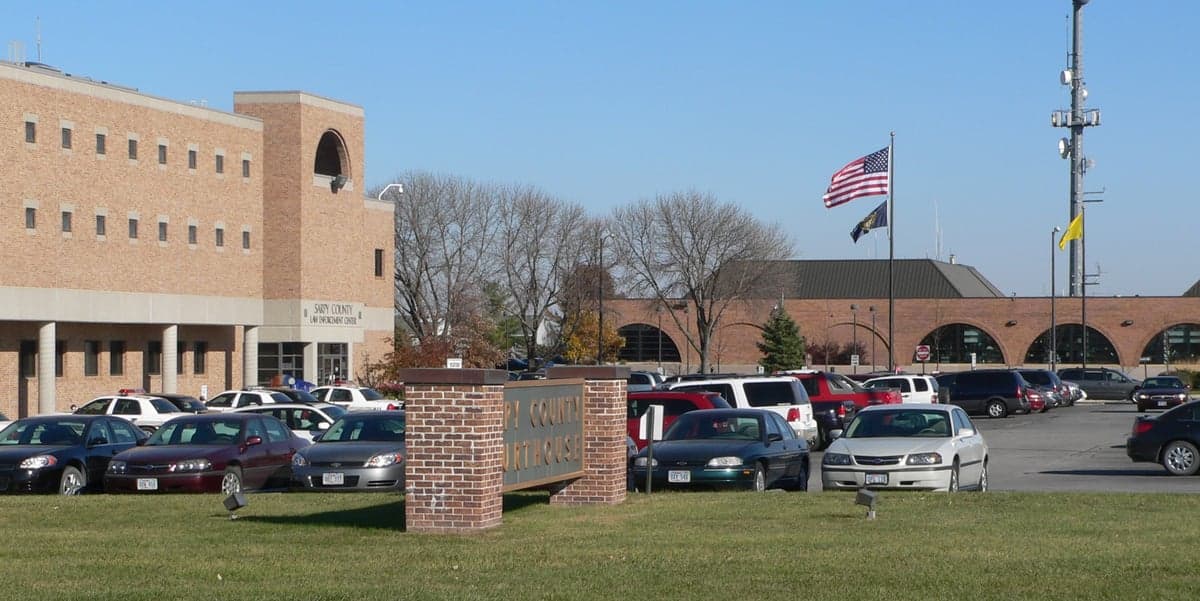
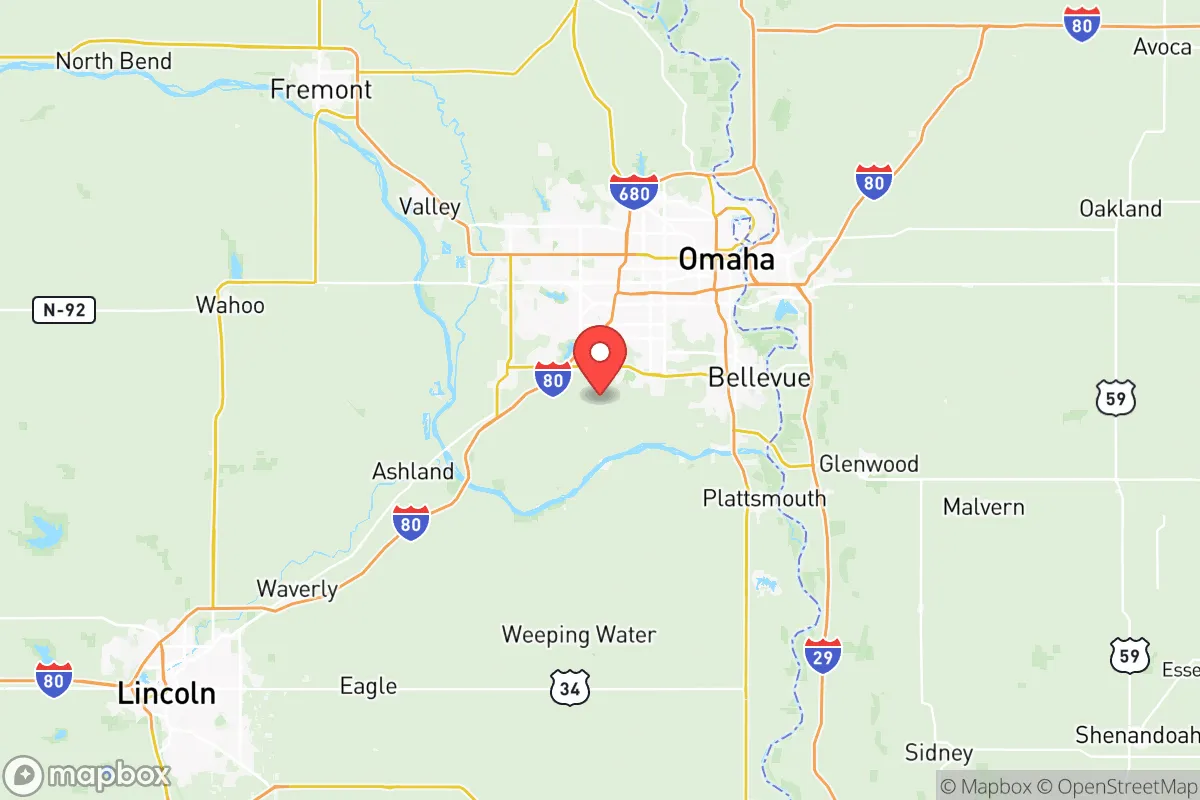
Sarpy County, Nebraska, home to 194,051 residents, is a rapidly growing suburban powerhouse south of Omaha that blends a historically rural, predominantly white population with a modest but increasing diversity. The county’s identity is shaped by its deep roots in agriculture and military presence, now layered with commuter-driven suburban development and a strong sense of community anchored by cities like Bellevue, Papillion, and La Vista. With a foreign-born population of just 2.7% and a white population of 77.6%, Sarpy County remains less diverse than the national average, but its Hispanic (11.1%), Black (4.0%), and East/Southeast Asian (2.4%) communities are growing, signaling a slow but steady demographic evolution.
Settlement & growth (pre-1960)
Before American settlement, the land that is now Sarpy County was home to the Omaha, Otoe, and Pawnee nations, who used the Missouri River floodplains for hunting and seasonal agriculture. The area was part of the Louisiana Purchase and saw limited French and Spanish fur trading activity, but no permanent European colonies were established. The first permanent American settlers arrived in the 1840s and 1850s, drawn by the promise of fertile land along the Missouri River. The county was officially organized in 1857 and named after Colonel Peter A. Sarpy, a fur trader and early territorial figure.
The dominant early wave was of Yankee and Mid-Atlantic settlers—English, Scots-Irish, and German Protestants—who established farms and small towns. Bellevue, founded in 1822 as a fur trading post, became the county’s first settlement and later the site of the Nebraska Territory’s first school. Papillion was platted in 1870 by German and Irish farmers, while Springfield and Gretna grew as agricultural service centers for the surrounding wheat and corn fields. The arrival of the Union Pacific and Burlington railroads in the 1870s accelerated settlement, bringing a second wave of German and Czech immigrants who worked as farmers and railroad laborers. These groups concentrated in La Vista (originally a farming hamlet) and Chalco, a small Czech community that later became part of Omaha’s suburban fringe.
By 1900, Sarpy County’s population was overwhelmingly white, native-born, and rural. The county’s economy remained tied to agriculture until the 1940s, when the establishment of Offutt Air Force Base in Bellevue during World War II transformed the area. The base brought thousands of military personnel and civilian workers, many of whom stayed after the war, laying the groundwork for suburbanization. The 1950s saw the first wave of white middle-class families moving from Omaha into new subdivisions in Bellevue and Papillion, drawn by affordable housing and the base’s economic stability. By 1960, the county’s population had grown to roughly 30,000, still overwhelmingly white but increasingly suburban.
Modern era (post-1965)
The 1965 Hart-Cellar Act had a limited immediate impact on Sarpy County, as the area was not a traditional immigrant gateway. However, the post-1965 era brought significant domestic migration that reshaped the county’s population. The most important trend was the suburbanization of Omaha’s white middle class, which accelerated after 1970. Families left the city for newer housing and better schools in Papillion and La Vista, which grew from small towns into sprawling suburbs. The 1980s and 1990s saw the construction of master-planned communities like Shadow Lake in Papillion, attracting professionals and military retirees.
The county’s Hispanic population began to grow in the 1990s, driven by labor demand in construction, meatpacking, and service industries. Bellevue and Papillion saw the largest Hispanic influx, with families settling near Offutt Air Force Base and along the Highway 370 corridor. The Black population, historically small, grew modestly after 2000, primarily in Bellevue and La Vista, as African American families moved from Omaha seeking better schools and lower crime rates. The East/Southeast Asian community, including Vietnamese and Filipino families, also grew, concentrated in Bellevue near the base and in Papillion’s newer subdivisions. The Indian subcontinent population remains tiny at 0.3%, with no distinct enclave.
Suburbanization continued through the 2000s and 2010s, with Gretna emerging as a fast-growing exurb. The county’s population more than doubled between 1990 and 2020, from 102,000 to 194,000, driven almost entirely by domestic migration from Omaha and other parts of Nebraska. The foreign-born share remains low at 2.7%, but the Hispanic share has risen from 3% in 2000 to 11.1% today, making it the county’s largest minority group. The white share has declined from 92% in 2000 to 77.6% in 2025, reflecting both Hispanic growth and a slight increase in Black and Asian populations.
The future
Sarpy County is projected to continue growing, with estimates reaching 250,000 by 2040. The population is becoming more diverse, but slowly. The Hispanic share is expected to rise to 15-18% by 2040, driven by both natural increase and continued migration for construction and service jobs. The Black and East/Southeast Asian shares will likely grow modestly, while the Indian subcontinent population will remain small. The white population will continue to decline as a share but will remain the majority for the foreseeable future.
New development is concentrating in Gretna and the western parts of Papillion and La Vista, where large tracts of farmland are being converted into subdivisions. Bellevue is nearing build-out and will see slower growth, while Springfield and Louisville (in neighboring Cass County) are emerging as affordable alternatives. The county’s cultural identity is evolving from a rural-agricultural past to a suburban-commuter present, with a growing emphasis on schools, parks, and family-oriented amenities. The military presence at Offutt remains a stabilizing force, though the base’s future is tied to federal budget decisions.
For someone moving in now, Sarpy County offers a safe, family-friendly environment with good schools and relatively low taxes, but with limited diversity and a slower pace of cultural change than the national average. The county is becoming more suburban and slightly more diverse, but it remains a place where the dominant culture is white, Midwestern, and conservative-leaning. New residents should expect a community that values stability, tradition, and neighborliness, with a growing but still modest Hispanic and Asian presence that is gradually reshaping the area’s character.

* Values derived from national, state, county, city and local statistics and may differ in a specific area. Last updated: 2026-07-23T11:35:36.000Z
Narrative content on this page is AI-generated and may contain mistakes. Verify any details that matter before acting on them.
ReloMaps may earn a commission from affiliate links at no extra cost to you.

