Photo: Wikipedia
Demographics of Nebraska
Affluence Level in Nebraska
An upper-middle-class area. Household wealth, education levels, and homeownership run ahead of national benchmarks.
People of Nebraska
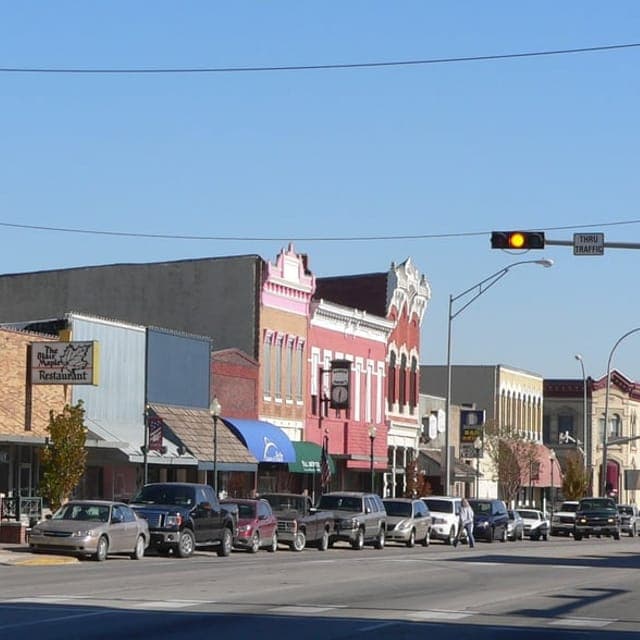
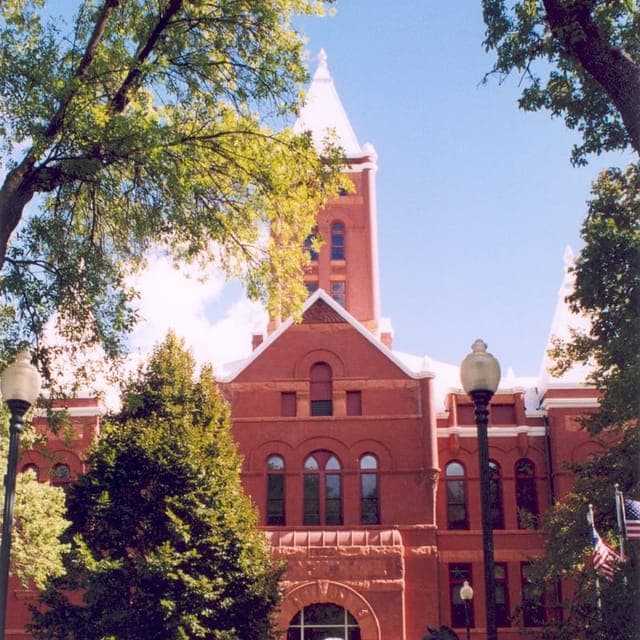
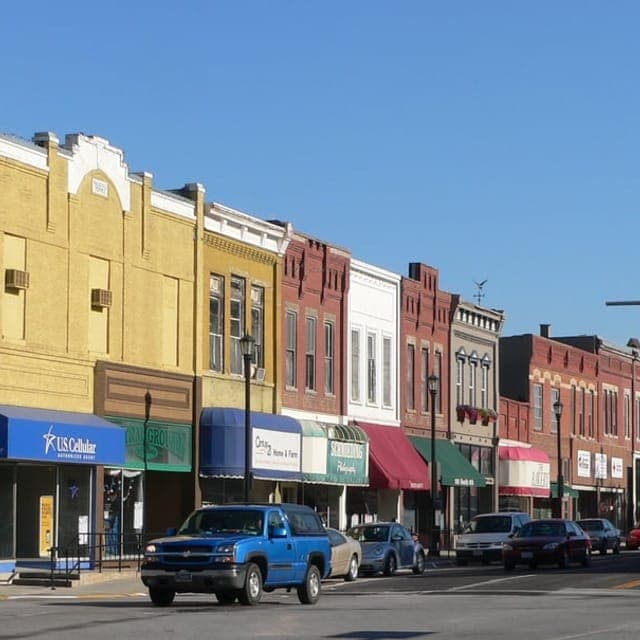
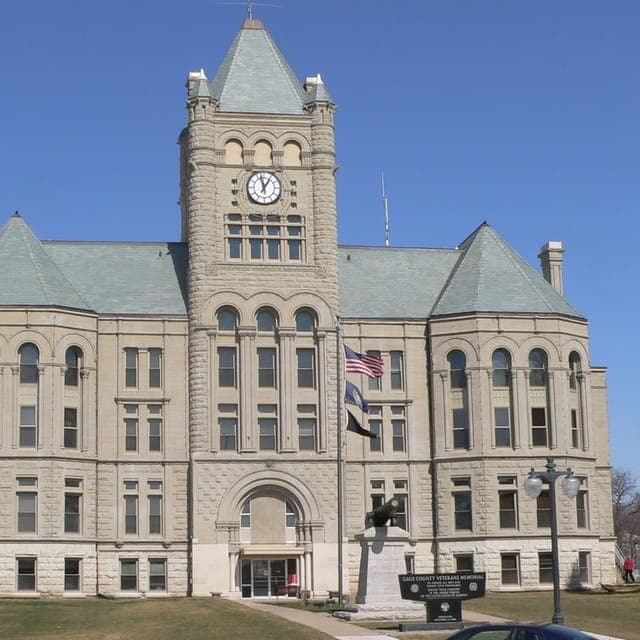
Nebraska’s 1.97 million residents are a predominantly white, native-born population with a strong rural and small-town character, anchored by the urban centers of Omaha and Lincoln. The state is notably less diverse than the national average, with a foreign-born share of just 4.4% and a population that is 76.2% white, though a growing Hispanic community of 12.3% is reshaping parts of the state. Nebraskans are known for a pragmatic, independent streak and a deep sense of place, with many families tracing their roots back multiple generations to the same farm or town. The state’s identity remains rooted in its agricultural heritage and Midwestern values of self-reliance and community, even as its cities modernize.
Settlement & growth (pre-1960)
Long before European settlement, Nebraska was home to several Native American nations, including the Omaha, Ponca, Pawnee, and Sioux (Lakota) tribes, who lived along the Platte and Missouri River valleys. The region was part of the Louisiana Purchase in 1803, and early American exploration, led by the Lewis and Clark expedition (1804-1806), established initial contact. The first permanent non-Native settlements emerged in the 1850s, spurred by the Kansas-Nebraska Act of 1854, which opened the territory to organized settlement and ignited a rush of land claims.
The defining wave of settlement came with the Homestead Act of 1862, which offered 160 acres of free land to anyone willing to farm it for five years. This drew a massive influx of German, Scandinavian (Swedish, Danish, Norwegian), and Czech immigrants throughout the 1860s-1890s. Germans were the largest single European group, founding communities like Grand Island (a major German settlement hub) and Norfolk (heavily German and Czech). Scandinavians concentrated in the northeastern part of the state, with Wahoo becoming a center of Swedish settlement and Blair attracting Danish immigrants. Czechs established a strong presence in Wilber, which still celebrates its Czech heritage annually. The Union Pacific Railroad, completed in 1869, was the other great engine of settlement, creating towns like North Platte and Sidney as railroad division points and supply centers.
The 1880s and 1890s saw a second wave of Irish and Polish immigrants drawn to railroad construction and meatpacking jobs in Omaha. The city’s South Omaha neighborhood became a classic immigrant gateway, with a large Irish population followed by Poles and later Eastern Europeans. The Dust Bowl of the 1930s hit Nebraska’s western counties hard, causing a significant out-migration of farm families to California and other states, but the post-World War II era brought a new wave of domestic migration. The 1940s-1950s saw a steady movement of rural Nebraskans into Omaha and Lincoln for manufacturing and government jobs, while the construction of Offutt Air Force Base near Bellevue and the Strategic Air Command headquarters brought a military-affiliated population to the Omaha area.
Modern era (post-1965)
The 1965 Hart-Cellar Act had a relatively modest impact on Nebraska compared to coastal states, but it did open the door to new immigrant streams. The most significant post-1965 change has been the growth of the Hispanic population, which rose from under 1% in 1970 to 12.3% today. This wave began in the 1980s and accelerated in the 1990s and 2000s, driven by jobs in meatpacking plants and agriculture. Lexington and Schuyler became majority-Hispanic towns as workers from Mexico and Central America filled jobs in beef processing. In Omaha, the South 24th Street corridor emerged as the heart of a vibrant Hispanic community, with a mix of Mexican, Guatemalan, and Salvadoran residents. The Hispanic population is now the state’s fastest-growing demographic group, with a high birth rate and continued immigration.
The East/Southeast Asian community, at 1.8% of the population, is concentrated in Omaha and Lincoln. A notable wave of Vietnamese refugees arrived after the fall of Saigon in 1975, with many settling in Omaha’s South Side and establishing a small but visible business district along 13th Street. A smaller community of Chinese and Korean professionals, often tied to the University of Nebraska-Lincoln and the state’s insurance and finance sectors, has grown since the 1990s. The Indian-subcontinent population (0.6%) is a more recent arrival, largely post-2000, and is heavily concentrated in Omaha and Lincoln, where many work in healthcare, information technology, and academia.
Domestic migration patterns have been more subtle. Nebraska has not experienced the explosive Sun Belt growth of states like Texas or Arizona, but it has seen a steady influx of retirees and remote workers from higher-cost states like California and Colorado, drawn by lower housing costs and a slower pace of life. This in-migration is most visible in smaller towns like Kearney and Fremont, which have attracted newcomers seeking a quieter, more affordable lifestyle. The Black population (4.6%) remains heavily concentrated in North Omaha, a historically African American neighborhood that has seen some suburbanization into areas like Bellevue and Papillion since the 1990s.
The future
Nebraska’s population is projected to grow slowly, reaching roughly 2.1 million by 2040, with growth concentrated in the Omaha-Lincoln corridor and a few regional hubs like Kearney and Grand Island. The Hispanic population will continue to be the primary driver of growth, likely rising to 15-18% of the state’s total by 2040, and will become an increasingly integrated part of Nebraska’s social and economic fabric. The white population, particularly in rural counties, will continue to age and decline, with many small towns facing population loss and school consolidation.
The state is not tribalizing into distinct ethnic enclaves in the way some larger metropolitan areas are. Instead, Nebraska’s immigrant communities are relatively small and geographically dispersed, with a strong tendency toward assimilation. The Hispanic population, while concentrated in certain towns and neighborhoods, is increasingly English-dominant and intermarrying with the white population. The East/Southeast Asian and Indian communities, while growing, remain small and professional, and are likely to continue integrating into the broader middle class. The cultural identity of Nebraska is absorbing these changes without dramatic friction, though tensions over immigration and cultural change are present in some rural communities.
For someone moving in now, Nebraska offers a stable, slow-growing, and culturally cohesive environment. The state is becoming slightly more diverse, but it remains overwhelmingly native-born and Midwestern in character. The key demographic story is the gradual Hispanicization of the state’s workforce and small towns, alongside the continued dominance of a white, rural-rooted population in the political and cultural mainstream.

Most Diverse Cities in Nebraska
Most Homogenous Cities in Nebraska
* Values derived from national, state, county, city and local statistics and may differ in a specific area. Last updated: 2026-04-18T23:38:45.000Z
Narrative content on this page is AI-generated and may contain mistakes. Verify any details that matter before acting on them.
ReloMaps may earn a commission from affiliate links at no extra cost to you.

