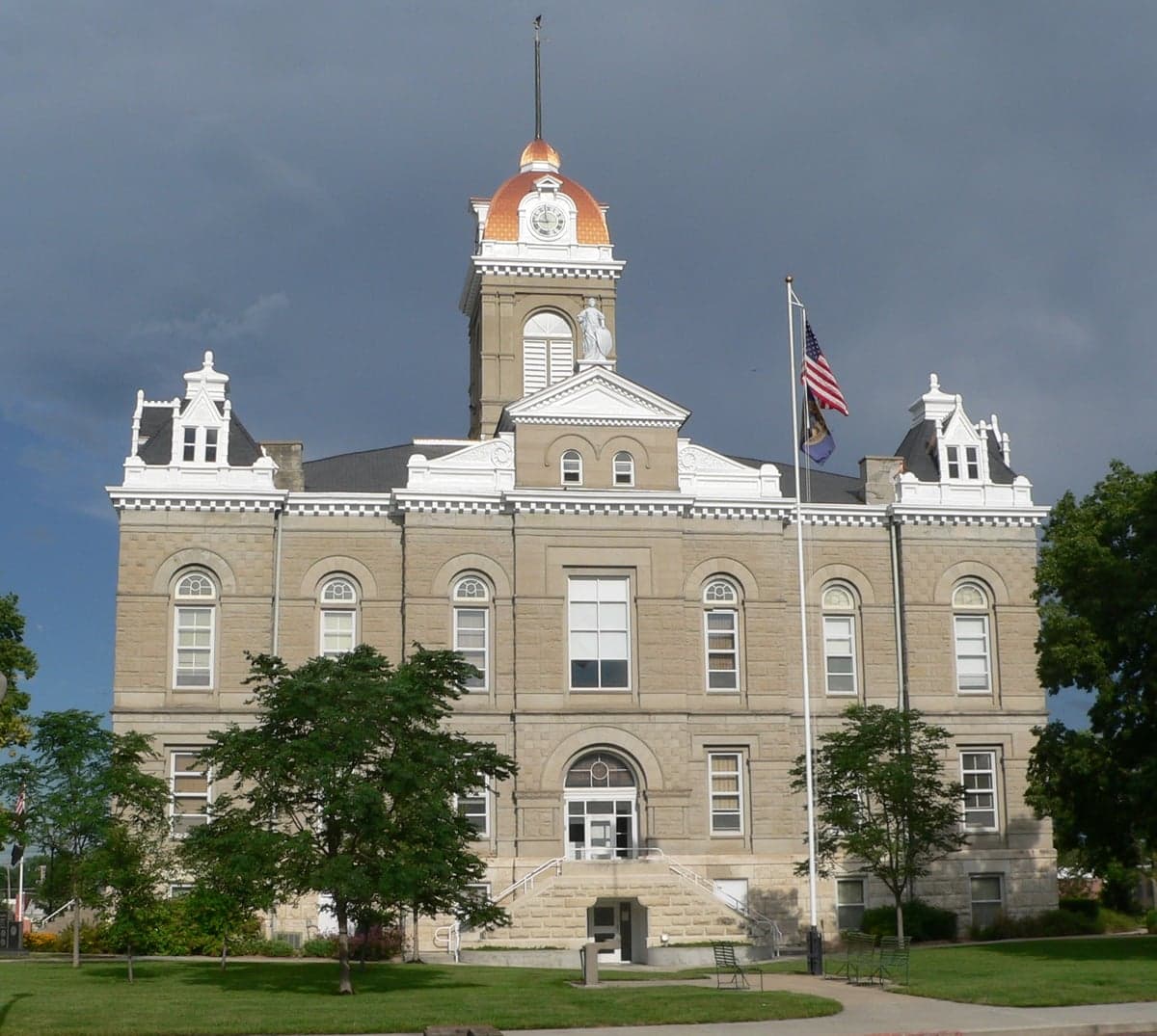
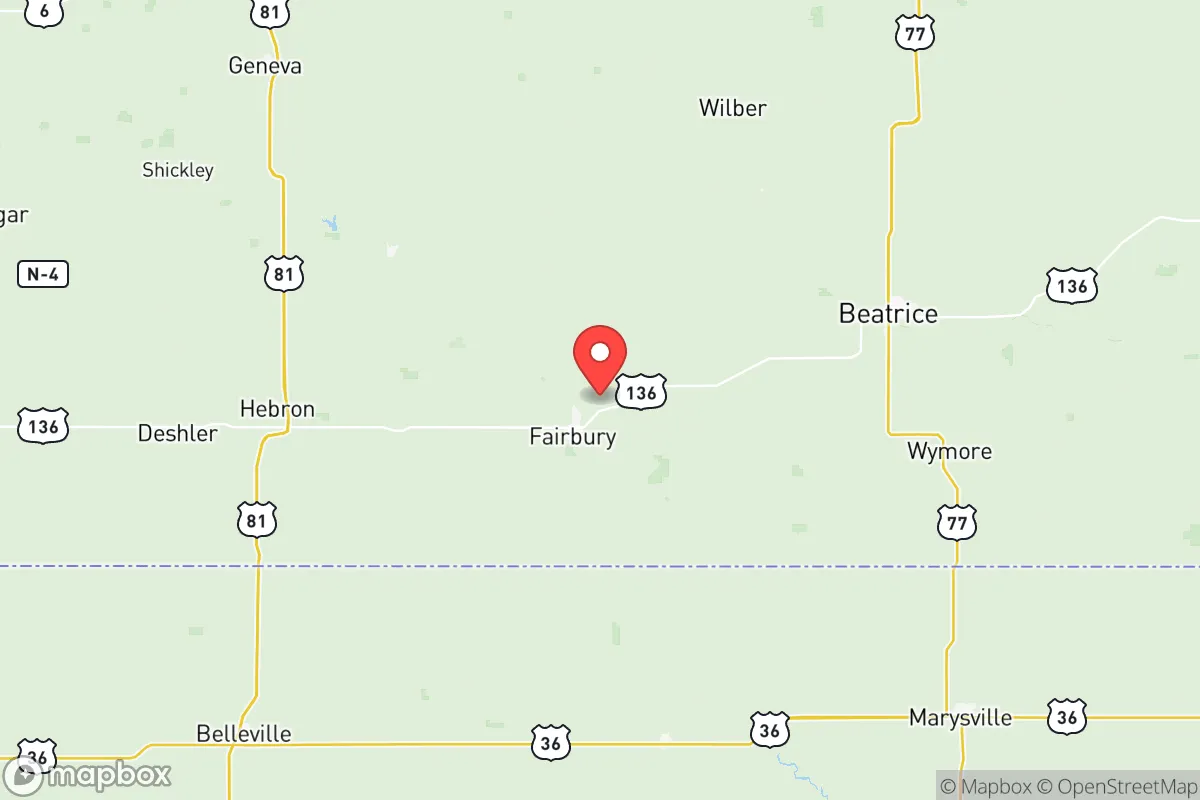
Photo: Wikipedia
Personal Sovereignty in Jefferson County
Viable for self-reliance. Generally workable, though some barriers may limit total independence.
What does Personal Sovereignty tell us?
Personal Sovereignty measures your capacity for self-reliance and independence with minimal government friction. Higher scores mean fewer barriers between you and the way you want to live... but it assumes you have the space you need and good neighbors.
What does this tell us?
Personal Sovereignty measures your capacity for self-reliance and independence with minimal government friction. Higher scores mean fewer barriers between you and the way you want to live... but it assumes you have the space you need and good neighbors.
State Policy
Energy independence: Importer (35% of energy produced in-state)
Personal Liberty
Homesteading

Personal Liberty Analysis
Jefferson County, Nebraska, offers a notably high degree of personal sovereignty, shaped by a state-level culture of limited government and local control that directly impacts daily life in its towns like Fairbury, Plymouth, and Diller. The autonomy environment here is characterized by low regulatory friction, a strong tradition of self-reliance, and legal frameworks that prioritize individual choice in areas from taxation to self-defense. For individuals and families seeking to minimize government overreach in their personal and economic decisions, this county presents a compelling option within the Great Plains corridor.
Tax burden and regulatory posture: How light is the hand of government?
Nebraska’s overall tax burden is moderate, but Jefferson County benefits from a state-level regulatory posture that is generally permissive, particularly for small businesses and property owners. The state has no personal property tax on vehicles or business inventory, a significant advantage for entrepreneurs and families. Property taxes in Jefferson County are levied at a local level, with rates that are competitive compared to the national average; the county’s total levy rate hovers around 1.5% of assessed value, though this can vary slightly between school districts. Sales tax is a flat 5.5% statewide, with no local option add-ons in Jefferson County, keeping the cost of goods predictable. The regulatory environment for home-based businesses is light: Fairbury, the county seat, does not impose restrictive zoning on home occupations, allowing residents to operate small-scale enterprises from their property without burdensome permits. This contrasts with more heavily regulated urban areas like Lincoln or Omaha, where licensing and zoning can be more complex. The county’s approach is best described as "hands-off until a problem arises," which aligns with a conservative preference for minimal bureaucratic interference.
Self-defense and gun law specifics: What are the legal protections for firearm owners?
Nebraska is a constitutional carry state, meaning that as of 2023, any law-abiding adult 21 or older can carry a concealed handgun without a permit. Jefferson County fully adheres to this state preemption, and local ordinances in Fairbury, Daykin, and Reynolds do not impose additional restrictions beyond state law. The county has a strong gun-friendly culture, with no local "red flag" laws or waiting periods. Open carry is legal without a permit, and the state’s "stand your ground" doctrine applies, meaning there is no duty to retreat before using deadly force in self-defense if lawfully present. For those seeking to purchase firearms, private sales between individuals are legal without a background check, though federal licensed dealers still require one. The Jefferson County Sheriff’s Office in Fairbury processes concealed carry permits (now optional but still useful for reciprocity in other states) efficiently, typically within 30 days. This legal framework provides a high degree of personal sovereignty for self-defense, with minimal government oversight compared to states like California or New York.
Self-reliance and homesteading viability: Lot sizes, zoning, and off-grid feasibility
Jefferson County is a prime location for homesteading and self-reliant living, with zoning that is permissive by design. Outside the city limits of Fairbury (population ~3,900), unincorporated areas like Steele City, Jansen, and Harbine have no county-wide zoning, meaning residents can build structures, keep livestock, and manage land without seeking permits for basic improvements. Minimum lot sizes in rural areas are typically 1 to 5 acres, though larger parcels are common and affordable—raw land can be found for under $3,000 per acre. Off-grid living is feasible: Nebraska law does not require connection to municipal water or sewer systems in unincorporated areas, and residents can drill private wells and install septic systems with standard health department permits. Solar panels and wind turbines are allowed without restrictive covenants, though net metering with the local utility (Nebraska Public Power District) is available for grid-tied systems. In Fairbury itself, zoning is more structured but still lenient: residents can keep chickens and small livestock on lots of 10,000 square feet or more, and the city does not ban clotheslines or rain barrels. For those seeking maximum autonomy, the rural townships around Diller and Plymouth offer the most freedom, with no HOA restrictions and minimal county oversight on land use.
Personal liberties: Parental rights, medical autonomy, speech, and property
Nebraska law provides strong protections for parental rights, including a state statute that affirms parents’ "fundamental right" to direct the upbringing, education, and healthcare of their children. Jefferson County schools, including Fairbury Public Schools and Meridian Public Schools, do not enforce mask or vaccine mandates, and parents can opt their children out of sex education or any curriculum they find objectionable. Medical autonomy is respected: Nebraska has no state-level vaccine passport requirement, and the state’s "Right to Try" law allows terminally ill patients to access experimental treatments without FDA approval. Free speech is robustly protected under the Nebraska Constitution, and local government meetings in Fairbury are open to public comment without prior approval. Property rights are strong, with Nebraska’s "right to farm" law protecting agricultural operations from nuisance lawsuits, and Jefferson County does not impose rent control or restrictive land-use regulations. The county’s approach to personal liberties is consistent with a conservative ethos: the government is seen as a protector of rights rather than a provider of mandates, and local officials in Fairbury and surrounding towns generally defer to individual choice in matters of health, education, and expression.
Overall, Jefferson County ranks among the more sovereignty-friendly areas in Nebraska, offering a regulatory environment that is notably lighter than in the state’s urban corridors. Compared to Lincoln (60 miles north) or Omaha (100 miles northeast), the county provides a significantly higher degree of personal autonomy in taxation, self-defense, land use, and personal liberties. For families and individuals who prioritize independence and minimal government intrusion, this area represents a practical, low-friction option within the broader Great Plains region, where state-level protections and local permissiveness combine to create a genuinely self-reliant lifestyle.

* Values derived from national, state, county, city and local statistics and may differ in a specific area. Last updated: 2026-07-14T00:35:20.000Z
Narrative content on this page is AI-generated and may contain mistakes. Verify any details that matter before acting on them.
ReloMaps may earn a commission from affiliate links at no extra cost to you.

