Photo: Wikipedia
Demographics of Jefferson County
Affluence Level in Jefferson County
A middle-class area roughly in line with national averages across income, home values, education, and employment.
People of Jefferson County
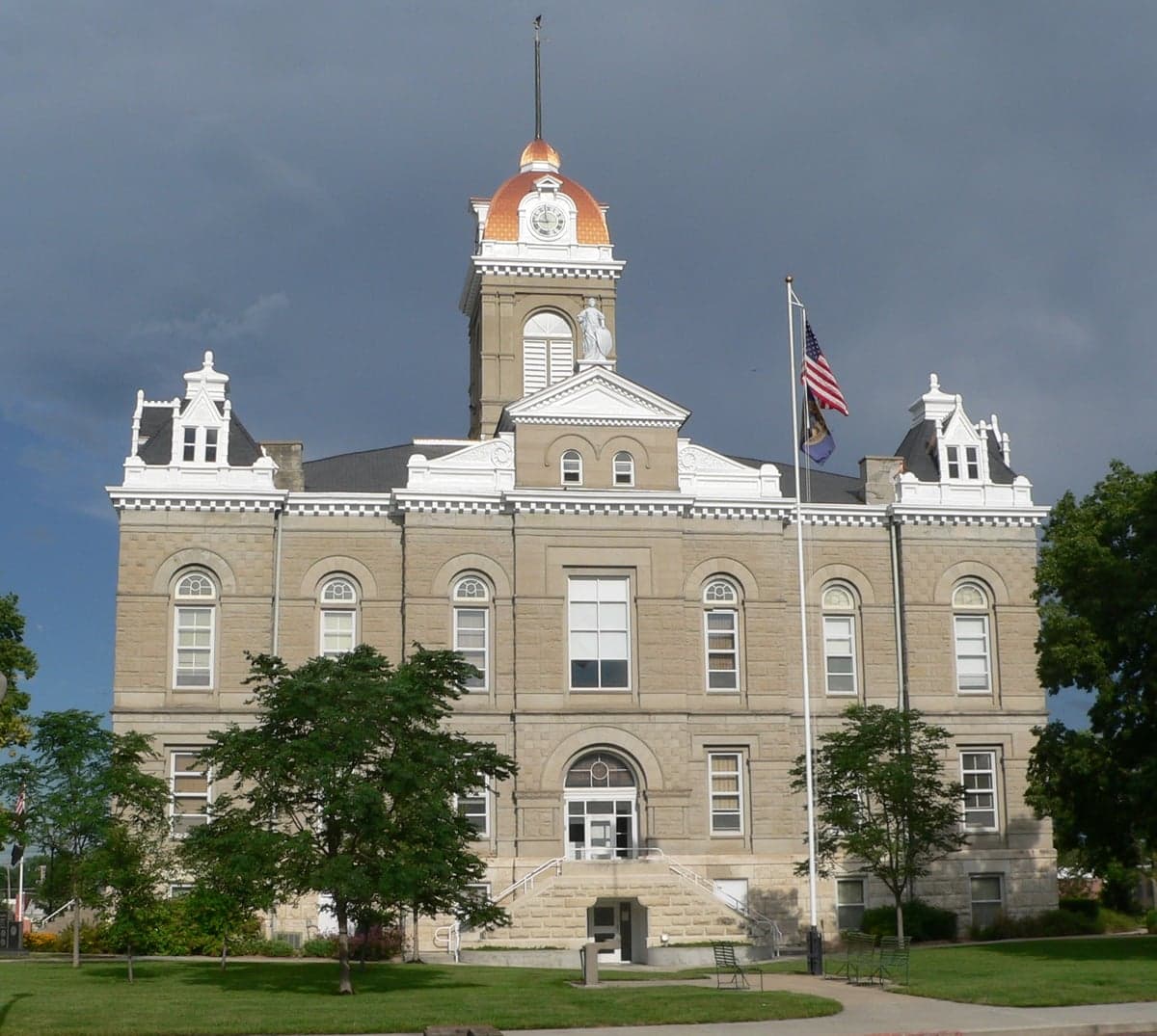
Jefferson County, Nebraska, today is a predominantly white, rural community of 7,155 residents, characterized by its agricultural roots and a population density of just over 10 people per square mile. The county’s identity is shaped by its Czech and German heritage, a legacy of 19th-century homesteading, and a slow, steady demographic decline that has accelerated since the 1990s. With a foreign-born population of only 1.0% and a Hispanic share of 5.3%, Jefferson County remains one of the least ethnically diverse counties in Nebraska, a place where the population is aging and the next generation often leaves for urban centers like Lincoln or Omaha.
Settlement & growth (pre-1960)
Before American settlement, the area that is now Jefferson County was part of the traditional territory of the Pawnee and Otoe-Missouria peoples, who used the region for seasonal hunting and farming along the Little Blue River. The first permanent American settlers arrived in the 1850s, following the passage of the Kansas-Nebraska Act in 1854, which opened the territory to homesteading. The county was formally organized in 1856, and the earliest settlers were primarily of English, Scots-Irish, and German stock, drawn by the promise of cheap land along the Oregon Trail corridor. The town of Fairbury, the county seat, was founded in 1858 as a trading post and quickly became the commercial hub for the surrounding agricultural region.
The major population wave came between 1870 and 1900, driven by the Homestead Act and the expansion of the Burlington and Missouri River Railroad, which reached Fairbury in 1872. This period saw a heavy influx of Czech immigrants, who were the single largest ethnic group to settle the county. They established farming communities in and around Diller, Endicott, and Reynolds, where Czech-language newspapers and fraternal societies flourished into the early 20th century. German immigrants also arrived in significant numbers, settling in Plymouth and Steele City, where they built Lutheran churches and maintained their language in parochial schools. By 1900, the county’s population had peaked at roughly 15,000, with agriculture—corn, wheat, and livestock—as the economic backbone.
The period from 1900 to 1960 was one of gradual population loss, as mechanization reduced the need for farm labor and younger residents began migrating to cities. The Dust Bowl of the 1930s hit the county hard, accelerating outmigration, but the post-World War II agricultural boom temporarily stabilized the population. The county’s ethnic character remained overwhelmingly white and European-descended, with Czech and German surnames still dominant in local phone books and cemetery records. The 1960 census recorded 9,549 residents, a decline of more than a third from the 1900 peak.
Modern era (post-1965)
The 1965 Hart-Cellar Act, which dramatically reshaped U.S. immigration, had virtually no effect on Jefferson County. Unlike Nebraska’s urban counties (Douglas, Lancaster) or its meatpacking towns (Lexington, Schuyler), Jefferson County did not attract post-1965 immigrants from Latin America, Asia, or Africa. The foreign-born population today stands at just 1.0%, almost entirely consisting of a handful of European-born individuals and a small number of Mexican-origin residents who arrived in the 1990s for agricultural work. The county’s Hispanic population, at 5.3%, is concentrated in Fairbury, where a small number of families work in the local food processing and farm equipment industries.
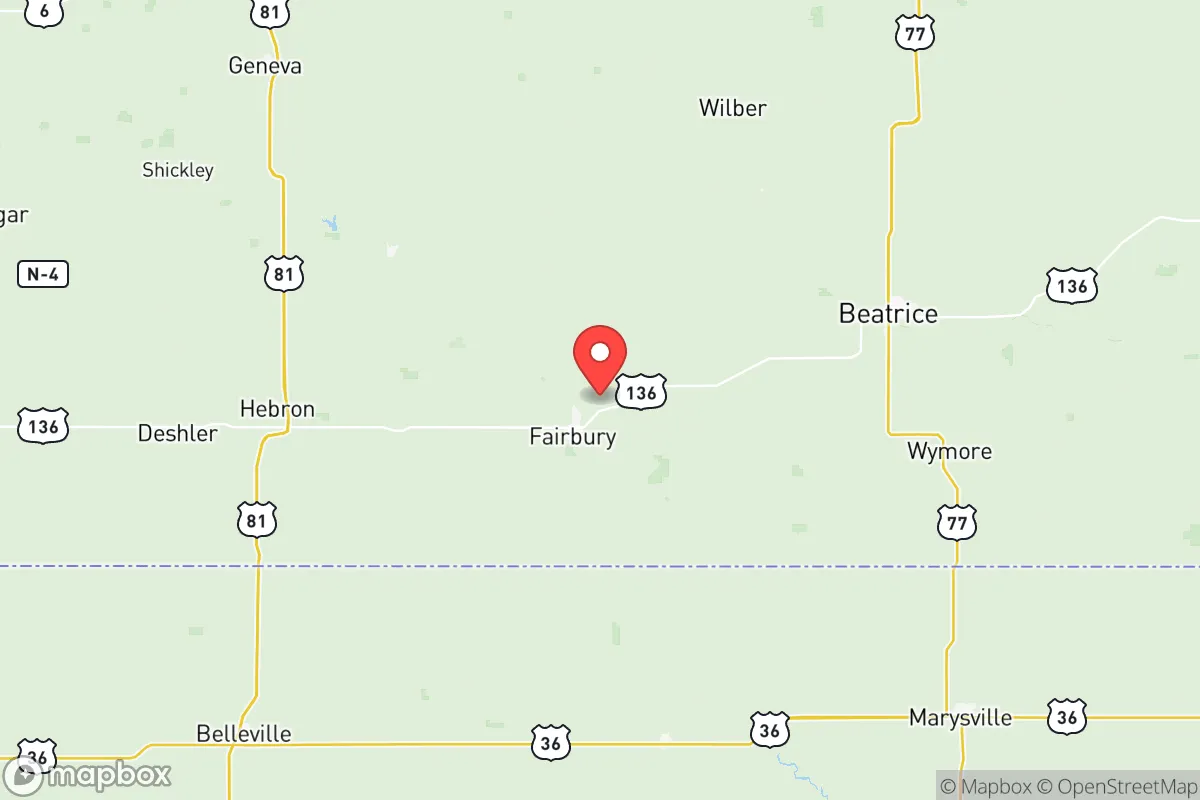
The dominant demographic trend since 1965 has been domestic outmigration. The county’s population fell from 9,549 in 1960 to 7,155 in 2020, a loss of 25%. Young adults leave for college or jobs in Lincoln (45 miles north) or Omaha (90 miles northeast), and few return. The county’s college-educated share is just 19.7%, well below the state average of 33%, reflecting the departure of those with higher education. The remaining population is older: the median age is 44.5, compared to Nebraska’s 36.5. Suburbanization has not reached Jefferson County; there are no bedroom communities for Lincoln or Omaha, as the county is too far from both cities for daily commuting. Instead, the county’s small towns—Daykin, Hubbell, and Jansen—have seen their populations shrink to a few hundred residents each, with many homes standing empty.
Racial and ethnic diversity has remained minimal. The county is 91.1% white, with a Black population of just 0.6% and no measurable East/Southeast Asian or Indian-subcontinent population. The small Hispanic community is the only source of demographic change, but it has not grown rapidly; the Hispanic share rose from 3.1% in 2010 to 5.3% in 2020, a modest increase driven by births rather than new immigration. The county’s cultural identity remains rooted in its Czech and German heritage, celebrated annually at the Fairbury Czech Festival and in the local cuisine (kolaches, sauerkraut, and sausage).
The future
Jefferson County’s population is projected to continue declining, likely falling below 6,500 by 2040. The county’s birth rate is below replacement level, and the aging population means deaths will outnumber births. The Hispanic share may slowly rise to 8-10% by 2040, driven by natural increase, but the county will remain overwhelmingly white. No new immigrant groups are expected to settle here, as the county lacks the industrial or agricultural processing jobs that attract immigrants to other parts of Nebraska. The small towns of Steele City and Reynolds may lose their post offices and schools, consolidating services into Fairbury.
The county’s cultural identity will likely become more nostalgic and heritage-focused, as the remaining population ages and the Czech and German traditions become more symbolic than lived. The county’s political character, already solidly Republican (Jefferson County voted +42 for Trump in 2020), will likely remain so, as the population is older, whiter, and more rural than the state average. For a newcomer, the county offers quiet, low-cost living and a strong sense of community, but it is not a place of demographic dynamism or growth.
Jefferson County is becoming a quieter, older, and more homogeneous version of itself—a place where the past is more visible than the future. For someone moving in now, the county offers affordable land, a slow pace of life, and a community where everyone knows their neighbors, but it also means accepting that the schools are shrinking, the job market is limited, and the cultural diversity is minimal. It is a place for those seeking stability and tradition, not for those looking for growth or change.

* Values derived from national, state, county, city and local statistics and may differ in a specific area. Last updated: 2026-07-14T00:35:20.000Z
Narrative content on this page is AI-generated and may contain mistakes. Verify any details that matter before acting on them.
ReloMaps may earn a commission from affiliate links at no extra cost to you.

