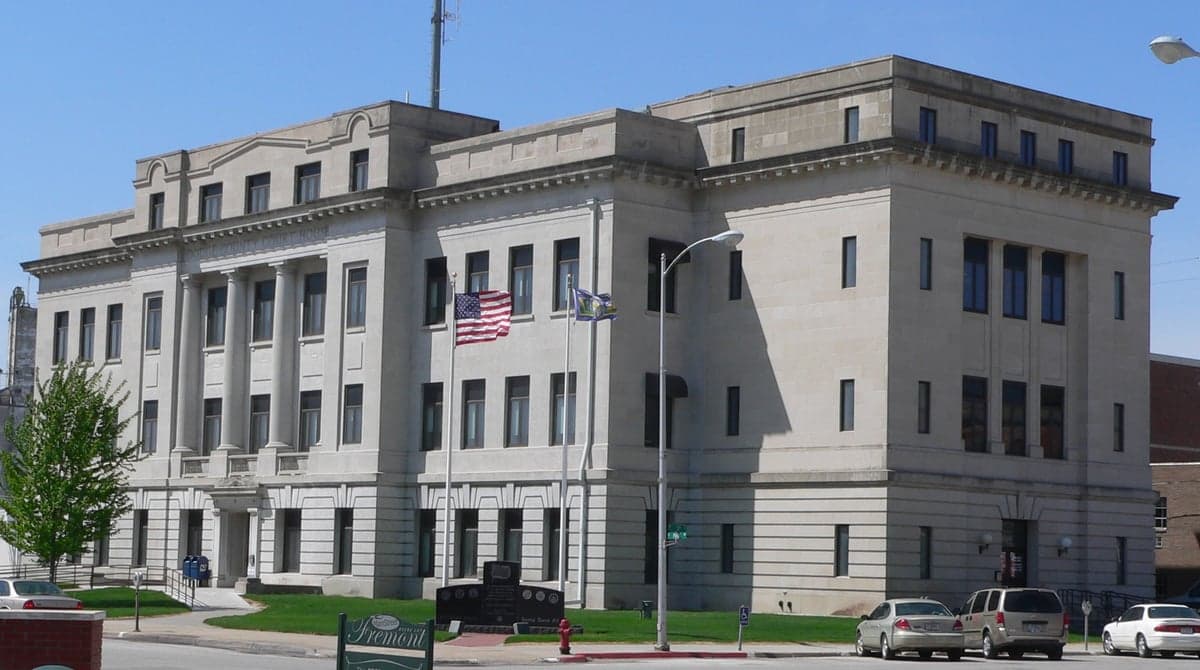
Photo: Wikipedia
Strategic Assessment of Dodge County
Workable tactical position. Some exposure to population density or targets, but generally defensible in a crisis.
What does the Strategic Assessment tell us?
Our Strategic Assessment grades tactical survivability of an area. Major population centers, military targets, fallout zones, natural disasters, and border exposure all drive risk — lower exposure means a more defensible position in a crisis.
This is heavily inspired by Joel Skousen's Strategic Relocation book. Highly recommended you checkout the book ($)What does this tell us?
Our Strategic Assessment grades tactical survivability of an area. Major population centers, military targets, fallout zones, natural disasters, and border exposure all drive risk — lower exposure means a more defensible position in a crisis.
This is heavily inspired by Joel Skousen's Strategic Relocation book. Highly recommended you checkout the book ($)Strategic Pillars

Key Distances
Strategic Assessment Analysis
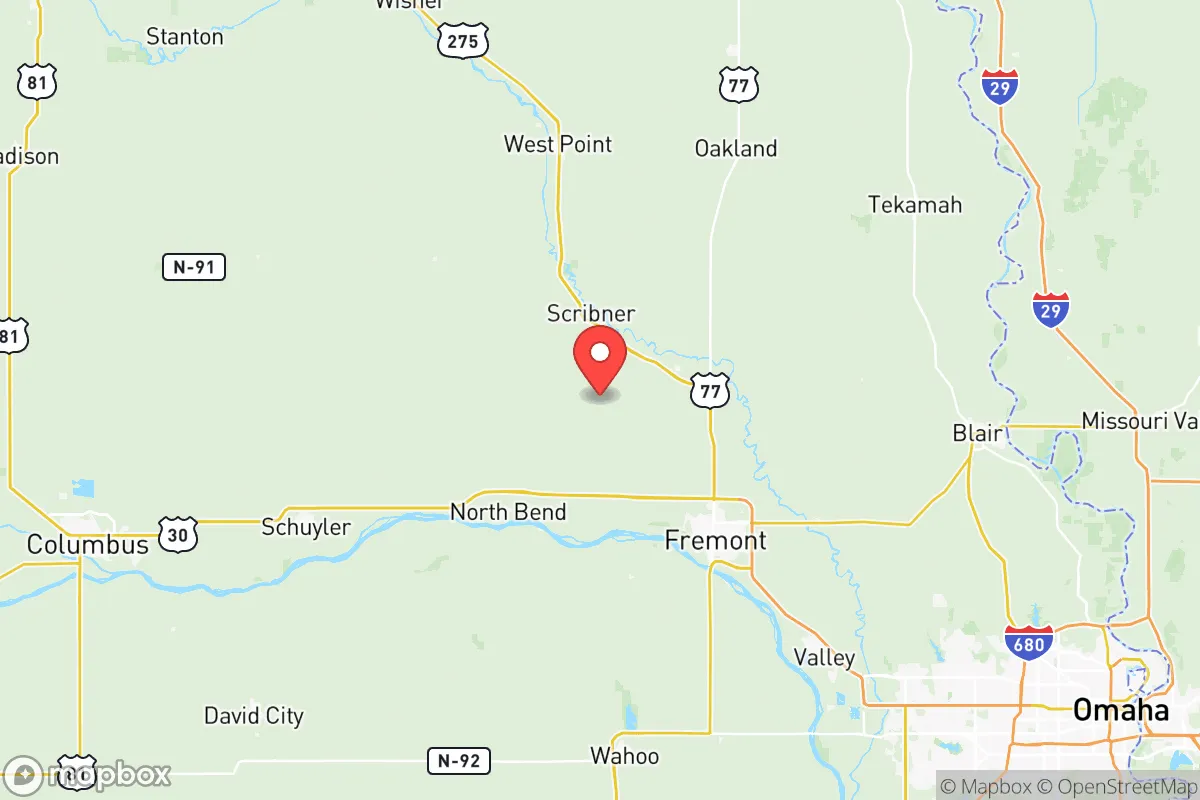
Dodge County, Nebraska, offers a compelling strategic profile for relocators prioritizing resilience, self-sufficiency, and a buffer from major metropolitan vulnerabilities. Anchored by the city of Fremont, the county sits roughly 35 miles northwest of Omaha and 50 miles north of Lincoln, placing it within a practical commuting radius of urban job markets while maintaining a distinctly rural, low-density character. This positioning provides a meaningful balance: access to regional medical centers and supply chains in Omaha, yet enough distance to avoid the cascading failure risks—grid dependency, civil unrest, supply chain choke points—that accompany dense urban cores. For a family or individual thinking seriously about disaster readiness, Dodge County’s agricultural base, modest population (around 37,000), and flat, open terrain present a grounded, defensible option in the eastern Nebraska plains.
Geographic position and natural advantages for long-term stability
Dodge County’s geography is defined by the Platte River Valley, which cuts through the southern portion of the county and provides a reliable freshwater source and fertile alluvial soils. The land is predominantly flat to gently rolling, which simplifies construction, road maintenance, and agricultural operations—practical advantages for anyone looking to establish a homestead or small farm. The county sits in Nebraska’s eastern rain belt, averaging around 30 inches of precipitation annually, which supports dryland farming without heavy irrigation dependency. This is a significant resilience factor: unlike much of the western U.S., Dodge County is not in a chronic drought zone, and its groundwater access through the Ogallala Aquifer’s eastern edge is relatively stable. The county seat, Fremont, is the only incorporated city of notable size; smaller towns like Hooper, Scribner, and North Bend offer even lower population densities and greater separation from potential fallout-related targets. The absence of major military installations, refineries, or nuclear power plants within the county itself reduces the risk of direct man-made catastrophe. The nearest significant military presence is Offutt Air Force Base near Bellevue, roughly 40 miles southeast—close enough to be a potential target in a conflict scenario, but far enough that Dodge County lies outside the most severe blast and fallout zones for most plausible attack profiles.
Risks, exposures, and proximity to fallout-relevant landmarks
While Dodge County avoids the highest-risk corridors, it is not immune to regional vulnerabilities. The primary man-made risk comes from its proximity to Omaha’s strategic infrastructure. Omaha hosts Offutt Air Force Base, headquarters of U.S. Strategic Command (STRATCOM), which is a high-priority target in any major conflict. In a nuclear exchange scenario, prevailing winds from the southeast would carry fallout away from Dodge County, but a shift in wind direction or a ground burst could still deposit radioactive material across the region. Additionally, the Union Pacific Railroad’s main line runs through Fremont, carrying hazardous materials—including crude oil and chemicals—through the county. A derailment or spill could contaminate local water sources, particularly the Platte River aquifer. Natural risks are comparatively mild: tornadoes are the primary threat, with Dodge County lying in the heart of Tornado Alley. The 2020 Easter tornado outbreak produced an EF-4 that tracked through the county, causing significant damage near Fremont. Flooding along the Platte and Elkhorn Rivers is a recurring concern, especially during spring snowmelt and heavy rain events. The 2019 floods demonstrated that low-lying areas near the river can be inundated for weeks, cutting off road access to some rural properties. For a relocator, this means choosing a homesite above the 100-year floodplain and ensuring a basement or storm shelter is non-negotiable.
Practical resilience for a relocator: food, water, energy, and defensibility
Dodge County’s agricultural economy is its strongest resilience asset. The county is a major producer of corn, soybeans, and livestock, with numerous family farms and agribusinesses operating throughout the area. Fremont is home to a Cargill meat processing plant and several grain elevators, meaning local food production is not just theoretical—it’s industrial-scale and accessible. For a relocator aiming for self-sufficiency, the availability of raw land (priced well below national averages, typically $5,000–$8,000 per acre for farmland) makes small-scale farming or hobby livestock feasible. Water access is straightforward: most rural properties rely on private wells tapping into the alluvial aquifer, which is shallow (typically 20–60 feet deep) and yields good-quality water. The Platte River itself is a perennial surface water source, though treatment would be necessary for drinking. Energy infrastructure is less robust. The county is served by the Nebraska Public Power District, which draws primarily from coal and nuclear sources (the Fort Calhoun nuclear plant, though decommissioned in 2016, still sits 20 miles southeast near Blair). Grid reliability is average for the rural Midwest—outages during ice storms or high winds are common but typically resolved within hours. For true resilience, solar panels with battery storage are a practical investment, as the region receives adequate sunlight (about 220 sunny days per year). Defensibility is a mixed picture. The open terrain offers long sightlines, which is advantageous for security, but also means little natural cover. Rural properties are spaced far apart, reducing the risk of crime but also limiting mutual aid. Fremont’s police department and the Dodge County Sheriff’s Office are professional and well-equipped, but response times in remote areas can exceed 20 minutes. For a family, a rural property with a fenced perimeter, a well, and a backup generator offers a strong baseline for security and self-reliance.
The overall strategic picture for Dodge County is one of moderate, grounded resilience. It avoids the extreme risks of coastal zones, major industrial corridors, and high-density urban centers, while still providing access to the resources of a mid-sized city (Omaha) within an hour’s drive. The county’s agricultural base, reliable water, and low population density make it a practical choice for someone serious about preparedness without wanting to live in a remote, off-grid location. The trade-offs are real: tornado risk, potential fallout from Offutt AFB, and the occasional flood event. But for a relocator who values a balance of self-sufficiency and community infrastructure—and who is willing to invest in a storm shelter, a well, and a backup power system—Dodge County represents a solid, defensible option in the Nebraska heartland. It is not a bunker, but it is a place where a prepared family can thrive through most disruptions.

* Values derived from national, state, county, city and local statistics and may differ in a specific area. Last updated: 2026-07-14T07:53:38.000Z
Narrative content on this page is AI-generated and may contain mistakes. Verify any details that matter before acting on them.
ReloMaps may earn a commission from affiliate links at no extra cost to you.

