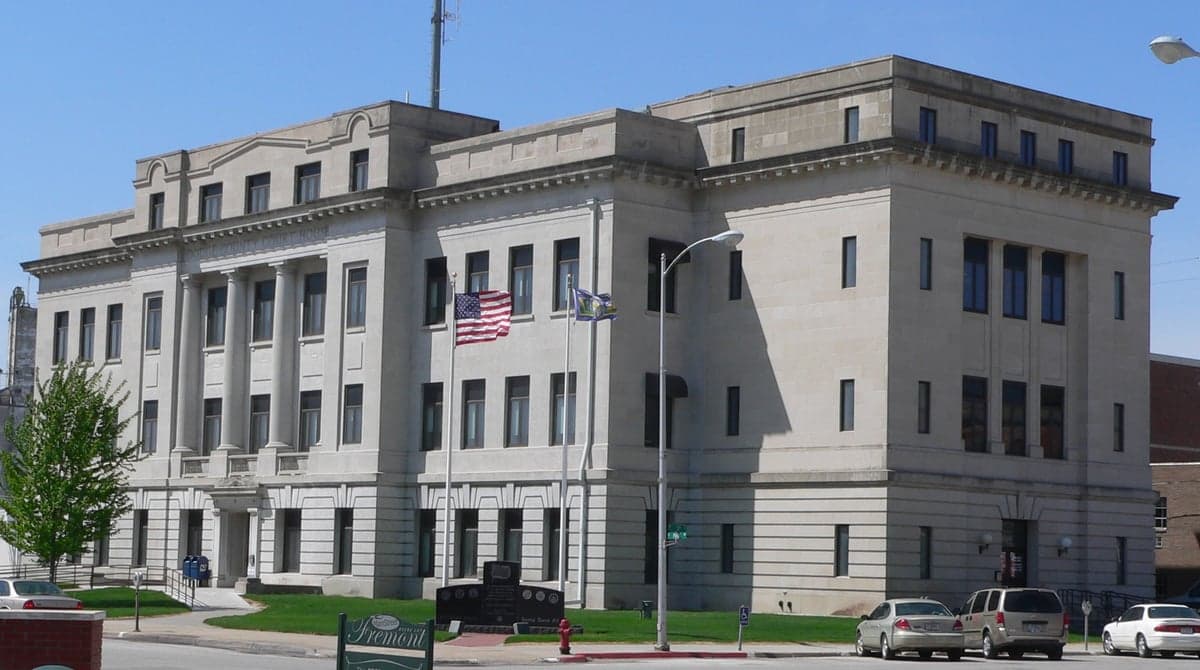
Photo: Wikipedia
Personal Sovereignty in Dodge County
Viable for self-reliance. Generally workable, though some barriers may limit total independence.
What does Personal Sovereignty tell us?
Personal Sovereignty measures your capacity for self-reliance and independence with minimal government friction. Higher scores mean fewer barriers between you and the way you want to live... but it assumes you have the space you need and good neighbors.
What does this tell us?
Personal Sovereignty measures your capacity for self-reliance and independence with minimal government friction. Higher scores mean fewer barriers between you and the way you want to live... but it assumes you have the space you need and good neighbors.
State Policy
Energy independence: Importer (35% of energy produced in-state)
Personal Liberty
Homesteading

Personal Liberty Analysis
Dodge County, Nebraska, offers a notably high degree of personal sovereignty, grounded in a state-level legal framework that prioritizes limited government, low taxation, and strong protections for individual rights. Residents in communities like Fremont, Hooper, and Scribner experience a regulatory environment that is far lighter than in urban centers, with a tax burden that ranks among the lowest in the nation and a legal culture that supports self-defense, parental authority, and property rights. For single individuals and families seeking to maximize personal autonomy, Dodge County represents a practical, middle-America option where the state’s hand is felt less in daily life than in many coastal or metropolitan areas.
Tax burden and regulatory posture: How Dodge County compares to Nebraska’s urban centers
Nebraska’s overall tax burden is moderate, but Dodge County benefits from a state-level posture that keeps income and property taxes relatively low compared to neighboring Iowa or Colorado. The state’s individual income tax rate is a flat 3.99% as of 2026, with no local income tax in Dodge County, meaning residents in Fremont and North Bend keep more of their earnings than counterparts in Omaha or Lincoln. Property taxes in the county are assessed at roughly 1.5% of market value, which is competitive for the region, though not the absolute lowest. The regulatory environment is notably light: Nebraska has no state-level rent control, no statewide zoning mandates that restrict land use, and a right-to-work law that limits union influence. In Dodge and Snyder, small businesses face fewer licensing hurdles than in larger cities, with the state’s business tax climate ranked in the top 15 nationally by the Tax Foundation. This combination of low income taxes, moderate property taxes, and minimal regulatory overhead makes the county attractive for those who value fiscal independence and dislike bureaucratic interference.
Self-defense and gun law specifics: What the Second Amendment looks like in Dodge County
Nebraska is a shall-issue state for concealed carry permits, and Dodge County’s sheriff’s office in Fremont processes applications with minimal delay. The state does not require a permit to open carry, and as of 2023, permitless concealed carry is legal for residents 21 and older, a significant expansion of personal sovereignty. In Hooper and Uehling, gun ownership is culturally normalized, with no local ordinances restricting firearm possession beyond state law. The state preempts local gun control, meaning cities like Fremont cannot enact their own bans or restrictions. Stand-your-ground laws are in effect, with no duty to retreat in any place where a person is lawfully present. This legal framework gives residents in Dodge County a high degree of confidence in their ability to defend themselves and their property, a key consideration for families prioritizing self-reliance. The county’s rural character also means that shooting ranges and hunting lands are easily accessible, with public lands like the Lake Wanahoo State Recreation Area offering opportunities for target practice and game hunting.
Self-reliance and homesteading viability: Lot sizes, zoning, and off-grid feasibility in Dodge County
Dodge County’s zoning and land-use policies are among the most permissive in eastern Nebraska, making it a strong candidate for homesteading and off-grid living. Outside the city limits of Fremont, agricultural zoning allows for properties of 5 acres or more with minimal restrictions on structures, livestock, and alternative energy systems. In North Bend and Scribner, residents can install solar panels, rainwater collection systems, and composting toilets without the permitting battles common in urban areas. The county does not enforce building codes in unincorporated areas, though state electrical and septic standards apply. Off-grid feasibility is high: Nebraska’s net metering policy allows solar owners to sell excess power back to the grid, and the state’s wind resources are excellent for small turbines. For those seeking true self-sufficiency, Dodge and Snyder offer affordable land parcels—often under $5,000 per acre—with well water and septic options. The county’s agricultural heritage means that feed stores, farm supply co-ops, and equipment rentals are readily available in Fremont, supporting a lifestyle of food production and animal husbandry. However, residents should note that Fremont itself has stricter zoning for urban lots, typically 6,000 to 10,000 square feet, which limits large-scale homesteading within city limits.
Personal liberties: Parental rights, medical autonomy, speech, and property protections
Nebraska law provides strong protections for parental rights, including a statutory requirement that schools obtain parental consent before administering surveys or medical treatments. In Dodge County, school districts like Fremont Public Schools and North Bend Central Public Schools generally defer to parents on curriculum and health decisions, with no local mandates for vaccine requirements beyond state law. Medical autonomy is supported by Nebraska’s lack of a state-level vaccine passport system and its protection of conscientious objection for medical procedures. Free speech is robustly protected under the state constitution, with no local hate speech ordinances or content-based restrictions in Fremont or other towns. Property rights are a cornerstone of the county’s legal culture: Nebraska’s eminent domain laws are among the most restrictive in the nation, requiring a public purpose and just compensation, and Dodge County has not seen the kind of aggressive land-use takings common in coastal states. For families, this means that decisions about education, healthcare, and property use remain largely in their hands, with minimal interference from county or state authorities.
Overall, Dodge County offers a level of personal sovereignty that is well above the national average, particularly for those who value low taxes, strong gun rights, and the ability to live self-sufficiently. While it lacks the extreme libertarian posture of some Western states like Idaho or Montana, its combination of a light regulatory touch, a pro-self-defense legal framework, and a culture of self-reliance makes it a compelling choice for conservative-leaning individuals and families. For those comparing it to urban areas in Nebraska or the broader Midwest, Dodge County stands out as a place where the state’s role is limited, and the individual’s freedom to live, work, and defend themselves is genuinely respected.

* Values derived from national, state, county, city and local statistics and may differ in a specific area. Last updated: 2026-07-14T07:53:38.000Z
Narrative content on this page is AI-generated and may contain mistakes. Verify any details that matter before acting on them.
ReloMaps may earn a commission from affiliate links at no extra cost to you.

