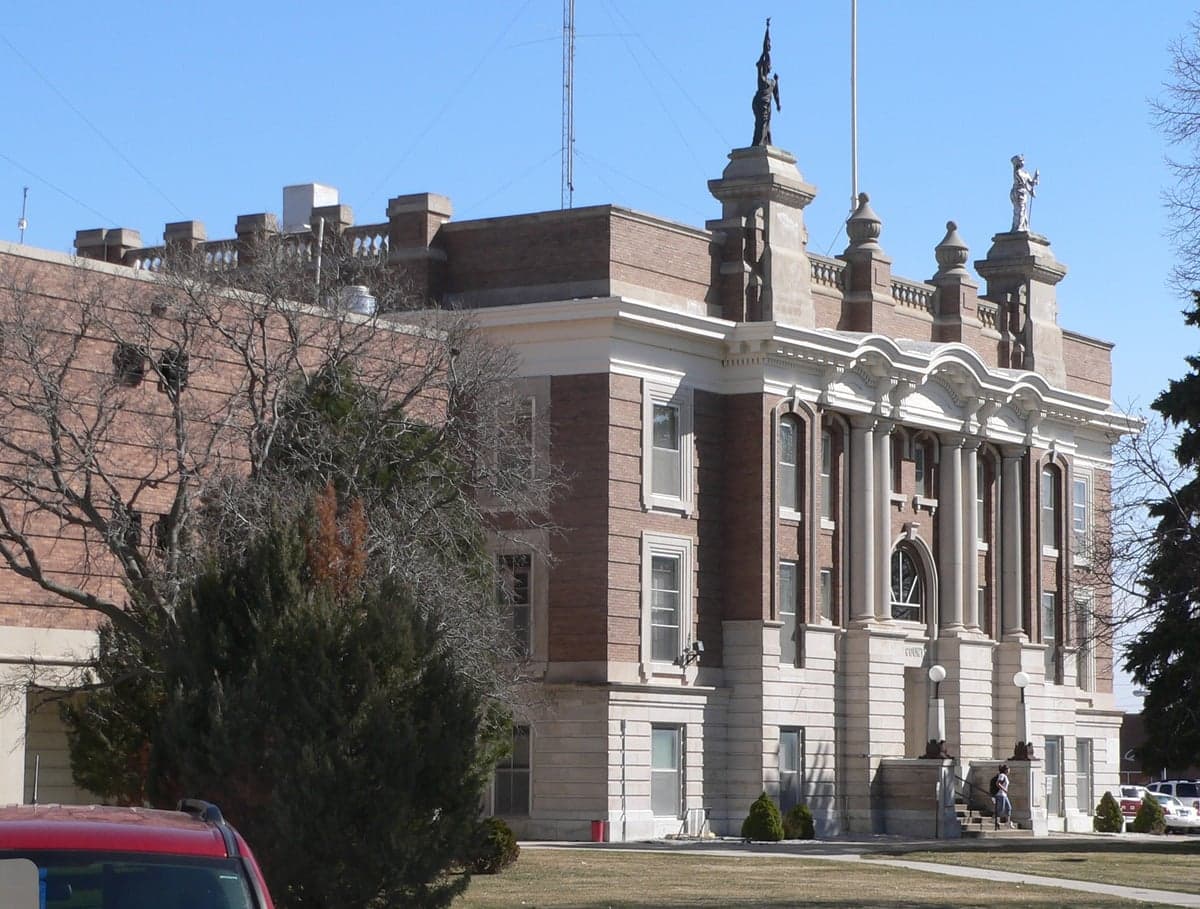
Photo: Wikipedia
Quality of Life in Dawson County
A livable area that tracks near national norms for affordability, walkability, and neighborhood health.
What does Quality of Life tell us?
Quality of Life measures an area by evaluating factors like cost of living, nearby amenities, country club access, airport proximity, socioeconomic signals and neighborhood character. For large states, this is a general average — quality of life can vary dramatically between metro areas, suburbs, and rural communities within the same state.
What does this tell us?
Quality of Life measures an area by evaluating factors like cost of living, nearby amenities, country club access, airport proximity, socioeconomic signals and neighborhood character. For large states, this is a general average — quality of life can vary dramatically between metro areas, suburbs, and rural communities within the same state.
Cost of Living
33% below national average
145%
The Real Cost of Living in Dawson County for 2026
| Tier | Individual | Family (4) |
|---|---|---|
| Survival | $14k | $26k |
| Comfortable | $31k | $45k |
| Luxury | $116k+ | $180k+ |
| Elite (Top 5%) | $137k+ | $212k+ |
Quality-of-Life Analysis
Dawson County, Nebraska, offers a distinct quality-of-life spectrum that ranges from the regional hub of Lexington to the quiet, unincorporated crossroads of Overton and the open agricultural land in between. The county’s overall cost of living index sits at 67—well below the national average of 100—with a median home value of $157,800 and median rent of $861, making it one of the more affordable places in the state. This economic reality attracts a mix of families seeking lower housing costs, workers employed in meatpacking and agriculture, and retirees looking for a slower pace. The character of daily life shifts noticeably depending on whether one lives in the county’s largest town, one of its smaller villages, or on a farmstead surrounded by irrigated cornfields.
Largest town(s) & population centers
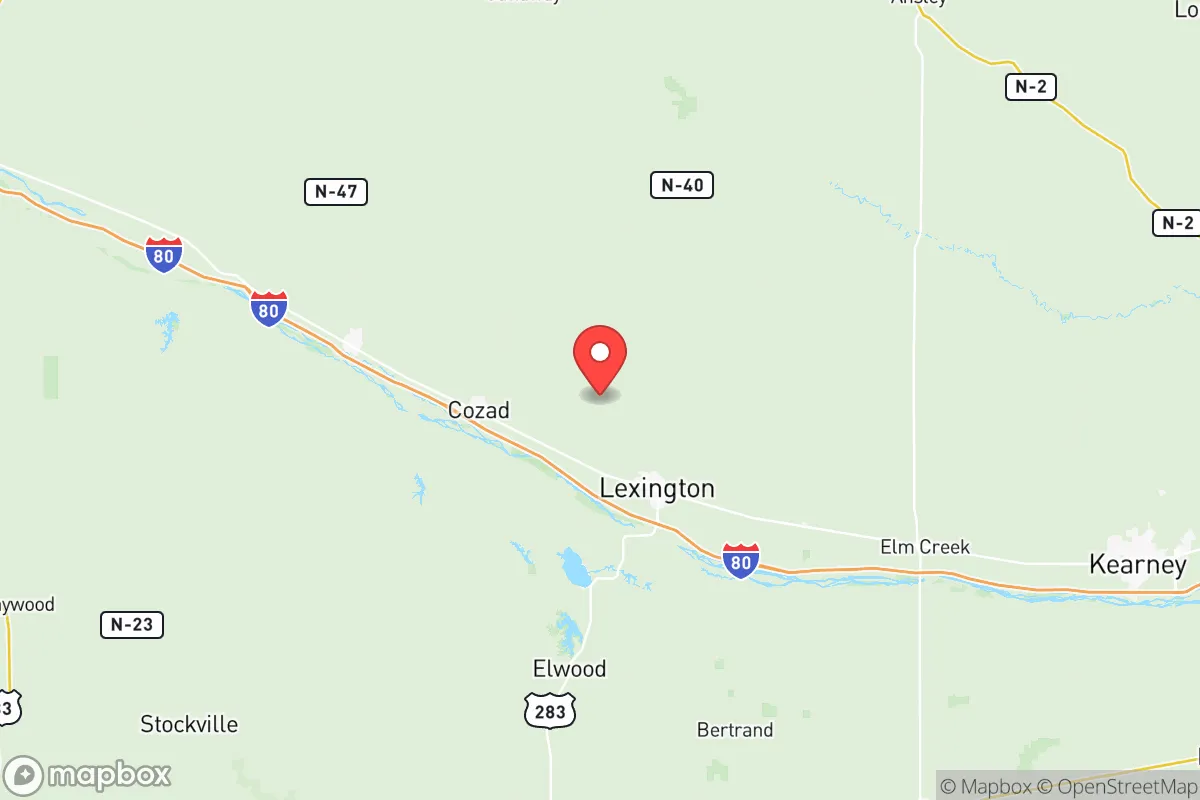
Lexington, the county seat and largest city with roughly 10,000 residents, is the commercial and employment anchor of Dawson County. Daily life here centers around the Tyson Fresh Meats plant, which employs a significant portion of the workforce and gives the town a notably diverse population. The downtown area along Plum Creek Parkway offers grocery stores, a hospital, and a community college campus, while the city’s parks and the Lake McConaughy recreation area draw residents for weekend outdoor activities. Lexington provides the most amenities in the county, including a public school system with a strong English Language Learner program, a public library, and a regional medical center. The average commute across the county is just under 18 minutes, and for Lexington residents, most jobs, shopping, and services are within a short drive. Cozad, located about 10 miles east of Lexington, is the county’s second-largest town with around 4,000 people. It offers a quieter, more self-contained lifestyle with its own school district, a handful of local restaurants, and easy access to Interstate 80. Cozad is often chosen by families who want a small-town atmosphere but still need to commute to Lexington or even Kearney for work.
Smaller towns & rural pockets
South of the Platte River, Gothenburg (population roughly 1,600) serves as a service center for the surrounding farm and ranch country. It has a historic downtown, a well-regarded public school, and a strong sense of community identity tied to the Oregon Trail heritage. Further west, Overton is a small village of fewer than 600 people, offering little more than a post office, a grain elevator, and a few blocks of homes—but it provides the quietest, most affordable entry point into the county. Farnam, in the county’s western reaches, is even smaller, with a population under 200 and no commercial services beyond a church and a volunteer fire department. These unincorporated and village-level areas are where residents trade convenience for space and privacy, often living on acreages or working in agriculture. The rural pockets between these towns are dominated by center-pivot irrigation farms and cattle operations, where the nearest grocery store might be a 20-minute drive.
Cost & lifestyle range
The cost spread across Dawson County is narrow by national standards but meaningful locally. Lexington sits at the higher end of the county’s affordability spectrum, with median home values near the countywide figure of $157,800 and rents averaging $861. A two-bedroom rental in Lexington typically costs between $750 and $950, while a similar unit in Overton or Farnam might rent for $600 to $700. Homebuyers in the smaller villages can often find fixer-upper houses for under $100,000, whereas a newer home in Lexington’s subdivisions may approach $250,000. The lifestyle trade-off is clear: Lexington offers grocery stores, a hospital, restaurants, and schools within a 10-minute drive, while rural residents accept longer drives to those amenities in exchange for lower housing costs, larger lots, and minimal traffic. Property taxes in Nebraska are relatively high, but the low home prices keep total housing costs well below the national average across all parts of the county.
Dawson County is best suited for people who prioritize affordability and a slower pace over urban amenities and career diversity. Families working in manufacturing or agriculture will find the housing market accessible and the commute short. Retirees on fixed incomes can stretch their savings further here than in almost any other part of the country. Those who need frequent access to specialty shopping, fine dining, or a major airport will find the county limiting, but for anyone comfortable with a self-reliant, community-oriented lifestyle, Dawson County delivers a low-cost, low-stress quality of life.

Crime in Dawson County
Generally safer than 65% of comparable U.S. locations.
Violent CrimeViolent Crime Analysis
Property CrimeProperty Crime Analysis
Crime Analysis
Dawson County, Nebraska, presents a mixed safety profile for prospective residents, with property crime rates significantly exceeding both state and national averages while violent crime remains below the national benchmark. Located in central Nebraska along the Platte River, the county's largest communities—Lexington, Gothenburg, and Cozad—each contribute differently to the overall crime picture. The most recent data shows a violent crime rate of 219.7 per 100,000 residents and a property crime rate of 1,391.6 per 100,000, figures that demand careful neighborhood-level evaluation before relocation.
Crime in context
Dawson County's violent crime rate of 219.7 per 100,000 sits roughly 37% below the national average of approximately 380 per 100,000, placing it in a relatively safer tier for serious offenses like homicide, rape, robbery, and aggravated assault. However, the property crime rate of 1,391.6 per 100,000 runs about 25% above the national average of roughly 1,100 per 100,000, and notably higher than Nebraska's statewide property crime rate of approximately 1,200 per 100,000. This divergence means residents face a lower risk of violent victimization but a heightened chance of burglary, theft, and motor vehicle theft compared to the typical American community. The county's position along Interstate 80, a major east-west freight corridor, may contribute to transient property crime, as does the agricultural economy's reliance on valuable, often unsecured equipment and livestock.
What residents experience
Daily life in Dawson County involves practical safety trade-offs. Lexington, the county seat and largest town with roughly 10,000 residents, accounts for a disproportionate share of reported crime, particularly property offenses linked to its larger population and higher poverty rate. Gothenburg, with about 1,600 residents, and Cozad, with roughly 3,800, generally report lower crime volumes, though their smaller populations mean even a few incidents can skew per-capita rates. Residents in all three communities commonly report unlocked vehicle thefts, shed and garage burglaries, and occasional farm equipment theft as recurring nuisances. Violent crime is rare enough that most residents feel safe walking downtown areas during daylight, though bar-related altercations and domestic incidents drive the majority of aggravated assaults. The Dawson County Sheriff's Office and local police departments maintain visible patrols, but response times in rural areas can exceed 20 minutes, making neighborhood watch participation and personal property security measures advisable.
Judicial philosophy in Dawson County leans conservative, with the 11th Judicial District covering Dawson, Buffalo, and Hall counties. Local prosecutors and judges generally take a tough-on-crime approach, which aligns with the area's political makeup—Dawson County voted heavily Republican in recent elections. This contrasts with more progressive jurisdictions in Nebraska's larger cities like Lincoln and Omaha, where some district attorneys have adopted bail reform and diversion programs that critics argue reduce accountability and increase recidivism. For residents moving from such areas, Dawson County's traditional sentencing practices may offer reassurance that property and violent offenders face meaningful consequences.
Neighborhood-level variation
Crime is not evenly distributed across Dawson County. Lexington's south side, particularly near the industrial areas and lower-income housing along Highway 30, sees higher concentrations of property crime and police calls. Gothenburg's historic downtown and newer subdivisions on the town's west edge report very few incidents, making it the safest choice within the county for families prioritizing low crime. Cozad's residential core near the elementary school and golf course also maintains a quiet reputation. Rural areas outside town limits face unique risks: farmsteads and acreages are vulnerable to equipment theft and trespassing, with longer sheriff response times. Prospective residents should check the Dawson County Sheriff's Office online crime map or speak directly with local police departments in their target town to assess block-level risk before committing to a lease or purchase.
* Values derived from national, state, county, city and local statistics and may differ in a specific area. Last updated: 2026-07-08T16:20:11.000Z
Narrative content on this page is AI-generated and may contain mistakes. Verify any details that matter before acting on them.
ReloMaps may earn a commission from affiliate links at no extra cost to you.

