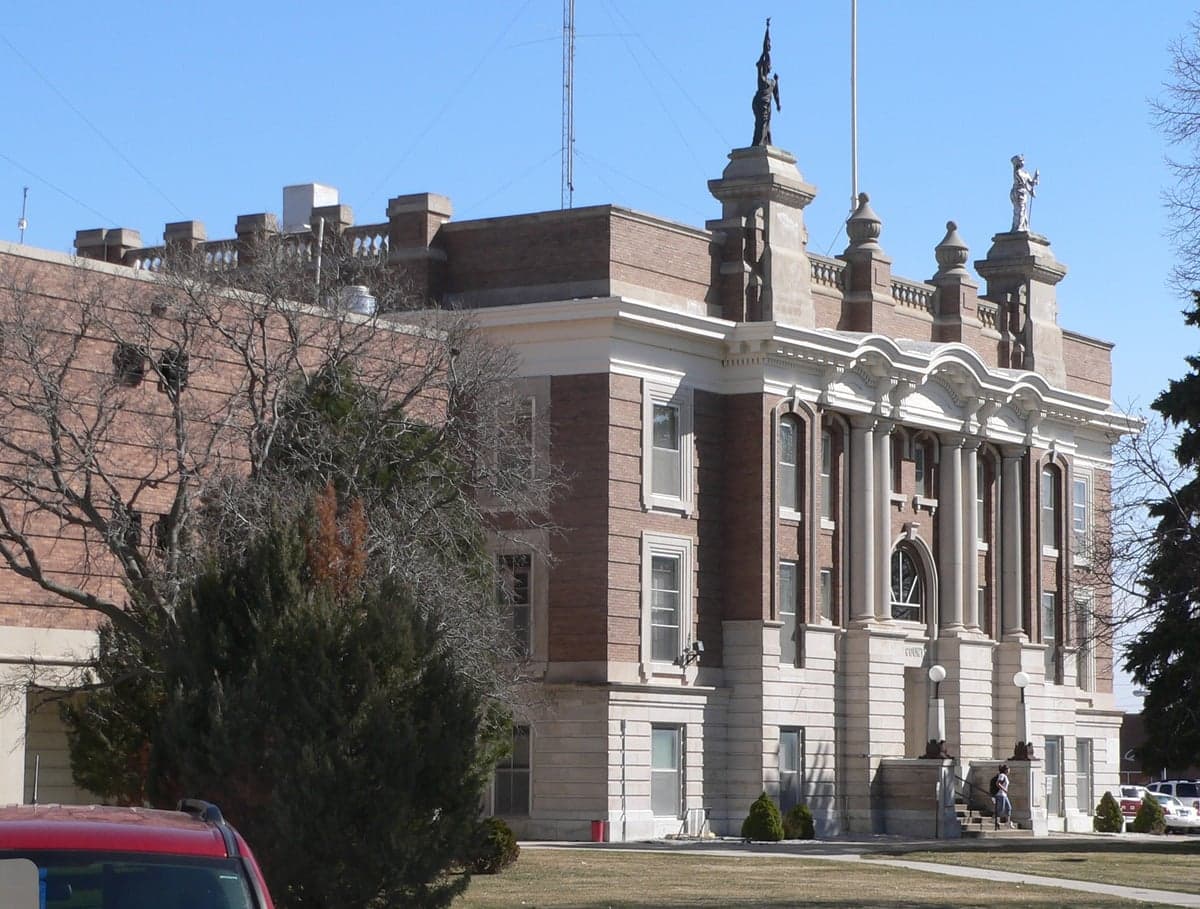
Photo: Wikipedia
Demographics of Dawson County
Affluence Level in Dawson County
A middle-class area roughly in line with national averages across income, home values, education, and employment.
People of Dawson County
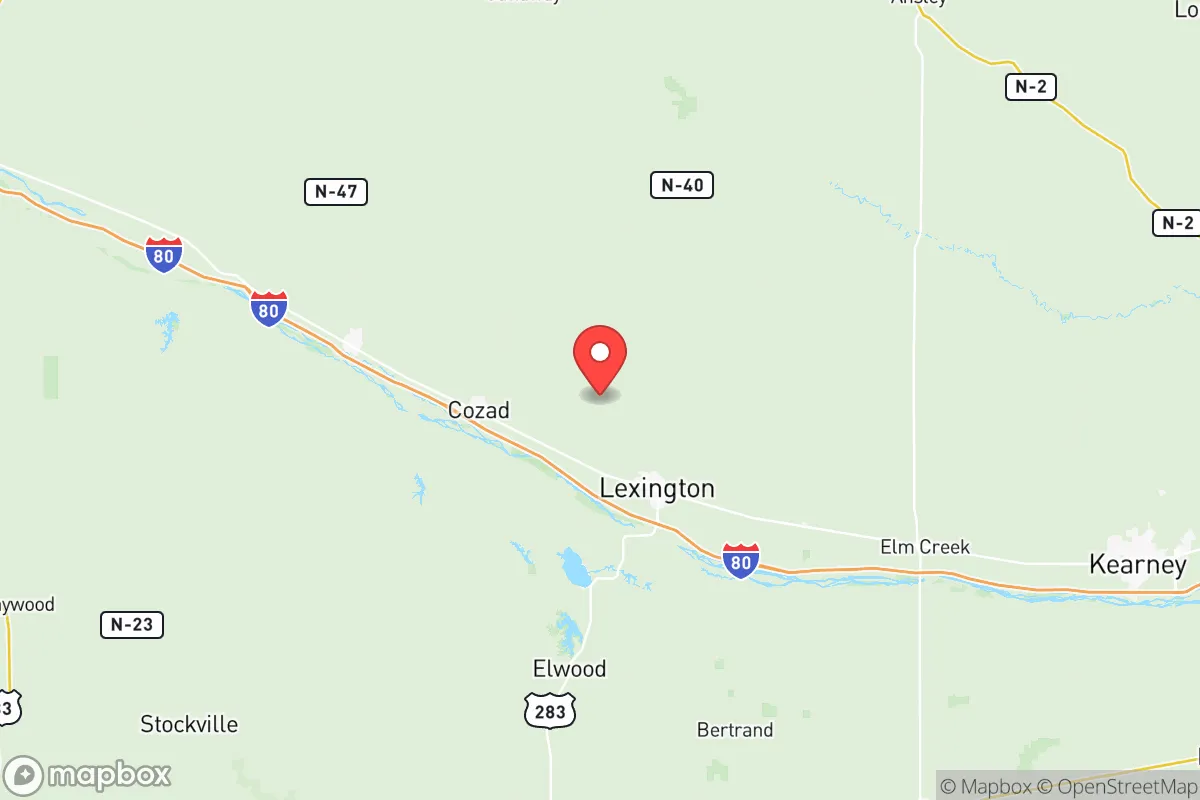
Dawson County, Nebraska, is a predominantly rural and agricultural community of 24,020 residents, characterized by a strong Hispanic presence that shapes its cultural and economic identity, alongside a historically rooted white population. The county is notably less diverse in its urban centers than the state average, with a foreign-born population of 11.5% and a low college attainment rate of 17.5%, reflecting a workforce heavily tied to meatpacking and farming. The people of Dawson County today are defined by a blend of long-standing German and Czech farming families and a newer, vibrant Latino community centered in the county seat of Lexington and the town of Cozad.
Settlement & growth (pre-1960)
Before American settlement, the region now known as Dawson County was part of the vast hunting grounds of the Pawnee and Lakota Sioux nations, who followed the bison herds along the Platte River. The area saw little permanent Native habitation but was a critical travel corridor for tribes and, later, for European explorers and fur traders. The first permanent American settlers arrived in the 1860s, drawn by the Homestead Act of 1862, which offered 160 acres of land to anyone willing to farm it. The construction of the Union Pacific Railroad through the Platte Valley in the late 1860s was the decisive event, bringing a wave of settlers to towns like Lexington (originally named Plum Creek), Cozad, and Gothenburg.
The dominant immigrant groups in this early wave were Germans from Russia and Czechs, who arrived in large numbers between 1870 and 1910. These groups were attracted by the promise of cheap, fertile land and the opportunity to practice their own religious and cultural traditions. The Germans from Russia, in particular, were experienced in dryland farming and wheat cultivation, making them ideal settlers for the Nebraska plains. They established tight-knit rural communities and churches, with a strong concentration around Overton and Sumner. Czech immigrants, known for their strong community organizations and brass bands, settled heavily in and around Lexington and Farnam. By 1910, Dawson County's population had swelled to over 15,000, almost entirely white and native-born or of Northern European descent.
The Dust Bowl and Great Depression of the 1930s hit the county hard, causing a significant population decline as many farm families abandoned their land and moved west to California or into urban areas. The population bottomed out at around 12,000 in 1940. Recovery came slowly, driven by the post-World War II agricultural boom and the expansion of irrigation from the Platte River, which stabilized farming. However, the county's population remained overwhelmingly white and rural through the 1950s, with Lexington serving as the primary commercial and railroad hub.
Modern era (post-1965)
The single most transformative event for Dawson County's demographics was the opening of the IBP (now Tyson Foods) beef processing plant in Lexington in the early 1990s. This plant, part of a broader trend of meatpacking industry consolidation in rural Nebraska, created a massive demand for low-skilled labor that could not be filled by the local white population. The plant actively recruited workers from Mexico and Central America, and later from Myanmar (Burma) and Sudan through refugee resettlement programs. This wave of immigration, which accelerated after the 1990s, fundamentally reshaped the county's ethnic makeup.
Today, Hispanic residents make up 36.3% of the population, up from virtually zero in 1980. The vast majority are of Mexican origin, with smaller numbers from Guatemala and El Salvador. They are heavily concentrated in Lexington, where they form a majority of the city's population and have established a vibrant commercial district with Mexican grocery stores, taquerias, and Spanish-language churches. The town of Cozad also has a significant Hispanic community, though smaller. The Black population, at 6.3%, is largely composed of refugees from Sudan and South Sudan, who began arriving in the early 2000s and are concentrated in Lexington's affordable housing complexes. The East/Southeast Asian population (0.6%) is almost entirely Burmese (Karen) refugees, who have formed a small but distinct community in Lexington. The Indian-subcontinent population is negligible (0.0%).
Domestic migration has been minimal. The county has not attracted significant numbers of retirees or remote workers from coastal states. Instead, the white population has continued a slow, decades-long decline, dropping from over 90% in 1980 to 53.9% today, as younger white residents leave for college and jobs in larger Nebraska cities like Lincoln and Omaha. The overall population has remained relatively stable since 1990, hovering around 24,000, as the influx of immigrant labor has offset the out-migration of native-born residents.
The future
Dawson County is on a clear trajectory toward becoming a majority-minority county, likely within the next 10-15 years. The white population is aging and shrinking, while the Hispanic population is younger and has higher birth rates. Continued immigration, both legal and undocumented, will likely sustain this trend, though national immigration policy changes could slow the pace. The Black and Asian populations are expected to remain small but stable, as refugee resettlement programs have slowed.
The cultural identity of the county is evolving. Lexington is increasingly bilingual, with Spanish spoken as commonly as English in many public spaces. The annual Lexington Hispanic Festival is now the largest community event in the county. However, the rural towns of Gothenburg, Overton, and Sumner remain overwhelmingly white and culturally conservative, creating a distinct urban-rural and ethnic divide within the county. The school system in Lexington is now majority-Hispanic, and the local economy is entirely dependent on the meatpacking plant, which makes the county vulnerable to automation or plant closures.
For a family or individual moving in now, Dawson County offers a low cost of living and a strong sense of community, but it is a place of stark demographic contrasts. The future will likely see a continued blending of cultures in Lexington, while the outlying towns remain more traditional. The county's economic fortunes will rise or fall with the meatpacking industry, which will continue to attract immigrant labor and shape the population's character.

* Values derived from national, state, county, city and local statistics and may differ in a specific area. Last updated: 2026-07-08T16:20:11.000Z
Narrative content on this page is AI-generated and may contain mistakes. Verify any details that matter before acting on them.
ReloMaps may earn a commission from affiliate links at no extra cost to you.

