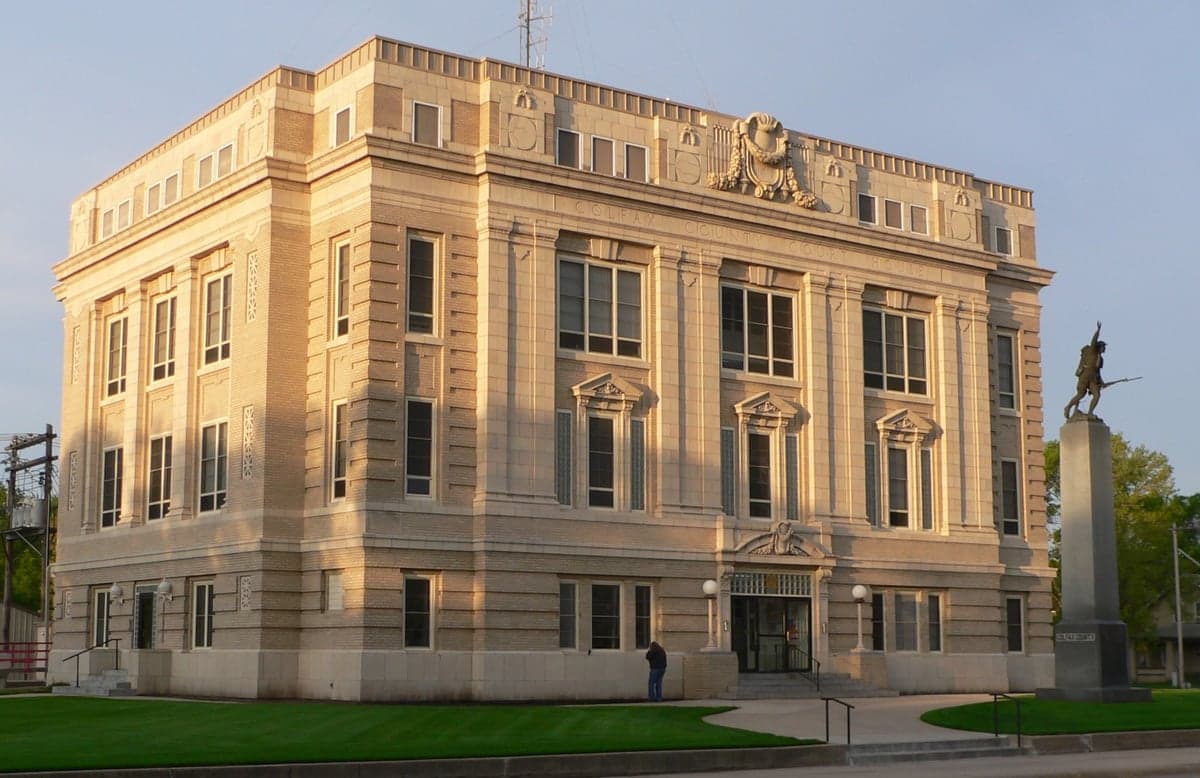
Photo: Wikipedia
Personal Sovereignty in Colfax County
Viable for self-reliance. Generally workable, though some barriers may limit total independence.
What does Personal Sovereignty tell us?
Personal Sovereignty measures your capacity for self-reliance and independence with minimal government friction. Higher scores mean fewer barriers between you and the way you want to live... but it assumes you have the space you need and good neighbors.
What does this tell us?
Personal Sovereignty measures your capacity for self-reliance and independence with minimal government friction. Higher scores mean fewer barriers between you and the way you want to live... but it assumes you have the space you need and good neighbors.
State Policy
Energy independence: Importer (35% of energy produced in-state)
Personal Liberty
Homesteading

Personal Liberty Analysis
Colfax County, Nebraska, offers a notably high degree of personal sovereignty, rooted in a state-level legal framework that prioritizes individual autonomy and limited government intervention. The county’s regulatory posture is light, its tax burden is among the lowest in the nation, and its gun laws are among the most permissive, creating an environment where self-reliance is not just possible but actively encouraged. For single individuals and families seeking to maximize personal freedom—from homeschooling to homesteading—Colfax County presents a compelling option, particularly when compared to more heavily regulated urban and coastal areas.
Tax burden and regulatory posture: How Colfax County compares to Nebraska and the nation
Nebraska’s overall tax burden is moderate, but Colfax County benefits from a state-level commitment to low property taxes and a regulatory environment that is generally business-friendly. The county’s property tax rate is competitive, and the state does not impose a personal property tax on vehicles or business equipment, a significant advantage for those who value financial autonomy. Sales tax in Colfax County is 6.5% (state plus county), which is below the national average. The regulatory posture in towns like Schuyler, the county seat, and Howells is notably light-touch; zoning ordinances are minimal, and building permits are straightforward and inexpensive. In contrast, Clarkson and Leigh have even fewer formal regulations, with many residents undertaking construction and land improvements without significant bureaucratic hurdles. The state’s right-to-work law further reinforces an environment where individual employment choices are not constrained by mandatory union membership. For a relocation-minded reader, the key takeaway is that Colfax County’s tax and regulatory climate is designed to minimize friction for those who want to keep more of what they earn and operate with fewer government approvals.
Self-defense and gun law specifics: Nebraska’s constitutional carry and castle doctrine
Nebraska is a strong Second Amendment state, and Colfax County reflects that culture. Since 2023, Nebraska has permitted constitutional carry (permitless concealed carry) for any law-abiding adult 21 or older. This means residents of Schuyler, Howells, or any other town in the county can carry a concealed firearm without a permit, background check, or training requirement—though a permit is still available for reciprocity with other states. The state also has a robust castle doctrine law, which presumes that a person using deadly force against an intruder in their home, vehicle, or place of business acted in self-defense, with no duty to retreat. This legal framework is particularly appealing to those who prioritize personal safety and the right to defend themselves and their families. Local gun culture is strong; shooting ranges and gun shops are common in the area, and firearms are a routine part of rural life. For families moving from states with restrictive gun laws, Colfax County offers a legal environment where self-defense rights are clearly protected and not subject to local preemption challenges.
Self-reliance and homesteading viability: Lot sizes, zoning, and off-grid feasibility
Colfax County is a prime location for those seeking a self-reliant lifestyle, with ample opportunities for homesteading, small-scale farming, and off-grid living. Zoning is minimal outside of the incorporated towns. In unincorporated areas, residents can keep livestock, build workshops, and install solar panels or wind turbines without the permitting headaches common in more urbanized counties. Lot sizes vary widely: agricultural parcels of 40 acres or more are common, but smaller 5- to 10-acre hobby farms are also available near Rogers and Oktaha (though Oktaha is in Muskogee County, Oklahoma—a common confusion; the correct reference is Richland, a small unincorporated community in Colfax County). For those wanting to be near amenities, Schuyler offers larger residential lots (0.5 to 2 acres) that still allow for gardens, chickens, and small livestock. Off-grid living is legally feasible: Nebraska has no statewide ban on rainwater collection, and solar panel installation is straightforward, though net metering policies are less generous than in some states. The county’s agricultural zoning allows for accessory dwelling units (ADUs) and farmworker housing without excessive red tape. For families who want to grow their own food, raise animals, or reduce reliance on municipal utilities, Colfax County’s regulatory environment is permissive and supportive of self-sufficiency.
Personal liberties: Parental rights, medical autonomy, speech, and property rights
Nebraska law strongly protects parental rights in education and healthcare. The state has no compulsory kindergarten requirement, and homeschooling is lightly regulated—parents need only file a simple notification and provide a basic curriculum outline. This makes Colfax County attractive for families who want to control their children’s education. Medical autonomy is also respected: Nebraska does not have a state-level vaccine mandate for adults, and while school vaccine requirements exist, exemptions (including religious and philosophical) are available. The state’s Health Care Freedom Act (passed in 2012) explicitly protects the right of individuals to pay directly for medical care without government penalties. Free speech is robustly protected under both the U.S. and Nebraska constitutions, and the county’s rural character means that local government meetings and public forums are small and accessible, allowing residents to voice concerns directly. Property rights are strong: Nebraska is a “Dillon’s Rule” state, meaning local governments have only the powers explicitly granted by the state, which limits the ability of county or town boards to impose overly restrictive land-use regulations. For those who value the ability to live as they see fit without excessive government oversight, Colfax County’s legal framework is a clear asset.
Overall, Colfax County ranks among the more sovereignty-friendly areas in the Great Plains. Its combination of constitutional carry, low taxes, minimal zoning, strong parental rights, and a culture of self-reliance places it well ahead of most urban and suburban counties in terms of personal freedom. While Nebraska’s state-level income tax is a modest drawback (a flat 3.99% as of 2026), the county’s low property taxes and light regulatory touch more than compensate. For a conservative-leaning individual or family seeking a place where autonomy is the default rather than the exception, Colfax County—and towns like Schuyler, Howells, Clarkson, Leigh, and Richland—offer a practical and legally sound environment for living on your own terms.

* Values derived from national, state, county, city and local statistics and may differ in a specific area. Last updated: 2026-06-18T04:22:40.000Z
Narrative content on this page is AI-generated and may contain mistakes. Verify any details that matter before acting on them.
ReloMaps may earn a commission from affiliate links at no extra cost to you.

