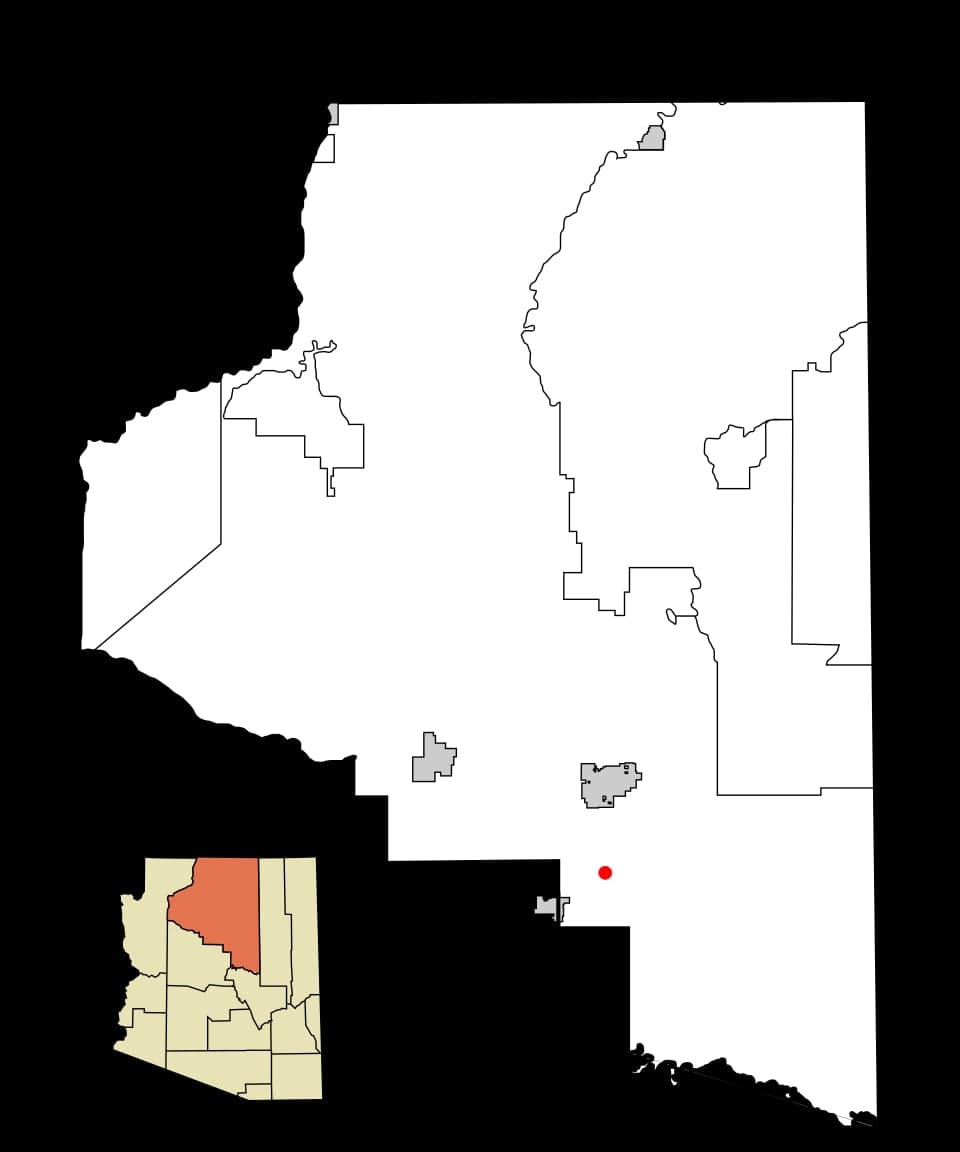
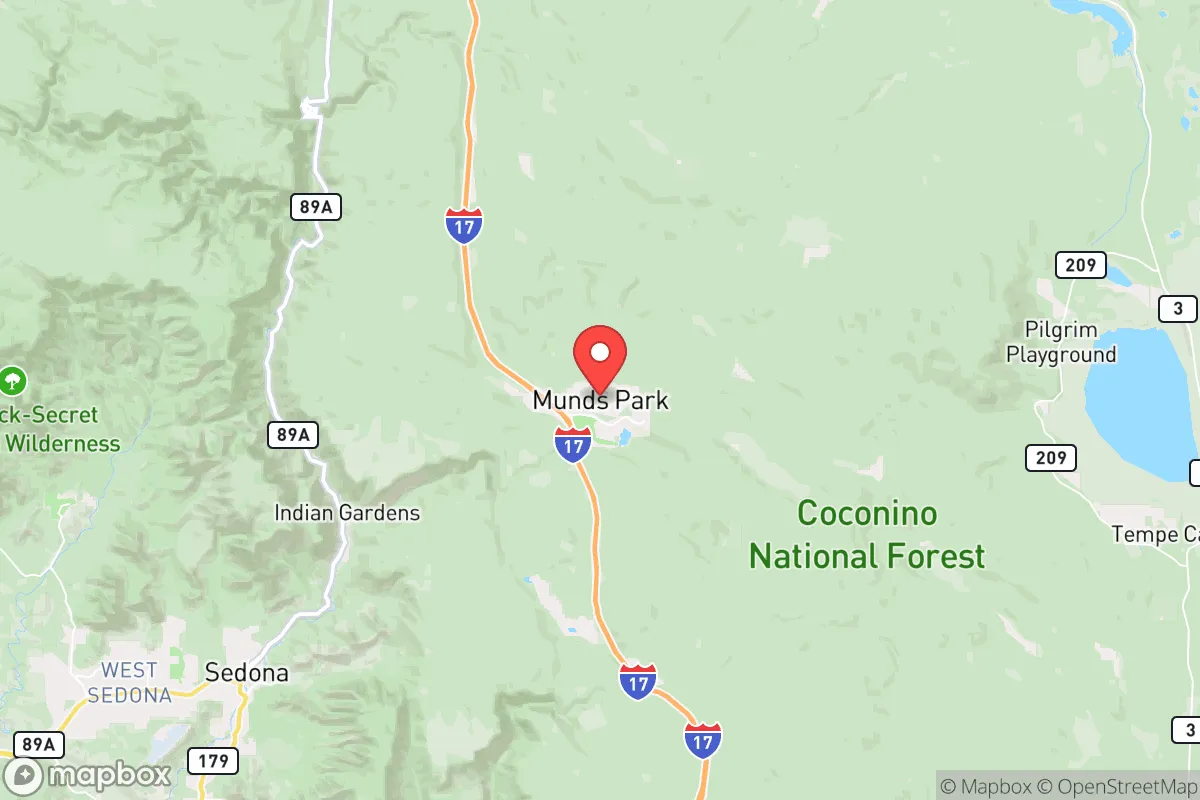
Photo: Wikipedia
Political ClimatePolitical Climate in Munds Park, AZ
District shown is the primary district for this city’s centroid. Cities may span multiple districts.
Local Political AnalysisPolitical Analysis of Munds Park, AZ
Munds Park leans solidly Republican, with a Cook PVI of R+7, making it significantly more conservative than Arizona as a whole, which sits at EVEN. This isn't a new development; the area has long been a reliably red pocket within Coconino County, a county that itself is a blue island thanks to Flagstaff and the Navajo Nation. The political trajectory here is one of slow, steady reinforcement of its conservative character, driven largely by an influx of retirees and second-home owners from Phoenix who bring their Maricopa County voting habits with them.
How it compares
The contrast between Munds Park and the rest of Arizona is stark. While the state has trended purple over the last decade—flipping blue for president in 2020 and electing two Democratic senators—Munds Park has held firm. Drive 20 minutes north to Flagstaff, and you'll find a very different political reality: a progressive college town that votes reliably blue and drives Coconino County's overall Democratic lean. Head south toward Sedona, and you'll find a mix of libertarian-leaning independents and environmentally-focused liberals. Munds Park, by contrast, feels more like an extension of the conservative Phoenix suburbs—think Fountain Hills or Cave Creek—than a typical mountain community. The local precincts routinely deliver 60-65% of the vote for Republican candidates, even in years when statewide races are decided by a point or two.
What this means for residents
For conservative residents, Munds Park offers a comfortable political environment where their views are the norm. Local businesses, community events, and even the homeowners' association tend to reflect traditional values. You'll see Trump signs in yards during election season without anyone batting an eye. For liberal residents, the reality is more nuanced. You won't face hostility, but you'll be in the minority. The local Democratic club is small but active, and most political discussions remain civil—this isn't a place where people argue politics at the grocery store. The practical impact is most visible in local governance: the Coconino County Board of Supervisors, which controls land use and zoning in unincorporated areas like Munds Park, is controlled by Democrats. This creates occasional friction when county-level policies on short-term rentals or forest management clash with the preferences of the predominantly conservative permanent residents.
Culturally, Munds Park feels more like a Western ranching community than a mountain resort town. The politics here are practical rather than ideological—people care about property rights, fire mitigation, and keeping the roads plowed in winter. There's less of the culture war intensity you see in Phoenix or Tucson. The biggest policy distinction from the rest of Arizona is the local attitude toward growth: while the state pushes for development, many Munds Park residents are wary of losing the quiet, low-density character that drew them here. That shared concern sometimes creates odd political alliances, with conservatives and liberals finding common ground on preserving open space and limiting commercial expansion. If you're moving here, expect a place where your neighbor's politics matter less than whether you help dig their truck out of a snowbank.

State Political ClimatePolitical Climate in Arizona
State Political AnalysisPolitical Environment in the State
Arizona is the ultimate swing state in 2026, with a Cook Partisan Voting Index of EVEN, meaning it is perfectly balanced between the two major parties. Over the last 20 years, the state has undergone a dramatic transformation from a reliably Republican stronghold—where George W. Bush won by 11 points in 2004—to a purple battleground decided by razor-thin margins in 2020 and 2024. The dominant coalition is no longer a single party; it is a volatile mix of fast-growing suburban independents, a mobilized Latino electorate, and a shrinking but still powerful base of rural conservatives.
Urban vs. rural divide
The political map of Arizona is a textbook study in geographic polarization. Maricopa County, home to Phoenix and its sprawling suburbs, is the entire ballgame—it contains over 60% of the state's voters and has flipped from deep red to purple to light blue over the past decade. The city of Phoenix itself leans Democratic, but the critical battlegrounds are the suburban "donut" counties like Mesa, Chandler, and Gilbert, where college-educated voters and transplants from blue states have shifted the suburbs leftward. Meanwhile, Tucson (Pima County) is a Democratic anchor, while the rest of the state—rural counties like Mohave, Yavapai, and Cochise—vote Republican by massive margins. The swing factor is the fast-growing exurbs of Buckeye and Maricopa (city), which remain conservative but are seeing demographic change.
Policy environment
Arizona's policy environment reflects its split personality. The state has a flat income tax rate of 2.5% (passed in 2021) and a sales tax around 5.6%, making it a relatively low-tax state compared to California or Illinois. Property taxes are low, and there is no estate tax. However, the state's regulatory posture is mixed: it is a "right-to-work" state with weak unions, but it also has some of the most stringent water-use regulations in the West due to the Colorado River shortage. Education policy is a flashpoint—Arizona was a pioneer in school choice and charter schools, but teacher pay and school funding remain perennial issues. Healthcare is similarly divided: the state expanded Medicaid under the Affordable Care Act (Arizona Health Care Cost Containment System), but it also has a restrictive abortion law (a 15-week ban passed in 2022, with a near-total ban from 1864 briefly revived and then blocked by the courts in 2024). Election laws have been a major battleground: the state has no-excuse mail-in voting (used by 80% of voters), but it also passed voter ID requirements and a ban on ballot harvesting in 2022.
Recent policy direction
The recent policy direction in Arizona is a tug-of-war between the Republican-controlled legislature and a Democratic governor (Katie Hobbs, elected in 2022). On gun rights, Arizona is a "constitutional carry" state (permitless carry since 2010) and has preemption laws blocking local gun ordinances. On parental rights and education, the state passed a universal school voucher program (Empowerment Scholarship Accounts) in 2022, making it the first state to offer vouchers to all students regardless of income. On speech and privacy, the state has no broad privacy law like California's, but it does have a data breach notification law. On medical and bodily autonomy, the abortion landscape is chaotic: the 15-week ban is currently in effect, but a ballot initiative to enshrine abortion rights in the state constitution is expected in 2026. On property rights, Arizona is a "Dillon's Rule" state in some areas but has strong private property protections. On voting access, the state has automatic voter registration at the DMV and same-day registration, but it also purges inactive voters regularly. The net effect is a state that is libertarian-leaning on economics and guns, but deeply divided on social issues.
Civil unrest & political movements
Arizona has been a hotbed of political activism and civil unrest for decades. The most visible flashpoint is immigration: the state passed SB 1070 in 2010 (the "show me your papers" law), which sparked massive protests and a national boycott. While the most controversial parts were struck down by the courts, the issue remains live, with the border in Yuma and Cochise counties seeing high traffic. On the left, the "Red for Ed" teacher walkouts in 2018 were the largest in the nation, with 50,000 educators walking out. On the right, the "Stop the Steal" movement was very active in Maricopa County after the 2020 election, leading to the "audit" of ballots in 2021. Election integrity remains a top concern for conservatives, while voting access is a top concern for liberals. There are also active secessionist/nullification movements in rural counties like Mohave, where some officials have called for joining Idaho or forming a new state. A new resident will notice the intensity of political signage, the frequency of ballot initiatives (Arizona has robust direct democracy), and the constant presence of political ads in Maricopa County.
Projection
Over the next 5-10 years, Arizona is likely to remain a swing state, but the trend lines favor Democrats slightly due to demographic shifts. The state is growing by about 100,000 people per year, mostly in Maricopa County, and many of these newcomers are from blue states like California and Illinois. The Latino population, which is about 30% of the state, is younger and growing, and while it is not monolithic, it leans Democratic. However, the Republican Party is also making inroads with Latino voters in places like Yuma and Santa Cruz counties. The wild card is the exurban growth in Pinal County (between Phoenix and Tucson), which is currently red but could shift as it becomes more suburban. A relocator moving in now should expect a state that will be decided by 1-2 points in presidential elections, with control of the legislature and governor's office flipping regularly. The practical implication is that policy will be volatile—one election can bring a 15-week abortion ban, the next can bring a constitutional amendment protecting it.
For a new resident, the bottom line is that Arizona offers a low-tax, pro-business environment with strong gun rights and school choice, but it also has a highly engaged and polarized electorate that will keep the state in the national spotlight. If you are conservative, you will find a welcoming environment in the suburbs and rural areas, but you will need to accept that the state is not a safe red state anymore. If you are liberal, you will find a growing coalition in the cities, but you will face a legislature that is often hostile to your priorities. The best advice is to pick your community carefully—Gilbert and Chandler are purple suburbs with good schools, Prescott is a conservative haven, and Tucson is a liberal enclave. The state's politics are a reflection of its people: independent, unpredictable, and fiercely contested.
* Values derived from national, state, county, city and local statistics and may differ in a specific area. Last updated: 2026-10-24T16:13:48.000Z
Narrative content on this page is AI-generated and may contain mistakes. Verify any details that matter before acting on them.
ReloMaps may earn a commission from affiliate links at no extra cost to you.

