Photo: Wikipedia
Demographics of Munds Park, AZ
Affluence Level in Munds Park, AZ
A middle-class area roughly in line with national averages across income, home values, education, and employment.
People of Munds Park, AZ
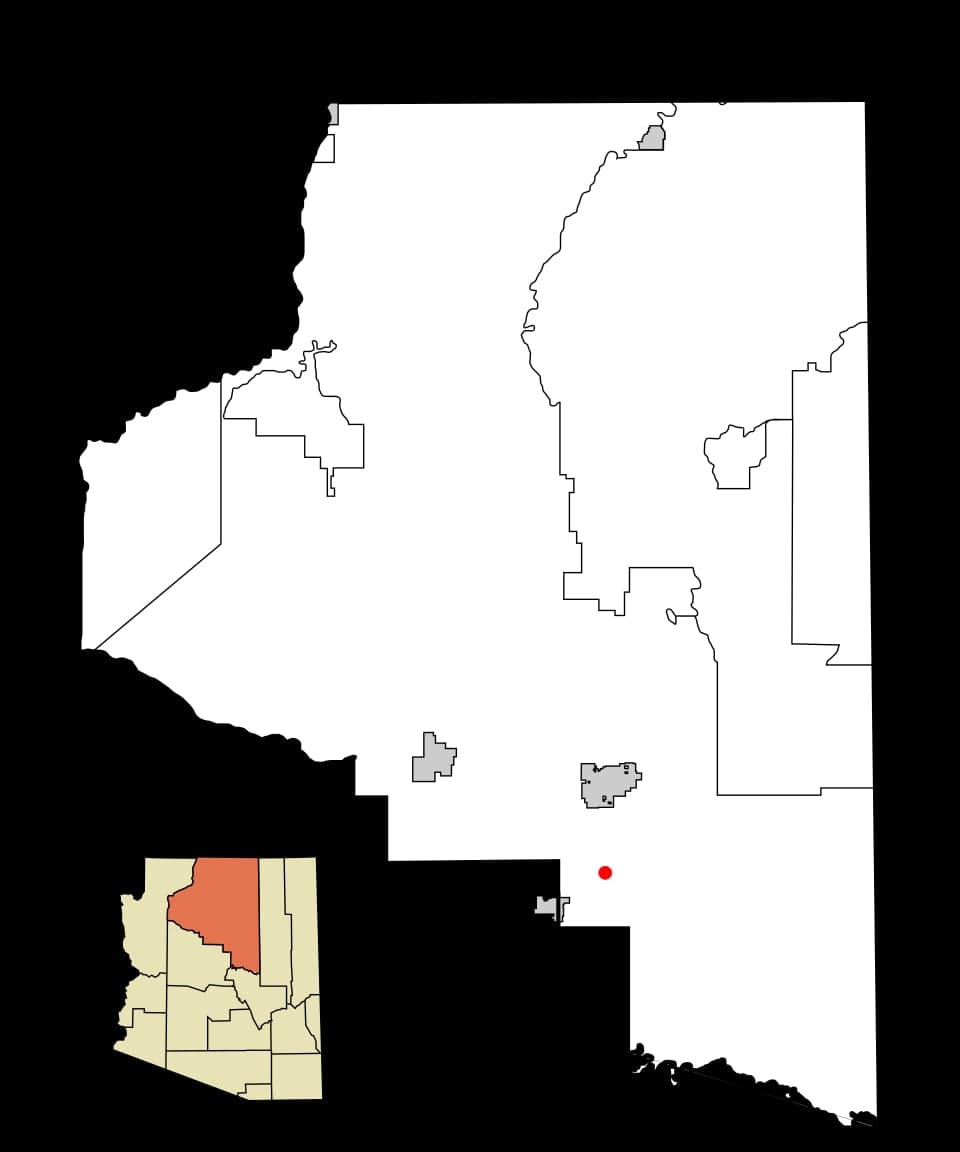
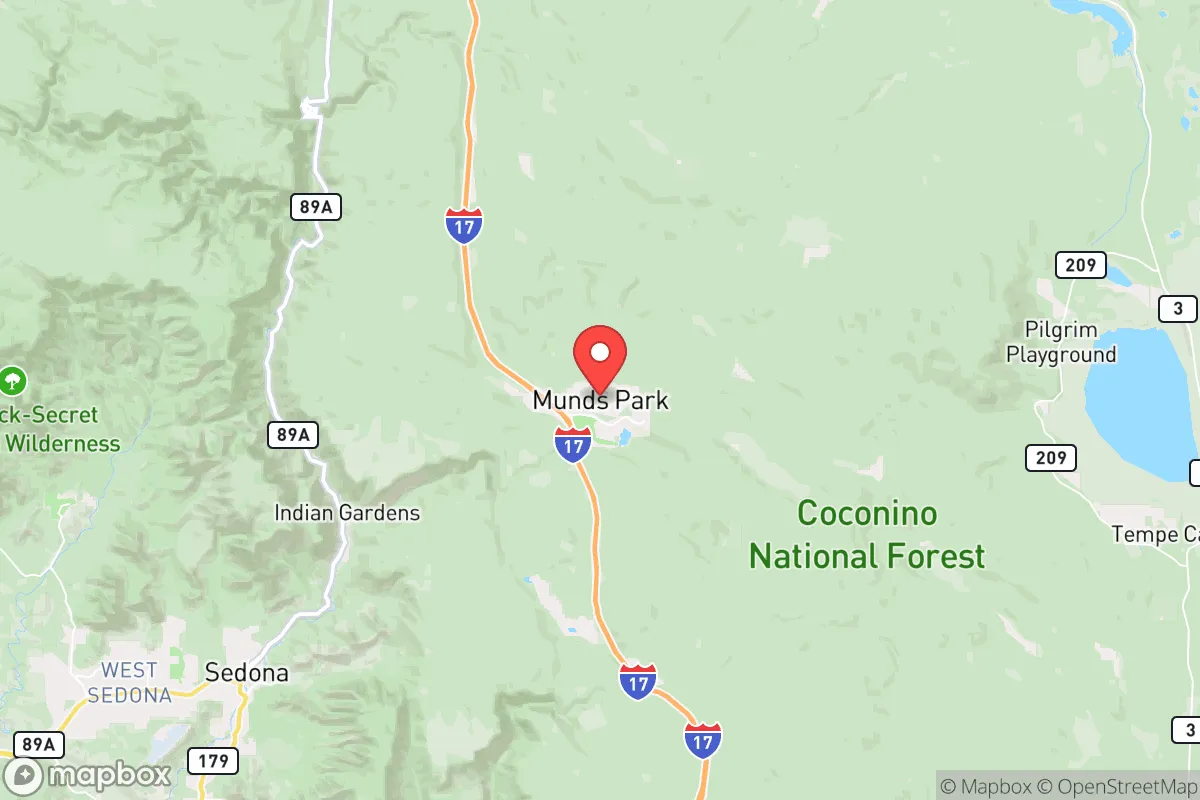
Munds Park, Arizona, is a small, unincorporated community of 752 residents that is overwhelmingly white and homogenous, with a population that is 100% white and 0.0% foreign-born. Located at roughly 6,500 feet in the Coconino National Forest, the community functions as a seasonal retreat and bedroom suburb for Flagstaff, characterized by its dense pine forests, recreational lake access, and a tight-knit, family-oriented culture. The population is notably well-educated, with 47.6% holding a college degree, and the area’s identity is rooted in outdoor recreation, second-home ownership, and a quiet, conservative-leaning lifestyle that attracts families and retirees seeking space and seclusion.
How the city was settled and grew
Munds Park was not a frontier settlement or a railroad town; it was a planned recreational subdivision that emerged in the mid-20th century. The area was originally part of the larger Coconino National Forest and was used for logging and seasonal grazing. The modern community began in the 1960s when developers subdivided the forested land into residential lots, marketed primarily to residents of the Phoenix and Tucson metropolitan areas seeking a cool-weather escape. The earliest wave of settlers were predominantly white, middle-class Arizonans who built cabins and vacation homes in what is now the Munds Park Estates neighborhood, the original core of the subdivision. A second wave followed in the 1970s and 1980s, with families building permanent residences in areas like Pinewood and Kachina Village (the latter technically a separate community but closely tied to Munds Park’s development pattern). These early residents were drawn by the promise of affordable land, proximity to Flagstaff (about 20 miles north), and access to the Munds Park Lake recreation area. No significant immigrant or minority populations settled here during this period; the community remained almost entirely white, reflecting both the marketing of the subdivision as a second-home destination and the broader demographic patterns of northern Arizona’s recreational developments.
Modern era (post-1965)
After the Hart-Cellar Act of 1965 reshaped U.S. immigration, Munds Park saw no corresponding demographic shift. The community’s foreign-born population remains at 0.0%, and its racial composition has not diversified. The post-1965 era instead saw domestic in-migration from within Arizona and the broader Sun Belt, with families and retirees purchasing existing cabins or building new homes. The Munds Park North area, developed in the 1990s and 2000s, absorbed many of these newer residents, who were typically white, college-educated professionals from Phoenix, Scottsdale, and Tucson. The Lakeview neighborhood, situated near the lake, became a preferred location for full-time residents, while the Forest Highlands area (a gated golf community technically within the Munds Park zip code but distinct in character) attracted wealthier retirees and second-home owners. The community’s population has remained small and stable, with no significant influx of Hispanic, Black, Asian, or Indian residents. The 0.0% Hispanic share is notable given Arizona’s overall 32% Hispanic population, underscoring Munds Park’s status as a demographic outlier — a predominantly white enclave in a diversifying state.
The future
Munds Park’s population is likely to remain small, white, and homogenous for the foreseeable future. The community’s zoning restricts dense development, and most land is already subdivided, limiting the potential for large-scale new construction. The population may grow modestly as more Phoenix-area residents seek second homes in the pines, but these newcomers will likely mirror the existing demographic profile. The area’s cultural identity — centered on outdoor recreation, privacy, and a low-key family lifestyle — is not expected to shift significantly. Younger families may be priced out as property values rise, potentially accelerating the trend toward an older, retiree-heavy population. For someone moving in now, Munds Park offers a stable, predictable community with little demographic change on the horizon — a place where the population is not diversifying, not growing rapidly, and not experiencing the cultural shifts seen in larger Arizona cities.
Munds Park is becoming an increasingly exclusive, older, and more established recreational community, with little turnover and minimal new development. For a family or individual seeking a quiet, forested retreat with a homogenous population and strong ties to Flagstaff’s amenities, it remains a consistent choice — but one that offers little in the way of demographic diversity or urban energy.

* Values derived from national, state, county, city and local statistics and may differ in a specific area. Last updated: 2026-10-24T16:13:48.000Z
Narrative content on this page is AI-generated and may contain mistakes. Verify any details that matter before acting on them.
ReloMaps may earn a commission from affiliate links at no extra cost to you.

