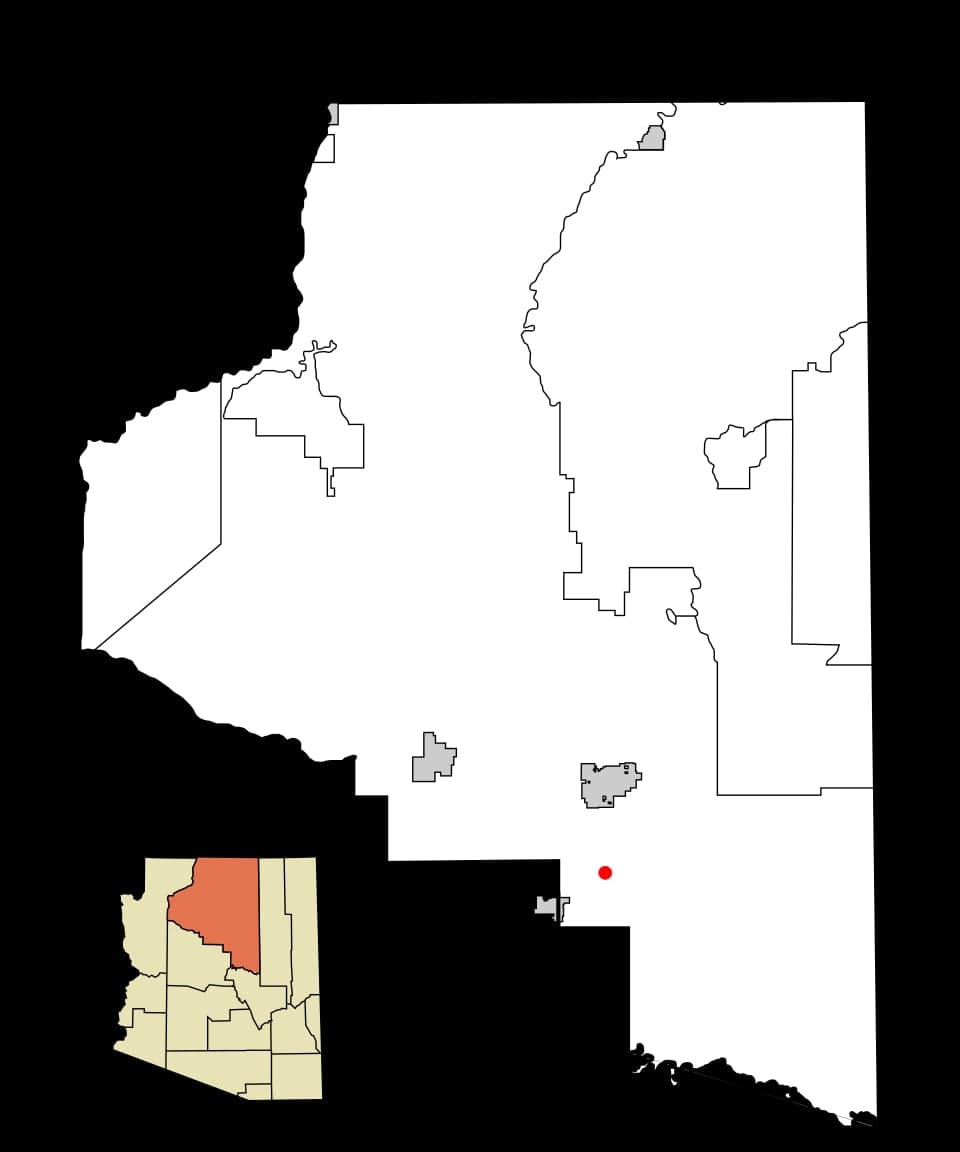
Photo: Wikipedia
Strategic Assessment of Munds Park, AZ
Workable tactical position. Some exposure to population density or targets, but generally defensible in a crisis.
What does the Strategic Assessment tell us?
Our Strategic Assessment grades tactical survivability of an area. Major population centers, military targets, fallout zones, natural disasters, and border exposure all drive risk — lower exposure means a more defensible position in a crisis.
This is heavily inspired by Joel Skousen's Strategic Relocation book. Highly recommended you checkout the book ($)What does this tell us?
Our Strategic Assessment grades tactical survivability of an area. Major population centers, military targets, fallout zones, natural disasters, and border exposure all drive risk — lower exposure means a more defensible position in a crisis.
This is heavily inspired by Joel Skousen's Strategic Relocation book. Highly recommended you checkout the book ($)Strategic Pillars
Key Distances
Regional Safe Places
Below is our recommended "safe zones" in Arizona and the surrounding area based on our strategic heuristics. For most people, it's unrealistic to live in a “safe zone” full-time due to work, family or other personal reasons. They tend to be more rural. However, many of these areas are perfect for second homes and retreat properties that double as a vacation home or even a short-term rental.
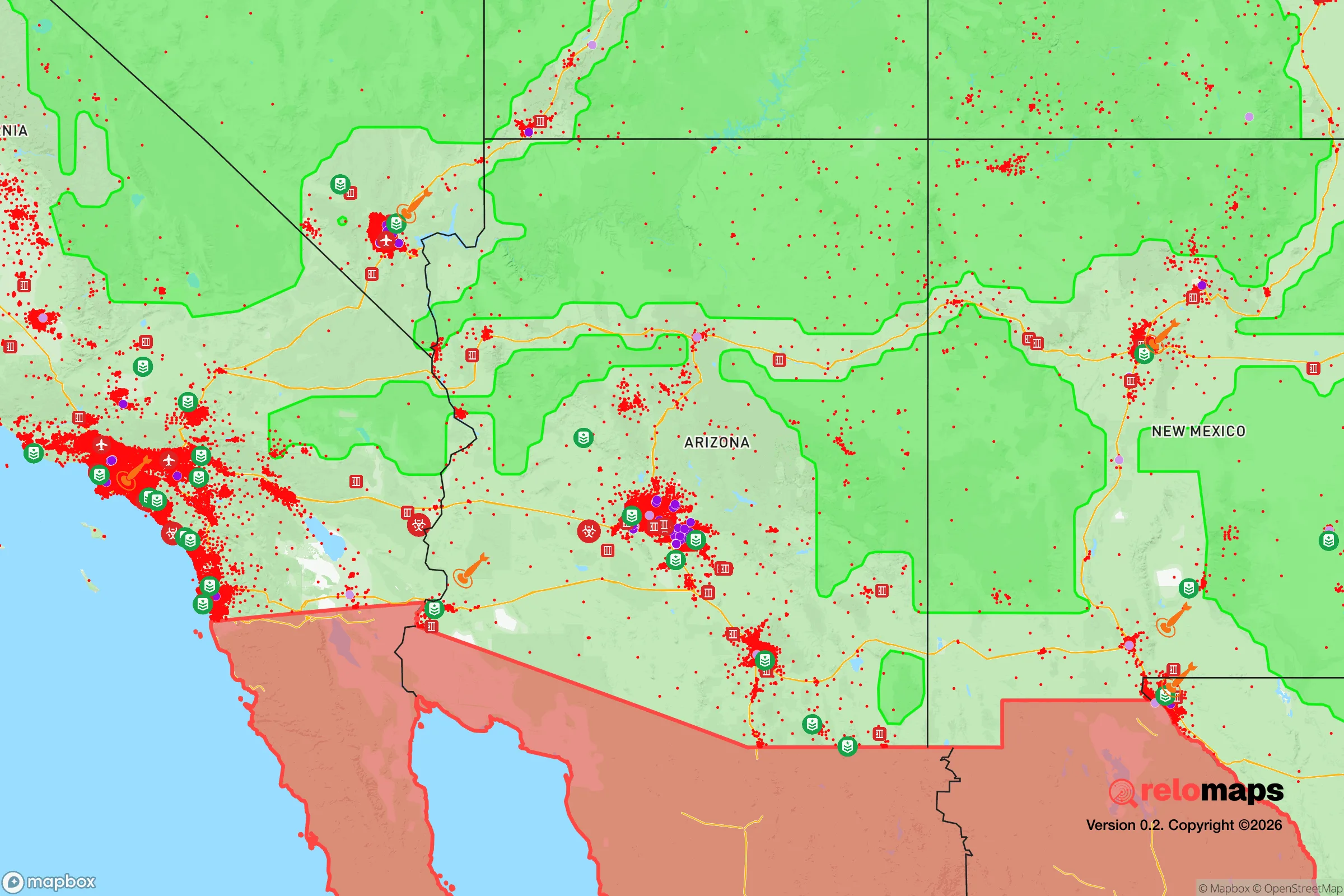
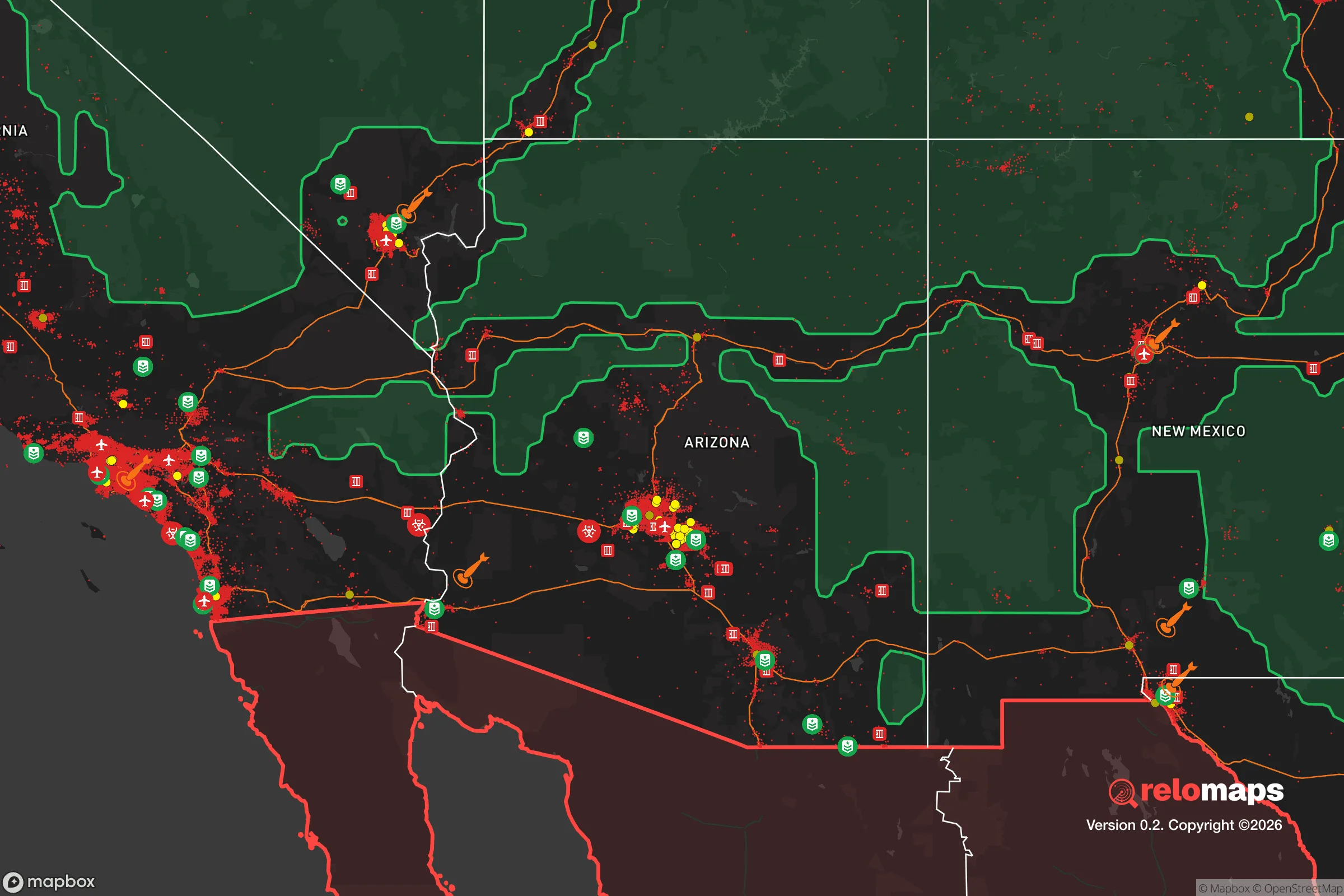


Important Note: For informational purposes only. This does not mean nothing bad ever happens in the green zones. Please use common sense. This is based on public data and modeled with AI. We tried to take a conservative approach but mistakes happen. We update this regularly as new information becomes available.
Solar Generator Recommendations
Backup power matters more here than in safer locations. We've picked three solar generators across budgets and capacity tiers — start with the budget unit if you only need a few essentials, or step up if you want to run a fridge and HVAC for days at a time.
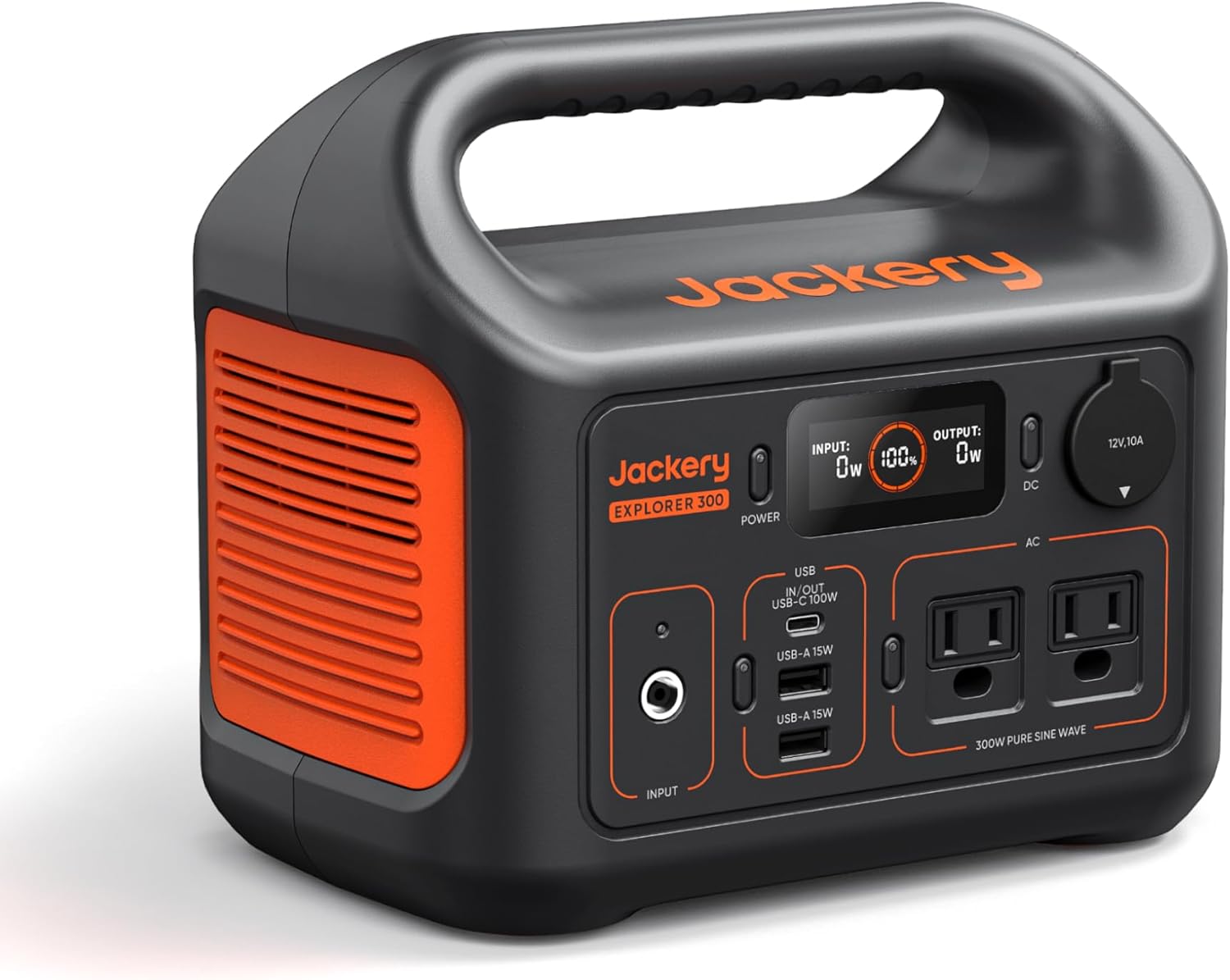
Jackery Portable Power Station Explorer 300
Budget OptionPower on the Go: Weighing only 11 lbs, it's convenient to set up and store with book-sized foldable solar panels

BLUETTI Portable Power Station AC180
Designed for both indoor and outdoor scenarios, AC180 is highly capable as it has a robost capacity and continuous output power.

EF ECOFLOW DELTA Pro Ultra Power Station
Upgraded PickEcoFlow DELTA Pro Ultra is a whole-home energy system designed to grow with your family. Integrated with the Smart Home Panel 2, it scales to meet your evolving energy needs — keeping your home powered, intelligent, and secure through every stage of life.
We earn a commission, at no additional cost to you.
Strategic Assessment Analysis
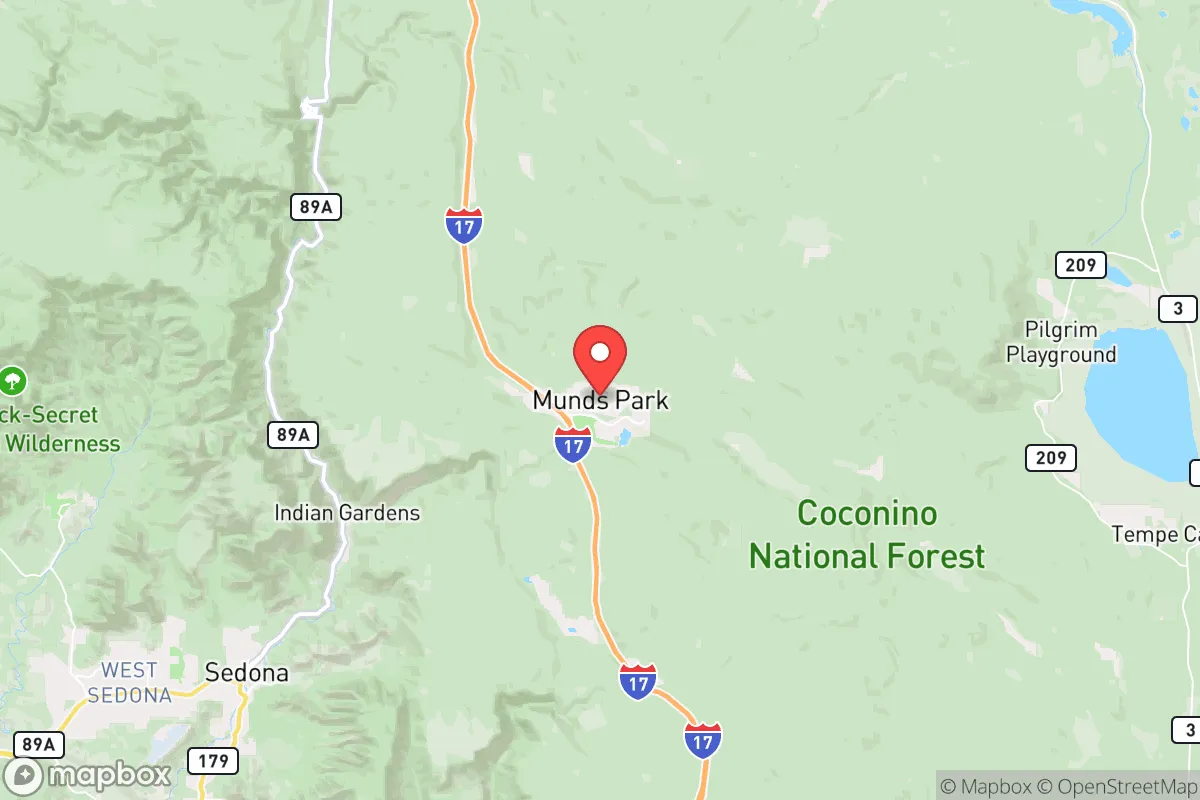
Munds Park, Arizona, sits at roughly 6,500 feet on the Mogollon Rim, offering a strategic blend of high-elevation seclusion and practical access that makes it a serious contender for a relocation focused on resilience and self-sufficiency. Its position roughly 20 miles south of Flagstaff and 30 miles north of the Verde Valley places it outside the immediate blast and fallout zones of major metropolitan targets like Phoenix (about 120 miles south) and Las Vegas (about 250 miles northwest), while still being close enough to supply corridors for initial stocking and medical emergencies. The area's natural isolation, dense ponderosa pine forest, and cooler climate provide a defensible buffer against the urban chaos that would likely follow a major disruption, making it a location worth a hard look for anyone prioritizing long-term preparedness.
Geographic position and natural advantages for long-term stability
Munds Park's primary resilience asset is its elevation and terrain. Sitting on the Mogollon Rim, the area benefits from a climate that is significantly cooler and wetter than the desert floor below, with average annual precipitation around 25 inches, much of it as snow. This means natural water sources are more reliable than in lower Arizona, with several perennial creeks and springs in the surrounding Coconino National Forest, though none are directly within the small residential subdivisions themselves. The dense forest cover provides excellent concealment and natural barriers against overland movement, making the area inherently more defensible than open desert or plains. The terrain is rugged, with limited road access—primarily Interstate 17 and a few forest service roads—which acts as a natural choke point. In a crisis, this limited egress is a double-edged sword: it slows unwanted traffic but also complicates evacuation. For a relocator, the key advantage is that Munds Park is not a primary target for any strategic strike, being far from military installations, major ports, or critical infrastructure hubs. Its proximity to Flagstaff (population ~77,000) provides a regional medical and supply hub, but the town itself is small enough (estimated year-round population under 2,000) to avoid the immediate chaos of a city collapse.
Risk exposure and proximity to fallout-relevant landmarks
While Munds Park avoids the worst of urban targeting, it is not without exposure. The most significant man-made risk comes from its proximity to the Interstate 17 corridor, a major north-south evacuation route from Phoenix. In a crisis, this highway could become a clogged, dangerous funnel of desperate people heading for the Rim. The area is also within 120 miles of the Palo Verde Nuclear Generating Station, the largest nuclear power plant in the country by output, located west of Phoenix. While prevailing winds generally blow from the west, a major incident at Palo Verde could deposit fallout across central Arizona, including the Mogollon Rim, depending on weather patterns. Munds Park is also within 30 miles of the San Francisco Peaks volcanic field, which includes Humphreys Peak and the dormant stratovolcano of Mount Elden. While the probability of an eruption is low, the area sits in a seismically active region with a history of volcanic activity, and the USGS monitors it as a moderate-risk field. Natural hazards include a high risk of wildfire—the 2022 Pipeline Fire burned within a few miles of the community—and periodic heavy snow that can isolate residents for days. For a relocator, the practical takeaway is that Munds Park is not a zero-risk zone, but its risks are primarily natural and manageable with proper preparation, rather than the existential threat of a direct nuclear strike or societal collapse in a major city.
Practical resilience for a relocator: food, water, energy, and defensibility
For someone serious about self-sufficiency, Munds Park presents a mixed picture. Water is the most critical limitation. Most homes rely on private wells, with depths typically ranging from 200 to 600 feet, and the aquifer is generally reliable but not unlimited. A well with a hand pump or solar-powered backup is essential, as power outages are common during winter storms. There are no municipal water systems in the core subdivisions, so a relocator must be prepared to manage their own water supply and storage. Food production is challenging due to the short growing season (roughly May to September) and the prevalence of rocky, acidic soil. Raised beds and greenhouses are necessary for any serious gardening, and hunting (elk, deer, turkey) is possible in the surrounding national forest with proper licensing. Energy resilience is more achievable. The area receives over 260 sunny days per year, making solar power a viable primary or backup system, though snow cover can reduce winter generation. Wood heating is common and practical, with ample firewood available from the surrounding forest, but a permit is required for cutting. Defensibility is strong due to the terrain and limited road access. The subdivisions are laid out on a grid of unpaved and paved roads, but the forest provides natural cover and chokepoints. Community cohesion is a wildcard; the area has a mix of full-time residents, second-home owners, and seasonal renters, so building relationships with year-round neighbors is critical for mutual aid. The nearest grocery store is in Flagstaff, 20 minutes north, so a relocator should plan for at least a month of stored supplies as a baseline.
Overall, Munds Park offers a solid strategic position for a relocator who values isolation, natural resources, and a cooler climate, but it demands serious preparation in water and food self-sufficiency. Its proximity to Flagstaff provides a buffer of services without the density of a major city, and its location on the Rim offers natural defensibility against the chaos that would follow a major urban event. The trade-offs are clear: you trade the convenience of low-elevation Arizona for a harder, more independent lifestyle with real but manageable risks. For a family or individual willing to invest in well redundancy, solar power, and a wood-heating system, Munds Park represents a viable long-term retreat with a realistic balance of access and security. It is not a bug-out location for a weekend; it is a place to build a life that is already oriented toward resilience.

* Values derived from national, state, county, city and local statistics and may differ in a specific area. Last updated: 2026-10-24T16:13:48.000Z
Narrative content on this page is AI-generated and may contain mistakes. Verify any details that matter before acting on them.
ReloMaps may earn a commission from affiliate links at no extra cost to you.

