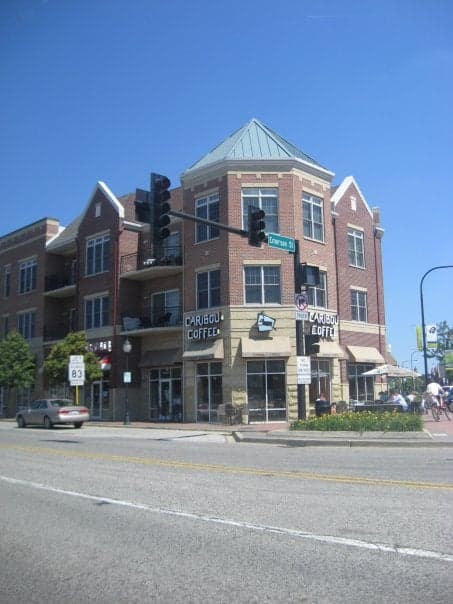
Photo: Wikipedia
Strategic Assessment of Mount Prospect, IL
Multiple tactical vulnerabilities. Population density, target proximity, or disaster risk are likely compounding. A retreat property and exit planning is required.
What does the Strategic Assessment tell us?
Our Strategic Assessment grades tactical survivability of an area. Major population centers, military targets, fallout zones, natural disasters, and border exposure all drive risk — lower exposure means a more defensible position in a crisis.
This is heavily inspired by Joel Skousen's Strategic Relocation book. Highly recommended you checkout the book ($)What does this tell us?
Our Strategic Assessment grades tactical survivability of an area. Major population centers, military targets, fallout zones, natural disasters, and border exposure all drive risk — lower exposure means a more defensible position in a crisis.
This is heavily inspired by Joel Skousen's Strategic Relocation book. Highly recommended you checkout the book ($)Strategic Pillars

Key Distances
Regional Safe Places
Below is our recommended "safe zones" in Illinois and the surrounding area based on our strategic heuristics. For most people, it's unrealistic to live in a “safe zone” full-time due to work, family or other personal reasons. They tend to be more rural. However, many of these areas are perfect for second homes and retreat properties that double as a vacation home or even a short-term rental.
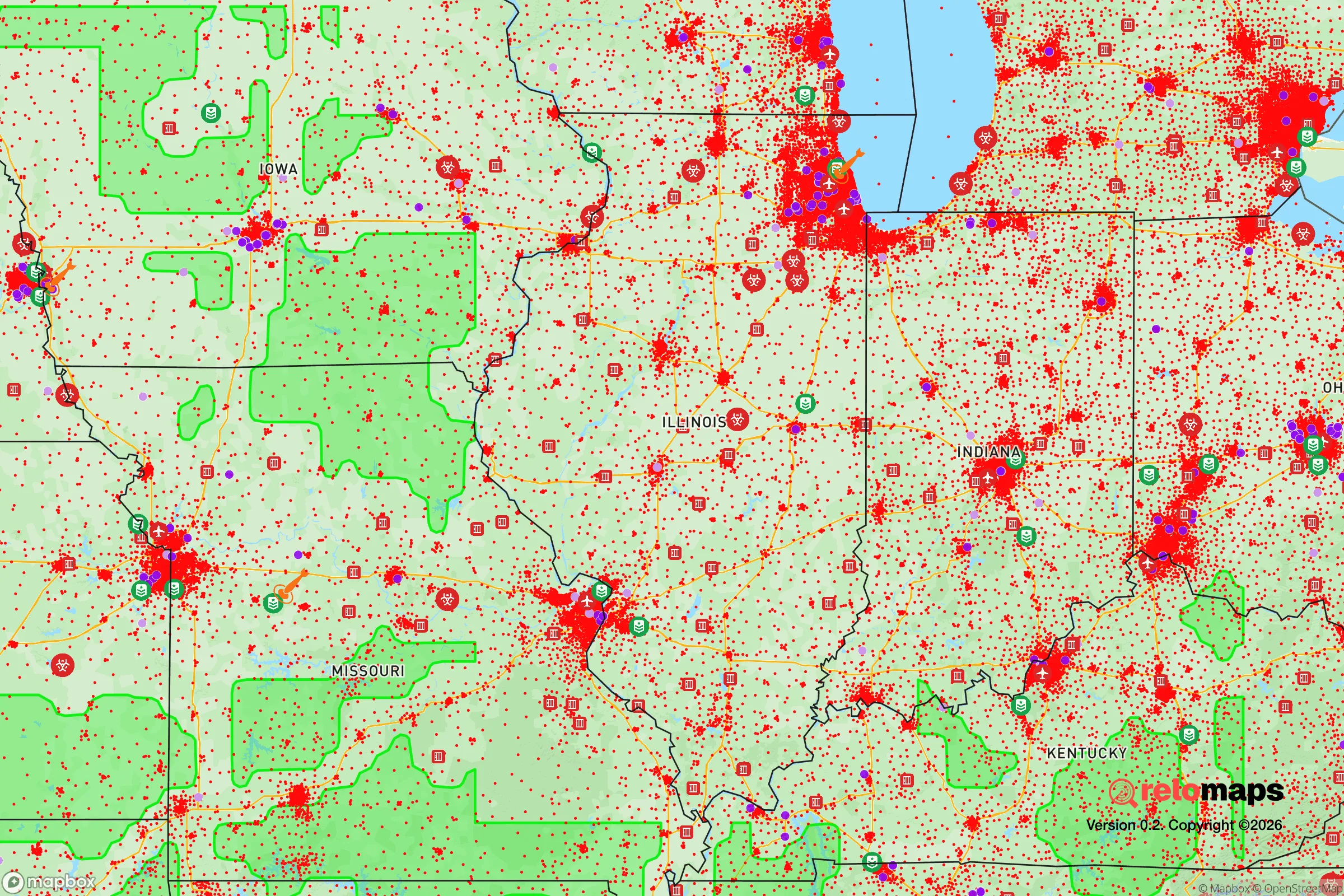
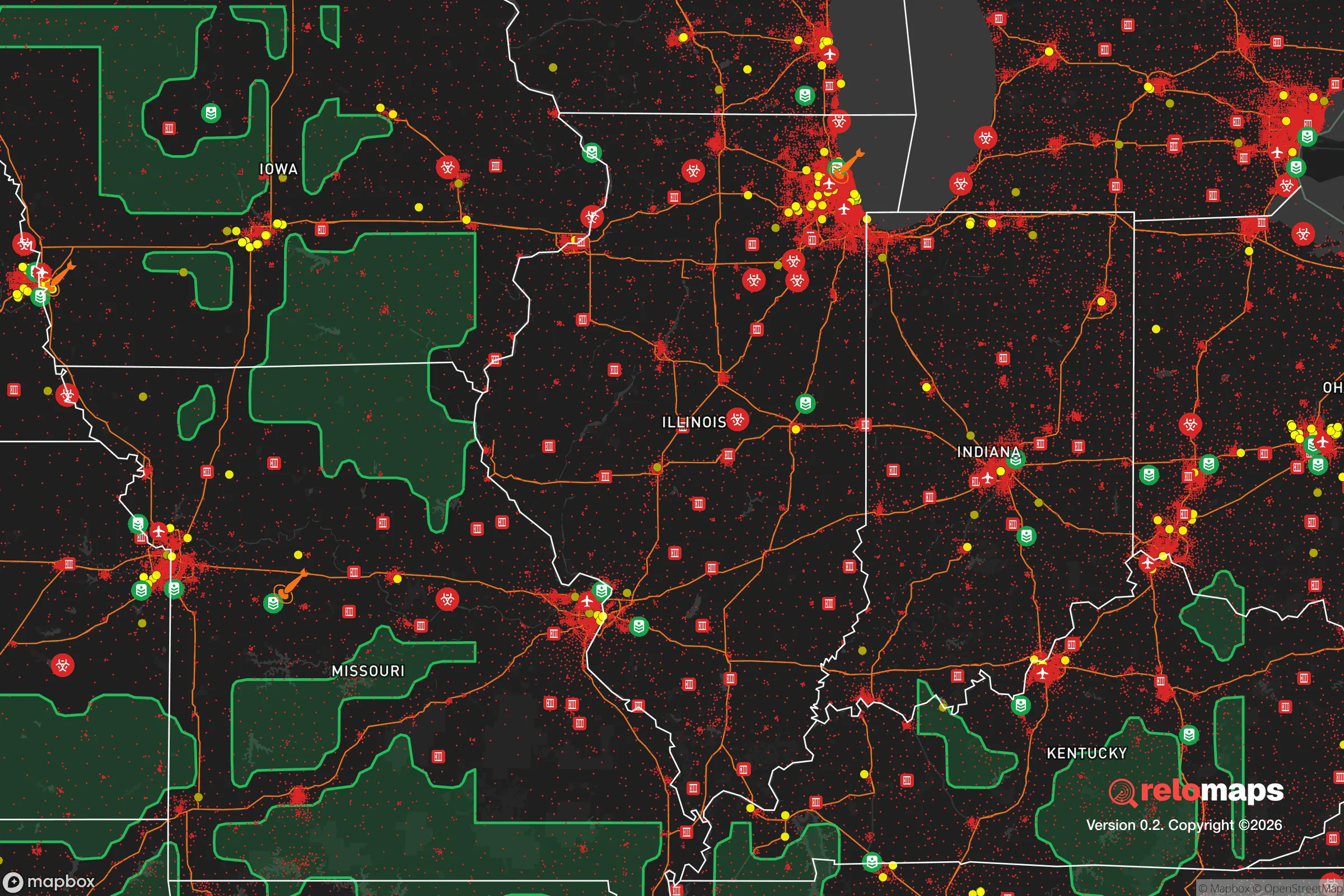


Important Note: For informational purposes only. This does not mean nothing bad ever happens in the green zones. Please use common sense. This is based on public data and modeled with AI. We tried to take a conservative approach but mistakes happen. We update this regularly as new information becomes available.
Solar Generator Recommendations
Backup power matters more here than in safer locations. We've picked three solar generators across budgets and capacity tiers — start with the budget unit if you only need a few essentials, or step up if you want to run a fridge and HVAC for days at a time.

Jackery Portable Power Station Explorer 300
Budget OptionPower on the Go: Weighing only 11 lbs, it's convenient to set up and store with book-sized foldable solar panels

BLUETTI Portable Power Station AC180
Designed for both indoor and outdoor scenarios, AC180 is highly capable as it has a robost capacity and continuous output power.

EF ECOFLOW DELTA Pro Ultra Power Station
Upgraded PickEcoFlow DELTA Pro Ultra is a whole-home energy system designed to grow with your family. Integrated with the Smart Home Panel 2, it scales to meet your evolving energy needs — keeping your home powered, intelligent, and secure through every stage of life.
We earn a commission, at no additional cost to you.
Strategic Assessment Analysis
Mount Prospect, Illinois, offers a mixed strategic picture for the conservative prepper: it’s a solidly middle-class, well-managed suburb with good infrastructure and a strong sense of community, but its location in the Chicago metro area introduces significant vulnerabilities that cannot be ignored. The village’s resilience is anchored in its stable tax base, reliable municipal services, and a population that skews toward law-abiding, family-oriented residents. However, for the relocator prioritizing long-term survival and self-sufficiency, the proximity to a major urban center—and the fallout risks that come with it—demands a clear-eyed assessment of trade-offs.
Geographic position and natural advantages for long-term stability
Mount Prospect sits roughly 20 miles northwest of downtown Chicago, placing it in the suburban ring that has historically been a buffer zone between the urban core and the exurban frontier. The area’s natural advantages are modest but real: the land is flat, with well-drained soils typical of the Des Plaines River watershed, and the village is not prone to major natural disasters like earthquakes, wildfires, or hurricanes. The local climate is continental, with cold winters and warm summers, which means a relocator must plan for seasonal extremes—but the region’s water supply is abundant, drawing from Lake Michigan via the Chicago water system. For a prepper, this means water security is less of a concern than in arid regions, though reliance on a municipal system introduces a single point of failure. The village’s tree canopy and numerous parks (like Lions Park and Melas Park) provide some cover and potential for small-scale gardening, but the overall density—about 3,500 people per square mile—limits true rural defensibility. The area’s strategic value lies in its stable property values and low crime rates (Mount Prospect’s violent crime rate is roughly 60% below the national average), which attract a demographic that values order and self-reliance. For the conservative relocator, this translates into a community that is likely to cooperate and organize during a crisis, rather than descend into chaos.
Risks, exposures, and proximity to fallout-relevant landmarks
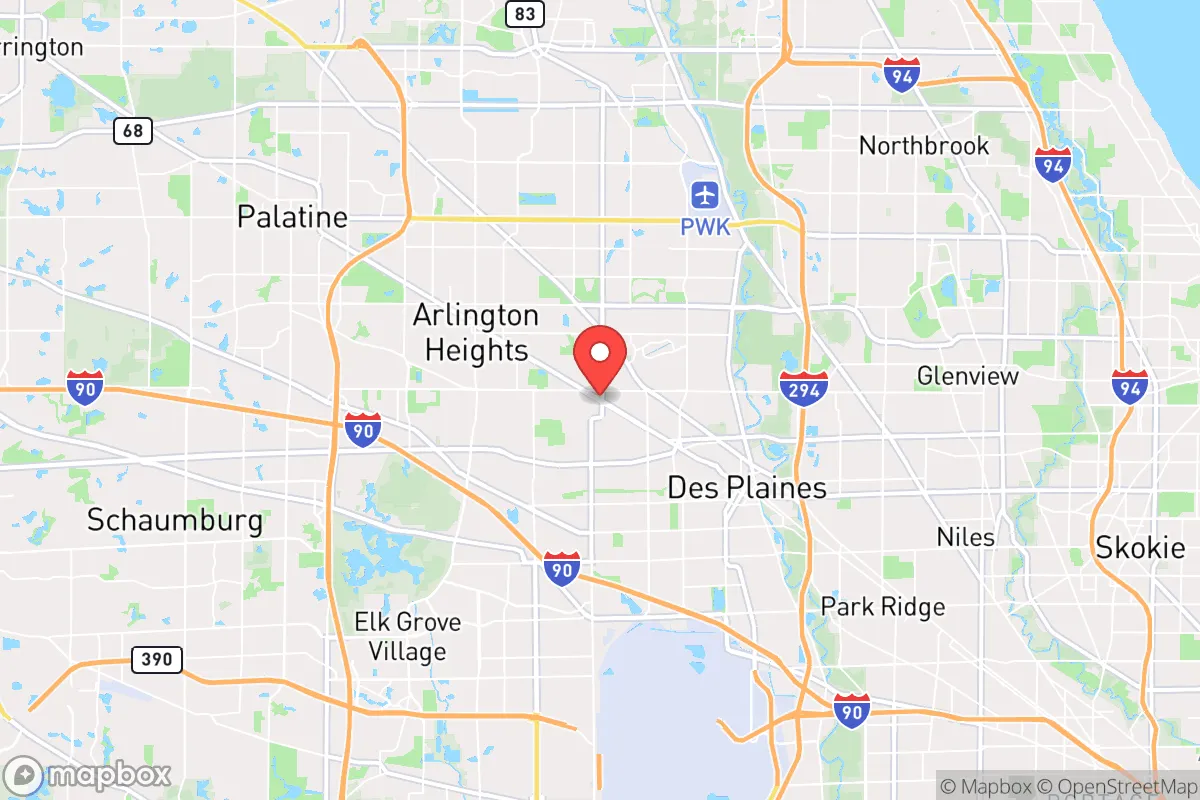
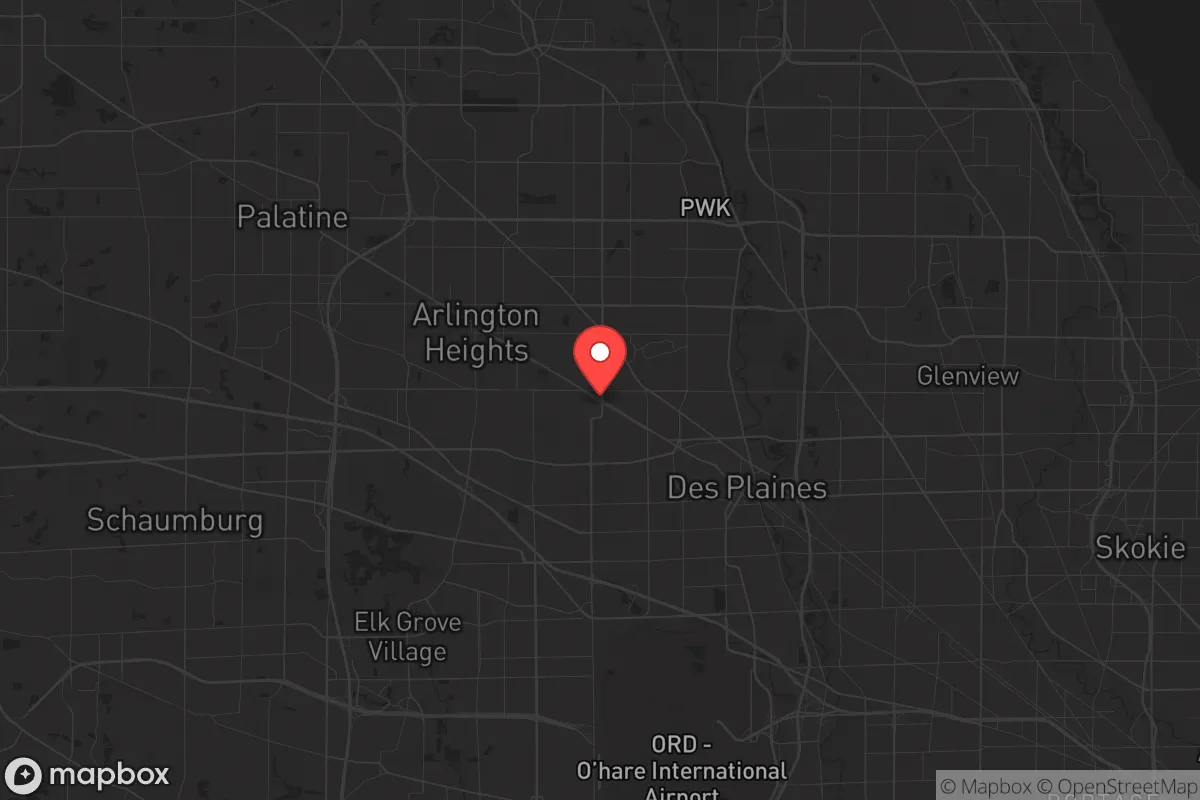
The elephant in the room is Mount Prospect’s proximity to Chicago, a city that is a prime target for civil unrest, mass casualty events, and—in a worst-case scenario—a nuclear or radiological incident. O’Hare International Airport is just 10 miles southeast, making it a high-value target for any adversary, and the village lies within the fallout plume zone for a ground burst at that location. Additionally, the Argonne National Laboratory (a major nuclear research facility) is about 20 miles southwest, and the Zion Nuclear Power Station (decommissioned but still storing spent fuel) is 35 miles north. While these are not immediate threats, they are fallout-relevant landmarks that a prepper must account for in their evacuation or shelter-in-place plans. The village itself is crisscrossed by major transportation corridors—I-90, I-294, and the Union Pacific Northwest Line—which are choke points for evacuation and potential targets for disruption during civil unrest. The 2020 riots in Chicago demonstrated that suburban spillover is a real risk; while Mount Prospect saw minimal direct impact, the psychological and economic ripple effects were felt in supply chain disruptions and increased police presence. For the conservative relocator, the key exposure is not the village itself but its dependence on regional stability. A major event in Chicago could trigger a refugee flow northward, overwhelming local resources and testing the community’s cohesion. The village’s police department is well-funded and professional, but with only about 60 sworn officers, it cannot handle a mass influx of displaced persons.
Practical resilience for a relocator: food, water, energy, and defensibility
When it comes to day-to-day preparedness, Mount Prospect offers a mixed bag. Food security is a weak point: the village is a food desert in the sense that most residents rely on supermarkets (Jewel-Osco, Mariano’s) that are part of national chains with just-in-time supply chains. A prolonged disruption—whether from a cyberattack, fuel shortage, or civil unrest—would empty shelves within 72 hours. The village does have a strong farmers’ market (May through October) and several community gardens, but these are not sufficient for long-term subsistence. A relocator would need to establish a private food storage plan and consider partnering with local farms in nearby McHenry County (about 30 minutes north) for bulk purchases. Water is more secure: the village’s water comes from Lake Michigan via the Chicago system, which has redundant intake structures and backup power. However, a prolonged power outage would disable pumping stations, so a prepper should have at least a two-week supply of stored water and a means to purify from local sources (the Des Plaines River is nearby but heavily polluted). Energy resilience is a bright spot: ComEd’s grid is relatively reliable, but the village has seen an uptick in outages from severe storms. Solar panels are permitted with a permit, and several homes in the area have installed them, but the village’s tree cover can limit efficiency. A backup generator is a must, and natural gas is widely available for heating and cooking, which is a strategic advantage over all-electric suburbs. Defensibility is the hardest sell: Mount Prospect is a grid of suburban streets with no natural barriers. The village’s layout—with cul-de-sacs and a few main arteries—makes it moderately defensible against small-scale threats, but a determined mob or organized group would have little trouble moving through. The best strategy for a relocator is to choose a home on a dead-end street near a park or green space for potential escape routes, and to invest in a strong neighborhood watch network. The village’s proximity to the Cook County Forest Preserves (like the nearby Busse Woods) offers some wilderness buffer, but these are not remote enough for true bug-out scenarios.
The overall strategic picture for Mount Prospect is one of calculated risk for the conservative prepper. It is not a survivalist’s paradise—it lacks the remoteness, defensibility, and self-sufficiency of rural or exurban locations. But it offers a stable, law-abiding community with good infrastructure and a low baseline threat level for day-to-day life. The relocator who chooses Mount Prospect must be willing to invest in layered preparedness: a robust food and water stockpile, a backup power system, and a clear evacuation plan that accounts for the Chicago metro’s vulnerabilities. The village’s greatest strength is its social fabric—a population that is largely conservative-leaning, family-oriented, and resistant to the kind of progressive policies that have destabilized other suburbs. For the prepper who values community cohesion over absolute self-sufficiency, Mount Prospect is a viable base of operations. But for those who prioritize fallout avoidance and total independence, the smart move is to look farther north or west, into the exurbs of McHenry or DeKalb counties, where the risks are lower and the land is cheaper. Mount Prospect is a good place to live, but it is not a good place to hide.

* Values derived from national, state, county, city and local statistics and may differ in a specific area. Last updated: 2026-04-23T10:21:19.000Z
Narrative content on this page is AI-generated and may contain mistakes. Verify any details that matter before acting on them.
ReloMaps may earn a commission from affiliate links at no extra cost to you.

