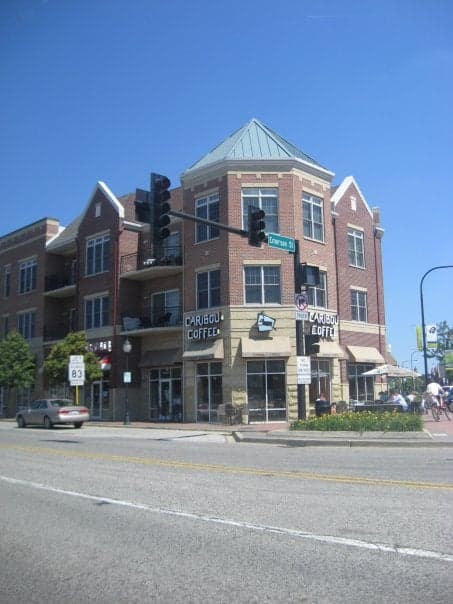
Photo: Wikipedia
Personal Sovereignty in Mount Prospect, IL
Viable for self-reliance. Generally workable, though some barriers may limit total independence.
What does Personal Sovereignty tell us?
Personal Sovereignty measures your capacity for self-reliance and independence with minimal government friction. Higher scores mean fewer barriers between you and the way you want to live... but it assumes you have the space you need and good neighbors.
What does this tell us?
Personal Sovereignty measures your capacity for self-reliance and independence with minimal government friction. Higher scores mean fewer barriers between you and the way you want to live... but it assumes you have the space you need and good neighbors.
State Policy
Energy independence: Importer (45% of energy produced in-state)
Personal Liberty
Homesteading

Personal Liberty Analysis
For the individual or family prioritizing personal sovereignty, Mount Prospect, Illinois presents a complex and often frustrating environment. While the village itself maintains a relatively orderly suburban character, the overarching legal and regulatory framework imposed by Cook County and the State of Illinois creates significant friction for those seeking to maximize autonomy. The core tension here is between a stable, well-serviced community and a state-level apparatus that consistently prioritizes collective mandates over individual choice, from tax policy to self-defense rights. A survivalist or prepper mindset will find the area's infrastructure and community resources valuable, but must be prepared to navigate a thicket of restrictions that directly challenge personal liberty.
Tax burden and regulatory posture: How state and county policies impact your finances
The financial sovereignty of a Mount Prospect resident is under constant pressure from one of the nation's highest combined tax burdens. Illinois has a flat state income tax of 4.95%, but the real weight comes from property taxes. Cook County's effective property tax rate hovers around 2.1% of a home's fair market value, meaning a $350,000 home in Mount Prospect can carry an annual tax bill exceeding $7,000. This is not a tax for services you can opt out of; it is a compulsory levy that funds a sprawling public sector, including pension obligations that have left the state with a credit rating just one notch above junk status. For a prepper, this represents a massive, recurring drain on resources that could otherwise be allocated to supplies, land, or self-sufficiency investments. Furthermore, the regulatory posture is dense. Cook County enforces a county-wide plastic bag ban, strict building codes that complicate off-grid modifications, and a patchwork of environmental regulations that can delay or deny property improvements. The state's regulatory climate is ranked among the worst in the nation for business freedom, which translates into higher costs for everything from vehicle registration to contractor services. Every dollar earned and spent is subject to layers of government extraction that feel less like partnership and more like overhead on your life.
Self-defense and gun law specifics: Navigating Illinois' restrictive firearms environment
For those who view the Second Amendment as a cornerstone of personal sovereignty, Illinois is a hostile jurisdiction. The state operates a "may-issue" concealed carry system in practice, though it is technically "shall-issue" after a court ruling. The real choke point is the Firearm Owners Identification (FOID) card, a state-level registry and prerequisite for owning any firearm or ammunition. This system creates a government database of gun owners, which is antithetical to the privacy-minded prepper. In 2023, Illinois passed a ban on so-called "assault weapons" and high-capacity magazines, directly restricting the types of arms commonly used for home defense and preparedness. Cook County has its own additional restrictions, including a county-wide assault weapons ban that predates the state law. Magazine capacity is capped at 10 rounds for long guns and 15 for handguns in many scenarios. Mount Prospect itself has no local gun store within village limits, forcing residents to travel to neighboring suburbs or gun-friendly counties like McHenry or Lake for purchases and transfers. The legal landscape is fluid and subject to ongoing litigation, but the current reality is that a law-abiding citizen faces significant bureaucratic hurdles, registration requirements, and outright bans on common defensive platforms. This environment directly undermines the ability to prepare for worst-case scenarios without running afoul of the state.
Self-reliance and homesteading viability: Lot sizes, zoning, and off-grid feasibility
Mount Prospect is a dense, fully developed inner-ring suburb, and its zoning code is designed for conventional suburban living, not homesteading. The vast majority of lots are between 6,000 and 10,000 square feet, with many homes on slabs or with small basements. Raising chickens is permitted in some residential zones, but with strict limits on coop placement and number of birds (typically no roosters). Larger livestock like goats or rabbits for meat are generally prohibited. Off-grid energy systems are effectively illegal; the village requires connection to the municipal power grid and water supply. Solar panels are allowed but must be grid-tied, and any battery storage systems must meet stringent fire codes. Rainwater collection is not explicitly banned but is heavily restricted by state and county water rights laws. Composting toilets are not permitted as a primary sanitation method. For a prepper seeking true self-reliance, the village's infrastructure dependency is a critical vulnerability. The positive side is that Mount Prospect has excellent access to emergency services and a robust municipal water system, but that same system is a single point of failure. The practical reality is that homesteading here is limited to intensive gardening, small-scale food preservation, and perhaps a few backyard hens. Anyone serious about off-grid capability or significant food production would need to look to exurban areas like McHenry County or beyond, where acreage and looser zoning allow for genuine self-sufficiency.
Personal liberties: Parental rights, medical autonomy, speech, and property
On parental rights, Illinois has moved aggressively in the opposite direction of what many conservative families prefer. The state mandates that public schools adopt policies aligned with the Illinois Learning Standards, which include comprehensive sex education starting in kindergarten, and schools are not required to notify parents if a child changes their name or pronouns. Parental opt-out rights for specific curriculum are limited, and the state has a strong track record of defending these policies against legal challenges. Medical autonomy is similarly constrained. Illinois has broad vaccine mandates for school attendance, and during public health emergencies, the governor has exercised sweeping executive powers to mandate treatments and restrictions. The state also has a "right-to-die" law, which some view as a slippery slope, but more relevant to the prepper is the lack of robust medical freedom protections for alternative treatments or conscientious objection. Free speech is generally protected, but Illinois has some of the nation's strictest anti-cyberstalking and harassment laws, which have been used to prosecute online political speech. Property rights are significantly curtailed by the state's strong eminent domain powers and the aforementioned regulatory burdens. The Illinois Supreme Court has consistently upheld broad government authority in land use. For the individualist, the cumulative effect is a legal environment that assumes the state knows best and has the power to enforce that assumption across nearly every domain of life.
In the broader landscape of American personal sovereignty, Mount Prospect ranks as a low-autonomy environment. It is a well-managed, safe, and convenient suburb, but those very qualities come at the cost of deep integration into a system that demands compliance. Compared to a free state like New Hampshire or a frontier county in Idaho, the trade-offs are stark. For the survivalist or prepper who values community resilience and access to urban resources, Mount Prospect offers a stable base, but only if you are willing to operate within a heavily regulated framework. The strategic calculation is simple: you can live here comfortably, but you will never be truly sovereign. The state's hand is in your pocket, your gun safe, your child's classroom, and your property line. If maximum personal liberty is your non-negotiable priority, this is not the place. If you are willing to trade some autonomy for the benefits of a dense, well-resourced community, Mount Prospect can work, but only with constant vigilance and a clear-eyed acceptance of the constraints.

* Values derived from national, state, county, city and local statistics and may differ in a specific area. Last updated: 2026-04-23T10:21:19.000Z
Narrative content on this page is AI-generated and may contain mistakes. Verify any details that matter before acting on them.
ReloMaps may earn a commission from affiliate links at no extra cost to you.

