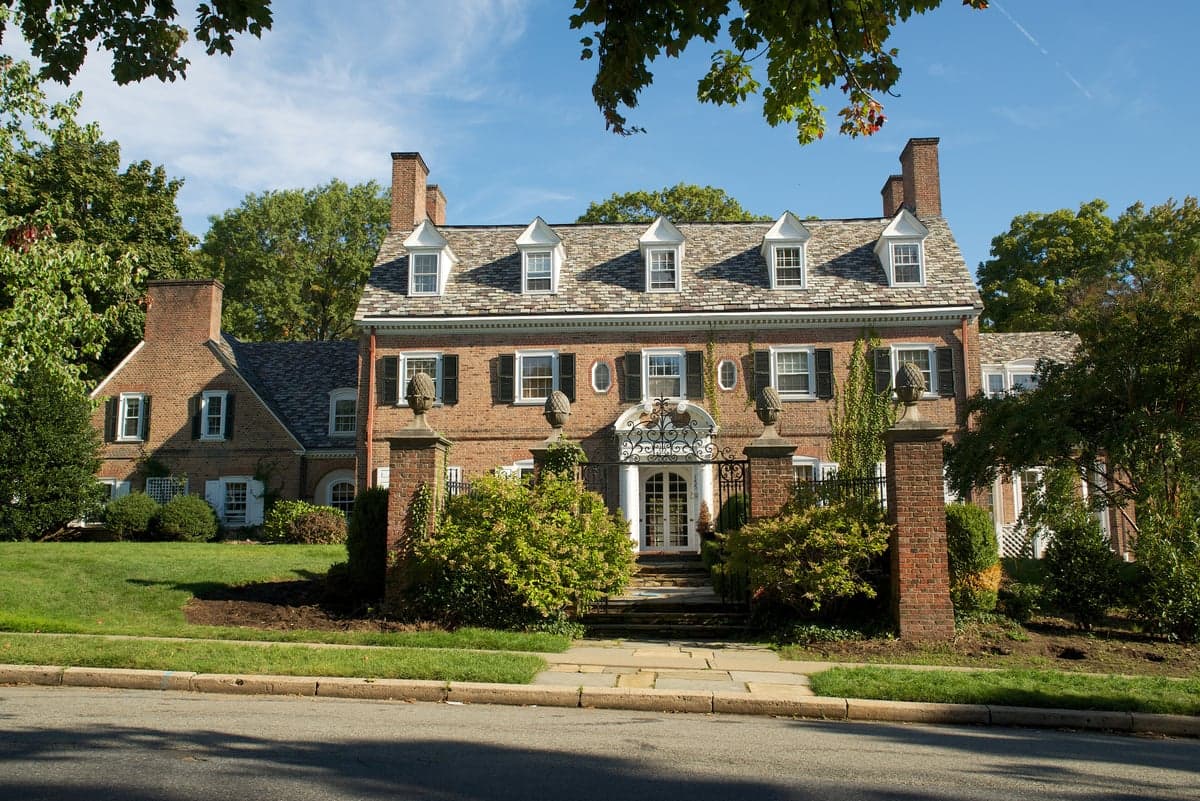
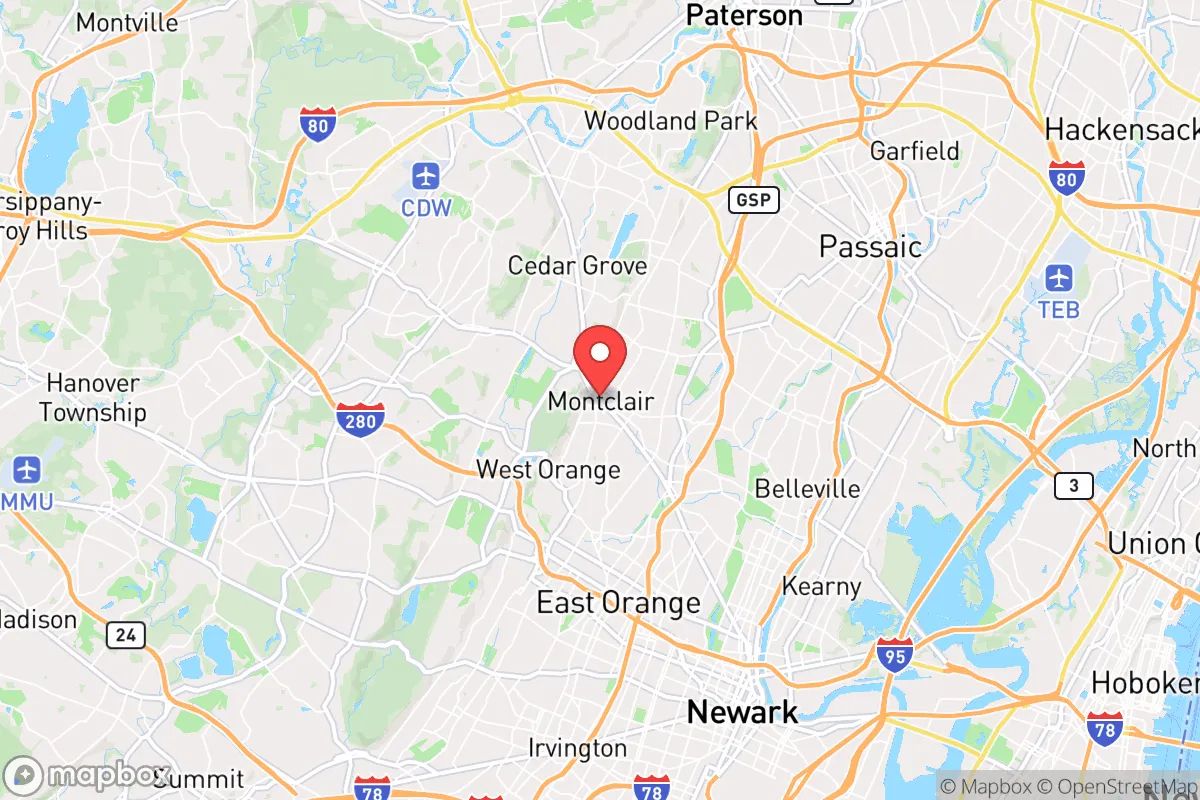
Photo: Wikipedia
Demographics of Montclair, NJ
Historical data isn't available for Montclair, NJ. Trends shown are for Essex County, NJ.
Affluence Level in Montclair, NJ
A middle-class area roughly in line with national averages across income, home values, education, and employment.
People of Montclair, NJ
Montclair, New Jersey is a densely settled, highly educated suburb of 2,177 residents where 83.5% of adults hold a college degree and the population is notably diverse by race and ethnicity. The city’s character is defined by a blend of historic walkable neighborhoods, a strong civic culture, and a demographic mix that includes a 66.1% white majority alongside significant Black (12.0%), Hispanic (11.4%), and East/Southeast Asian (7.2%) communities. This is a place where old-money estates, commuter rail access, and progressive politics coexist, attracting professionals and families who prioritize schools and cultural amenities.
How the city was settled and grew
Montclair’s original population was drawn by its position along the Morris Canal and later the railroad, which made it a desirable retreat for wealthy New York City merchants in the mid-19th century. The first wave of settlement concentrated in Upper Montclair and Montclair Center, where large Victorian homes were built by Anglo-Saxon Protestant families who commuted to Manhattan. By the early 1900s, Italian and Irish immigrants arrived to work in local trades and construction, settling in the Glen Ridge Avenue corridor and the Pine Street area near the train station. A small but established African American community grew in the Fourth Ward (roughly bounded by Bloomfield Avenue, Orange Road, and Glenridge Avenue), drawn by jobs in domestic service and the area’s relative tolerance compared to nearby towns. The city’s population peaked around 40,000 in the 1950s, then declined as suburbanization and white flight pulled families to newer developments in Essex County.
Modern era (post-1965)
After the 1965 Hart-Cellar Act, Montclair experienced a significant demographic shift. The Fourth Ward and South End saw an influx of Black middle-class families from Newark and other urban centers, drawn by Montclair’s reputation for integrated schools and stable property values. By the 1980s, the city became a magnet for white liberals and professionals seeking a diverse, walkable suburb—a trend that accelerated in the 2000s. The Watchung Plaza and Walnut Street neighborhoods attracted young families and empty-nesters, while Upper Montclair remained predominantly white and affluent. The East/Southeast Asian population (7.2%) grew steadily from the 1990s onward, with many families settling near the Glen Ridge border and around Edgemont Memorial Park, drawn by the school system. The Indian subcontinent population (0.9%) is small but present, concentrated in the Montclair Center condominiums. The Hispanic population (11.4%) is dispersed but has a notable presence in the South End and along Bloomfield Avenue, where many own small businesses.
The future
Montclair’s population is projected to remain stable or grow modestly, driven by infill development and the continued appeal of its transit-oriented lifestyle. The city is becoming more diverse, with the white share declining slowly as East/Southeast Asian and Hispanic populations increase. New residents are dispersing across all neighborhoods, though Upper Montclair and Watchung Plaza remain the most expensive and least diverse. The Fourth Ward is experiencing gentrification pressure, with rising home values pushing out some long-term Black residents while attracting younger white and Asian professionals. The next 10–20 years will likely see Montclair become even more of a “super-suburb”—highly educated, multiracial, and expensive—with the school system and downtown amenities continuing to drive demand. The city’s cultural identity is evolving from a historically Black-white dynamic to a more complex multiethnic mix, though affordability remains a barrier for lower-income households.
For someone moving in now, Montclair offers a dense, walkable, and intellectually vibrant community where diversity is a lived reality rather than a talking point. The trade-off is high housing costs and a competitive real estate market. This is a place for people who value progressive politics, top-tier schools, and a neighborhood feel within commuting distance of Manhattan—and who can afford the premium that comes with it.

* Values derived from national, state, county, city and local statistics and may differ in a specific area. Last updated: 2026-11-15T18:45:38.000Z
Narrative content on this page is AI-generated and may contain mistakes. Verify any details that matter before acting on them.
ReloMaps may earn a commission from affiliate links at no extra cost to you.

