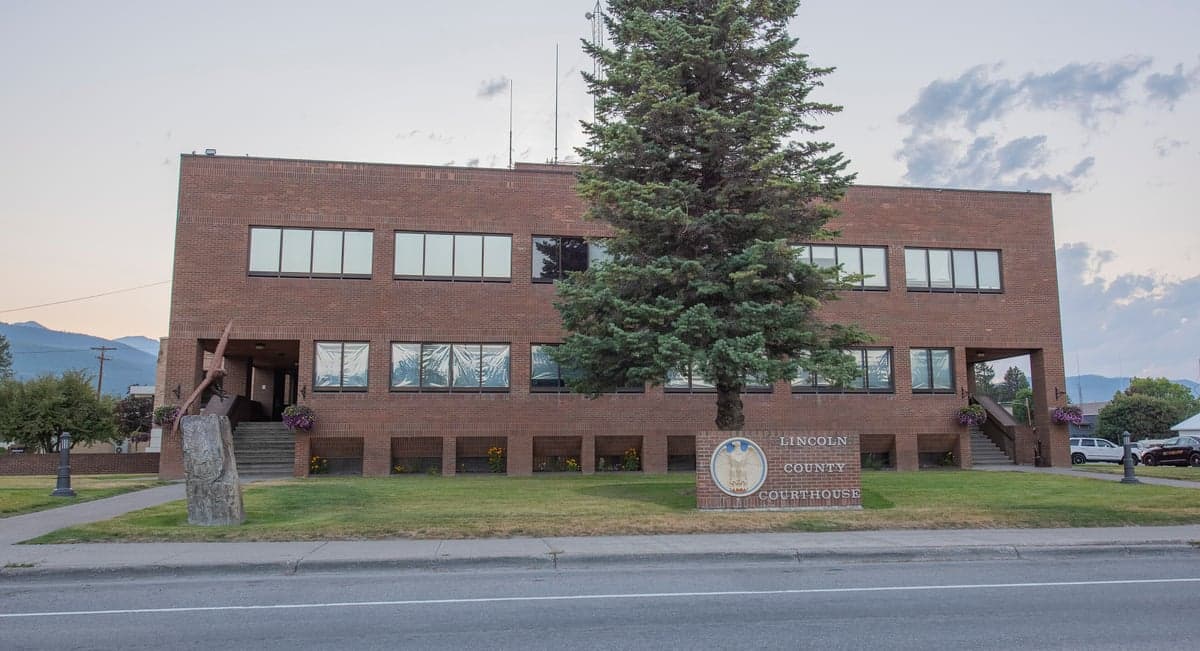
Photo: Wikipedia
Personal Sovereignty in Lincoln County
Viable for self-reliance. Generally workable, though some barriers may limit total independence.
What does Personal Sovereignty tell us?
Personal Sovereignty measures your capacity for self-reliance and independence with minimal government friction. Higher scores mean fewer barriers between you and the way you want to live... but it assumes you have the space you need and good neighbors.
What does this tell us?
Personal Sovereignty measures your capacity for self-reliance and independence with minimal government friction. Higher scores mean fewer barriers between you and the way you want to live... but it assumes you have the space you need and good neighbors.
State Policy
Energy independence: Net exporter (120% of energy produced in-state)
Personal Liberty
Homesteading

Personal Liberty Analysis
Lincoln County, Montana, offers one of the strongest personal sovereignty environments in the lower 48, combining a deeply rooted self-reliance culture with some of the lightest state and local regulatory touches in the nation. The county’s vast geography—from the Kootenai River valley around Libby to the remote Cabinet Mountains near Troy and the high plains around Eureka—means that autonomy looks different depending on where you land, but the baseline is consistently high. For single individuals and families who prioritize freedom from government overreach, Lincoln County presents a compelling case, though the trade-offs in services and infrastructure are real and must be weighed carefully.
Tax burden and regulatory posture: How light is the government footprint?
Montana has no state sales tax, and Lincoln County keeps property taxes among the lowest in the state. The county’s mill levy for 2025-2026 sits at roughly 85 mills on residential property, translating to an annual tax bill of about $850 per $100,000 of assessed value—well below national averages. There is no county-level income tax, and Montana’s state income tax is a flat 4.7% as of 2026, with no local add-ons. Business licensing is minimal: a simple registration with the Secretary of State suffices for most sole proprietorships, and the county imposes no special occupational licenses beyond state-mandated ones (e.g., for contractors or health professionals). Zoning is virtually nonexistent outside the incorporated towns of Libby, Troy, and Eureka. In unincorporated areas—which cover 95% of the county—land use is governed only by state subdivision regulations and basic health codes. This means you can build a workshop, park an RV, or start a small repair business on your property without seeking county permits, as long as you meet septic and well requirements. The regulatory posture is best described as “don’t ask unless you have to,” with county officials generally taking a hands-off approach unless a complaint is filed.
Self-defense and gun law specifics: What the Second Amendment looks like on the ground
Montana is a constitutional carry state, meaning no permit is required to carry a concealed firearm for anyone legally allowed to possess one. Lincoln County fully embraces this: the sheriff’s office in Libby does not issue concealed carry permits (they are not needed), and there is no county-level firearm registry or waiting period. The state preempts all local gun ordinances, so cities like Libby, Troy, and Eureka cannot enact their own restrictions—a fact that has been tested and upheld. Open carry is legal everywhere, including in vehicles. Stand-your-ground law applies with no duty to retreat in any place where a person is lawfully present. For self-defense in the home, the Castle Doctrine is absolute. The practical effect in Lincoln County is that gun ownership is near-universal in rural areas, and firearms are a routine part of daily life—seen openly in trucks, at the grocery store, and on public land. The county’s gun culture is not performative; it is utilitarian, tied to hunting, predator control, and personal protection in a region where law enforcement response times can exceed 30 minutes in the backcountry around Yaak and Trego.
Self-reliance and homesteading viability: Lot sizes, zoning, and off-grid feasibility
Homesteading is not just viable in Lincoln County—it is the dominant lifestyle outside the three main towns. Unincorporated land parcels commonly range from 5 to 40 acres, with many available for under $3,000 per acre in areas like Stryker, Fortine, and the Yaak Valley. Zoning is absent, so there are no minimum square footage requirements for dwellings, no restrictions on livestock (chickens, goats, cattle), and no bans on accessory structures like greenhouses or barns. Off-grid living is fully legal: the county does not require connection to municipal water or power, and many residents rely on wells, septic systems, solar panels, and propane. The state’s building code applies only to structures over 4,000 square feet or those intended for commercial use, so a modest cabin or tiny home can be built without permits. However, the Kootenai National Forest covers roughly 60% of the county, so land buyers must verify that parcels are not within federal ownership or subject to Forest Service restrictions. In the Libby area, some subdivisions have covenants (e.g., the Libby Bench area), but these are private, not county-imposed. For families seeking true self-reliance—growing food, harvesting timber, generating power—the areas around Eureka, Trego, and the Yaak River corridor offer the most freedom, with minimal neighbor proximity and no HOA oversight.
Personal liberties: Parental rights, medical autonomy, speech, and property
Montana law strongly protects parental rights in education and healthcare. Parents have the legal right to direct their child’s upbringing, including the choice to opt out of any public school curriculum or activity without penalty. Lincoln County’s school districts—Libby, Troy, and Eureka—are small and community-responsive, with school boards that generally defer to parental input. Homeschooling is straightforward: a simple notification to the county superintendent is all that is required, with no standardized testing mandates. Medical autonomy is similarly broad: Montana has no state vaccine mandate for adults or children, and Lincoln County does not impose any local health orders beyond state baseline requirements. The county’s health department in Libby focuses on sanitation and disease reporting, not enforcement of federal guidance. On speech and assembly, the county is a free-speech zone in practice—political signs, public gatherings, and open criticism of officials are common and protected. Property rights are robust: eminent domain is rarely used, and the county’s planning board has no authority over land use outside incorporated towns. The Montana Land Use Planning Act gives counties limited power, but Lincoln County has not adopted any growth policy that would restrict private property use. The one notable exception is the Libby area, where EPA oversight from the former vermiculite mine cleanup creates federal involvement in some properties—a localized constraint on full property sovereignty.
Compared to other parts of Montana and the Mountain West, Lincoln County ranks among the most sovereignty-friendly areas for its combination of low taxes, minimal zoning, strong gun rights, and permissive off-grid laws. It lacks the urban amenities and regulatory predictability of Bozeman or Missoula, but for those who value personal freedom over convenience, the trade-off is clear. The county’s remote character—especially in the Yaak, Trego, and Fortine areas—means that self-reliance is not just a philosophy but a daily necessity, and the legal environment supports that reality. For families and individuals who want to live largely unbothered by government, Lincoln County delivers a level of personal sovereignty that is increasingly rare in the United States.

* Values derived from national, state, county, city and local statistics and may differ in a specific area. Last updated: 2026-06-15T15:48:22.000Z
Narrative content on this page is AI-generated and may contain mistakes. Verify any details that matter before acting on them.
ReloMaps may earn a commission from affiliate links at no extra cost to you.

