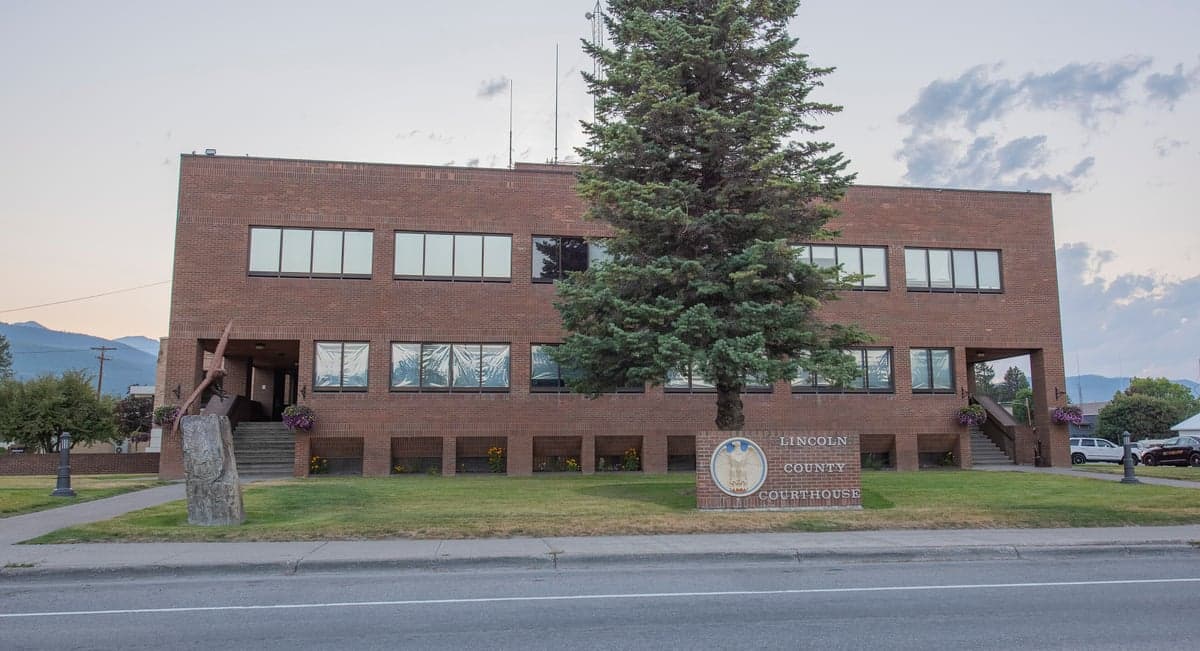
Photo: Wikipedia
Demographics of Lincoln County
Affluence Level in Lincoln County
A middle-class area roughly in line with national averages across income, home values, education, and employment.
People of Lincoln County
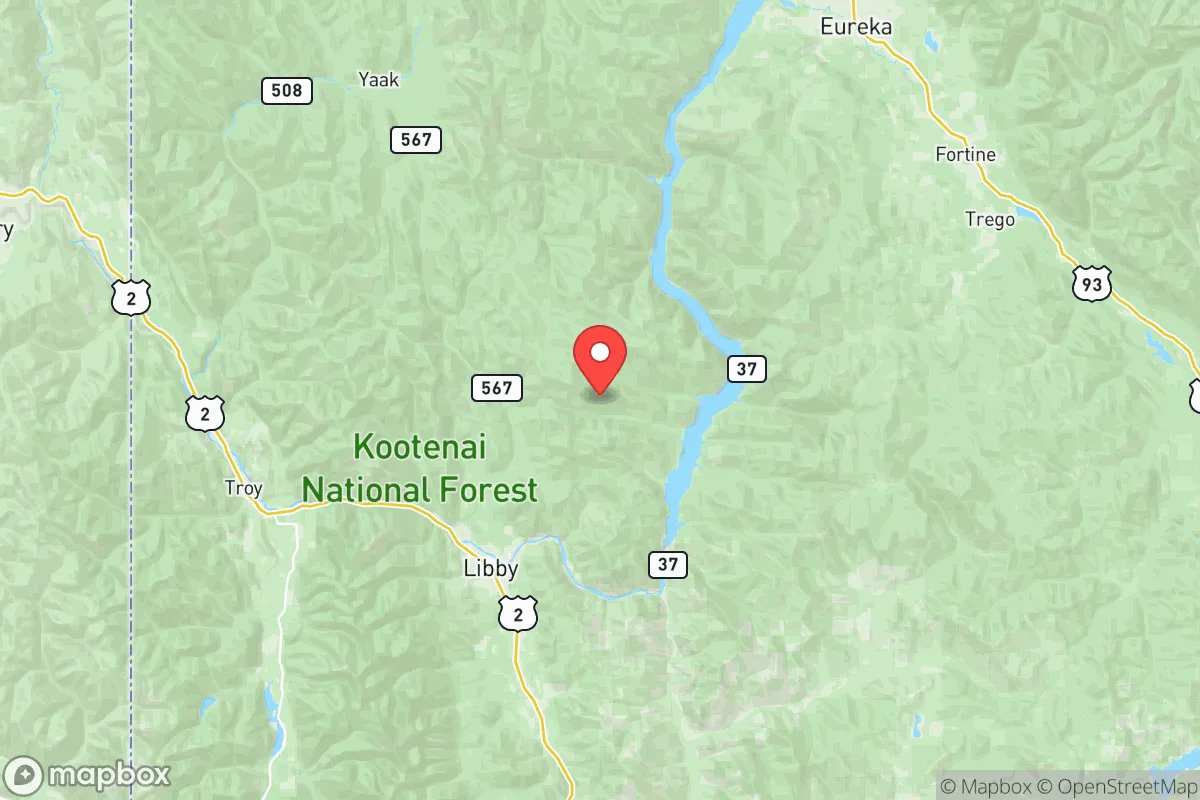
The people of Lincoln County, Montana, today form one of the most ethnically homogeneous populations in the state, with 90.8% of residents identifying as white and only 1.6% foreign-born. Spread across 3,675 square miles of rugged timberland and mountain valleys, the county's 20,656 residents are concentrated in the communities of Libby, Troy, and Eureka, where a distinctively self-reliant, resource-extraction culture persists. This is a place shaped by hard-rock mining, timber mills, and a deep-rooted sense of local independence, where the population has been slowly aging and declining as the industries that built it have contracted.
Settlement & growth (pre-1960)
Long before European settlement, the Kootenai people inhabited the Kootenai River valley and the surrounding Cabinet Mountains, using the region's abundant game and fish for subsistence. The Salish and Kalispel peoples also traversed the area seasonally. The first recorded non-Native exploration came with the Lewis and Clark Expedition in 1805, but the region remained largely untouched by permanent settlement for decades. The 1855 Hellgate Treaty confined the Kootenai to the Flathead Reservation to the south, opening Lincoln County to homesteaders and prospectors.
The first major population wave arrived with the discovery of gold and silver in the 1860s and 1870s. Prospectors, many of them Cornish, Irish, and German immigrants, established small mining camps at places like Libby Creek and Fisher River. The town of Libby itself was founded in 1886 as a supply hub for miners and loggers, named after a local settler. The arrival of the Great Northern Railway in the 1890s transformed Libby from a remote outpost into a regional transportation and commerce center, drawing a second wave of Scandinavian and Finnish immigrants who found work in the railroad and the burgeoning timber industry.
The timber boom of the early 20th century defined the county's character. The J. Neils Lumber Company established a massive mill in Libby in 1912, and the town of Troy grew around its own sawmill operations. Eureka, founded in the 1880s, became a farming and logging community in the Tobacco Valley. These were company towns, where mill whistles dictated daily life and the workforce was overwhelmingly white, native-born, and male. The Great Depression hit hard, but World War II brought a temporary economic surge as demand for lumber and minerals increased. The post-war period saw a modest influx of returning veterans and their families, but the county's population remained small and stable, hovering around 10,000 through the 1950s.
Modern era (post-1965)
The 1965 Hart-Cellar Act had almost no effect on Lincoln County. Unlike urban centers that saw waves of new immigration from Asia, Latin America, and Africa, Lincoln County's foreign-born population today stands at just 1.6%, far below the national average. The county's demographic story since 1965 is not one of immigration but of domestic migration and industrial decline.
The most significant demographic event of the modern era was the construction of the Libby Dam, completed in 1975. The dam brought a temporary influx of construction workers and engineers, many of whom stayed, and created Lake Koocanusa, which reshaped the local economy toward recreation and tourism. However, the closure of the W.R. Grace vermiculite mine in 1990, following the discovery of widespread asbestos contamination, dealt a devastating blow to Libby's population and economy. The resulting Superfund cleanup and health crisis prompted an exodus of families and a wave of early retirements, accelerating the county's aging trend.
Since 1990, Lincoln County has seen a slow but steady population decline, from a peak of roughly 22,000 to the current 20,656. The Hispanic population has grown modestly, now at 3.0%, concentrated primarily in Libby and Troy, where a small number of families work in the remaining timber and service industries. The East/Southeast Asian population remains negligible at 0.2%, and the Black population at 0.1%. The county's college-educated share is just 18.0%, reflecting a workforce historically oriented toward manual trades rather than professional services. A small but notable influx of retirees and second-home buyers from western Montana and the Pacific Northwest has settled around Lake Koocanusa and the Yaak Valley, drawn by low property taxes and the region's remote beauty.
The future
Lincoln County's population is projected to continue its slow decline over the next 10 to 20 years, driven by an aging demographic and limited economic opportunities for younger families. The county's median age has risen above 50, and the school-age population in Libby, Troy, and Eureka has been shrinking for over a decade. The timber industry, once the backbone of the local economy, employs a fraction of its historical workforce, and no major new industry has emerged to replace it.
The county is becoming slightly more diverse, but from a very low base. The Hispanic share may grow to 5-6% over the next decade, driven by service-sector and construction jobs in Libby and the recreational economy around Lake Koocanusa. The white share will remain above 85%, and the foreign-born share will likely stay below 3%. The most significant demographic trend is the continued in-migration of retirees and remote workers from more expensive parts of the West, particularly around Yaak and Fortine, where land prices remain relatively affordable. This is creating a cultural tension between long-time logging families and newer residents who prioritize conservation and recreation over resource extraction.
For someone moving in now, Lincoln County offers a deeply rooted, predominantly white, working-class culture with strong community ties and a slow pace of life. The population is aging and shrinking, but the communities that remain are resilient and self-sufficient. New arrivals will find a place where neighborly help is still the norm, but where economic opportunity is limited and the social fabric is shaped by the legacy of extraction and environmental recovery.

* Values derived from national, state, county, city and local statistics and may differ in a specific area. Last updated: 2026-06-15T15:48:22.000Z
Narrative content on this page is AI-generated and may contain mistakes. Verify any details that matter before acting on them.
ReloMaps may earn a commission from affiliate links at no extra cost to you.

