Photo: Wikipedia
Political ClimatePolitical Climate in Hill County
Showing district-level results — no local-only data available.
Local Political AnalysisPolitical Analysis of Hill County
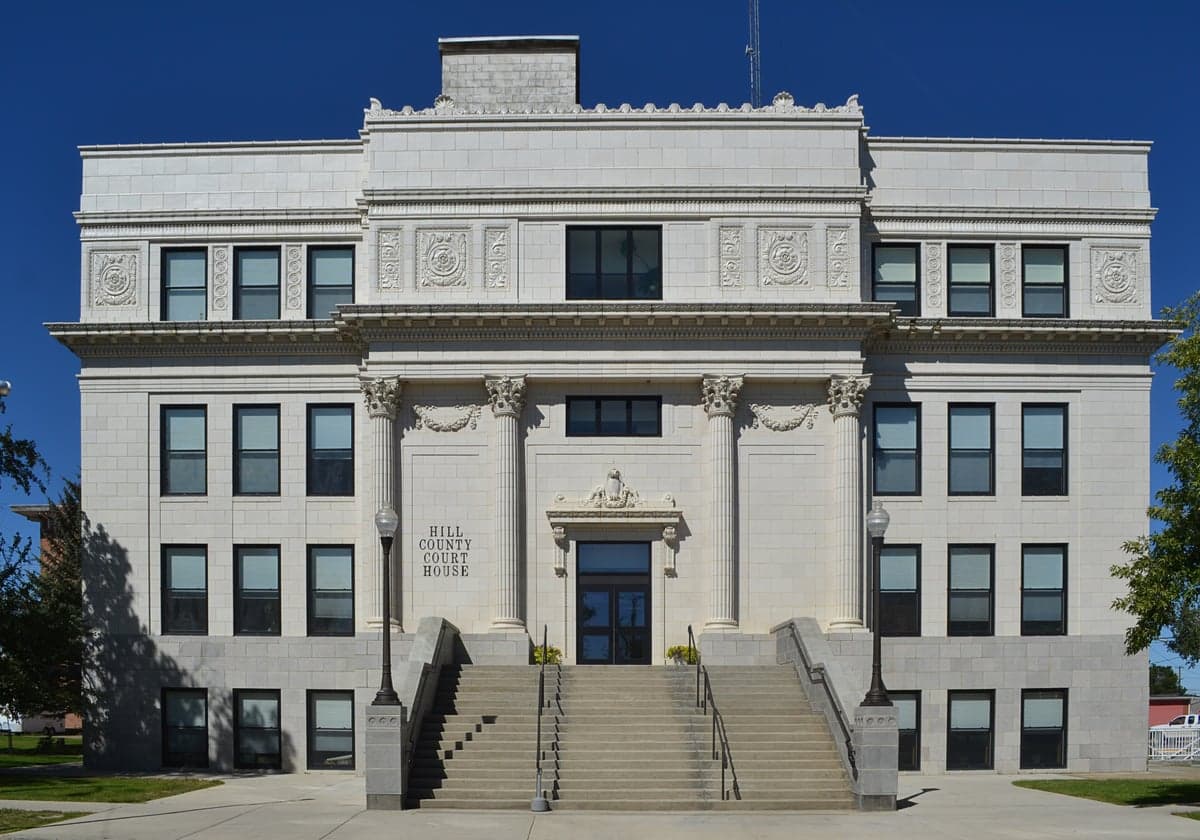
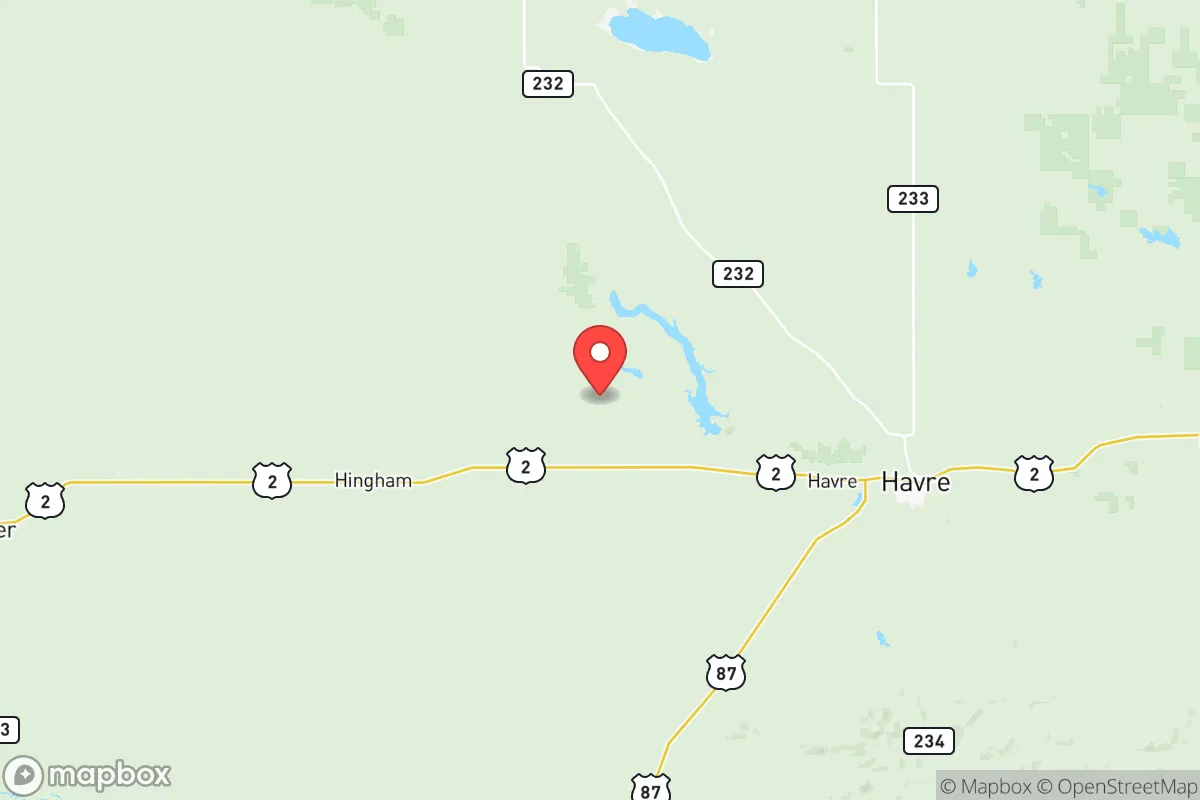
Hill County, Montana, is a reliably Republican stronghold with a Cook PVI of R+15, making it significantly more conservative than the state of Montana as a whole, which sits at R+10. This isn't a new development; the county has voted for the GOP presidential candidate in every election since 2000, often by margins exceeding 20 points. However, the political landscape isn't a monolith. The county seat, Havre, with its larger population and the presence of Montana State University-Northern, introduces a noticeable blue streak, with precincts around the university and downtown often breaking for Democrats. In contrast, the rural towns like Chinook, Harlem, and the smaller communities along the Hi-Line are deeply red, with GOP candidates routinely pulling 70-80% of the vote. The swing precincts are few and far between, typically found in the more populated areas of Havre where local economic concerns can sometimes override party loyalty.
How it compares
The five-point gap between Hill County's R+15 and Montana's R+10 is more than just a number—it reflects a real cultural and political divide. While Montana as a whole has trended redder in recent cycles, Hill County has remained consistently to the right of the state average. This is partly due to its agricultural base and strong ranching heritage, which align closely with GOP priorities on land use, property rights, and federal regulation. In contrast, Montana's more purple-leaning areas, like Missoula and Bozeman, have seen an influx of out-of-state transplants and a growing tech sector that has nudged the state's overall politics slightly leftward. Hill County hasn't experienced that demographic shift to the same degree. The result is that local elections here often feel more like a formality for Republicans, whereas in the state at large, competitive races for governor or the U.S. Senate are the norm. A Republican candidate who wins Hill County by 20 points is doing well, but that same candidate might only win the state by 5-7 points.
What this means for residents
For conservative residents, this political climate means their values are the default. Local government, school boards, and county commissions are overwhelmingly Republican, and policy debates tend to center on how to implement conservative principles, not whether to. For liberal residents, it can feel isolating. While Havre provides a small, more progressive bubble, the broader county can be unwelcoming for those who don't align with the majority. Practical implications include limited access to reproductive healthcare—the nearest Planned Parenthood is hours away—and a general lack of visible Democratic Party infrastructure. However, the small population means that personal relationships often transcend politics. It's not uncommon for a liberal Havre professor and a conservative rancher from Chinook to work together on a local water board or community project. The political divide is real, but it's not as personal or hostile as in more polarized urban areas.
Culturally, Hill County is defined by its Hi-Line identity—a mix of self-reliance, agricultural pragmatism, and a deep sense of community that predates modern political divisions. The county's strong Native American presence, primarily the Rocky Boy's Indian Reservation, adds another layer, with tribal politics often intersecting with county and state issues in ways that don't fit neatly into the red-blue binary. Policy-wise, you'll see strong support for gun rights, local control over land use, and skepticism of federal environmental regulations. The local economy's reliance on farming, ranching, and the BNSF Railway means that trade policy and infrastructure spending are more likely to sway voters than social issues. In short, Hill County is a place where the political reality is deeply conservative, but the day-to-day life is more about neighborly cooperation than partisan warfare.

State Political ClimatePolitical Climate in Montana
State Political AnalysisPolitical Environment in the State
Montana has shifted from a competitive purple state to a solidly Republican stronghold over the past two decades, now carrying a Cook PVI of R+10. The dominant coalition is a mix of rural conservatives, libertarian-leaning ranchers, and a growing number of out-of-state transplants seeking lower taxes and fewer regulations. While Democrats held both U.S. Senate seats as recently as 2014, the state has not voted for a Democratic presidential candidate since 1992, and the GOP now controls every statewide office, both chambers of the legislature, and both congressional seats. The trajectory has been a steady rightward march, accelerated by in-migration from California and the Pacific Northwest, though a stubborn Democratic foothold remains in a few university towns and the Native American reservations.
Urban vs. rural divide
The political map of Montana is a textbook study in geographic polarization. The state’s largest population center, the Billings metro area (Yellowstone County), is a Republican stronghold that reliably delivers 60-65% of its vote to GOP candidates. Missoula County, home to the University of Montana, is the state’s most reliably Democratic urban center, voting for Joe Biden by a 20-point margin in 2020. Bozeman (Gallatin County) was once a swing area but has trended rightward as tech and finance transplants from California have moved in, though it still elects a mix of moderate Republicans and Democrats to local office. The Flathead Valley around Kalispell and Whitefish is deeply conservative, with Lake and Flathead counties routinely voting 70%+ Republican. The rural eastern plains—counties like Dawson, Richland, and Custer—are among the most Republican in the nation, often delivering 80%+ margins. The state’s seven Indian reservations, including the Crow and Northern Cheyenne reservations in the southeast, vote overwhelmingly Democratic but have low turnout, limiting their statewide impact. The key swing area is the Helena region (Lewis and Clark County), where the state capital’s mix of government workers and rural ranchers keeps it competitive—it voted for Trump by just 2 points in 2020.
Policy environment
Montana’s policy environment is defined by a low-tax, low-regulation posture that appeals strongly to conservative relocators. There is no state sales tax, and the state income tax uses a flat rate of 5.9% after recent reforms. Property taxes are moderate, with a residential rate around 0.84% of assessed value, though they vary by county. The state has a right-to-work law and is a “constitutional carry” state—no permit is required to carry a concealed firearm in most places. Montana’s education policy is a mixed bag: the state funds public schools through a per-student formula, but there is a growing charter school movement, and the legislature passed a school choice bill in 2023 allowing education savings accounts for special-needs students. Healthcare policy is conservative: Montana expanded Medicaid under the Affordable Care Act in 2015, but the program requires periodic reauthorization and faces ongoing political fights. Election laws are moderately restrictive: voters must show a photo ID at the polls, same-day registration is allowed, and mail-in voting is available but not universal. The state has no voter ID laws for absentee ballots, which has been a point of contention.
Recent policy direction
Since 2021, the Republican supermajority in the legislature has pushed a distinctly conservative agenda. Gun and self-defense law: In 2021, Montana passed a “Second Amendment Preservation Act” that attempts to nullify federal firearms regulations, though it has been challenged in court. The state also expanded “stand your ground” protections. Parental and education rights: The 2023 session saw passage of a “Parents’ Bill of Rights” requiring schools to notify parents about curriculum changes and medical services, and a ban on transgender athletes in K-12 and college sports. Speech and privacy: Montana passed one of the nation’s strictest data privacy laws in 2023, requiring opt-in consent for the sale of personal data, but has no specific laws targeting social media content moderation. Medical and bodily autonomy: Abortion remains legal up to fetal viability under a 1999 Montana Supreme Court ruling, but the legislature has passed a 20-week ban and a requirement for parental consent for minors, both of which are currently blocked by court orders. Property rights: The state has strong private property protections, including a law requiring compensation for any regulation that reduces property value by more than 30%. Taxation: The 2021 session cut the top income tax rate from 6.9% to 5.9% and expanded the property tax exemption for veterans. Voting and ballot access: In 2023, the legislature passed a law requiring a photo ID for all voters, including absentee voters, and banned ballot harvesting, though these changes have not yet been fully implemented.
Civil unrest & political movements
Montana has a history of libertarian and anti-government activism, but large-scale civil unrest is rare. The most visible political flashpoints in recent years have been around public health mandates. During the COVID-19 pandemic, Missoula and Bozeman saw small but vocal protests against mask mandates and business closures, while rural counties largely ignored state guidance. The “Yellowstone County Freedom Defense” group organized several rallies in Billings against vaccine mandates. On the left, the Montana Human Rights Network and local chapters of Indivisible have organized counter-protests and voter registration drives, particularly around abortion rights. Immigration politics are less heated than in border states, but the legislature passed a law in 2023 requiring local law enforcement to cooperate with federal immigration authorities, and there are no sanctuary cities. Election integrity controversies have been muted compared to other states—Montana uses paper ballots and has robust audit procedures, though the 2020 election saw a brief controversy over ballot drop boxes in Gallatin County. The state has a small but active secessionist movement in the form of the “Montana Secession” group, which advocates for leaving the Union, but it has no political traction.
Projection
Over the next 5-10 years, Montana’s political trajectory is likely to continue rightward, driven by two forces: in-migration and demographic change. The state is growing fastest in the conservative-leaning Flathead Valley and Gallatin County, while the Democratic strongholds of Missoula and the reservations are growing more slowly. The 2024 redistricting process gave Republicans a structural advantage in the state legislature, and the GOP is likely to hold a supermajority for the foreseeable future. However, the influx of out-of-state transplants—many from blue states—could moderate the state’s politics over time, as seen in Bozeman, where local elections have become more competitive. The key wildcard is the state’s independent streak: Montanans have a history of voting for third-party candidates and rejecting party-line orthodoxy, which could lead to surprises in gubernatorial or Senate races. A new resident moving in now should expect a state that is reliably Republican but not uniformly so, with a political culture that values local control and individual liberty over party loyalty.
For a new resident, the bottom line is that Montana offers a political environment that is broadly conservative but with significant local variation. If you’re a conservative, you’ll find a state government that aligns with your values on taxes, guns, and education, but you’ll need to navigate local politics in places like Missoula or Bozeman where progressive voices are loud. If you’re a liberal, you’ll find a small but active community in the university towns and reservations, but you’ll be in the minority statewide and will face an uphill battle on most policy issues. The practical takeaway: choose your county carefully, as the political climate in Billings versus Missoula is night and day, and be prepared for a state that is deeply committed to its libertarian roots, even as it shifts rightward.
* Values derived from national, state, county, city and local statistics and may differ in a specific area. Last updated: 2026-06-11T20:29:00.000Z
Narrative content on this page is AI-generated and may contain mistakes. Verify any details that matter before acting on them.
ReloMaps may earn a commission from affiliate links at no extra cost to you.

