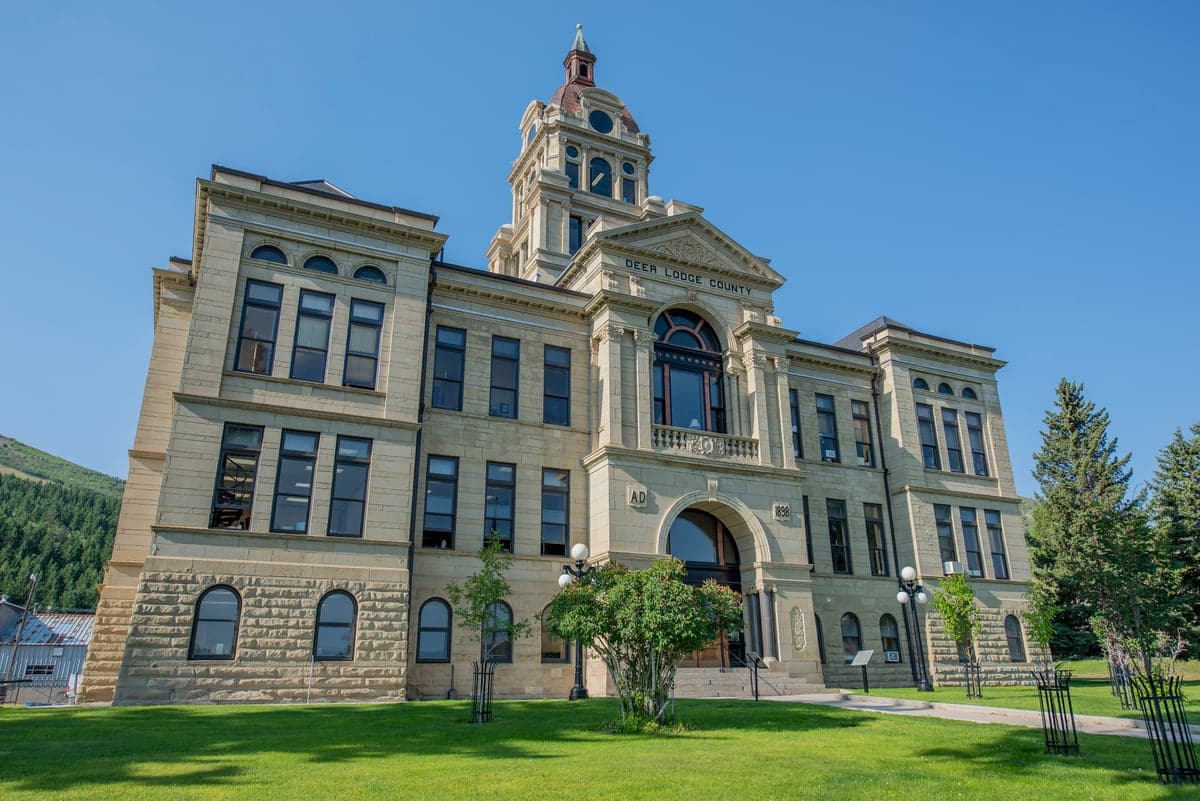
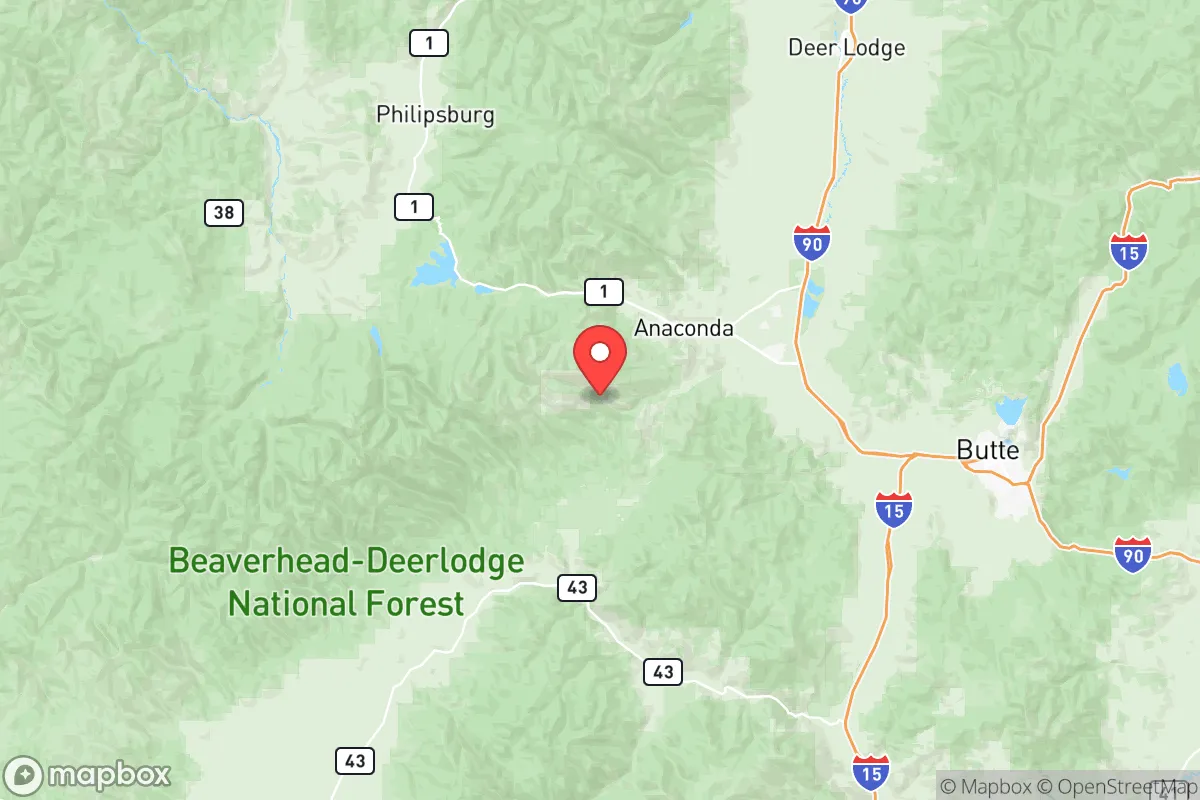
Photo: Wikipedia
Demographics of Deer Lodge County
Affluence Level in Deer Lodge County
A middle-class area roughly in line with national averages across income, home values, education, and employment.
People of Deer Lodge County
Deer Lodge County, Montana, is home to roughly 9,500 residents, making it one of the state's more sparsely populated counties, with a population density of just over four people per square mile. The county's population is predominantly white (89.9%) and overwhelmingly native-born (only 0.2% foreign-born), reflecting a deep-rooted, multi-generational character shaped by mining, ranching, and the railroad. The county seat, Anaconda, anchors the population, with smaller communities like Warm Springs and the historic settlement of Opportunity dotting the landscape. Today, the county's identity is a blend of labor history, Irish-Catholic heritage, and a quiet, rural conservatism that values self-reliance and community ties.
Settlement & growth (pre-1960)
Before Euro-American settlement, the Deer Lodge Valley was part of the traditional territory of the Salish (Flathead) people, who used the area for hunting and seasonal camps. The name "Deer Lodge" itself derives from a Salish term referring to a lodge made of deer hides. The first permanent non-Native presence came with fur trappers and traders in the 1820s and 1830s, but significant settlement did not begin until the 1860s, following the discovery of gold in nearby Grasshopper Creek and Alder Gulch. The county was officially created in 1865, and the town of Deer Lodge (now the county seat of neighboring Powell County) served as the early administrative center.
The defining event in Deer Lodge County's population history was the establishment of the Anaconda Smelter in 1884 by Marcus Daly, one of the "Copper Kings" of Montana. Daly chose the location for its access to water and rail lines, and the smelter quickly drew thousands of workers. The town of Anaconda was platted in 1883 and incorporated in 1887, growing explosively as Irish, Cornish, Italian, and Scandinavian immigrants arrived to work the smelter and the underground copper mines. The Irish were the largest and most influential group, shaping the town's politics, labor unions, and Catholic identity. The Cornish ("Cousin Jacks") brought hard-rock mining expertise, while Italians and Scandinavians filled construction and rail jobs. By 1900, Anaconda had over 9,000 residents, making it one of Montana's largest cities.
The smelter operated continuously until 1980, and for nearly a century it defined the county's economy and demographics. The population peaked around 12,000 in the 1920s and remained stable through the 1950s, sustained by the smelter's demand for labor and the ancillary businesses that served the workforce. Smaller communities like Warm Springs grew around the state mental hospital (established 1877) and the Montana State Prison (moved to Deer Lodge in 1912), both of which provided steady employment. The town of Opportunity, located just west of Anaconda, housed smelter workers and their families, while the rural areas supported ranching families of Scots-Irish and German descent who had arrived in the 1870s and 1880s.
Modern era (post-1965)
The closure of the Anaconda Smelter in 1980 was a demographic earthquake. The county lost roughly a third of its population between 1980 and 2000, dropping from over 12,000 to about 9,000. Unlike many Western counties that experienced a post-1965 immigration boom, Deer Lodge County saw almost no new foreign-born population; the foreign-born share today is just 0.2%, among the lowest in the nation. The county's demographic story since 1965 is one of out-migration, aging, and a slow, modest influx of domestic migrants seeking lower costs and a quieter life.
The Hispanic population, now 3.4%, grew slightly from a very small base, largely through domestic migration from other Western states rather than direct immigration. Some Hispanic families moved to Anaconda for work in healthcare, education, and the prison system. The East/Southeast Asian population (0.7%) is tiny and scattered, with no visible ethnic enclave; a few families are connected to the medical and academic sectors. The Black population (0.3%) and Indian subcontinent population (0.0%) are negligible. The county remains overwhelmingly white and native-born, with a cultural character that is distinctly Northern Rockies: conservative, Catholic-influenced, and rooted in labor and ranching traditions.
Suburbanization has been minimal. Anaconda itself has seen some new housing development on its outskirts, particularly along the Pintler Scenic Route (Highway 1) toward Georgetown Lake, where second-home owners and retirees from Missoula and Butte have built seasonal and year-round residences. Warm Springs has grown slightly as a bedroom community for workers at the state hospital and the prison. But the overall pattern is one of population stagnation and aging: the median age in Deer Lodge County is over 50, significantly higher than the state median of 40, and the county has one of the highest shares of residents aged 65 and older in Montana.
The future
Deer Lodge County's population is projected to remain flat or decline slightly over the next 10-20 years. The county lacks the job growth, housing stock, or amenity migration that is driving growth in Montana's western valleys (Gallatin, Missoula, Flathead). The prison and the state hospital remain the largest employers, along with healthcare and education, but these are not high-growth sectors. The county's remote location and cold winters limit its appeal to the remote-work migrants who have flocked to Bozeman or Whitefish.
Diversity is unlikely to increase significantly. The foreign-born share will probably remain below 1%, and the Hispanic share may inch up to 5-6% through domestic migration, but the county will remain one of the least diverse in Montana. The cultural identity will continue to be shaped by the Irish-Catholic and labor heritage of the smelter era, with a growing emphasis on outdoor recreation (hunting, fishing, snowmobiling, and the Georgetown Lake area) as an economic and lifestyle draw. The county is becoming more of a retirement and second-home destination for Montanans from higher-cost areas, rather than a destination for out-of-state newcomers.
For someone moving in now, Deer Lodge County offers a deeply rooted, slow-paced, and affordable rural lifestyle. The population is aging, but community institutions — the churches, the Anaconda Pintler Civic Center, the county fair — remain active. The county is not growing or diversifying, but it is stable, with a strong sense of place and a history that residents wear with pride. New arrivals will find a place where neighbors know each other, where the smelter stack still dominates the skyline as a monument to the past, and where the future looks much like the present: quiet, white, and rural.

* Values derived from national, state, county, city and local statistics and may differ in a specific area. Last updated: 2026-06-28T08:05:25.000Z
Narrative content on this page is AI-generated and may contain mistakes. Verify any details that matter before acting on them.
ReloMaps may earn a commission from affiliate links at no extra cost to you.

