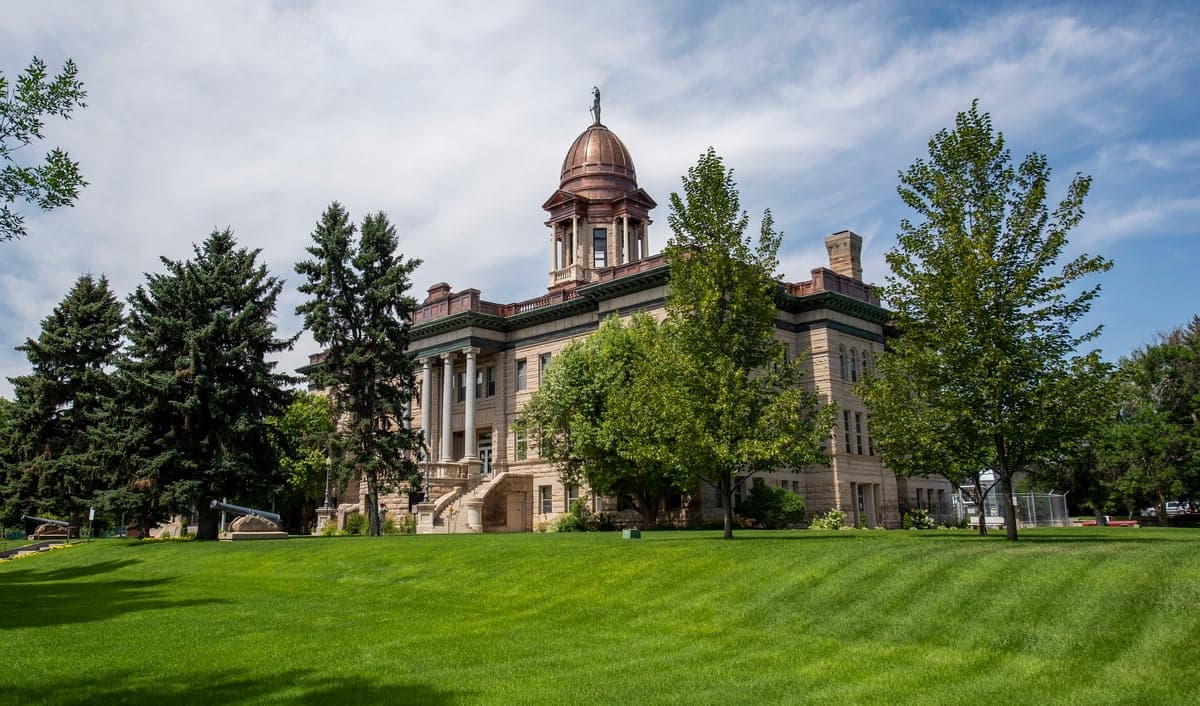
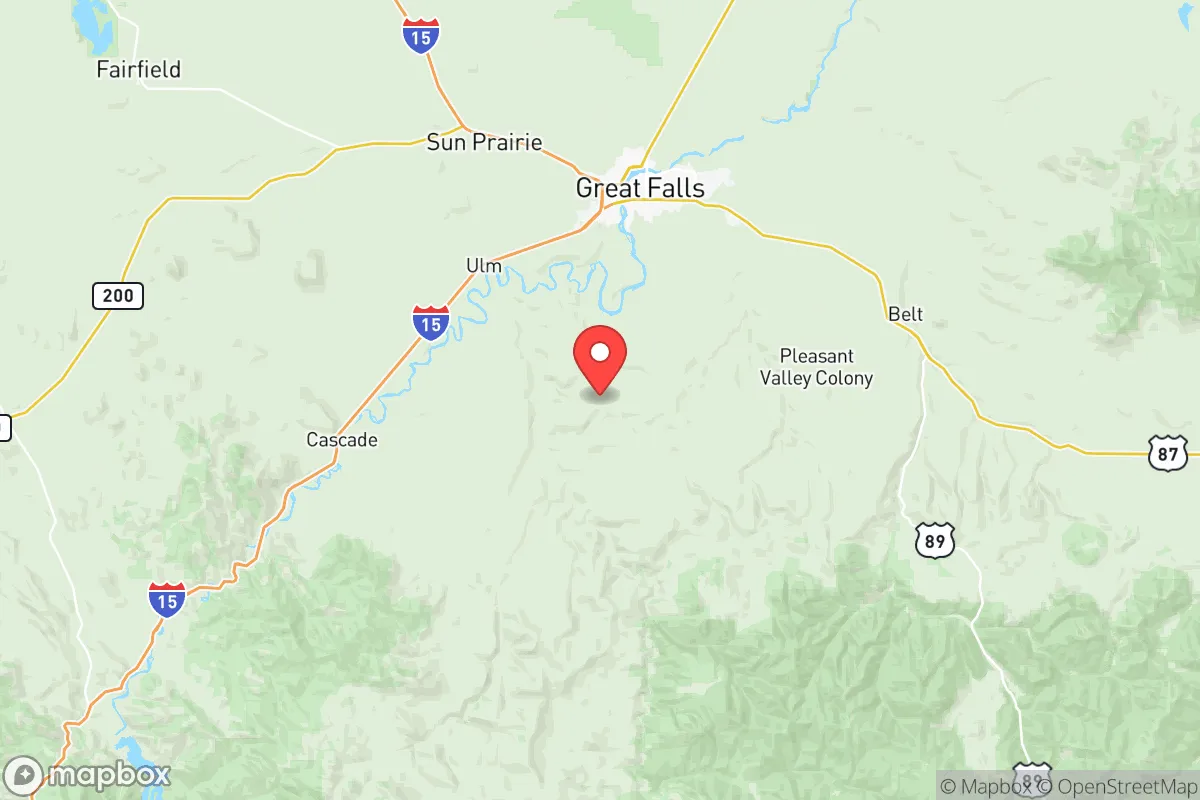
Photo: Wikipedia
Political ClimatePolitical Climate in Cascade County
Showing district-level results — no local-only data available.
Local Political AnalysisPolitical Analysis of Cascade County
Cascade County leans solidly Republican with a Cook PVI of R+15, making it significantly more conservative than Montana as a whole, which sits at R+10. This isn't a new development, but the gap has widened over the last decade as the rural parts of the county have shifted right while Great Falls has remained a more competitive, purple-ish anchor. If you're looking at the political map, the real story is the divide between the city and the surrounding countryside — and how that split shapes daily life for everyone here.
How it compares
The R+15 rating puts Cascade County about five points to the right of the state average, which is a meaningful gap in practical terms. In the 2024 presidential election, the county went for the Republican candidate by roughly 20 points, while the state overall was closer to a 12-point margin. The difference is driven almost entirely by the rural precincts. Towns like Belt, Cascade, and Ulm routinely vote 70-80% Republican, while Great Falls itself is more of a mixed bag. The city's central and east-side precincts, particularly around the downtown core and the Malmstrom Air Force Base area, have trended bluer in recent cycles, with some precincts flipping to Democratic in 2020 and 2022. Meanwhile, the western and southern edges of Great Falls — think the newer subdivisions near the Missouri River — lean heavily red. So the county's overall R+15 number masks a real internal tug-of-war: the rural areas are pulling hard right, and the city is holding the line as a swing zone.
What this means for residents
For conservative residents, Cascade County is a comfortable place to live politically. Local offices — county commission, sheriff, school board — are reliably held by Republicans, and the policy environment reflects that. Taxes are low, gun laws are permissive, and the county government tends to take a hands-off approach to land use and business regulation. For liberal residents, it's more of a mixed experience. You'll find like-minded people in Great Falls, especially in the downtown neighborhoods and near the university, but you're definitely in the minority countywide. That said, the city itself is competitive enough that Democratic candidates can win local races — the mayor's office and some city commission seats have gone to Democrats in recent years — and there's an active progressive community centered around the Great Falls Civic Center and local advocacy groups. The key takeaway: your experience depends heavily on whether you live inside the city limits or out in the county.
Culturally, the county's conservatism is of the Western, libertarian-leaning variety rather than the more socially rigid strain you might find in the Deep South. People here value independence and self-reliance, and there's a live-and-let-live attitude that makes it workable for most folks regardless of their politics. The biggest policy distinction you'll notice is the county's approach to land use — there's very little zoning outside of Great Falls, and the county commission has consistently resisted efforts to impose growth management rules. That's a point of pride for many residents and a frustration for others who'd like to see more planning around development along the U.S. Highway 89 corridor and near the Missouri River. Looking ahead, the trajectory seems clear: the rural areas will keep getting redder, Great Falls will stay competitive, and the county as a whole will remain a solid Republican stronghold — but with enough internal diversity to keep things interesting.

State Political ClimatePolitical Climate in Montana
State Political AnalysisPolitical Environment in the State
Montana has shifted from a competitive purple state to a solidly Republican stronghold over the past two decades, carrying a Cook PVI of R+10. The dominant coalition is a mix of rural conservatives, libertarian-leaning ranchers, and a growing number of out-of-state transplants, many of whom moved here specifically for lower taxes and fewer regulations. While Democrats held the governor’s office as recently as 2020, the state legislature has been under GOP supermajority control since 2022, and the state has voted for the Republican presidential candidate in every election since 2008, with margins widening from 2 points in 2012 to 16 points in 2024.
Urban vs. rural divide
The political map is a textbook case of urban islands in a deep-red sea. The Democratic strongholds are Missoula and Bozeman, both college towns that vote reliably blue by 15-20 points in state races. Missoula, home to the University of Montana, is the most liberal city in the state, with a strong environmental and progressive activist scene. Bozeman, despite its rapid growth from tech and outdoor industry transplants, has actually become more Democratic over the last decade, flipping from a swing city to a solidly blue one by 2024. In contrast, Billings, the largest city, is a Republican stronghold, voting +20 R in recent cycles, driven by its energy, healthcare, and agricultural economy. The rural counties—especially in the eastern plains like McCone, Garfield, and Petroleum counties—routinely vote 80-90% Republican. The most notable recent flip is Gallatin County (Bozeman), which went from R+5 in 2016 to D+8 in 2024, driven entirely by in-migration of younger, college-educated workers. Meanwhile, Flathead County (Kalispell) has moved in the opposite direction, becoming more conservative as it attracts retirees and second-home owners from California and Washington.
Policy environment
Montana’s policy environment is defined by a low-tax, limited-government ethos. There is no state sales tax, and the top income tax rate was cut from 6.9% to 5.9% in 2023, with a flat tax of 4.7% scheduled for 2026. Property taxes are moderate but vary significantly by county, with Missoula and Gallatin counties seeing sharp increases due to rising home values. The state has a Republican-controlled legislature that has consistently passed right-to-work laws, expanded school choice through charter school funding, and maintained a strong preemption law that prevents local governments from enacting stricter gun ordinances than the state. On education, Montana has a school funding formula that heavily favors rural districts, but urban districts like Missoula and Bozeman have seen per-pupil funding lag behind inflation. Healthcare policy is mixed: the state expanded Medicaid under the Affordable Care Act in 2015, a decision that has been repeatedly reauthorized by the GOP legislature, but it also passed a 24-week abortion ban in 2023, with no exceptions for rape or incest. Election laws have tightened: voter ID requirements were strengthened in 2021, same-day voter registration was eliminated in 2023, and mail-in ballots now require a notarized signature or witness for first-time voters.
Recent policy direction
The last three legislative sessions have pushed Montana sharply rightward on nearly every axis a relocator might weigh. On gun and self-defense law, Montana passed constitutional carry in 2021, allowing permitless concealed carry for anyone 18 or older, and in 2023 it passed a law prohibiting local law enforcement from enforcing federal gun laws that conflict with state law. On parental and education rights, the 2023 session passed a Parents’ Bill of Rights, requiring schools to notify parents of any curriculum involving sexual orientation or gender identity, and a school choice expansion that created education savings accounts for special-needs students. Speech and privacy saw the passage of a law requiring social media platforms to obtain parental consent for minors, and a ban on TikTok on state-owned devices. On medical and bodily autonomy, the state passed a near-total abortion ban in 2023 (currently blocked by court order), but also legalized medical marijuana in 2020 and has a robust dispensary system in Missoula and Bozeman. Property rights have been a flashpoint: the 2023 legislature passed a law limiting local zoning authority, making it harder for cities like Missoula and Bozeman to impose inclusionary zoning or rent control. Taxation remains a top issue: the 2023 session passed a $1 billion tax cut package, including the flat income tax and a property tax rebate for primary residences. Voting and ballot access have tightened, with the elimination of same-day registration and stricter signature verification, though the state still allows no-excuse absentee voting.
Civil unrest & political movements
Montana has seen relatively low levels of civil unrest compared to coastal states, but there have been notable flashpoints. The most visible is the ongoing conflict over public lands and resource extraction. In 2023, protests in Missoula and Bozeman drew hundreds against a proposed copper mine near the Yellowstone River, with environmental activists clashing with pro-mining groups. Immigration politics are less heated here than in border states, but the 2023 legislature passed a law requiring local law enforcement to cooperate with federal immigration authorities, and there have been small but vocal protests in Billings and Missoula over detention conditions at the state’s only immigration detention center in Shelby. Election integrity controversies have been relatively muted, though the 2022 gubernatorial race saw a recount in the GOP primary, and some rural counties have debated hand-counting ballots. The most organized political movements are on the right: the Montana Freedom Caucus, a group of hardline state legislators, has pushed for further tax cuts, school vouchers, and restrictions on local government authority. On the left, the Montana Environmental Information Center and local Indivisible chapters in Missoula and Bozeman remain active, but their influence has waned as the state has shifted right. There is no serious secession or nullification movement, though some rural counties have passed symbolic resolutions declaring themselves “Second Amendment sanctuaries.”
Projection
Over the next 5-10 years, Montana is likely to become even more Republican, but with a growing internal tension between traditional libertarian conservatives and the newer, more culturally conservative transplants. The demographic trends are clear: in-migration is concentrated in the western counties—Gallatin, Missoula, Flathead, and Ravalli—which are becoming more politically diverse. Gallatin County (Bozeman) will likely remain a Democratic stronghold, but the rest of the state is aging and becoming more rural, which favors the GOP. The 2024 election results suggest that the state’s PVI could shift to R+12 or R+13 by 2030, driven by continued out-migration from deep-blue states. However, the urban-rural divide will deepen: Missoula and Bozeman will become more progressive, while the eastern plains and smaller cities like Great Falls and Butte will become more conservative. The policy direction will continue to be tax cuts, school choice, and gun rights expansion, but there will be increasing conflict over water rights, land use, and local control as the western cities grow. A new resident moving to Bozeman in 2026 should expect to find a politically divided community, while someone moving to Billings or Kalispell will find a more uniformly conservative environment.
For a new resident, the bottom line is that Montana offers a genuinely low-tax, limited-government environment that appeals to conservatives, but with significant local variation. If you’re moving to Missoula or Bozeman, you’ll find a liberal bubble with high housing costs and active progressive politics. If you’re moving to Billings, Kalispell, or any rural county, you’ll find a deeply conservative community where your vote will be in the majority. The state’s trajectory is toward more Republican control at the state level, but with growing local friction over growth, land use, and cultural values. For a conservative family, Montana is one of the most welcoming states in the country. For a liberal resident, it’s a place where you’ll need to be comfortable being in the minority, but where your voice can still be heard in the cities.
* Values derived from national, state, county, city and local statistics and may differ in a specific area. Last updated: 2026-08-25T19:31:15.000Z
Narrative content on this page is AI-generated and may contain mistakes. Verify any details that matter before acting on them.
ReloMaps may earn a commission from affiliate links at no extra cost to you.

