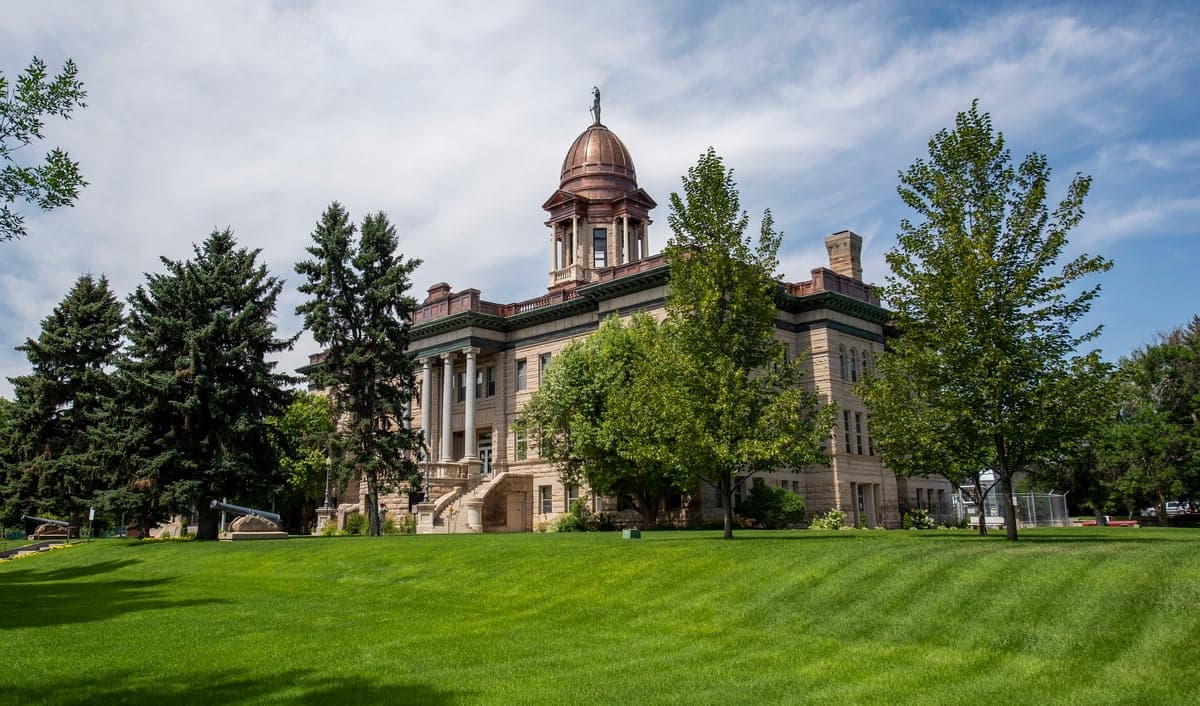
Photo: Wikipedia
Personal Sovereignty in Cascade County
Viable for self-reliance. Generally workable, though some barriers may limit total independence.
What does Personal Sovereignty tell us?
Personal Sovereignty measures your capacity for self-reliance and independence with minimal government friction. Higher scores mean fewer barriers between you and the way you want to live... but it assumes you have the space you need and good neighbors.
What does this tell us?
Personal Sovereignty measures your capacity for self-reliance and independence with minimal government friction. Higher scores mean fewer barriers between you and the way you want to live... but it assumes you have the space you need and good neighbors.
State Policy
Energy independence: Net exporter (120% of energy produced in-state)
Personal Liberty
Homesteading

Personal Liberty Analysis
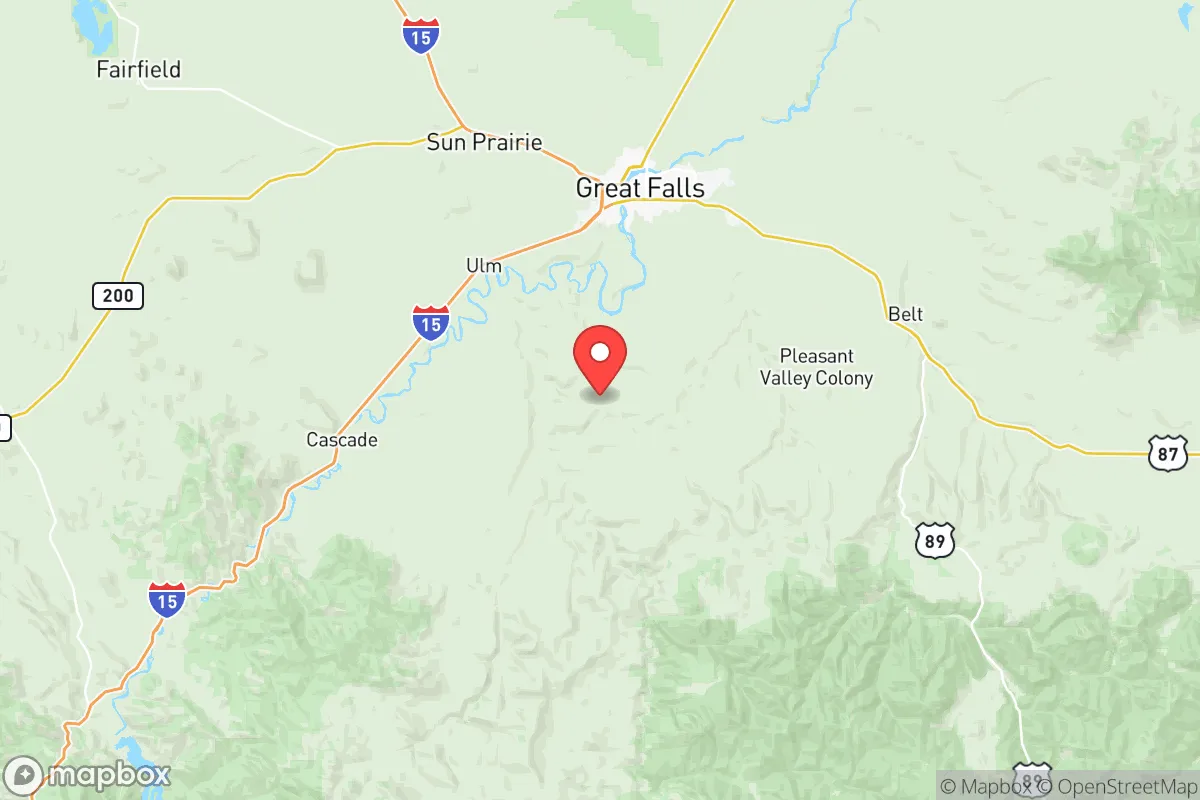
Cascade County, Montana offers a notably high degree of personal sovereignty, grounded in Montana’s strong tradition of limited government, low taxes, and expansive personal liberties. The county’s regulatory environment is generally light-touch, particularly outside the urban core of Great Falls, with state-level protections for gun rights, property use, and medical autonomy creating a framework where self-reliance is both expected and legally supported. For individuals and families prioritizing independence, the area presents a compelling balance of rural freedom and access to essential services, though the degree of autonomy varies significantly between the city limits of Great Falls and outlying communities like Belt, Cascade, and Sun River.
Tax burden and regulatory posture in Cascade County
Montana’s tax structure is among the most favorable in the nation for those seeking to minimize government overhead. There is no state sales tax, which directly reduces the cost of everyday goods and services. Property taxes in Cascade County are moderate, with the average effective rate hovering around 0.83% of assessed home value, slightly below the national average. The state’s income tax is a flat 5.9% on all taxable income, a simple system that avoids the complexity of progressive brackets. Regulatory posture is similarly restrained: Montana is a right-to-work state, meaning no one can be compelled to join a union as a condition of employment. Business licensing requirements are minimal, especially for sole proprietors and small farms, and the county planning department generally defers to property owners unless a project triggers environmental review under the Montana Environmental Policy Act (MEPA). In practice, this means a homeowner in Belt or Cascade can add a workshop, fence, or accessory dwelling unit with far less red tape than in more regulated Western states.
Self-defense and gun law specifics in Cascade County
Montana is a constitutional carry state, and Cascade County fully reflects that ethos. No permit is required to carry a concealed firearm for any law-abiding adult 18 or older. The state preempts local gun ordinances, so cities like Great Falls cannot enact their own bans on firearms in parks or public buildings beyond what state law allows. Stand-your-ground laws are in effect, with no duty to retreat in any place where a person has a legal right to be. Castle doctrine protections extend to occupied vehicles and workplaces, not just homes. For those purchasing firearms, private sales between individuals require no background check, though federal law still applies to licensed dealers. The gun culture is deeply embedded: shooting ranges are common, and hunting is a primary recreational activity across the county. In towns like Fort Shaw and Ulm, firearm ownership is near-universal, and local law enforcement generally interprets self-defense statutes broadly. The only notable restriction is a 72-hour waiting period for handgun purchases from licensed dealers, a state-level rule that some residents find intrusive but is rarely enforced as a barrier to ownership.
Self-reliance and homesteading viability in Cascade County
Homesteading and off-grid living are not only feasible but actively supported by the county’s zoning and land-use policies. Outside the Great Falls city limits, most unincorporated areas have no building codes, no mandatory inspections, and no zoning restrictions on what you can build or how you power it. Minimum lot sizes in agricultural zones are typically 20 acres, but many parcels in areas like Sand Coulee or Stockett are sold in 5- to 10-acre increments, suitable for a small homestead with a garden, chickens, and a few livestock. Off-grid systems—solar panels, wind turbines, rainwater catchment, composting toilets—are legal and common, provided they meet basic health department requirements for septic and well water. The county does not restrict rainwater collection, and Montana law explicitly protects the right to harvest rainwater on your property. For those seeking total self-reliance, the Missouri River corridor near Craig offers irrigated farmland with water rights, while the drier benchlands east of Great Falls require more careful water planning. The biggest practical challenge is winter: heating with wood or propane is standard, and road maintenance on county gravel roads can be inconsistent, so a 4WD vehicle and a backup generator are wise investments.
Personal liberties in Cascade County: parental rights, medical autonomy, speech, and property
Montana law provides strong protections for parental rights, including the right to direct a child’s education, medical care, and religious upbringing. Homeschooling is straightforward: parents simply file a notification with the county superintendent and are free to design their own curriculum with no state testing or oversight requirements. Medical autonomy is similarly robust: Montana is one of the few states with explicit constitutional protection for the right to refuse medical treatment, and the 2023 Montana Medical Freedom Act prohibits discrimination against those who decline vaccines or other medical interventions. Free speech is protected under both the U.S. and Montana constitutions, with the state’s constitution offering even broader protections for political speech and assembly. Property rights are a cornerstone of Montana’s legal culture: the state’s Private Property Rights Protection Act requires government agencies to compensate landowners for any regulatory taking that reduces property value by 30% or more. In practice, this means county officials in Great Falls and Black Eagle are cautious about imposing land-use restrictions that could trigger compensation claims. The only notable tension is around water rights: Montana follows prior appropriation doctrine, meaning senior water rights holders have priority, and new wells in some areas may require proof that they won’t deplete existing aquifers.
Overall, Cascade County ranks among the most sovereignty-friendly areas in the Mountain West, offering a legal and cultural environment where personal autonomy is the default rather than the exception. Compared to counties in Colorado, Oregon, or Washington, the regulatory burden is dramatically lighter, and the state’s constitutional protections for gun rights, medical choice, and property use create a durable legal foundation. For a family or individual seeking to live with minimal government interference—whether through homesteading in Vaughn, carrying a firearm in Great Falls, or homeschooling in Sun Prairie—Cascade County provides a rare combination of freedom, affordability, and practical self-reliance that is increasingly hard to find elsewhere in the United States.

* Values derived from national, state, county, city and local statistics and may differ in a specific area. Last updated: 2026-08-25T19:31:15.000Z
Narrative content on this page is AI-generated and may contain mistakes. Verify any details that matter before acting on them.
ReloMaps may earn a commission from affiliate links at no extra cost to you.

