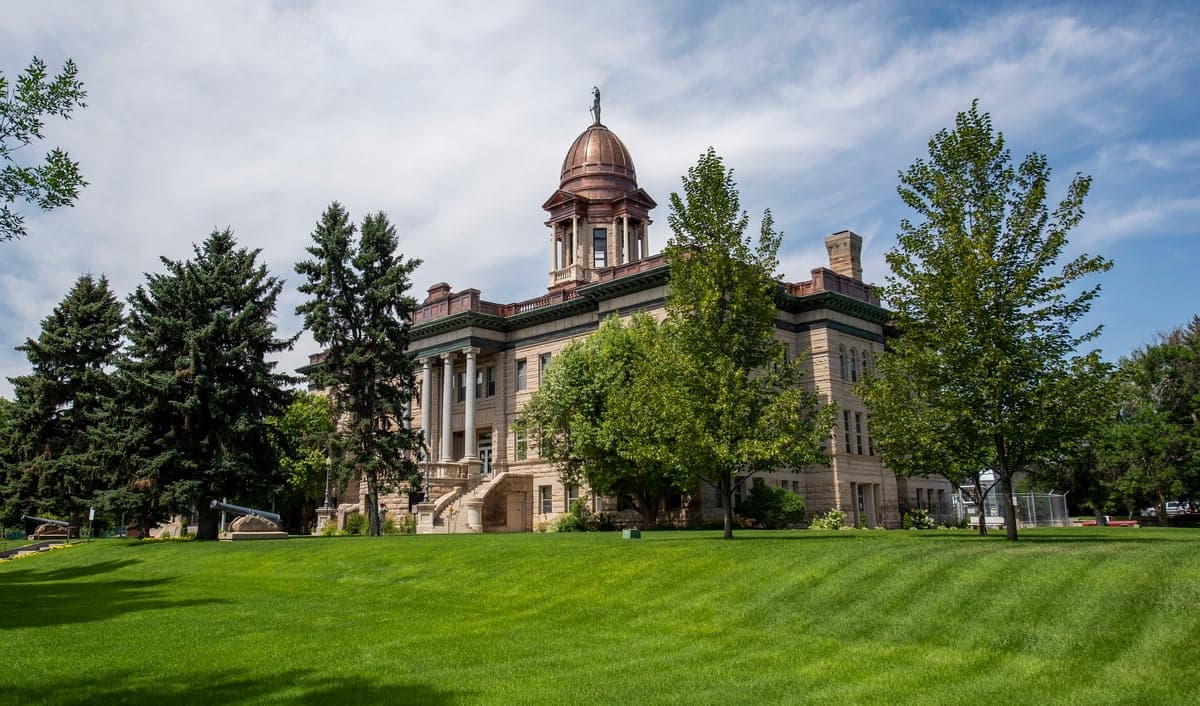
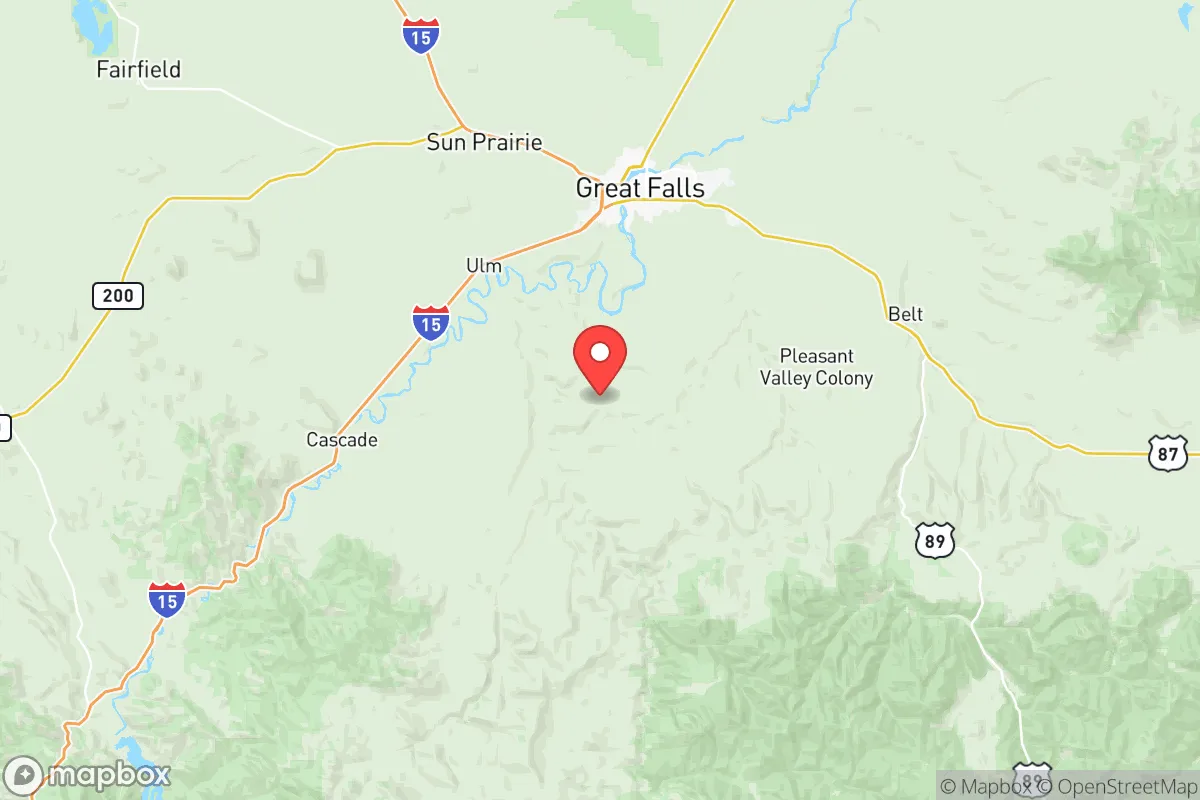
Photo: Wikipedia
Demographics of Cascade County
Affluence Level in Cascade County
A middle-class area roughly in line with national averages across income, home values, education, and employment.
People of Cascade County
The people of Cascade County, Montana, today number 84,601 and are overwhelmingly white (83.2%) with a very small foreign-born population (0.6%), reflecting a deeply rooted, multi-generational character shaped by homesteading, railroad work, and military service. The county’s identity is anchored by the city of Great Falls, which serves as the economic and cultural hub, with smaller communities like Belt, Cascade, and Ulm retaining a rural, agricultural feel. Distinctive markers include a strong sense of place tied to the Missouri River, a legacy of labor unionism from the Anaconda Copper Mining Company era, and a noticeable presence of retired and active-duty military personnel from Malmstrom Air Force Base. This is a population that values self-reliance, outdoor recreation, and community stability, with a demographic profile that has changed little in recent decades.
Settlement & growth (pre-1960)
Before American settlement, the area now known as Cascade County was the homeland of the Blackfeet Nation, with the Missouri River serving as a vital corridor for trade and travel. The Blackfeet, along with the Assiniboine and Gros Ventre, used the vast plains for bison hunting, and their presence shaped the landscape long before any permanent non-Native structures were built. The first significant American incursion came with the Lewis and Clark Expedition (1805-1806), which passed through the region, but it was the discovery of gold in Montana in the 1860s that spurred the first wave of permanent settlement.
The city of Great Falls was founded in 1883 by the Great Northern Railway, which saw the Missouri River’s waterfalls as a source of hydroelectric power for industry. The railroad brought a diverse mix of workers: Irish and German immigrants laid track, while Scandinavian settlers (Norwegians, Swedes, and Danes) took up homesteads in the surrounding countryside, particularly around Belt and Cascade. The Anaconda Copper Mining Company, which built a massive smelter in Great Falls in the 1890s, drew a second wave of immigrants—Italians, Poles, and Eastern European Jews—who settled in working-class neighborhoods like the “Smelter City” area near the plant. By 1910, the county’s population had surged to over 28,000, fueled by copper smelting, railroad maintenance, and agricultural homesteading under the Enlarged Homestead Act of 1909.
The Dust Bowl and Great Depression of the 1930s brought a smaller but notable influx of “Okies” and “Arkies” from the Southern Plains, who found work on farms and ranches around Ulm and Vaughn. World War II and the subsequent Cold War transformed the county’s economy: Malmstrom Air Force Base was established in 1942, bringing a steady stream of military personnel and their families, many of whom stayed after retirement. This military presence, combined with the decline of copper smelting in the 1960s, shifted the county’s economic base from heavy industry to defense and services, a transition that defined the post-war era.
Modern era (post-1965)
The 1965 Hart-Cellar Act had a minimal direct impact on Cascade County, as the region did not attract the large-scale immigration seen in coastal or Sun Belt areas. The foreign-born population remains tiny at 0.6%, and the county’s racial composition has changed only modestly since 1965. The most significant demographic shift has been domestic: the closure of the Anaconda smelter in 1980 led to a population decline from a peak of 81,804 in 1960 to a low of 77,372 in 1990, as workers left for jobs in other states. Since then, growth has been slow but steady, driven by the expansion of Malmstrom Air Force Base and the rise of Great Falls as a regional healthcare and retail center.
Hispanic residents now make up 5.1% of the population, a share that has grown from near-zero in 1980, primarily through migration from the Southwest and Mexico for agricultural work in the county’s sugar beet and hay fields around Fort Shaw and Sun River. The Black population (1.4%) is concentrated in Great Falls, largely tied to military families stationed at Malmstrom. East and Southeast Asian communities (1.1%) include a small but established group of Vietnamese and Filipino families, many with military connections. The Indian subcontinent population (0.1%) is negligible, consisting of a handful of professionals in healthcare and education. Suburbanization has been limited: Great Falls’s core remains the primary residential area, with newer subdivisions spreading south toward Black Eagle and west along the Missouri River, but the county lacks the sprawling exurbs seen in larger metropolitan areas.
The future
Cascade County is projected to remain one of Montana’s most demographically stable regions, with slow growth driven by natural increase and modest in-migration from other parts of the state and the Mountain West. The population is expected to reach roughly 88,000 by 2040, with the Hispanic share rising to 7-8% as younger families move in for agricultural and service-sector jobs. The white share will likely decline slightly but remain above 80%, as the county does not attract the diversity seen in Bozeman or Missoula. The military presence at Malmstrom will continue to anchor the economy, but the base’s role in nuclear deterrence means its future is tied to federal defense policy, which could shift with political changes.
New residential development is concentrating in the southern and western edges of Great Falls, particularly around the West Bank area and near the Missouri River, where newer subdivisions cater to retirees and remote workers seeking lower costs than Bozeman or Kalispell. The county’s cultural identity is evolving slowly: the old union-town ethos is fading as manufacturing jobs disappear, replaced by a more conservative, military-aligned civic culture. For someone moving in now, Cascade County offers a stable, low-crime environment with strong schools in Great Falls and a deep connection to Montana’s outdoor heritage, but little racial or ethnic diversity and limited economic dynamism outside of healthcare and defense.
In short, Cascade County is becoming a quieter, more retirement-oriented version of its industrial past—a place where the population is aging slowly, diversity is increasing at a glacial pace, and the defining character remains rooted in the Missouri River, the Air Force base, and the legacy of the homesteaders and smelter workers who built it. For a relocating family or individual seeking a predictable, safe, and affordable community with strong ties to the land, it remains a solid choice, but those looking for rapid growth or cultural variety will find it elsewhere.

* Values derived from national, state, county, city and local statistics and may differ in a specific area. Last updated: 2026-08-25T19:31:15.000Z
Narrative content on this page is AI-generated and may contain mistakes. Verify any details that matter before acting on them.
ReloMaps may earn a commission from affiliate links at no extra cost to you.

