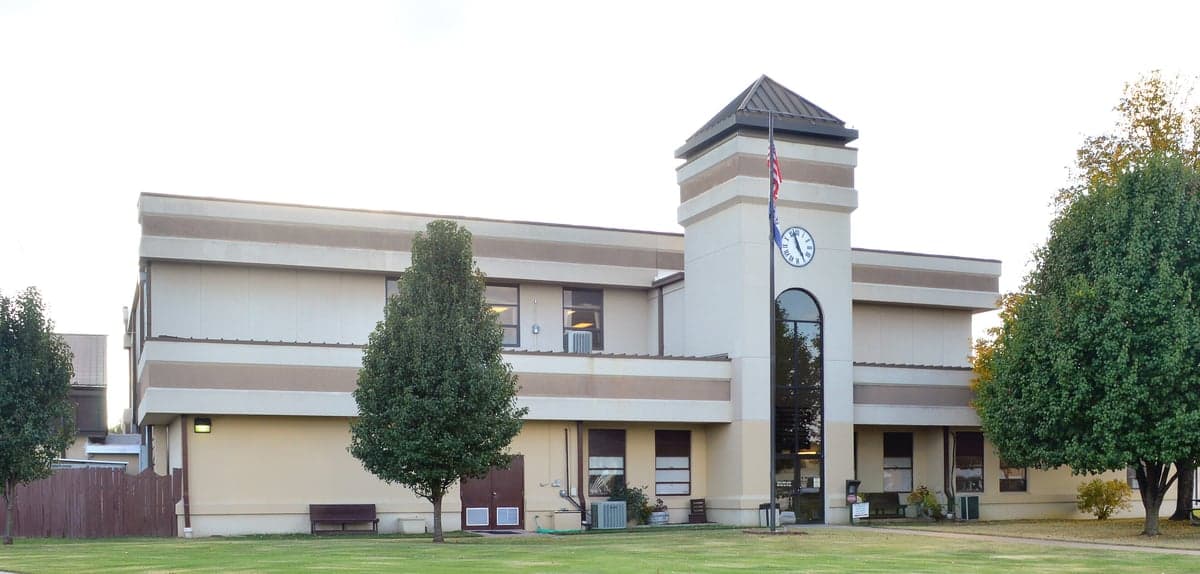
Photo: Wikipedia
Political ClimatePolitical Climate in Taney County
Showing county-level results — no local-only data available.
Lean and PVI are calculated from this county’s 2020 and 2024 presidential results, Cook-style.
Political rankings in Missouri
- Most Conservative Cities in Missouri
- Most Liberal Cities in Missouri
- Best Liberal-Leaning Towns in the Midwest
- Safest Liberal-Leaning Towns in the Midwest
- Safest Conservative-Leaning Towns in the Midwest
- Affordable Small Towns for Conservatives
- Most Affordable Liberal-Leaning Small Towns in the U.S.
- Safest Conservative-Leaning Cities in the U.S.
- Most Conservative Counties in Missouri
- Most Liberal Counties in Missouri
Local Political AnalysisPolitical Analysis of Taney County
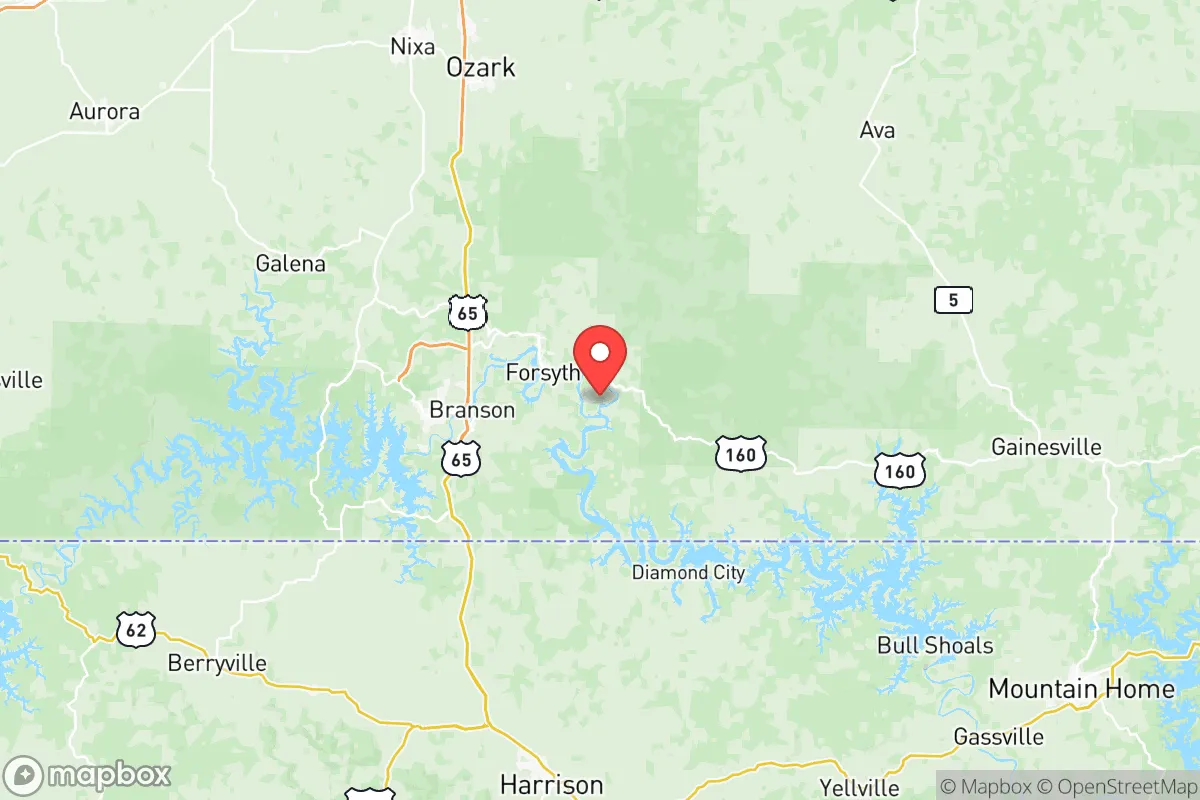
Taney County, Missouri, is deeply conservative, with a Cook Partisan Voting Index of R+21, making it significantly more Republican than the state of Missouri as a whole, which sits at R+8. This isn't a recent shift; the county has been a reliable GOP stronghold for decades, though the margin has widened in the last two presidential cycles as rural areas have moved further right. While the county as a whole is solidly red, there are subtle variations—Branson and the lakeside areas tend to be a bit more moderate, while towns like Forsyth and Kirbyville are among the most conservative precincts in the region.
How it compares
To put the R+21 rating in perspective, Taney County votes Republican by a margin roughly 13 points higher than the state average. In the 2024 presidential election, Donald Trump likely carried the county by around 70-75% of the vote, compared to about 58-60% statewide. This isn't just about presidential races; it holds true down the ballot. The county's state representatives and senators are almost uniformly Republican, and local offices like sheriff, county commissioner, and prosecutor are typically uncontested in the general election. The real political action happens in the Republican primary. For a liberal resident, this means their vote in the general election has little practical impact on local outcomes, though they can still influence primary races by crossing over. For a conservative resident, the county's lean means their values are reflected in local policy—from lower taxes to Second Amendment protections—without much pushback.
What this means for residents
For day-to-day life, the political climate translates into a government that is generally small, low-tax, and hands-off. Property taxes are among the lowest in the state, and there's little appetite for new regulations on businesses or homeowners. The county commission tends to prioritize tourism infrastructure (roads, sewer, and water for the Branson area) over social programs. Liberal residents often find themselves in the minority on local issues, but they aren't silenced—Branson itself has a small but visible progressive community, and the county's growing retiree and remote-worker population has brought a slightly more diverse set of views. Conservative residents, meanwhile, enjoy a sense of cultural alignment: churches are central to community life, gun rights are widely respected, and political signs for Republican candidates are a common sight from Hollister to Rockaway Beach.
Culturally, Taney County stands apart from Missouri's more urbanized areas like St. Louis or Kansas City. There's a strong libertarian streak here—people generally want to be left alone by government, whether that's about business licenses, land use, or mask mandates. The county's reliance on tourism (Branson alone draws millions of visitors annually) also creates a unique dynamic: locals are welcoming to outsiders but protective of their rural way of life. You'll see "Keep Taney County Free" bumper stickers alongside "Support Our Troops" flags. The trajectory is toward continued conservatism, but with a slow, subtle diversification as more out-of-state retirees and remote workers move in—many of whom are conservative themselves, but bring different expectations about services and amenities. The next decade will likely see the county remain deeply red, but with more internal debate about growth, development, and how to balance tourism with preserving the natural beauty of the Ozarks.

State Political ClimatePolitical Climate in Missouri
State Political AnalysisPolitical Environment in the State
Missouri is a solidly Republican state with a Cook PVI of R+8, meaning it typically votes about eight points more Republican than the national average. Over the past 20 years, the state has shifted from a competitive purple state—where it voted for Bill Clinton in 1996 and was a key battleground in 2000 and 2004—to a reliably red one, driven by the rapid depopulation of its Democratic-leaning rural areas and the exurban growth around its two major metros. The dominant coalition is a mix of rural conservatives, suburban Republicans in the St. Louis and Kansas City exurbs, and a shrinking but still influential Democratic base concentrated in the urban cores and the Bootheel.
Urban vs. rural divide
The political map of Missouri is a textbook case of the urban-rural split. The state’s two major cities—St. Louis and Kansas City—are deep blue, with St. Louis City and County consistently delivering 70-80% of their votes to Democrats. However, the surrounding suburbs have been trending redder. For example, St. Charles County, just northwest of St. Louis, has become a Republican stronghold, voting +30 points for Trump in 2024, while Clay County (north of Kansas City) flipped from blue to red in the last decade. The rural areas—like the Ozarks around Springfield and the farmlands of northwest Missouri—are deeply conservative, often voting 75-80% Republican. The Bootheel, historically a Democratic stronghold due to its Southern roots and agricultural ties, has also shifted right, with counties like Dunklin and Pemiscot now reliably red. The only real blue outposts outside the metros are college towns like Columbia (home to the University of Missouri) and Rolla (Missouri S&T), which lean left but are surrounded by deep-red countryside.
Policy environment
Missouri’s policy environment is unmistakably conservative. The state has a flat income tax rate of 4.8% (with a scheduled phase-down to 4.5% by 2027), no estate tax, and a relatively low property tax burden compared to the national average. It is a right-to-work state (though the law was repealed by referendum in 2018, the legislature has since passed similar restrictions on union power). Education policy is dominated by school choice: Missouri has a robust charter school system in St. Louis and Kansas City, and a tax-credit scholarship program for private school tuition. The state is also a “Second Amendment Sanctuary” state, with no permit required to carry a concealed firearm. Election laws are moderately restrictive: voters must show a photo ID, and absentee voting requires an excuse, though no-excuse mail-in voting was expanded during COVID and remains in place. Healthcare policy is mixed—Missouri expanded Medicaid in 2021 via ballot initiative, but the legislature has resisted further expansion and has passed several abortion restrictions, including a near-total ban after 8 weeks (currently blocked by courts).
Recent policy direction
The last five years have seen Missouri accelerate its conservative trajectory. In 2021, the legislature passed a sweeping election integrity law (SB 42) that shortened the absentee voting window, banned ballot drop boxes, and required a notarized signature for mail-in ballots. In 2022, the state enacted a “Second Amendment Preservation Act” (SAPA) that purports to nullify federal gun laws, though it has been partially blocked by federal courts. On education, the 2023 “Parents’ Bill of Rights” (HB 634) requires schools to notify parents of any curriculum involving sexual orientation or gender identity and bans transgender girls from female sports. On property rights, Missouri has a strong “right to farm” constitutional amendment (passed in 2014) that protects agricultural practices from local regulation. On medical and bodily autonomy, the state has a near-total abortion ban (triggered by the Dobbs decision) with no exceptions for rape or incest, though a ballot initiative to restore abortion access is expected in 2024. On privacy and surveillance, Missouri passed a law in 2023 banning the use of facial recognition technology by law enforcement without a warrant. The overall direction is toward more state-level control over local policies, especially on guns, education, and election administration.
Civil unrest & political movements
Missouri has a history of visible political flashpoints. The 2014 Ferguson protests (in a suburb of St. Louis) after the shooting of Michael Brown sparked a national movement and led to the creation of the “Ferguson Commission” and some police reforms, though tensions remain high in the St. Louis region. On the right, the state has seen a strong “constitutional sheriff” movement, with several sheriffs refusing to enforce federal gun laws under SAPA. Immigration politics are less heated than in border states, but there have been localized controversies over sanctuary policies—St. Louis City and Kansas City have been labeled “sanctuary cities” by conservative groups, though they do not formally have such policies. Election integrity remains a hot topic: the 2020 election saw Trump win Missouri by 15 points, but conservative activists continue to push for further restrictions, citing baseless claims of fraud. The state has also seen a rise in “county supremacy” movements, where rural counties have passed resolutions asserting local control over federal lands and regulations. A new resident in a blue city like St. Louis will see occasional protests and a strong activist presence, while in a red suburb like O'Fallon or Lee's Summit, the political climate is quieter but deeply conservative.
Projection
Over the next 5-10 years, Missouri is likely to become even more Republican, but with a growing internal tension between its conservative rural base and its increasingly diverse urban areas. The state’s population is aging and slowly declining in rural counties, while the St. Louis and Kansas City suburbs are growing, particularly among younger families and remote workers. This could lead to a more moderate Republican Party in the suburbs, but the rural-dominated legislature will likely continue to push conservative policies on guns, abortion, and education. The biggest wildcard is the potential 2024 ballot initiative on abortion access—if it passes, it could shift the state’s political dynamics by mobilizing suburban women and younger voters. In-migration is modest, with most newcomers coming from other Midwestern states (Illinois, Kansas) and being slightly more conservative than the national average. A person moving to Missouri now should expect a state that is firmly red, with a legislature that is more conservative than the electorate, and a political culture that values local control, gun rights, and low taxes above all else.
For a new resident, the bottom line is this: if you’re conservative, you’ll find a state that aligns with your values on taxes, guns, and education, with a legislature that is actively pushing those priorities. If you’re liberal, you’ll find a state where your vote in statewide elections is largely symbolic, but where you can still find like-minded communities in St. Louis, Kansas City, or Columbia. The practical takeaway is that Missouri offers a low-cost, low-regulation environment with a strong sense of local identity, but the political climate is increasingly polarized between its urban and rural halves. Choose your county carefully—it will determine your daily experience more than the state’s overall lean.
* Values derived from national, state, county, city and local statistics and may differ in a specific area. Last updated: 2026-10-23T19:10:32.000Z
Narrative content on this page is AI-generated and may contain mistakes. Verify any details that matter before acting on them.
ReloMaps may earn a commission from affiliate links at no extra cost to you.

