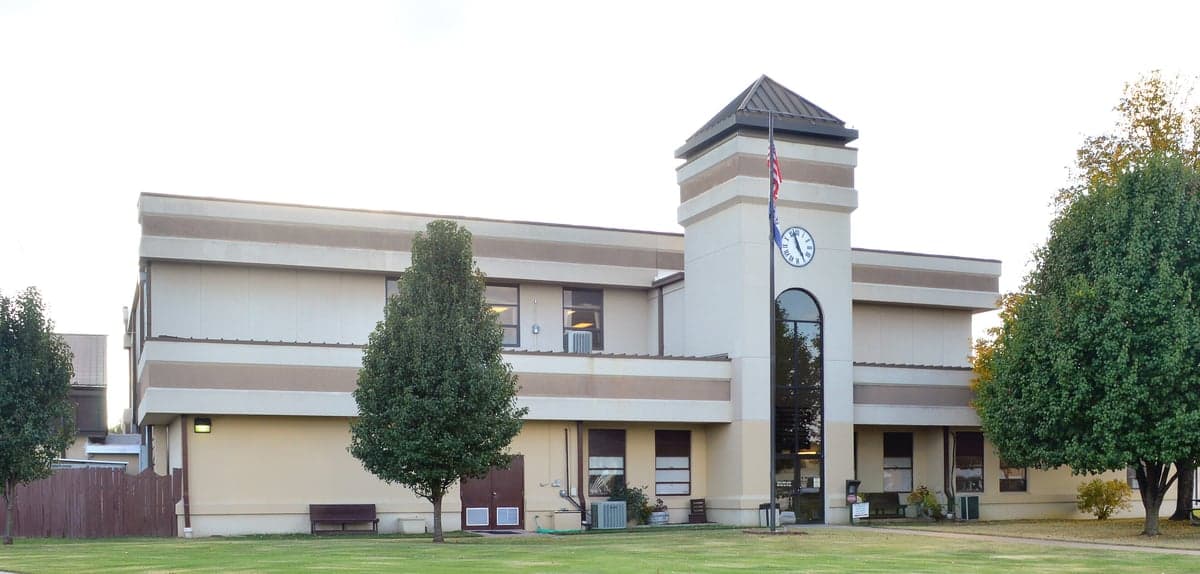
Photo: Wikipedia
Demographics of Taney County
Historical data isn't available for Taney County. Trends shown are for Missouri.
Affluence Level in Taney County
A middle-class area roughly in line with national averages across income, home values, education, and employment.
People of Taney County
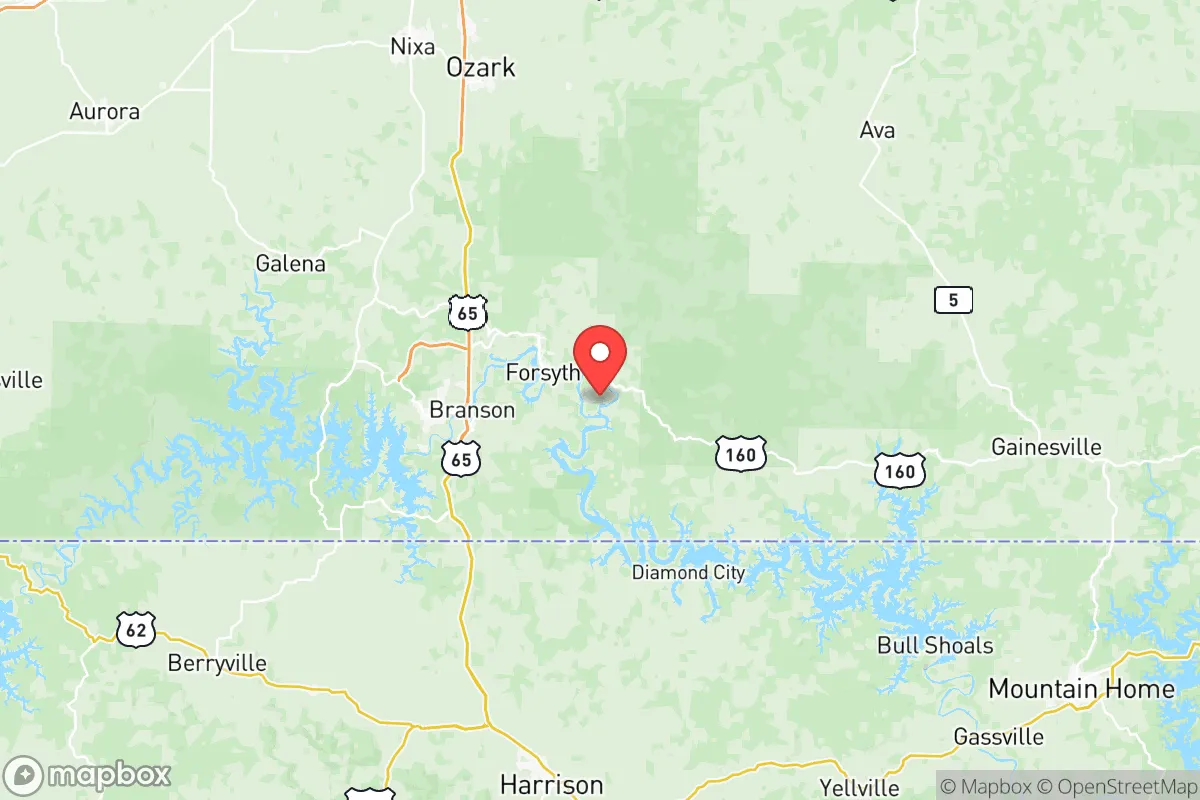
Taney County, Missouri, is home to roughly 56,382 residents, a population that remains predominantly white (85.6%) with a small but growing Hispanic community (7.5%) and a foreign-born share of just 1.3%. The county’s character is shaped by its dual identity: the historic, rural Ozark hill country around Forsyth and the tourist-driven, rapidly developing Branson area. This is a place where deep-rooted family lineages meet a steady stream of newcomers drawn by low taxes, lake recreation, and a conservative cultural climate.
Settlement & growth (pre-1960)
Long before European settlement, the Osage Nation controlled much of what is now Taney County, using the White River valley for hunting and seasonal camps. The Osage were forcibly removed through treaties in the early 1800s, opening the land to American settlers. The first permanent white settlers arrived in the 1830s and 1840s, primarily Scots-Irish and English families migrating from Kentucky, Tennessee, and the Upper South. These were subsistence farmers and hunters who valued independence and self-reliance, traits still associated with Ozark culture today.
The county was formally organized in 1837, named after Roger B. Taney, then Chief Justice of the U.S. Supreme Court. The first county seat was established at Forsyth, which remains a small but historic hub. The early economy revolved around timber, livestock, and small-scale agriculture along the White River and its tributaries. The Civil War deeply divided the region, with guerrilla warfare and bushwhackers leaving lasting scars; many families lost land and livestock, and recovery took decades.
After the war, the population grew slowly but steadily. The arrival of the railroad in the late 19th century connected Taney County to national markets, and small towns like Branson, Hollister, and Rockaway Beach began to emerge as trading posts and summer retreats. The construction of Powersite Dam on the White River in 1913 created Lake Taneycomo, transforming the local economy from farming to tourism. Branson, in particular, began its long evolution from a quiet railroad town into a live-entertainment destination, a process that accelerated after World War II.
Through the 1950s, Taney County remained overwhelmingly white, native-born, and rural. The population was concentrated in small communities like Kirbyville, Walnut Shade, and Cedar Creek, with most residents working in agriculture, timber, or seasonal tourism. There was no significant wave of European immigration to this part of Missouri; the county’s ethnic makeup was almost entirely old-stock American of British Isles descent.
Modern era (post-1965)
The post-1965 era in Taney County is defined not by international immigration but by domestic migration. The 1965 Hart-Cellar Act had minimal direct impact here—the foreign-born population remains just 1.3%, far below the national average. Instead, the county’s modern demographic story is one of Sun Belt-style growth driven by tourism, retirement, and lifestyle migration.
Branson’s explosive growth as a live-music and family-entertainment capital, beginning in the 1980s and peaking in the 1990s, drew workers and entrepreneurs from across the Midwest and South. The city’s population swelled, and new subdivisions spread across the hillsides. This growth also attracted a small but visible Hispanic workforce, many employed in construction, hospitality, and service industries. The Hispanic share of the county’s population now stands at 7.5%, up from negligible levels in 1980. These families are concentrated in and around Branson and Hollister, where affordable housing and job opportunities are most accessible.
Retirees from the Midwest—particularly Illinois, Iowa, and Kansas—have been a major source of growth, settling in lakefront communities like Table Rock, Kimberling City, and Indian Point. These are predominantly white, middle-class, and politically conservative, reinforcing the county’s existing cultural character. The Black population remains very small at 1.4%, and East/Southeast Asian communities account for just 0.8%, with Indian-subcontinent residents at 0.2%. These groups are largely concentrated in Branson, often in professional or service roles tied to the tourism industry.
The county’s college-educated share is 25.4%, below the national average, reflecting the region’s blue-collar and service-oriented economy. However, the influx of retirees and remote workers since the COVID-19 pandemic has begun to raise that figure, particularly in the Branson and Forsyth areas.
The future
Taney County’s population is projected to continue growing, driven by domestic migration from the Midwest and West Coast. The county is becoming slightly more diverse, primarily through the growth of the Hispanic population, which is expected to rise from 7.5% to perhaps 10-12% over the next decade. This growth is concentrated in Branson and Hollister, where Hispanic-owned businesses and churches are becoming more visible.
The white population, while still the overwhelming majority, is aging. Younger families are moving in, but they are often priced out of lakefront property and settling in more affordable inland areas like Forsyth and Kirbyville. The county’s cultural identity—conservative, family-oriented, and rooted in Ozark traditions—is likely to persist, though it will be tempered by the influence of newcomers from more urban and suburban backgrounds.
Remote work and the rise of Branson as a second-home market are pushing development further into the countryside, with new subdivisions appearing near Walnut Shade and along Highway 65. The county is unlikely to see significant growth in Asian, Black, or Indian populations, as the economy and social networks do not currently attract those groups in large numbers. The foreign-born share will remain low, though the Hispanic community will continue to expand.
Taney County is becoming a more diverse, more suburban version of its former self, but it remains deeply conservative, overwhelmingly white, and culturally tied to the Ozarks. For someone moving in now, the county offers a low-cost, low-tax environment with strong community ties and abundant outdoor recreation, but with limited racial or ethnic diversity and a population that skews older and less educated than the national average. The character of the place is stable, but the growth is real—and it is reshaping the landscape one subdivision at a time.

* Values derived from national, state, county, city and local statistics and may differ in a specific area. Last updated: 2026-10-23T19:10:32.000Z
Narrative content on this page is AI-generated and may contain mistakes. Verify any details that matter before acting on them.
ReloMaps may earn a commission from affiliate links at no extra cost to you.

