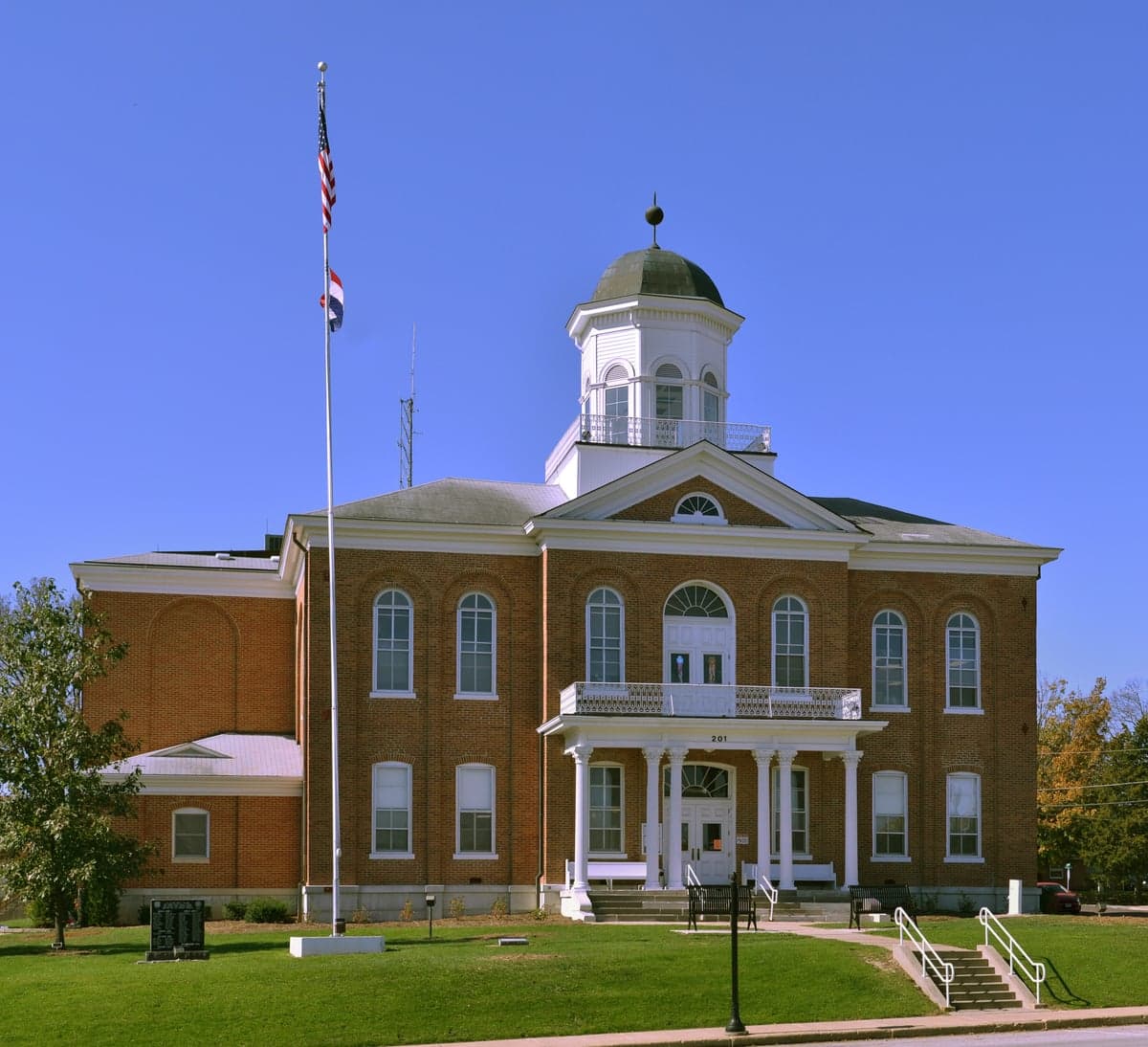
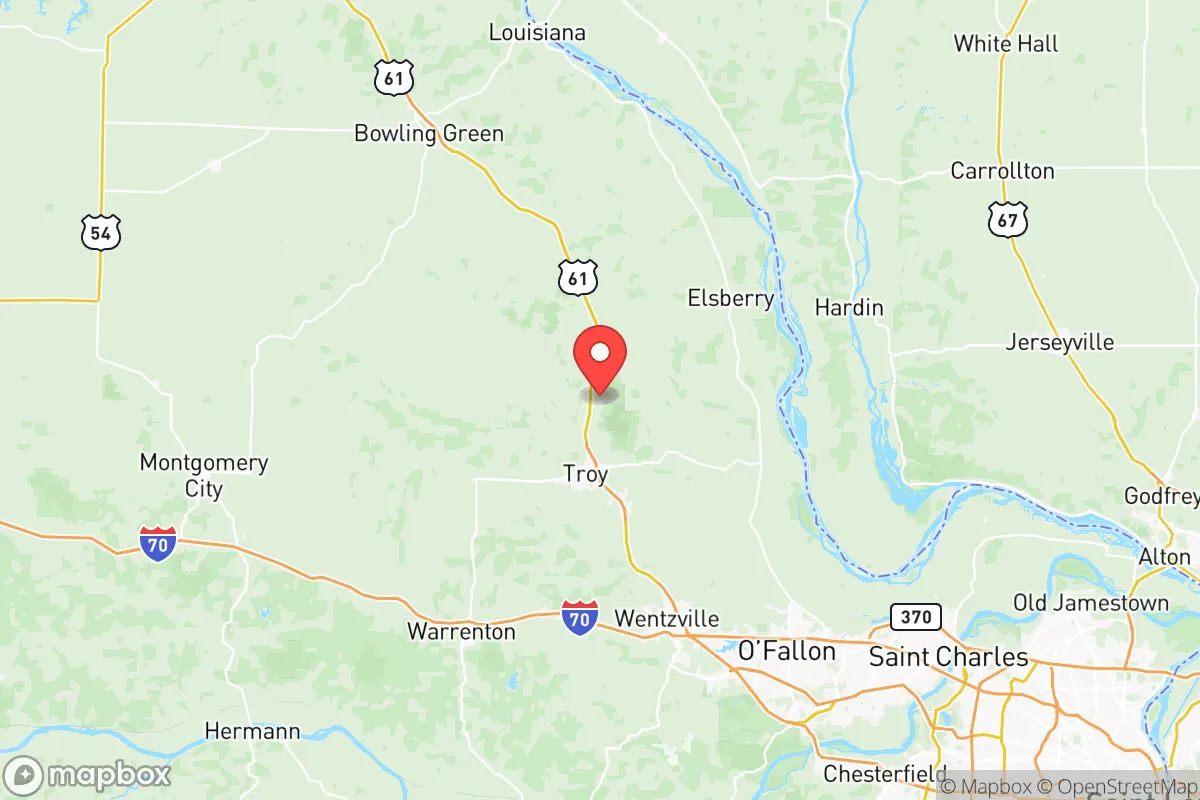
Photo: Wikipedia
Demographics of Lincoln County
Affluence Level in Lincoln County
A middle-class area roughly in line with national averages across income, home values, education, and employment.
People of Lincoln County
The people of Lincoln County, Missouri, today are a predominantly white, native-born population of roughly 61,600 residents, characterized by a strong rural and small-town identity rooted in 19th-century German and Southern settlement. With a foreign-born share of just 0.5% and a population that is 92.1% white, the county remains one of the least ethnically diverse in the St. Louis metro area. Its distinctive markers include a deep connection to agriculture, a growing commuter presence from the St. Louis exurbs, and a conservative-leaning political culture that reflects its historic settlement patterns. The county seat of Troy and the largest city of Moscow Mills anchor a population that is slowly suburbanizing, yet retains a distinctly rural character.
Settlement & growth (pre-1960)
Before American settlement, the area now known as Lincoln County was inhabited by the Osage and Missouri Native American nations, who used the region for hunting and seasonal camps along the Mississippi River and its tributaries. French fur traders and trappers passed through the area in the 18th century, but no permanent European settlements were established until after the Louisiana Purchase of 1803. The first American settlers arrived in the 1810s and 1820s, primarily from Kentucky, Tennessee, and Virginia—a wave of Scots-Irish and English migrants who followed the Boone's Lick Trail into the Missouri Territory. These early settlers established the first permanent communities, including Troy (founded 1819), which became the county seat, and Elsberry (founded 1820), both of which served as trading and agricultural hubs along the Mississippi River.
A second, more transformative wave arrived in the 1830s and 1840s: German immigrants, many of them from the Rhine region and Bavaria, who were drawn by the promise of cheap land and the establishment of the Missouri German Settlement Society. These settlers founded Old Monroe (1836) and Foley (1840), and their descendants remain a strong cultural presence in the county today. The Germans brought with them a tradition of family farming, Lutheran and Catholic church life, and a preference for small, independent landholdings that shaped the county's rural landscape. By 1850, German-born residents made up roughly 15-20% of Lincoln County's population, a share that held steady through the late 19th century.
The post-Civil War period saw a modest influx of freed African Americans, who settled primarily in Winfield (founded 1857) and the southern part of the county near the Mississippi River, working as sharecroppers and farm laborers. However, the Black population never exceeded 5% of the total, and by 1900 it had declined to around 3% as many left for St. Louis or other urban centers. The late 19th and early 20th centuries brought no major new immigrant groups; instead, the county's population grew slowly through natural increase and internal migration from other parts of Missouri and the Midwest. The arrival of the railroad in the 1870s spurred the founding of Moscow Mills (1870) and Silex (1880), both of which became shipping points for grain, livestock, and timber. By 1960, Lincoln County's population stood at just 14,000, overwhelmingly white, native-born, and employed in agriculture or small-town commerce.
Modern era (post-1965)
The 1965 Hart-Cellar Act had virtually no direct impact on Lincoln County. The county's foreign-born population remained below 1% through the 1970s and 1980s, and it stands at just 0.5% today. Instead, the major demographic shift of the modern era has been domestic: the gradual suburbanization of the St. Louis metro area. Beginning in the 1980s and accelerating after 2000, families seeking lower housing costs, larger lots, and a slower pace of life began moving east from St. Charles and St. Louis counties into Lincoln County. This wave has been overwhelmingly white and middle-class, drawn by new subdivisions in Troy and Moscow Mills, which have seen the fastest population growth in the county. The population more than doubled between 1990 and 2020, from 22,000 to 61,636.
The Hispanic population, while still small at 2.8%, has grown from near-zero in 1990, driven primarily by Mexican and Central American workers in agriculture, construction, and food processing. These families have concentrated in Elsberry and Troy, where a small but visible Hispanic community has formed around Catholic parishes and seasonal labor. The Black population, at 1.7%, has remained stable and is concentrated in Winfield and the southern part of the county, with some newer arrivals from St. Louis seeking lower crime rates and better schools. East and Southeast Asian residents, at 0.3%, are a tiny presence, mostly professionals and business owners in Troy and Moscow Mills. The Indian-subcontinent population is statistically negligible at 0.0%.
The most significant cultural shift has been the influx of exurban commuters, who have brought with them a more suburban, consumer-oriented lifestyle that sometimes clashes with the county's traditional agricultural identity. The share of college-educated adults is just 18.4%, well below the national average of 33%, reflecting the county's continued reliance on blue-collar and service-sector employment. Politically, the county has moved sharply to the right: Lincoln County voted +45 points Republican in the 2024 presidential election, a shift from the +20-point margins of the 1990s, as new arrivals have reinforced the existing conservative culture.
The future
Lincoln County is projected to continue growing at a moderate pace, reaching roughly 70,000-75,000 residents by 2040, driven primarily by continued exurban spillover from St. Charles County. The population will likely remain overwhelmingly white, with the Hispanic share slowly rising to perhaps 4-5% as agricultural and construction labor demand persists. The Black and Asian shares are expected to remain below 3% each, as the county lacks the urban amenities, job diversity, and housing stock that attract more diverse populations. New subdivisions will continue to spread along the Highway 61 corridor between Troy and Moscow Mills, while the more remote towns of Elsberry, Foley, and Silex will see slower growth and gradual population aging.
Culturally, the county is becoming more suburban but not more diverse. The tension between long-time farming families and new commuters will likely persist, manifesting in debates over land use, school funding, and local ordinances. The county's political identity will remain solidly conservative, with the new arrivals reinforcing rather than challenging the existing partisan lean. The small Hispanic community may grow modestly but is unlikely to reach a critical mass that would shift the county's cultural or political dynamics.
For someone moving in now, Lincoln County offers a stable, low-cost, and safe environment with strong community ties and a predictable cultural landscape. It is a place where the population is growing but not diversifying, where the past is still visible in the German-named towns and family farms, and where the future looks much like the present—only with more subdivisions and longer commutes to St. Louis.

* Values derived from national, state, county, city and local statistics and may differ in a specific area. Last updated: 2026-11-15T07:14:52.000Z
Narrative content on this page is AI-generated and may contain mistakes. Verify any details that matter before acting on them.
ReloMaps may earn a commission from affiliate links at no extra cost to you.

