
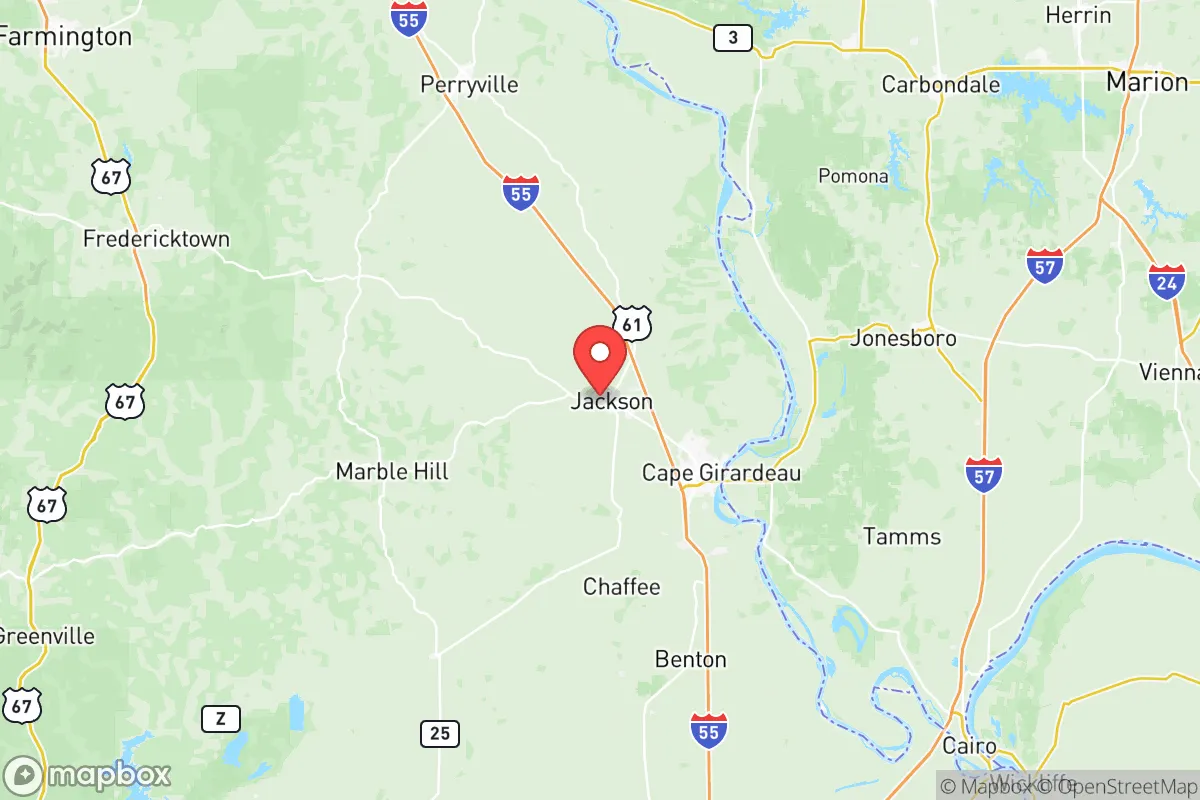
Photo: Wikipedia
Personal Sovereignty in Cape Girardeau County
Strong independent fundamentals that actively favor personal liberty and low regulation.
What does Personal Sovereignty tell us?
Personal Sovereignty measures your capacity for self-reliance and independence with minimal government friction. Higher scores mean fewer barriers between you and the way you want to live... but it assumes you have the space you need and good neighbors.
What does this tell us?
Personal Sovereignty measures your capacity for self-reliance and independence with minimal government friction. Higher scores mean fewer barriers between you and the way you want to live... but it assumes you have the space you need and good neighbors.
State Policy
Energy independence: Importer (15% of energy produced in-state)
Personal Liberty
Homesteading

Personal Liberty Analysis
Cape Girardeau County offers a notably high degree of personal sovereignty, grounded in Missouri’s strong constitutional protections for gun rights, low tax burden, and a regulatory environment that generally favors individual autonomy over government oversight. The county’s legal and cultural framework consistently prioritizes self-reliance, from permissive self-defense laws to minimal zoning restrictions in unincorporated areas, making it a compelling option for those seeking to minimize external control over their daily lives. This analysis examines the specific factors that shape personal freedom in the county, with attention to how these vary across its communities.
Tax burden and regulatory posture: How light is the government footprint?
Missouri ranks among the most tax-friendly states in the U.S., and Cape Girardeau County reflects that posture. The state’s income tax is a flat 4.95% as of 2026, with no local income tax in the county. Property taxes are low by national standards, with the county’s effective rate averaging around 0.8% of assessed home value—roughly half the national average. Sales tax in Cape Girardeau city is 8.35%, but drops to 7.35% in unincorporated areas like Burfordville and Dutchtown, where county-only rates apply. The regulatory environment is similarly light: Missouri is a right-to-work state, and Cape Girardeau County has no county-level business licensing requirements beyond basic state registration. Zoning is minimal outside incorporated cities; in unincorporated areas like Whitewater and Gordonville, land use is governed primarily by state health and environmental codes rather than local ordinances. This creates a notably low administrative burden for individuals seeking to start a home business, build a workshop, or keep livestock—activities that would face far more scrutiny in more regulated counties.
Self-defense and gun law specifics: What the Second Amendment means here
Missouri is a constitutional carry state, meaning no permit is required to carry a concealed firearm for anyone 19 or older (18 with military service). Cape Girardeau County fully aligns with this framework. The county sheriff’s office issues concealed carry permits for reciprocity purposes, but there is no local waiting period, no firearm registration, and no red flag law—Missouri explicitly preempts local governments from enacting stricter gun ordinances. In practice, this means a resident in Jackson or Cape Girardeau city can legally carry a firearm in most public spaces, including parks and restaurants that serve alcohol (unless posted). Stand-your-ground and castle doctrine laws are fully in effect, with no duty to retreat in any place where a person has a legal right to be. The county’s gun culture is deeply embedded: shooting ranges like the Cape Girardeau County Shooting Range near Oak Ridge are well-used, and firearm ownership is common across all demographics. For a reader prioritizing self-defense autonomy, this is one of the most permissive legal environments in the Midwest.
Self-reliance and homesteading viability: Lot sizes, zoning, and off-grid feasibility
Homesteading and off-grid living are genuinely viable in Cape Girardeau County, particularly outside its incorporated cities. In unincorporated areas, there are no county-wide minimum lot size requirements for residential use—state health codes for septic systems effectively set the floor at 1-3 acres depending on soil type, but larger parcels are common. Zoning is virtually absent in townships like Apple Creek and Byrd, where residents can keep chickens, goats, or horses without permits, and where building a detached workshop or greenhouse requires no county approval. Off-grid feasibility is high: Missouri has no state law prohibiting rainwater collection, and solar panel installation is unrestricted by county code. The Old Appleton area, with its rural character and low population density, is particularly suited for those seeking energy independence. However, within Cape Girardeau city limits, zoning is more restrictive—livestock is generally prohibited on lots under 2 acres, and building permits are required for most structures. For maximum homesteading autonomy, Millersville and Pocahontas offer the lightest regulatory touch, with large parcels and minimal oversight.
Personal liberties: Parental rights, medical autonomy, speech, and property
Missouri law provides strong protections for parental rights, including a 2021 statute affirming parents’ “fundamental right” to direct their children’s education, healthcare, and religious upbringing. Cape Girardeau County’s school districts—including Cape Girardeau Public Schools and Jackson R-II—generally defer to parental authority on curriculum objections and opt-out requests. Medical autonomy is more complex: Missouri has not expanded Medicaid under the ACA (as of 2026), and the state’s abortion ban (triggered in 2022) is among the strictest in the nation, with no exceptions for rape or incest. For those who prioritize medical freedom, this means limited reproductive healthcare options within the county; the nearest abortion provider is in St. Louis, about 120 miles north. Speech protections are robust under both the U.S. and Missouri constitutions, with no county-level restrictions on public expression. Property rights are strongly protected: Missouri’s “takings” law requires just compensation for any regulatory action that diminishes property value by 50% or more, and Cape Girardeau County has no county-wide rent control or short-term rental bans. In Delta and Allenville, property owners can generally use their land as they see fit, subject only to state environmental and health codes.
Overall, Cape Girardeau County ranks among the more sovereignty-friendly areas in the Midwest, particularly for those who value gun rights, low taxes, and minimal zoning. Its regulatory posture is lighter than in St. Louis County or Boone County, but heavier than in more remote rural counties like Shannon or Oregon. For a reader seeking a balance of personal autonomy with access to regional amenities—healthcare, shopping, and interstate connectivity—the county offers a practical middle ground. The key variable is location: choosing Jackson or Cape Girardeau city means accepting some municipal oversight, while Whitewater or Gordonville provide near-total freedom from local government interference. For those who prioritize self-reliance above all else, the unincorporated townships of Cape Girardeau County deliver a level of personal sovereignty that is increasingly rare in modern America.

* Values derived from national, state, county, city and local statistics and may differ in a specific area. Last updated: 2026-06-15T10:44:05.000Z
Narrative content on this page is AI-generated and may contain mistakes. Verify any details that matter before acting on them.
ReloMaps may earn a commission from affiliate links at no extra cost to you.

