Photo: Wikipedia
Demographics of Cape Girardeau County
Affluence Level in Cape Girardeau County
A middle-class area roughly in line with national averages across income, home values, education, and employment.
People of Cape Girardeau County
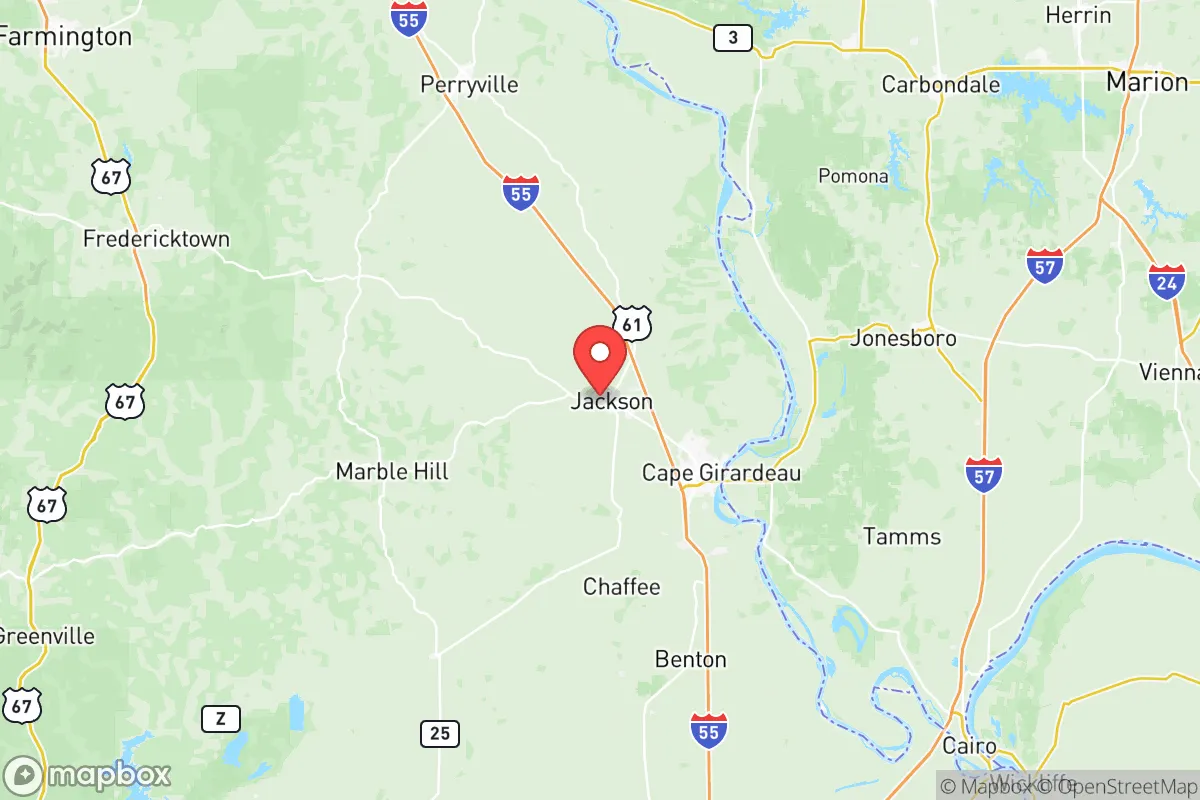
Cape Girardeau County’s 82,180 residents today form a community that is predominantly white (84.1%) and native-born (only 1.3% foreign-born), with a notable Black minority (8.1%) and small but growing Hispanic (2.8%) and East/Southeast Asian (0.9%) populations. The county’s character is rooted in its Mississippi River border location, a blend of historic river town culture and modern suburban expansion from the city of Cape Girardeau outward. With 33.9% of adults holding a college degree, the population is moderately educated, reflecting the presence of Southeast Missouri State University and a regional healthcare economy centered on Saint Francis Medical Center and SoutheastHEALTH.
Settlement & growth (pre-1960)
Long before European arrival, the area that is now Cape Girardeau County was home to the Mississippian culture and later the Osage and Delaware nations, who used the Mississippi River bluffs as hunting and trading grounds. French fur traders established a small settlement at present-day Cape Girardeau around 1733, naming it after a rocky promontory (cap) on the river. The Spanish took nominal control after 1763, but the population remained sparse—a mix of French-Canadian voyageurs and a few enslaved Africans—until the Louisiana Purchase of 1803 brought American settlers flooding in.
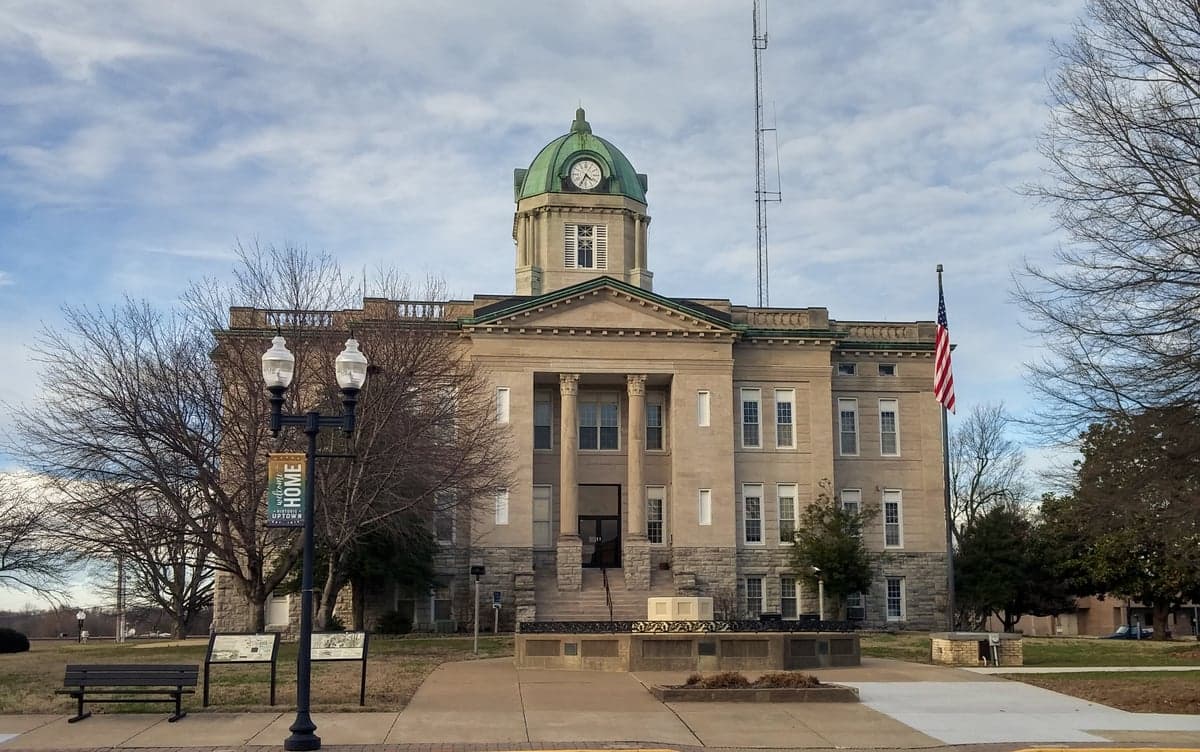
The first major American wave arrived between 1805 and 1830: Scots-Irish and English migrants from Kentucky, Tennessee, and Virginia, drawn by cheap federal land grants and the promise of fertile Mississippi bottomlands. They established farms and small river landings at Jackson (founded 1814 as the county seat), Dutchtown, and Burfordville. By 1820, the county’s population had reached roughly 5,000, with a small enslaved Black population working cotton and tobacco fields along the river.
The second transformative wave came from German immigrants between 1840 and 1880. Lured by the region’s cheap land and the promise of a new life after the failed 1848 revolutions, Germans settled heavily in the northern and central parts of the county. They founded Altenburg (1839) and Frohna (1839) as part of the Lutheran Saxon immigration, and later established farming communities at Oak Ridge and Whitewater. These German settlers brought a strong work ethic, Lutheran church traditions, and a preference for diversified family farms over the cotton monoculture of the Deep South. By 1880, Germans and their descendants made up roughly a third of the county’s population.
The post-Civil War period saw the arrival of freed African Americans, who moved from rural plantations into the county’s towns, particularly Cape Girardeau and Jackson, where they found work as laborers, domestic servants, and railroad workers. The Black population peaked at around 15% of the county total in 1900 before declining through the Great Migration northward. Meanwhile, the county’s economy shifted from agriculture to manufacturing and river commerce, with the railroad arriving in the 1850s and the bridge across the Mississippi completed in 1928, connecting Cape Girardeau to Illinois and the eastern markets.
No significant new immigrant groups arrived between 1900 and 1960. The Dust Bowl and Great Depression brought a small number of Ozark hill-country migrants (often called “hillbillies” at the time) from southern Missouri and Arkansas, but they were culturally similar to the existing Scots-Irish population. The county’s population grew slowly but steadily, reaching 42,000 by 1950, with the city of Cape Girardeau emerging as the dominant commercial and educational hub.
Modern era (post-1965)
The 1965 Hart-Cellar Act had a minimal direct impact on Cape Girardeau County. Unlike coastal or Sun Belt metros, the county attracted very few post-1965 immigrants. The foreign-born population today is just 1.3%, far below the national average of 13.7%. The small East/Southeast Asian community (0.9%) consists largely of Vietnamese and Filipino families who arrived in the 1980s and 1990s, many as medical professionals recruited by Saint Francis Medical Center and SoutheastHEALTH. They concentrate in Cape Girardeau proper, near the hospital campuses. The Indian-subcontinent population (0.5%) is even smaller, primarily professionals in healthcare and information technology, also clustered in Cape Girardeau.
The Hispanic population (2.8%) has grown steadily since 2000, driven by Mexican and Central American immigrants working in agriculture (especially the region’s large poultry and hog operations), construction, and food processing. They are dispersed across the county, with small concentrations in Jackson and Gordonville, where seasonal farm labor has transitioned into permanent settlement. The Black population (8.1%) has remained relatively stable, with most Black residents living in Cape Girardeau and Jackson, where historic neighborhoods like the “North End” in Cape Girardeau retain a strong community identity.
Domestic migration has reshaped the county more than immigration. Since the 1990s, the county has attracted retirees and remote workers from St. Louis (about 100 miles north) and Chicago, drawn by lower housing costs, the Mississippi River lifestyle, and the region’s conservative cultural climate. Suburbanization has pushed growth south and east of Cape Girardeau, with new subdivisions in Scott City and unincorporated areas near I-55. The county’s population grew by 8% between 2010 and 2020, outpacing the state average, as the city of Cape Girardeau itself has become a regional hub for healthcare, education, and retail.
The future
Cape Girardeau County is likely to become slightly more diverse over the next 10–20 years, but it will remain overwhelmingly white and native-born. The Hispanic population is projected to grow to 4–5% by 2040, driven by natural increase and continued labor migration into agriculture and construction. The East/Southeast Asian and Indian populations will grow slowly, primarily through professional recruitment by the healthcare sector. The Black population share is expected to remain stable or decline slightly, as younger Black residents continue to leave for larger metros with more economic opportunities.
The county’s cultural identity is evolving from a quiet river-and-farming community into a more suburban, service-oriented region. New residents from St. Louis and Chicago are bringing slightly more diverse political and social views, but the county’s conservative lean remains strong. The biggest demographic challenge is aging: the median age is 38.5, and the 65+ population is growing faster than the under-18 population, which will strain healthcare and social services. Growth will continue to concentrate in Cape Girardeau and along the I-55 corridor, while rural towns like Altenburg and Frohna will likely see population stagnation or decline.
For someone moving in now, Cape Girardeau County offers a stable, low-crime, family-oriented environment with a strong sense of local identity and a cost of living well below the national average. The trade-off is limited diversity, a slow pace of change, and a cultural landscape that remains deeply rooted in its German and Scots-Irish heritage. It is a place where newcomers are welcomed but expected to adapt to existing norms, not transform them.

* Values derived from national, state, county, city and local statistics and may differ in a specific area. Last updated: 2026-06-15T10:44:05.000Z
Narrative content on this page is AI-generated and may contain mistakes. Verify any details that matter before acting on them.
ReloMaps may earn a commission from affiliate links at no extra cost to you.

