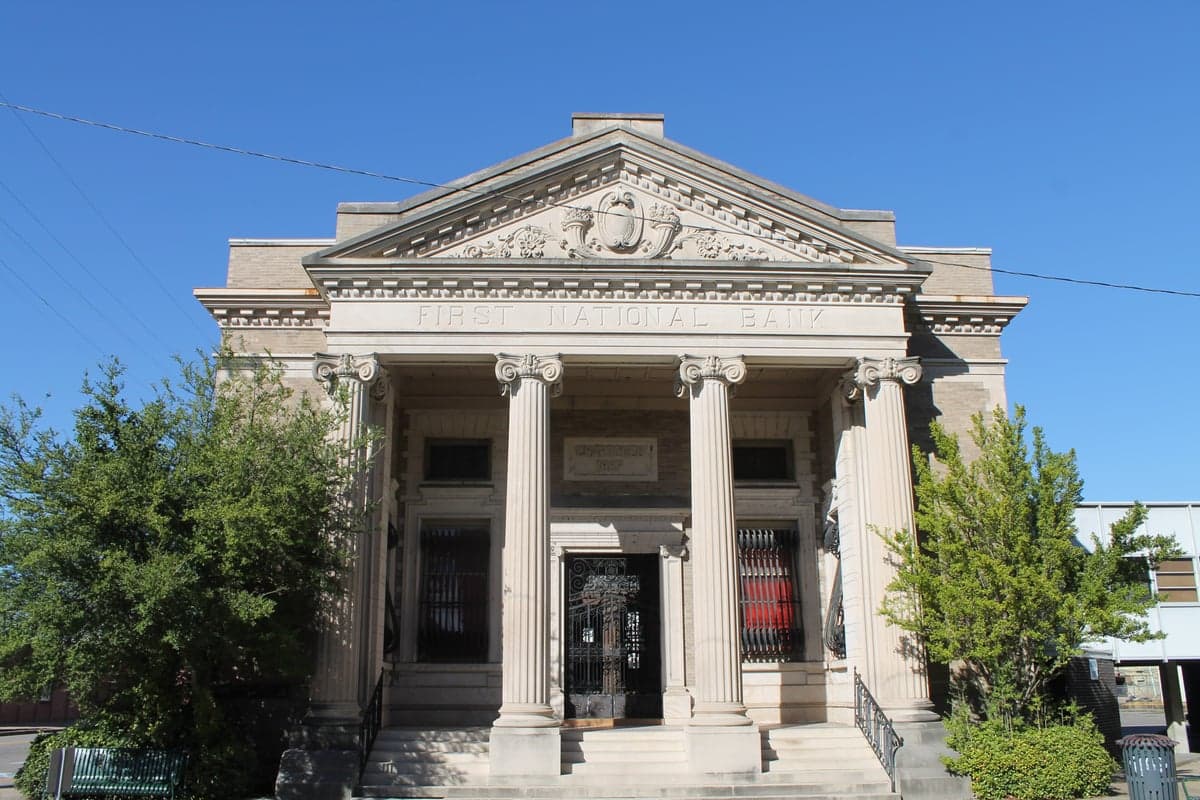
Photo: Wikipedia
Demographics of Washington County
Affluence Level in Washington County
A below-average socioeconomic profile. Incomes, home values, and educational attainment trail the U.S., with higher poverty and unemployment.
People of Washington County
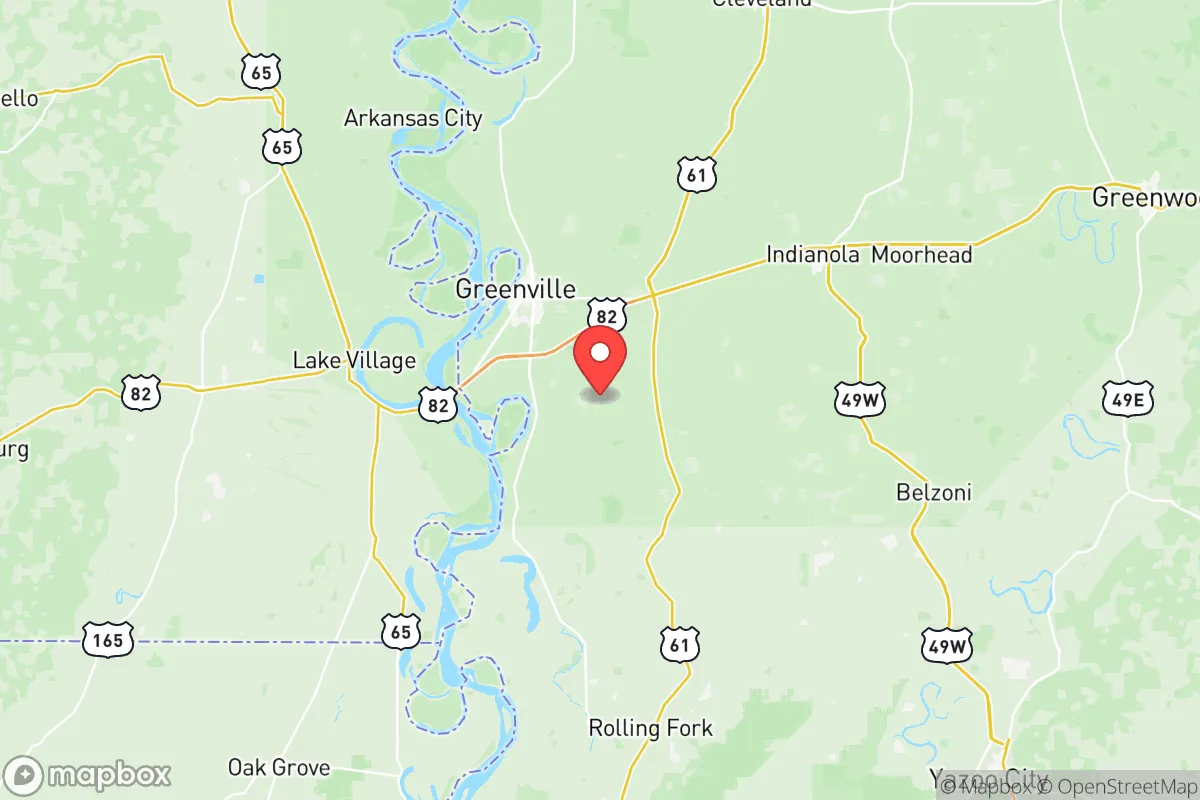
The people of Washington County, Mississippi today form a predominantly Black community (72.0% of the population), concentrated in the historic Delta region along the Mississippi River. With a total population of 43,674, the county is notably less diverse than the national average—only 0.2% foreign-born—and retains a strong sense of place rooted in the agricultural and cultural legacy of the Mississippi Delta. The county seat of Greenville serves as the demographic and economic hub, while smaller towns like Leland, Hollandale, and Arcola anchor rural communities shaped by generations of cotton farming, the blues, and the civil rights movement.
Settlement & growth (pre-1960)
Before European contact, the area now known as Washington County was inhabited by the Tunica and Choctaw peoples, who lived in villages along the Mississippi River and its tributaries. The French explored the region in the late 17th century, but permanent European settlement did not begin until the early 19th century, after the United States acquired the territory through the Louisiana Purchase (1803) and the subsequent Treaty of Doak's Stand (1820) forced the Choctaw to cede their lands. Washington County was formally established in 1827, named after George Washington, and its early economy was built on cotton plantations worked by enslaved African Americans.
The first major wave of settlers were Anglo-American planters from the Upper South—Virginia, North Carolina, and Tennessee—who arrived in the 1820s and 1830s, drawn by the fertile alluvial soil of the Delta. They established large plantations along the Mississippi River, with Greenville (founded 1824) emerging as the county's commercial center. By 1860, enslaved Black people made up the vast majority of the county's population, a pattern that persisted after emancipation. Following the Civil War, many freedmen remained in the area as sharecroppers and tenant farmers, forming the foundation of the county's Black majority.
The late 19th and early 20th centuries saw the arrival of European immigrants, though in smaller numbers than in other parts of the South. Italian immigrants came to the Delta in the 1890s and early 1900s, many working as laborers on plantations or opening small businesses in Greenville and Leland. A small Jewish community also settled in Greenville, primarily of German and Eastern European origin, establishing retail stores and contributing to the town's commercial life. However, the county's population remained overwhelmingly Black and white native-born, with the foreign-born share never exceeding a few percent.
The Great Migration (1910–1970) reshaped Washington County's demographics profoundly. Between 1940 and 1970, tens of thousands of Black residents left the Delta for industrial cities in the North and West—Chicago, Detroit, St. Louis—seeking better jobs and escaping Jim Crow segregation. This exodus, combined with the mechanization of cotton farming, caused the county's population to peak at around 70,000 in 1940 and then decline steadily. The white population also shrank, though less dramatically, as many planters and merchants moved to urban centers. By 1960, the county's population had fallen to 58,000, with Black residents still comprising roughly 65% of the total.
Modern era (post-1965)
The 1965 Hart-Cellar Act, which eliminated national-origin quotas, had minimal impact on Washington County. Unlike major metropolitan areas that saw surges of immigration from Asia, Latin America, and Africa, the Mississippi Delta remained largely untouched by post-1965 immigration. The county's foreign-born population today stands at just 0.2%, one of the lowest rates in the United States. The small Asian and Indian populations—0.2% East/Southeast Asian and 0.6% Indian subcontinent—are concentrated almost entirely in Greenville, where a handful of professionals work in healthcare, education, and small business. The Hispanic population (1.5%) is also tiny, mostly employed in agricultural labor, with small clusters in Hollandale and Arcola.
The dominant demographic trend since 1965 has been continued out-migration of both Black and white residents. The county's population dropped from 58,000 in 1960 to 43,674 in 2020, a decline of roughly 25%. Young people, in particular, leave for college or jobs in Jackson, Memphis, or Atlanta, and many do not return. The white population has fallen from about 35% in 1960 to 24.1% today, while the Black share has risen from 65% to 72.0%, reflecting both higher birth rates among Black families and the disproportionate departure of white residents. The county's college-educated share (20.5%) is below the national average, and the economy remains heavily reliant on agriculture (cotton, soybeans, rice) and a small manufacturing base.
Suburbanization has been limited. Greenville remains the county's only city of significant size (population ~28,000), and its downtown has struggled with vacancy and disinvestment. The unincorporated areas and small towns like Leland (home to the Highway 61 Blues Museum) and Hollandale have seen population losses as well. The county's cultural identity is deeply tied to the blues—Greenville is the birthplace of musicians like Little Milton and Johnny Taylor—and to the legacy of the civil rights movement, which saw significant activism in the 1960s, including the 1965 march from Greenville to Jackson.
The future
Washington County's population is projected to continue declining slowly, as out-migration of young adults and low in-migration persist. The county is becoming less diverse in absolute terms, as the small white, Hispanic, and Asian populations shrink or age out. The Black majority is likely to grow as a share of the total, but the overall population will continue to age, with a rising median age (currently around 38). New residents are rare; most newcomers are either retirees returning to family roots or a small number of professionals in healthcare and education, often recruited to fill positions at Delta Health System or local schools.
The county's cultural identity is evolving slowly. The blues heritage remains a draw for tourists, and efforts to revitalize downtown Greenville—including the restoration of the historic Greenville Bridge and the development of the Mississippi Delta National Heritage Area—may attract some new investment. However, the lack of economic diversification and the region's reputation for poverty and racial tension limit growth. The next 10–20 years will likely see a continued slow decline, with the population stabilizing around 40,000, and the county remaining a predominantly Black, rural, and aging community.
For someone moving in now, Washington County offers a deeply rooted sense of place, a strong Black cultural heritage, and a low cost of living, but also limited economic opportunity, a shrinking population, and a demographic profile that is unusually homogeneous by national standards. It is a place where history is still very much alive, but where the future depends on reversing decades of out-migration and attracting new residents to a region that has long been one of America's most isolated.

* Values derived from national, state, county, city and local statistics and may differ in a specific area. Last updated: 2026-07-02T02:32:50.000Z
Narrative content on this page is AI-generated and may contain mistakes. Verify any details that matter before acting on them.
ReloMaps may earn a commission from affiliate links at no extra cost to you.

