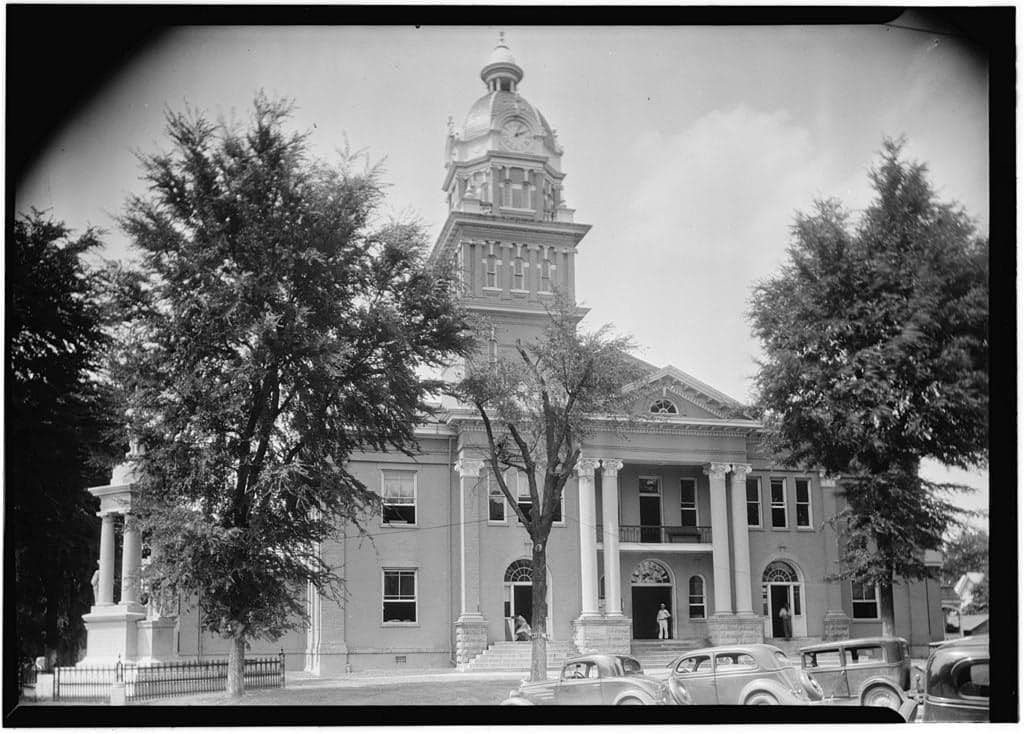
Photo: Wikipedia
Political ClimatePolitical Climate in Lowndes County
Showing district-level results — no local-only data available.
Local Political AnalysisPolitical Analysis of Lowndes County
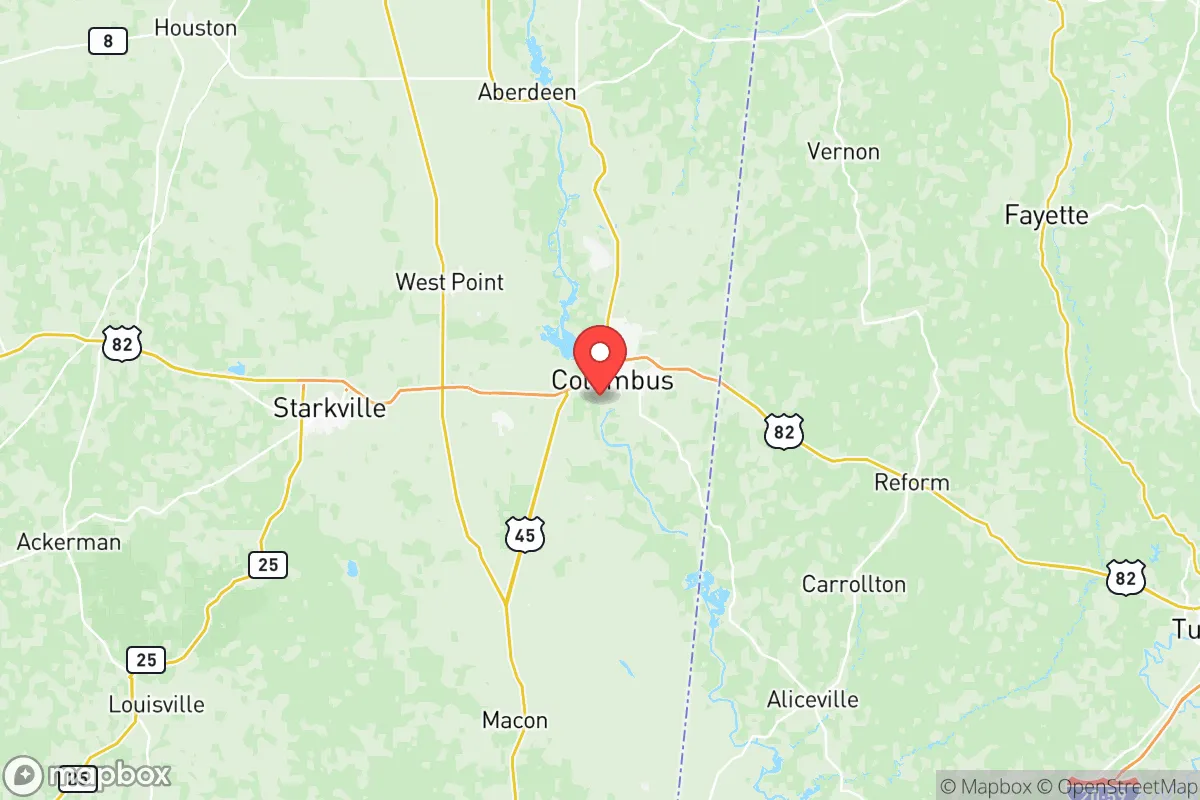
Lowndes County leans reliably Republican, with a Cook Partisan Voting Index (PVI) of R+18, making it significantly more conservative than Mississippi as a whole, which sits at R+11. This isn’t a recent shift — the area has been trending redder for decades, but the margin has widened notably since 2016. In practical terms, local elections are often decided in the GOP primary, and Democrats rarely contest county-level races outside of a handful of precincts in Columbus and the southern edge near Crawford.
How it compares
Mississippi’s R+11 rating already places it among the most Republican states in the country, but Lowndes County pulls a full seven points further right. That spread matters. While the state has competitive pockets — like Hinds County (Jackson) and Bolivar County (Delta) — Lowndes is squarely in the “deep red” category for the South. The political geography inside the county tells the story. Columbus, the county seat and home to Mississippi University for Women and a sizable African American population (around 45% of city residents), is the most politically mixed area. Precincts near the MUW campus and downtown tend to lean Democratic, sometimes breaking 55-45 for Dems in presidential years. But drive ten minutes north or east, into the rural subdivisions and unincorporated communities like Steens and New Hope, and you’ll find precincts that vote 75-80% Republican. Caledonia, on the county’s western edge, is reliably red as well. The swing precincts — the ones that tip county-wide races — are mainly around the Highway 45 corridor and the southern parts of Columbus, where suburban white voters and Black voters are more evenly mixed. Historically, Lowndes was a “Yellow Dog Democrat” area well into the 1980s, but the realignment over race and national politics has been decisive. You don’t hear much about cross-party voting anymore; it’s pretty settled.
What this means for residents
If you lean conservative, you’ll find your views reflected in nearly every level of local government, from the Board of Supervisors to the school board to the county sheriff. Tax policy is generally pro-business, and there’s little appetite for new regulations. The local Republican Party is well-organized, with active precinct-level groups around Columbus and Caledonia. For liberal residents, the reality is different. Your vote has the most impact in city council races in Columbus (Wards 3 and 4, for example, are often competitive) and in state legislative seats that cover the more diverse parts of the county. But county-wide, you’re likely to feel outnumbered. That said, political discourse here is usually civil — it’s a small enough place that you’ll still run into your neighbor at the grocery store no matter how you vote. The one powder keg is anything touching race and public schools, which tends to bring out the sharpest divisions, especially when district lines or funding questions hit the agenda.
Culturally, Lowndes County is distinct from both the Mississippi Delta (more Deep South and agricultural) and the Gulf Coast (more tourism and military). It’s a manufacturing and logistics hub, anchored by the Columbus Air Force Base and major employers like Paccar and Severstal. That economic base tilts the politics toward pragmatic conservatism — pro-military, pro-jobs, and generally skeptical of government expansion, but not ideologically rigid. The local Democratic Party, while diminished, holds influence in the Black churches and community organizations around Columbus’s east side, particularly through the NAACP chapter. Looking ahead, the county will likely stay R+18 or even drift slightly redder as rural depopulation continues and Columbus’s growth stays modest. Third-party candidates have no real presence, and ballot measures (like the 2020 medical marijuana initiative, which passed statewide but failed in Lowndes) show the county leans against progressive social policy. For anyone moving here, the bottom line is: you’ll find a stable, predictable political environment where local issues matter more than national headlines.

State Political ClimatePolitical Climate in Mississippi
State Political AnalysisPolitical Environment in the State
Mississippi is one of the most reliably Republican states in the nation, with a Cook Partisan Voting Index of R+11, meaning it votes eleven points more Republican than the national average in presidential elections. The state hasn't voted for a Democratic presidential candidate since Jimmy Carter in 1976, and that streak shows no signs of ending. Over the past 10-20 years, the shift has been about consolidation rather than conversion — rural and suburban areas that were already trending right have become deeply red, while the Democratic coalition has narrowed to a strong but geographically contained base in the Delta and along the Gulf Coast's majority-Black communities. The result is a state where Republicans hold every statewide office and supermajorities in both legislative chambers, but where local control and county-level dynamics can still produce surprises.
Urban vs. rural divide
The political map of Mississippi reads like a classic red-state-with-blue-dots pattern, but the dots are smaller and more scattered than in most places. Jackson, the capital and largest city, is the state's Democratic stronghold — heavily African American, reliably blue, and home to a politically active civil rights legacy. Hinds County, which contains most of Jackson, regularly delivers 80% or more of its vote to Democratic candidates. On the coast, Biloxi and Gulfport are more competitive but lean right overall; Harrison County has trended Republican over the last two cycles, though the southern part of the county near the water still puts up competitive local races. Oxford, home to the University of Mississippi, is a notable outlier — a small college town that has been slowly shifting left, with Lafayette County voting for Biden in 2020 after narrowly going for Trump in 2016. The rest of the state — places like Tupelo, Hattiesburg, Southaven, and the sprawling Pine Belt — is solidly Republican, driven by suburban growth, evangelical voters, and a cultural conservatism that runs deep. The rural Delta counties, meanwhile, are among the poorest and most heavily Black in the nation; places like Greenville and Clarksdale vote overwhelmingly Democratic, but their population decline has steadily eroded their statewide influence.
Policy environment
Mississippi's policy environment is among the most conservative in the country, with low taxes, limited regulation, and a heavy emphasis on traditional values. The state has a flat income tax that is being phased down — starting in 2025, the rate dropped to 4.7%, with a path to full elimination by 2030. The state sales tax is 7%, one of the highest in the nation, and local add-ons can push it higher. Property taxes are low by national standards, especially in rural counties. The state has no broad homestead exemption cap, so your actual property tax burden depends heavily on local school district levies and county assessor practices. On education, Mississippi has a school choice program — the Mississippi Education Scholarship Account program — which allows parents of students in failing schools to use taxpayer funds for private school or homeschooling expenses. Public schools remain deeply underfunded relative to need, though the 2022 MAEP overhaul was an attempt to make funding formulas more transparent. Healthcare is a mixed bag: the state did not expand Medicaid under the Affordable Care Act, leaving a coverage gap for low-income adults, but the 2023 legislative session passed a rural hospital stabilization plan. Election laws are restrictive — voters must show a photo ID at the polls, absentee voting requires a notarized application (or a medical excuse), and early voting does not exist in the traditional sense; the state only offers a limited in-person absentee period. Abortion is effectively banned in almost all cases, with no exceptions for rape or incest. Gun laws are among the most permissive in the country — Mississippi is a constitutional carry state, meaning no permit is required to carry a concealed firearm.
Recent policy direction
The last three legislative sessions have pushed Mississippi further right on nearly every axis a relocator might care about. In 2023, the state passed a near-total abortion ban (the Gestational Age Act), which triggered immediately after Dobbs, leaving only a narrow exception to save the mother's life. The same year, the legislature expanded parental rights in education — the "Parents' Bill of Rights" (SB 2094) codifies a parent's right to review instructional materials and opt their child out of sex education or any lesson the parent deems objectionable. In 2024, the state joined the multi-state "Second Amendment Preservation Act" movement. Gun laws got even looser — the legislature passed a preemption law that bars any local government from enacting its own gun ordinances, preventing cities like Jackson from imposing their own restrictions. Medical marijuana was legalized via a voter initiative in 2020, but the state's program is tightly controlled — only a limited number of dispensaries, no home grow, and a qualified medical condition list that was narrowed by the legislature in 2023. On property rights, Mississippi remains a strong "right-to-work" state and has no statewide rent control or price gouging laws. Surveillance and privacy have seen little movement, though a 2023 law (HB 1200) requires law enforcement to obtain a warrant before accessing a person's cell-site location data. On voting, the state has tightened ballot access in recent years. In 2023, the legislature passed a law requiring absentee ballots to be returned by the voter in person (or via a designated caregiver), ending the practice of allowing third-party ballot collection. The state's voter ID law, originally passed in 2011, remains one of the strictest in the South, though compliance is high in practice. Overall, the trajectory is clearly toward less regulation on guns and property, more restrictions on abortion and voting, and a slow but steady expansion of school choice.
Civil unrest & political movements
Mississippi has a long and painful history of civil rights struggle, and that legacy still shapes the state's political culture. In 2020, after the murder of George Floyd, protests broke out in Jackson, Oxford, and Hattiesburg. The Jackson protests were particularly notable because they involved running battles between police and demonstrators over the removal of Confederate statues — the city eventually removed a statue of Confederate President Jefferson Davis from the state capitol grounds, a move that had been blocked for years by the legislature. The flag debate was another flashpoint: in 2020, the state voted to retire its Confederate-themed state flag and adopt a new design with a magnolia, passing by a wide margin after decades of resistance. On the right, the most organized political movements are centered on gun rights and parental control of education. The Mississippi Gun Owners Caucus is active in the legislature, and local chapters of Moms for Liberty have been active in school board races in DeSoto County and Rankin County. Immigration politics remain quieter than in border states, but in 2023, the legislature passed a bill (HB 164) that requires local law enforcement to cooperate with ICE detainers, a move that drew attention from immigrant advocacy groups in Jackson and Greenwood. Election integrity concerns have become a regular feature of Republican primary politics; in 2022, the state auditor, Shad White, launched a high-profile investigation into voter fraud in Benton County, though only a handful of cases resulted in charges. For a new resident, the most visible political flashpoint is likely to be the state's stark racial and economic divide — you'll see Confederate flags in rural yards and Black Lives Matter signs in liberal college towns, and those two Mississippis don't talk to each other much.
Projection
Over the next 5-10 years, Mississippi's political polarization is likely to deepen, not moderate. Population growth is slow — the state is growing at about 0.2% annually — and what growth there is skews toward the Gulf Coast and the Memphis suburbs (DeSoto County), both of which are reliably Republican. The Black population is slowly declining as a share of the total, driven by out-migration from rural Delta counties, which will further dilute the Democratic base. The state's R+11 lean is likely to hold or even widen slightly in presidential years, but the real drama will be in intraparty fights. The Republican primary is where the action will be — expect more fights over school vouchers (rural Republicans worry about public school funding), hunting/shooting access on public land, and whether the state should push even further on federal preemption. The Democratic Party will remain a rump coalition concentrated in Jackson, the Delta, and a handful of Gulf Coast precincts, with no realistic path to winning statewide office unless national demographics shift dramatically. For a new resident, the practical implication is that Mississippi will continue to be a very safe place for conservative families and retirees who value low taxes, gun rights, and limited government, while liberal residents will find their political influence confined to city limits and college towns. The state's policy environment will continue to align with the priorities of the Republican supermajority — expect further tax cuts, tightening of abortion laws (possibly including a push for personhood language), expansion of school choice, and resistance to federal mandates on environmental or labor regulation.
For a relocator, the bottom line is straightforward. If you're conservative, Mississippi offers one of the most permissive policy environments in the country — low and falling taxes, constitutional carry, no state income tax on the horizon, minimal regulation, and a culture that doesn't question traditional values. If you're liberal, you'll find a small but tight-knit community in Jackson or Oxford, but you'll be living in a state where your vote has almost no impact on statewide elections and where state policy will consistently run counter to your preferences on social issues, healthcare, and civil rights. The state's polarized reality means that most people pick a county that matches their politics and build their life there. That's been the Mississippi way for a long time, and it's not changing soon.
* Values derived from national, state, county, city and local statistics and may differ in a specific area. Last updated: 2026-06-30T04:39:33.000Z
Narrative content on this page is AI-generated and may contain mistakes. Verify any details that matter before acting on them.
ReloMaps may earn a commission from affiliate links at no extra cost to you.

