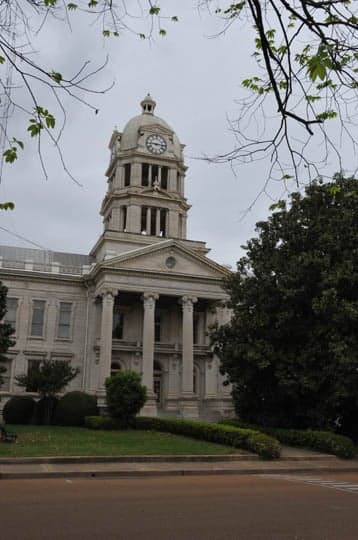
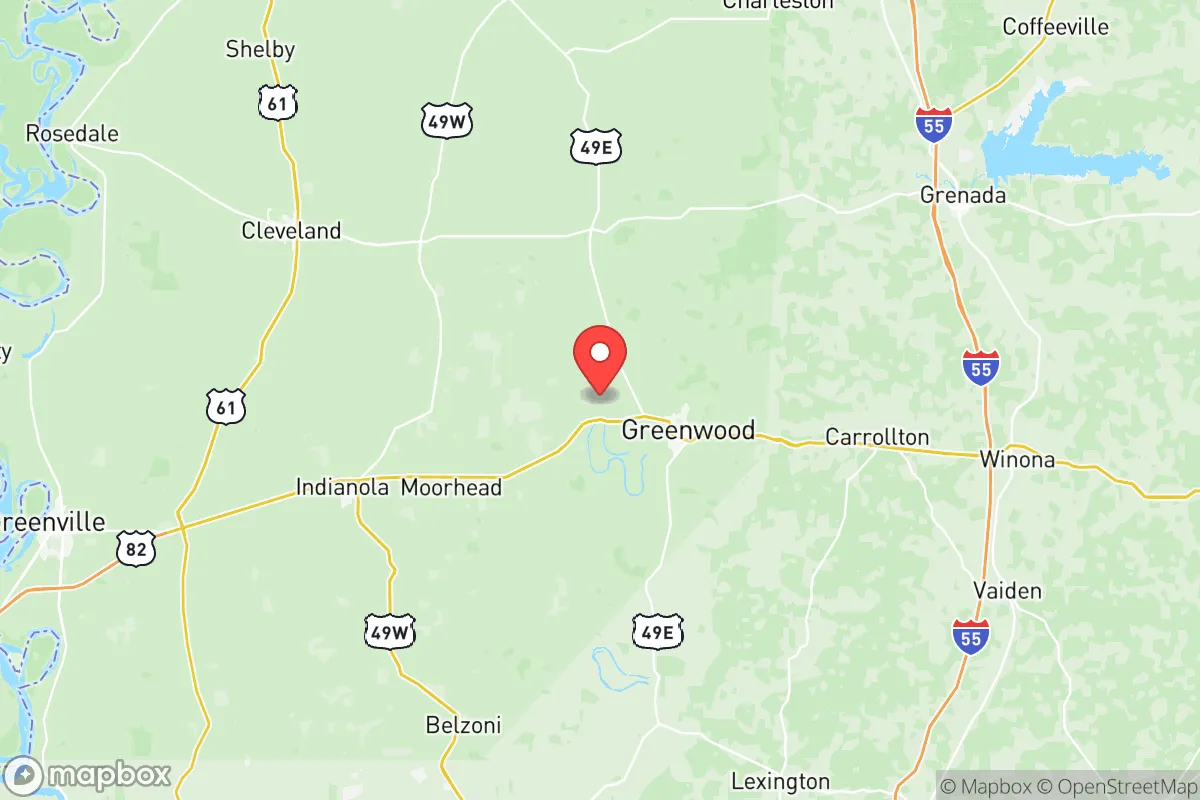
Photo: Wikipedia
Quality of Life in Leflore County
A livable area that tracks near national norms for affordability, walkability, and neighborhood health.
What does Quality of Life tell us?
Quality of Life measures an area by evaluating factors like cost of living, nearby amenities, country club access, airport proximity, socioeconomic signals and neighborhood character. For large states, this is a general average — quality of life can vary dramatically between metro areas, suburbs, and rural communities within the same state.
What does this tell us?
Quality of Life measures an area by evaluating factors like cost of living, nearby amenities, country club access, airport proximity, socioeconomic signals and neighborhood character. For large states, this is a general average — quality of life can vary dramatically between metro areas, suburbs, and rural communities within the same state.
Cost of Living
50% below national average
114%
The Real Cost of Living in Leflore County for 2026
| Tier | Individual | Family (4) |
|---|---|---|
| Survival | $11k | $21k |
| Comfortable | $20k | $29k |
| Luxury | $60k+ | $93k+ |
| Elite (Top 5%) | $105k+ | $163k+ |
Quality-of-Life Analysis
Leflore County, Mississippi, offers a quality-of-life spectrum that ranges from the historic Delta hub of Greenwood to deeply rural, unincorporated communities where agriculture defines daily rhythm. With a cost of living index of 50 — half the national average — the county attracts retirees on fixed incomes, first-time homebuyers, and workers in agribusiness and manufacturing who prioritize affordability over urban amenities. The trade-off is consistent across the county: low expenses paired with limited retail diversity and healthcare access concentrated in the county seat.
Largest town(s) & population centers
Greenwood is the county’s undisputed population and economic center, home to roughly 14,000 residents and the majority of Leflore County’s jobs, retail, and healthcare infrastructure. Daily life here revolves around a compact downtown anchored by the Viking Range Corporation headquarters and the Alluvian Hotel, which draws culinary tourism tied to the Delta’s food heritage. The median home value of $98,200 and median rent of $701 make homeownership attainable for households earning near the county’s median income of roughly $32,000. Greenwood’s public schools, including Greenwood High School and Leflore County High School, serve the bulk of the county’s student population, though private options like Pillow Academy exist for families seeking alternatives. The average commute of 19.8 minutes reflects the town’s contained geography — most residents can reach work, grocery stores, and the Greenwood Leflore Hospital within a 10-minute drive. Itta Bena, with about 1,700 residents, functions as a secondary population center and is best known as the home of Mississippi Valley State University, a historically Black university that brings a modest college-town energy and cultural events to the southern part of the county.
Smaller towns & rural pockets
Beyond the two incorporated towns, Leflore County’s character shifts to sparsely populated agricultural hamlets and unincorporated communities. Minter City, straddling the Leflore-Tallahatchie line, is a crossroads settlement with a handful of homes and a post office, surrounded by cotton and soybean fields. Schlater and Quito are unincorporated areas where residents live on large lots or family farmland, often commuting to Greenwood for work and shopping. Morgan City, near the county’s eastern edge, offers a similar rural profile — no commercial core, but quiet, low-density living on county roads. These areas lack municipal services like public water or sewer in many cases, relying on wells and septic systems, which keeps property taxes minimal but requires self-sufficiency from homeowners.
Cost & lifestyle range
The cost-of-life spread across Leflore County is narrow in absolute dollars but meaningful in lifestyle terms. In Greenwood, a three-bedroom home near downtown or the historic Baptist Town neighborhood might sell for $85,000 to $120,000, while a comparable rural property in Minter City or Schlater can fall below $70,000. Renters in Greenwood pay the county’s median of $701; rural rental options are scarce, as most housing stock is owner-occupied. Utility costs are slightly higher in rural areas due to reliance on propane and private well maintenance, while Greenwood residents benefit from lower-cost natural gas and municipal water. Amenities follow a similar gradient: Greenwood offers two grocery chains, a Walmart Supercenter, and the Greenwood Little Theatre, while residents of Itta Bena rely on a smaller Piggly Wiggly and must drive 10 miles north for full-service retail. The rural eastern and northern parts of the county have no grocery stores within a 15-minute drive, making vehicle ownership essential.
Leflore County best suits those who value extreme affordability and a slow, community-oriented pace over career diversity or urban convenience. Greenwood provides enough infrastructure for comfortable daily life, while the outlying communities reward self-reliance with quiet, land-rich living at some of the lowest housing costs in the United States. Retirees, remote workers with stable internet (fiber is available in Greenwood but limited rurally), and agricultural employees will find the most natural fit here.

Crime in Leflore County
Generally safer than 61% of comparable U.S. locations.
Violent CrimeViolent Crime Analysis
Property CrimeProperty Crime Analysis
Crime Analysis
Leflore County, Mississippi, reports a violent crime rate of 187 incidents per 100,000 residents and a property crime rate of 1,065.3 per 100,000, placing it in a mixed position relative to state and national averages. While the violent crime figure sits below the Mississippi state average of roughly 220 per 100,000, the property crime rate exceeds both the state average (approximately 2,500 per 100,000) and the national median, indicating that theft, burglary, and vehicle break-ins are the primary safety concerns for most residents. The county’s overall safety picture is heavily shaped by conditions in its largest municipality, Greenwood, and the surrounding unincorporated areas, where law enforcement coverage and socioeconomic factors vary significantly.
Crime in context
Leflore County’s violent crime rate of 187 per 100,000 is roughly 35% lower than the Mississippi state average and about 50% lower than the national average of approximately 380 per 100,000. This places the county among the safer rural areas in the Mississippi Delta for violent offenses such as homicide, aggravated assault, and robbery. However, the property crime rate of 1,065.3 per 100,000 is notably higher than the national average of roughly 1,950 per 100,000, meaning residents face a greater-than-average risk of larceny, burglary, and motor vehicle theft. The disparity between low violent crime and elevated property crime is typical of many Delta counties, where economic distress and population decline contribute to opportunistic theft rather than organized violent activity. The 4th Circuit Court District, which covers Leflore County, has seen a mix of judicial philosophies in recent years; progressive-leaning district attorneys in some Delta counties have drawn criticism for plea-bargaining rates that critics argue reduce accountability for property offenders, potentially contributing to repeat offenses. Readers should be aware that a lenient approach to property crime prosecution can erode deterrence and increase the likelihood of recidivism, directly impacting victims and public confidence in the justice system.
What residents experience
Daily life in Leflore County involves a clear divide between the urban core of Greenwood and the smaller communities of Itta Bena, Schlater, and Money. Greenwood, the county seat and largest city, accounts for the majority of reported property crimes, with break-ins and vehicle thefts concentrated near the downtown commercial corridor and along Highway 82. Residents in Greenwood’s historic districts, such as the area around Grand Boulevard, report lower incident rates, while neighborhoods near the industrial zones and public housing complexes see higher police activity. In contrast, Itta Bena—home to Mississippi Valley State University—experiences a spike in petty theft and vehicle break-ins during the academic year, driven by transient student populations. The unincorporated community of Money, famous for its role in civil rights history, has very low crime volume but virtually no local law enforcement presence, meaning residents rely on the Leflore County Sheriff’s Department for response. Schlater and the rural farming areas along the Yazoo River see minimal violent crime but suffer from occasional agricultural equipment theft, a crime that often goes underreported. The progressive judicial philosophy seen in some Delta courtrooms, which prioritizes rehabilitation over incarceration for nonviolent offenders, has been linked to higher recidivism rates for property crimes in the region; residents in these communities should be concerned that such policies may leave repeat offenders on the street, undermining public safety and victim restitution.
Neighborhood-level variation in Leflore County is pronounced but predictable. The safest areas are generally the outlying rural subdivisions and the newer developments on the western edge of Greenwood near the Greenwood-Leflore Airport, where home values are higher and police response times are shorter. Higher-crime pockets are concentrated in Greenwood’s east side and the area around the old downtown rail depot, where poverty rates exceed 40%. For prospective residents, the safest choice is to live outside the Greenwood city limits—in Itta Bena’s quieter residential streets or in the unincorporated areas near the county line—while remaining within a short commute to the city’s jobs and services. The progressive criminal justice policies adopted by some Delta prosecutors, while well-intentioned, have created a climate where property offenders cycle through the system quickly; readers should factor this into their relocation decision, as a soft-on-crime approach directly affects neighborhood stability and the likelihood of becoming a victim of repeat offenses.
* Values derived from national, state, county, city and local statistics and may differ in a specific area. Last updated: 2026-06-15T19:31:49.000Z
Narrative content on this page is AI-generated and may contain mistakes. Verify any details that matter before acting on them.
ReloMaps may earn a commission from affiliate links at no extra cost to you.

