
Photo: Wikipedia
Personal Sovereignty in Stearns County
Viable for self-reliance. Generally workable, though some barriers may limit total independence.
What does Personal Sovereignty tell us?
Personal Sovereignty measures your capacity for self-reliance and independence with minimal government friction. Higher scores mean fewer barriers between you and the way you want to live... but it assumes you have the space you need and good neighbors.
What does this tell us?
Personal Sovereignty measures your capacity for self-reliance and independence with minimal government friction. Higher scores mean fewer barriers between you and the way you want to live... but it assumes you have the space you need and good neighbors.
State Policy
Energy independence: Importer (20% of energy produced in-state)
Personal Liberty
Homesteading

Personal Liberty Analysis
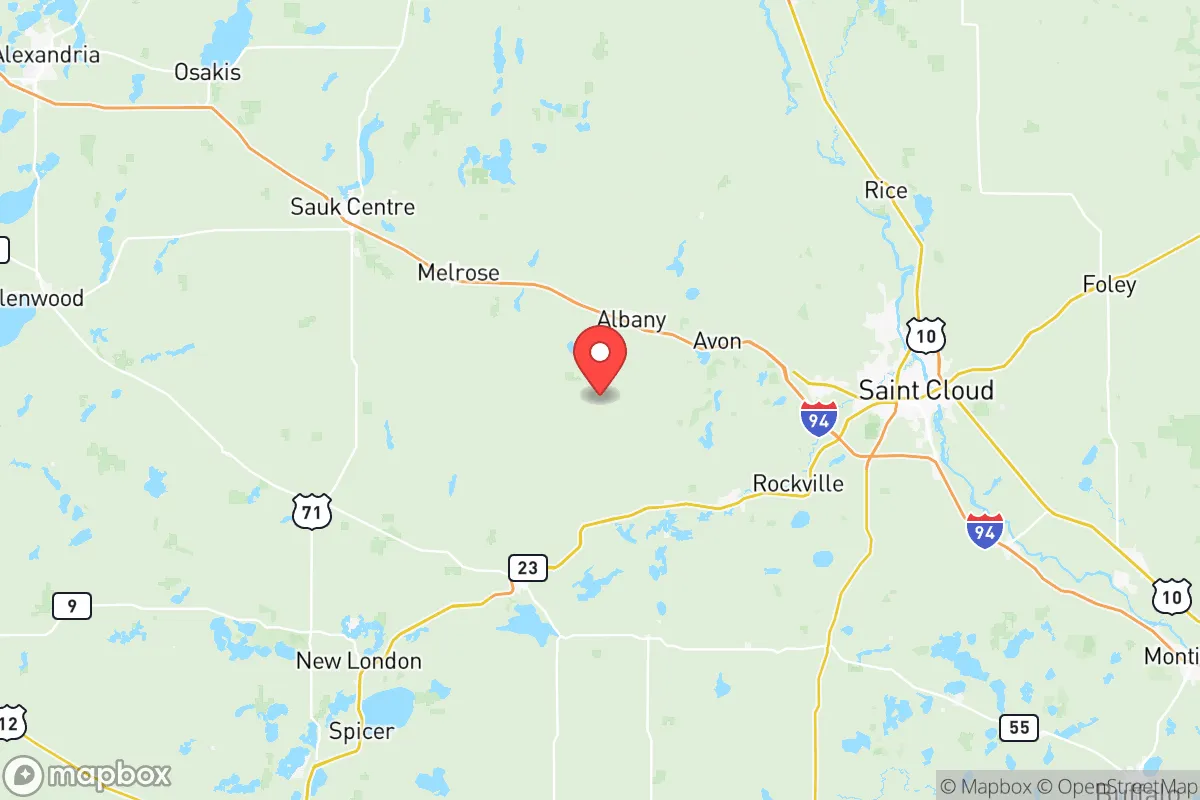
Stearns County, Minnesota, offers a notably high degree of personal sovereignty relative to the Twin Cities metro, with a regulatory environment that generally favors individual autonomy in land use, self-defense, and daily life. The county's political culture, shaped by a mix of rural agricultural communities and the college town of St. Cloud, leans center-right, creating a practical balance between local governance and state-level mandates. For individuals and families prioritizing personal freedom, the key variables are not just state law but the specific city or township where one settles, as zoning and local ordinances vary significantly from the urban core of St. Cloud to the outlying towns of Sauk Centre, Albany, Melrose, and Paynesville.
Tax burden and regulatory posture in Stearns County
Minnesota's overall tax burden is among the highest in the nation, but Stearns County offers a more moderate experience than the metro area. The county's property tax rate is competitive, with a 2025 median effective rate around 1.05% of home value, which is lower than Hennepin or Ramsey counties. The state's progressive income tax (ranging from 5.35% to 9.85%) applies uniformly, but the county's regulatory posture is notably lighter. Building permits, septic system approvals, and land-use variances are processed with greater speed and flexibility in townships outside city limits. For example, Sauk Centre and Albany have a reputation for pragmatic code enforcement, while St. Cloud's city government imposes more structured zoning and inspection requirements. The county does not impose a local sales tax beyond the state's 6.875%, and there are no special business or occupational taxes that burden self-employed individuals or small homesteaders.
Self-defense and gun law specifics in central Minnesota
Minnesota is a "shall-issue" state for permits to carry a firearm, and Stearns County is a reliable jurisdiction for obtaining one. The Stearns County Sheriff's Office processes permit applications efficiently, with no local ordinances that restrict carry beyond state law. The county is home to several active shooting ranges and gun clubs, particularly around Melrose and Paynesville, where firearm ownership is culturally normalized. Stand-your-ground laws do not exist in Minnesota; the state requires a duty to retreat in public spaces before using deadly force, except inside one's home (the Castle Doctrine applies). However, in practice, prosecutors in Stearns County are generally conservative on self-defense cases, and the legal climate is far more favorable than in the Twin Cities. No local "assault weapon" or magazine capacity bans exist beyond state law, and private firearm sales between individuals remain legal without a background check, though this is subject to federal dealer requirements for commercial transactions.
Self-reliance and homesteading viability: lot sizes, zoning, and off-grid feasibility
Stearns County is one of the better areas in Minnesota for off-grid living and homesteading, provided one avoids the urbanized portions of St. Cloud and Sartell. Minimum lot sizes in agricultural zoning districts are typically 20 acres for new subdivisions, but existing parcels of 5 to 10 acres are common and can be used for intensive hobby farming. Townships such as Munson Township (near Paynesville) and Lake George Township (near Albany) have minimal zoning restrictions, allowing for alternative housing like tiny homes, yurts, or RVs as primary residences, provided septic and well requirements are met. Off-grid solar is legal and common, though net metering with Xcel Energy or Great River Energy is the standard for grid-tied systems; fully off-grid setups require battery storage and are not prohibited. Rainwater collection is unrestricted for outdoor use, and private wells are the norm in rural areas. The county's soil quality and growing season (Zone 4b) support substantial vegetable gardens and small livestock operations, with many residents keeping chickens, goats, and bees without special permits outside city limits.
Personal liberties: parental rights, medical autonomy, speech, and property
Stearns County reflects Minnesota's broader legal framework, which grants significant parental rights in education and healthcare decisions. Parents can opt children out of sex education and certain health screenings without penalty, and the state's "Parents' Bill of Rights" (enacted in 2023) affirms the fundamental right to direct a child's upbringing. Medical autonomy is generally respected, though Minnesota has not adopted broad medical freedom legislation; vaccine mandates for school attendance exist but allow for medical and conscientious exemptions. Free speech protections are robust, with no local ordinances restricting political expression or public assembly. Property rights are well-protected, with eminent domain used sparingly and primarily for infrastructure projects like highway expansions. The county's approach to short-term rentals (Airbnb/VRBO) is permissive outside St. Cloud, where a licensing requirement exists, but towns like Richmond and Cold Spring have no such restrictions, allowing homeowners to monetize their property freely.
Overall, Stearns County offers a sovereignty profile that is strong for a Midwestern county, particularly when compared to the heavily regulated urban cores of Minneapolis or St. Paul. The combination of moderate taxes, a gun-friendly sheriff's office, flexible rural zoning, and respect for parental and property rights makes it a viable destination for those seeking a balance between community infrastructure and personal autonomy. The key is location: St. Cloud and Sartell represent the more regulated, urban end of the spectrum, while Sauk Centre, Albany, Melrose, and Paynesville offer the lighter-touch environment that self-reliant individuals and families typically seek.

* Values derived from national, state, county, city and local statistics and may differ in a specific area. Last updated: 2026-07-02T22:52:18.000Z
Narrative content on this page is AI-generated and may contain mistakes. Verify any details that matter before acting on them.
ReloMaps may earn a commission from affiliate links at no extra cost to you.

