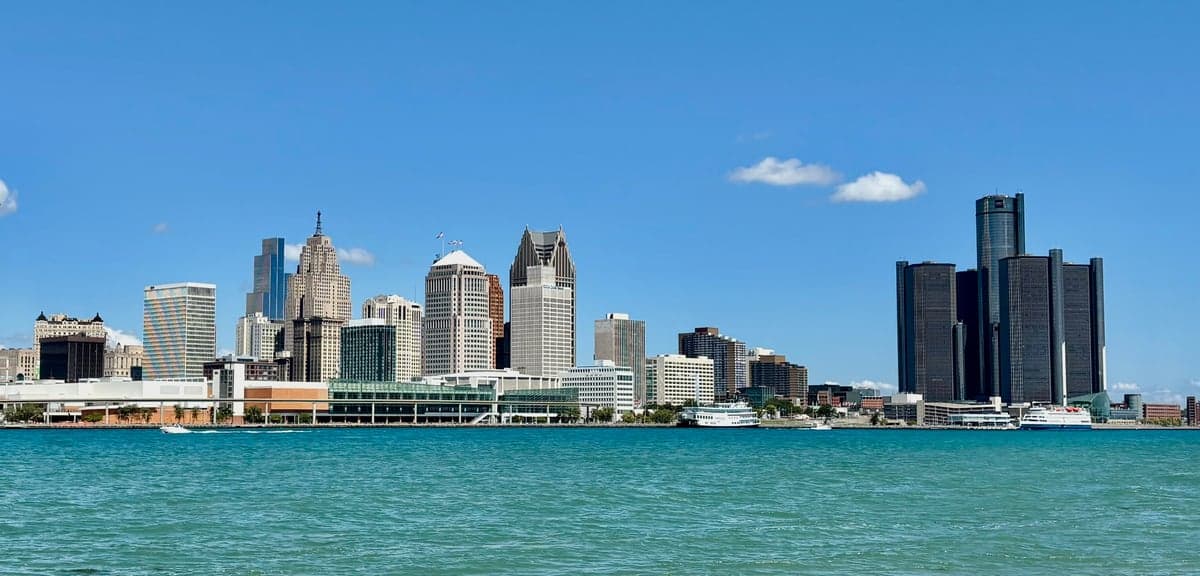
Photo: Wikipedia
Political ClimatePolitical Climate in Wayne County
Showing district-level results — no local-only data available.
Local Political AnalysisPolitical Analysis of Wayne County
Wayne County, Michigan, is a deep-blue stronghold with a Cook PVI of D+21, meaning it votes about 21 points more Democratic than the national average. This isn't a recent shift; it's been the political bedrock of the state for decades, powered overwhelmingly by Detroit and its inner-ring suburbs. But if you've lived here as long as I have, you know the county isn't a monolith. The real story is how the political energy has changed, and not always for the better if you value personal freedoms and a limited government approach. The surrounding state of Michigan, by contrast, has a Cook PVI of EVEN, making it a true swing state—a fact that often gets lost in the noise coming out of Wayne County's dominant political machine.
How it compares
The comparison between Wayne County and the rest of Michigan is stark. While the state as a whole is a political battleground, Wayne County is the engine that consistently pushes it left. Look at the 2022 gubernatorial race: Gretchen Whitmer won the state by about 11 points, but she carried Wayne County by over 40 points. That's the kind of margin that drowns out the more conservative voices in places like Macomb County or western Michigan. Within Wayne County itself, the political landscape is fractured. Detroit and the downriver communities like Allen Park and Wyandotte still vote heavily Democratic, but the old-school, union-style Democrats are being replaced by a more progressive, activist brand. Meanwhile, communities like Canton Township and Northville have become swing precincts, often breaking for Republicans in local races, especially when taxes or school policies are on the ballot. The Grosse Pointes are a fascinating case—historically Republican, they've trended blue in presidential years, but still push back hard on county-level overreach, like the recent debates over zoning and property rights.
What this means for residents
For a conservative-leaning resident, living in Wayne County means constantly feeling like your vote is a drop in a very blue bucket. The county commission and many local school boards are dominated by progressive voices, which has led to some concerning policy pushes. We've seen a real uptick in government overreach, especially around public health mandates and local business regulations that go far beyond what neighboring counties like Oakland or Washtenaw would tolerate. The push for "equity" policies in school districts, like in Dearborn and Westland, often translates into curriculum changes that many parents find intrusive. Property taxes are another sore spot—Wayne County's millage rates are among the highest in the state, and there's a constant drumbeat for new county-wide taxes for things like transit and "climate resilience" that feel like a blank check for pet projects. The sense of personal freedom—to run a business without endless red tape, to choose your child's education, to speak your mind without fear of being canceled—feels more constrained here than in the rest of Michigan.
Culturally, Wayne County is a world apart from the rest of the state. You won't find the same "live and let live" attitude you get in rural Michigan. Instead, there's a heavy emphasis on collective action and government solutions, which can feel suffocating if you value individual liberty. The local political machine is deeply entrenched, and challenging it is an uphill battle. For a conservative, the long-term outlook is tough. The county's demographics and the steady influx of progressive transplants from other blue states suggest the political trajectory will only get more left-leaning. Your best bet is to get involved at the local level—school board, city council, zoning board—where your voice can still make a difference, even if the county-wide elections feel like a lost cause. It's not a hopeless place, but you have to be willing to fight for every inch of ground.

State Political ClimatePolitical Climate in Michigan
State Political AnalysisPolitical Environment in the State
Michigan is a true battleground state, with a Cook PVI of EVEN, meaning it is perfectly split between the two major parties. Over the last 10-20 years, the state has shifted from a reliably blue stronghold in presidential elections (voting for Democrats from 1992 to 2012) to a fiercely contested toss-up, flipping to Trump in 2016, back to Biden in 2020, and remaining a top target for 2024 and beyond. The dominant coalition is a fragile mix of union-heavy, blue-collar workers in the southeast (who are trending right) and a growing, educated, and progressive population in the urban core of Detroit and Ann Arbor, creating a constant tug-of-war that makes the state’s political future anything but settled.
Urban vs. rural divide
The political map of Michigan is a textbook case of the urban-rural split. The Democratic stronghold is concentrated in the southeast corner, anchored by Detroit and its inner-ring suburbs like Southfield and Ferndale, along with the college town of Ann Arbor (Washtenaw County). These areas deliver massive vote margins for Democrats, often exceeding 70-80% of the vote. In contrast, the rest of the state is overwhelmingly red. The western side of the Lower Peninsula, from Grand Rapids (Kent County) north to Traverse City, is reliably conservative, though Grand Rapids itself has a growing progressive urban core. The Upper Peninsula, once a Democratic stronghold due to union mining and logging, has flipped hard to the right over the past decade, with counties like Dickinson and Gogebic now voting Republican by double digits. The real battlegrounds are the suburban "collar counties" around Detroit—Macomb County (home to Warren and Sterling Heights) and Oakland County (home to Troy and Novi). Macomb, in particular, is the bellwether: it went for Obama twice, then Trump twice, and is the epicenter of the blue-collar, culturally conservative shift that defines Michigan’s volatility.
Policy environment
Michigan’s policy environment has swung dramatically leftward since Democrats took full control of state government in 2023. The state now has a flat income tax rate of 4.25%, which was actually reduced from 4.35% in 2023 due to a 2015 law that triggers automatic cuts when revenues exceed a certain threshold. However, the Democratic legislature has been actively working to repeal that trigger, which would lock in the higher rate. Property taxes are moderate, but the state’s personal property tax on business equipment remains a burden. On education, the state repealed its right-to-work law in 2023, a major blow to workplace freedom, and reinstated prevailing wage requirements for public construction projects. This is a clear signal that union power is resurgent. Healthcare policy has expanded under the Affordable Care Act, with Michigan being one of the first states to adopt Medicaid expansion. On election law, the state has moved toward greater accessibility, with no-excuse absentee voting and same-day voter registration passed via a 2018 ballot initiative, which conservatives argue increases the risk of fraud. The most concerning recent development for liberty-minded residents is the passage of a red flag law (extreme risk protection orders) in 2023, allowing courts to temporarily seize firearms from individuals deemed a threat without a criminal conviction or due process hearing.
Trajectory & freedom
Michigan is clearly trending less free under the current one-party rule in Lansing. The 2023 legislative session was a firehose of progressive legislation that directly contracts personal liberty. The repeal of right-to-work means workers can be forced to pay union dues as a condition of employment, a direct infringement on economic freedom. The red flag law, as mentioned, erodes Second Amendment rights by allowing gun confiscation based on a civil complaint rather than a criminal standard. On parental rights, the state has moved in the opposite direction of many red states: a 2023 law expanded the definition of "sexual orientation" and "gender identity" in the state’s civil rights code, which critics argue can be used to override parental authority in schools regarding curriculum and medical decisions. The state also passed a law requiring insurance coverage for abortion and gender transition procedures, further entrenching a progressive healthcare mandate. On the positive side for conservatives, Michigan remains a shall-issue state for concealed carry (no permit required for open carry), and there is no state-level assault weapons ban, though local ordinances in places like Ann Arbor and Ferndale have attempted to create their own restrictions. The trajectory is clear: if Democrats maintain control, expect more restrictions on gun rights, higher taxes, and a continued erosion of local control in favor of state mandates.
Civil unrest & political movements
Michigan has been a flashpoint for political activism on both sides. The most visible recent event was the 2020 Whitmer kidnapping plot, which involved a group of anti-government extremists targeting the governor, an event that still colors the state’s political discourse. On the left, the 2020 protests in Detroit and Grand Rapids over the death of George Floyd were large and occasionally violent, leading to property damage and a lasting sense of insecurity in some downtown areas. The right has been equally mobilized, with the #OpenMichigan protests in 2020 against COVID-19 lockdowns drawing thousands to the state capitol in Lansing, including armed demonstrators. This movement gave rise to the Michigan Conservative Coalition and other grassroots groups that remain active in school board and local elections. Immigration politics are less of a flashpoint than in border states, but Detroit and Ann Arbor have declared themselves "sanctuary cities," limiting cooperation with federal immigration enforcement. Election integrity remains a hot-button issue: the 2020 election in Michigan saw widespread use of ballot drop boxes and mass mail-in voting, leading to ongoing lawsuits and audits. The 2024 presidential election is expected to be another battleground, with both parties investing heavily in legal teams and poll watchers. A new resident will notice a palpable tension in the air, especially in the suburbs, where neighbors may have very different views on the legitimacy of recent elections.
Projection
Over the next 5-10 years, Michigan’s political trajectory depends heavily on demographic shifts and in-migration patterns. The state is losing population overall, but the growth is concentrated in the conservative-leaning western side (Grand Rapids, Holland, Traverse City) and the exurbs of Detroit (northern Oakland County, Livingston County). Meanwhile, the urban core of Detroit is slowly depopulating, which could weaken the Democratic base. However, the influx of remote workers from blue states into places like Ann Arbor and the Leelanau Peninsula is bringing a more progressive, high-income demographic that could offset rural gains. The wildcard is the 2024 redistricting cycle: Michigan now has an independent redistricting commission, which created more competitive districts in 2022. This could keep the state legislature and congressional delegation in play for the foreseeable future. If Republicans can win back the governorship in 2026, expect a rollback of the 2023 progressive laws, particularly the red flag law and right-to-work repeal. If Democrats hold power, expect a push for a progressive income tax (higher rates on the wealthy), a state-level assault weapons ban, and expanded government healthcare. For someone moving in now, the next decade will be a constant political knife fight, with the outcome determining whether Michigan becomes a Great Lakes version of Illinois or a northern version of Ohio.
For a conservative-leaning individual or family considering a move to Michigan, the bottom line is this: you are moving to a state that is politically divided down the middle, and your experience will vary dramatically based on where you settle. If you choose the western side of the state—places like Grand Rapids, Holland, or the Traverse City area—you will find a more culturally conservative environment with strong churches, good schools, and a lower cost of living. If you end up in the southeast, especially in Oakland County or Washtenaw County, you will be in a blue stronghold with high taxes, progressive school boards, and a government that is actively expanding its reach into your personal life. The state’s political future is uncertain, but one thing is clear: your vote will matter more here than almost anywhere else in the country. Be prepared for a constant battle over the direction of your community, and choose your county wisely.
* Values derived from national, state, county, city and local statistics and may differ in a specific area. Last updated: 2026-05-16T03:08:25.000Z
Narrative content on this page is AI-generated and may contain mistakes. Verify any details that matter before acting on them.
ReloMaps may earn a commission from affiliate links at no extra cost to you.

